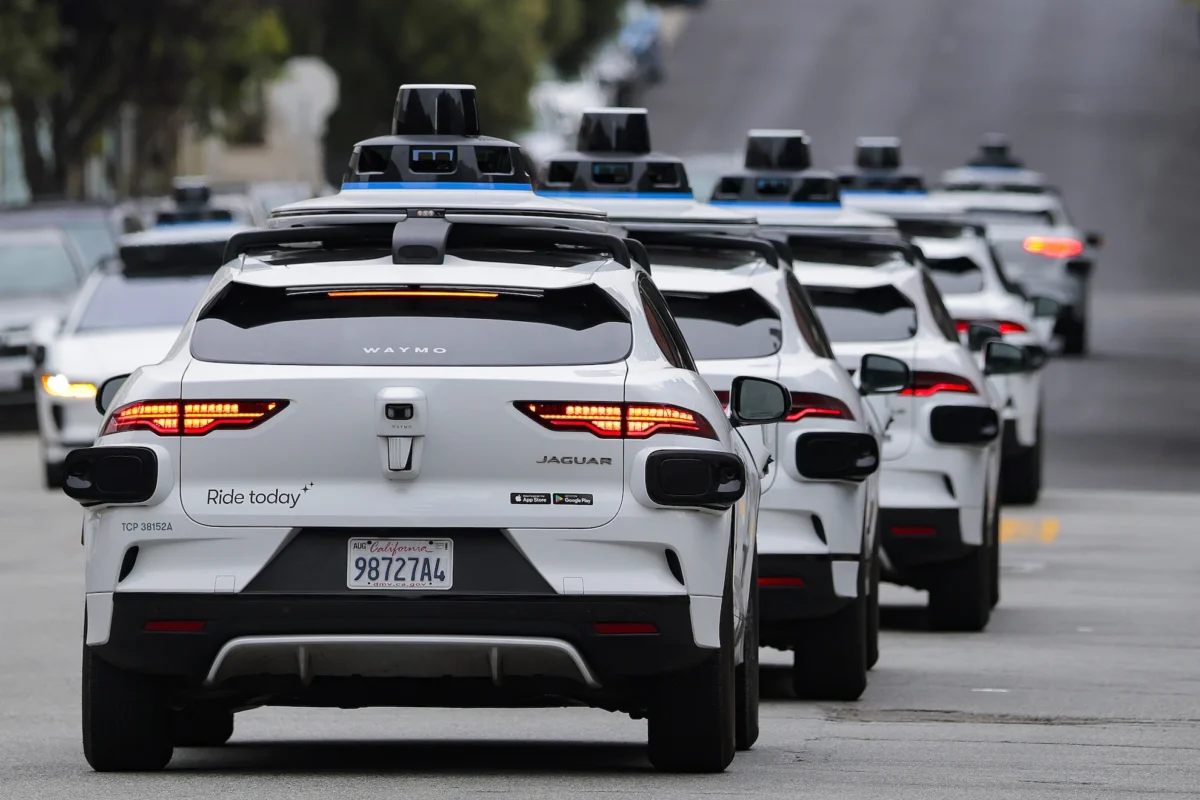
San Francisco’s burgeoning autonomous vehicle landscape experienced a momentary but significant disruption on Friday, July 18, 2026, when Waymo, the self-driving technology company owned by Alphabet, temporarily paused its robotaxi service across parts of the city. The operational halt, which saw service "temporarily paused" and "freeway routes unavailable," was a direct response to a widespread power outage that impacted approximately 7,000 PG&E customers in San Francisco. While service resumed after roughly an hour, the incident once again cast a spotlight on the intricate challenges of integrating advanced autonomous systems into complex urban environments, particularly concerning infrastructure resilience and public safety.
The Immediate Impact: Power Outage and Waymo’s Response
The events unfolded on a Friday afternoon, a time when San Francisco’s streets are typically bustling with activity, including a growing number of Waymo’s distinctive self-driving vehicles. At approximately 12:30 PM PDT, reports began to surface of a significant power outage affecting various neighborhoods within the city. PG&E, the primary utility provider for the region, later confirmed that thousands of its customers were without electricity, prompting concerns about traffic signal functionality, communication networks, and overall urban infrastructure stability.
Almost concurrently with the outage, Waymo customers attempting to hail a robotaxi received notifications indicating a service interruption. A screenshot widely shared on social media platforms, including X (formerly Twitter), showed a message from Waymo informing San Francisco users that "service was temporarily paused" and, critically, that "freeway routes are unavailable." This immediate communication from Waymo to its customer base underscored the severity of the perceived conditions and the company’s rapid response to mitigate potential risks.
When approached for comment shortly after the initial reports, a Waymo spokesperson confirmed the adjustments to TechCrunch, stating, "We are making temporary adjustments to our service while we monitor local conditions. We know riders depend on us, and we will return to normal operations as soon as possible." This initial statement emphasized the company’s cautious approach and its commitment to rider safety amidst uncertain external conditions.
Following the initial publication of news regarding the disruption, Waymo provided further clarification, explaining that the company "decided to pause service for approximately one hour to assess the scale of the power outage affecting a large portion of San Francisco and coordinate with local officials." This subsequent detail highlights a proactive, rather than reactive, decision-making process, indicating that Waymo prioritizes a thorough understanding of the operational environment before resuming full service. By approximately 1:30 PM PDT, Waymo confirmed that its robotaxi service had indeed resumed, signaling that the assessment of local conditions had been completed and deemed safe for continued operation.
Waymo’s Expanding Footprint in San Francisco
Waymo, a pioneer in autonomous driving technology, has steadily expanded its operations in San Francisco, transforming from an experimental pilot program to a fully commercialized robotaxi service. The company first began testing its vehicles in the hilly, congested streets of San Francisco several years prior, navigating the city’s unique challenges, including its narrow roads, numerous hills, dense pedestrian traffic, and diverse weather conditions. In the years leading up to 2026, Waymo successfully secured the necessary permits from the California Public Utilities Commission (CPUC) and the Department of Motor Vehicles (DMV) to operate a fare-based, fully driverless ride-hailing service across significant portions of the city.
By July 2026, Waymo had become an increasingly familiar sight, with hundreds of its Jaguar I-PACE electric SUVs, equipped with an array of lidar, radar, and camera sensors, silently traversing San Francisco’s urban fabric. The service offered residents and visitors an alternative transportation option, promising enhanced safety, efficiency, and convenience. The company had steadily expanded its operational design domain (ODD) within the city, covering not only downtown areas and residential neighborhoods but also crucial freeway segments, connecting various parts of the metropolitan area. This expansion had been met with both enthusiasm for technological advancement and skepticism regarding the readiness and reliability of autonomous systems in real-world scenarios. The company’s rapid growth underscored its ambition to be a leading provider of autonomous mobility solutions, but also placed it under intense public and regulatory scrutiny, particularly when incidents, however minor, occurred.
A Pattern of Disruption: Autonomous Vehicles and Infrastructure Vulnerabilities
The July 18th incident was not an isolated event but rather the latest in a series of challenges that have highlighted the vulnerabilities of autonomous vehicle operations to external infrastructure failures. Waymo, along with other AV operators in San Francisco, has previously encountered difficulties when confronted with widespread power outages or major civic events that strain urban systems.
One notable incident occurred in December 2025, during a significant blackout that left large swathes of San Francisco without power. During that event, a number of Waymo vehicles were reported to have stalled on city streets, unable to navigate effectively without crucial infrastructure support. While the vehicles entered a safe state, their unexpected immobility contributed to traffic congestion and raised questions about their ability to autonomously manage unforeseen external disruptions. The incident underscored the reliance of even the most advanced autonomous systems on a robust and continuously functional urban grid.

Similarly, an earlier incident during a Fourth of July fireworks display near the Golden Gate Bridge saw autonomous vehicles, including Waymo’s, struggle to adapt to the unprecedented traffic density and dynamic, unpredictable human behavior associated with such a large-scale event. While not a power outage, this scenario also demonstrated how extraordinary circumstances can paralyze traffic and challenge the operational parameters of AVs, leading to calls for better integration with emergency response protocols and more resilient decision-making frameworks. These incidents, though varied in their specific causes, collectively painted a picture of autonomous vehicles operating within a complex ecosystem where their performance is intricately linked to the reliability of external infrastructure and the predictability of human interaction.
Regulatory Scrutiny and Calls for Enhanced Oversight
The recurring nature of these disruptions has not gone unnoticed by local authorities. San Francisco Mayor Daniel Lurie has emerged as a prominent voice advocating for stricter regulations governing autonomous vehicles, particularly in the aftermath of incidents that impact public services or create safety concerns. Following the Waymo traffic fiasco during the Fourth of July celebrations, Mayor Lurie publicly called for "tougher state regulations to adequately address how autonomous vehicles operate during major incidents, planned or not."
This sentiment reflects a broader tension between state-level regulators, primarily the CPUC and DMV, which have largely championed the expansion of AV testing and commercial deployment, and local municipalities that bear the immediate brunt of operational challenges. Local officials often express concerns about AVs impeding emergency vehicles, blocking traffic lanes, or creating unforeseen hazards, especially when their systems encounter anomalies. The Mayor’s push for enhanced regulations seeks to ensure that AV companies not only demonstrate technological prowess but also develop robust contingency plans and communication protocols that integrate seamlessly with city emergency services and infrastructure management.
The CPUC, which grants permits for commercial autonomous passenger services, and the DMV, responsible for vehicle testing permits, have historically balanced fostering innovation with ensuring public safety. However, the accumulation of incidents, even minor ones, has intensified public and political pressure to re-evaluate the regulatory framework. Stakeholders argue that regulations must evolve to cover scenarios beyond routine operation, encompassing how AVs behave during power outages, natural disasters, mass gatherings, and other unpredictable events that characterize urban life. The dialogue often centers on whether AVs should be mandated to have a higher degree of independent resilience or if a more tightly integrated command-and-control system involving human oversight during critical events is necessary.
Technical Vulnerabilities and the Smart City Vision
The incident also highlights specific technical vulnerabilities inherent in current autonomous vehicle designs and their reliance on external infrastructure. While Waymo vehicles are designed with extensive onboard sensing capabilities (lidar, radar, cameras) and redundant computing systems, they are not entirely immune to environmental factors or infrastructure failures.
A power outage can lead to several challenges:
- Loss of Traffic Signals: While AVs are trained to recognize and interpret non-functioning traffic lights or use four-way stop protocols, widespread outages can create chaotic intersections, making safe navigation more complex.
- Communication Blackouts: AVs often rely on cellular networks for real-time map updates, remote assistance from human operators (though Waymo’s system aims for full autonomy, remote support can still be a layer of safety), and communication with dispatch systems. A widespread power outage can degrade or sever cellular service in affected areas, limiting these crucial communication channels.
- GPS Degradation: While AVs use multiple localization methods, GPS is still a foundational element. Power outages can sometimes affect localized GPS signal boosters or ground stations, potentially impacting precision, although this is less common for widespread outages.
- Charging Infrastructure: For electric robotaxis like Waymo’s, prolonged power outages could eventually impact the availability of charging stations, though this is typically a longer-term concern than immediate operational safety.
- Perception Challenges: The absence of streetlights during a nighttime outage, or the general increase in unpredictable human behavior and improvised traffic management during a daytime outage, can present novel perception challenges for even sophisticated AI systems.
Waymo’s decision to pause service during the San Francisco outage, rather than attempt to navigate potentially compromised conditions, underscores its commitment to a "safety-first" approach. This decision aligns with the industry’s common "safe harbor" protocol, where vehicles are programmed to enter a minimal risk condition (e.g., pulling over safely) if they encounter situations beyond their operational design domain or if critical system redundancies are compromised. However, the broader implication for the "smart city" vision is that the promise of seamless, autonomous mobility is intrinsically tied to the resilience of the underlying urban infrastructure. A truly smart city, leveraging AVs for transportation, must invest equally in a robust, intelligent, and resilient power grid and communication network.
Broader Implications for Public Trust and Future Deployment
The incident, though brief, carries significant implications for public trust in autonomous vehicle technology and the pace of future deployments. Each disruption, whether due to technical glitches or external factors like power outages, serves as a test case for how AV companies manage crises and communicate with the public and authorities. Maintaining public confidence is paramount for the widespread adoption of robotaxi services. If users perceive AVs as unreliable during common urban disruptions, it could significantly slow down their integration into daily life.
For Waymo and the broader AV industry, this incident reinforces the need for:
- Enhanced Resilience: Developing more robust vehicle systems and operational protocols that can better withstand or adapt to infrastructure failures and unpredictable external events. This might include more sophisticated onboard processing to reduce reliance on real-time external communication or improved sensing capabilities to navigate degraded environments.
- Clearer Communication Protocols: Establishing standardized, transparent, and immediate communication channels with city officials, emergency services, and the public during incidents.
- Collaborative Planning: Working more closely with urban planners, utility companies, and emergency responders to develop comprehensive contingency plans for AV operations during widespread disruptions.
- Phased Deployment Strategies: Potentially adopting more conservative deployment strategies that allow for greater validation in challenging scenarios before full-scale expansion.
The power outage in San Francisco and Waymo’s subsequent service pause serve as a tangible reminder that the future of autonomous mobility is not solely about the intelligence of the vehicles themselves, but also about the intelligence and resilience of the cities they operate within. As autonomous vehicles become an increasingly integral part of urban transportation networks, the imperative to build robust, interconnected, and adaptive smart city infrastructures becomes ever more critical. The ongoing dialogue between technology innovators, urban policymakers, and utility providers will shape how effectively these revolutionary technologies can deliver on their promise of safer, more efficient, and more sustainable urban living, even when the lights go out.