The exploration of time as a cognitive construct rather than a physical absolute has long served as a focal point for the intersection of literature, philosophy, and science. Central to this discourse is the 1946 essay "A New Refutation of Time" by the Argentine man of letters Jorge Luis Borges (1899–1986). Later compiled in his seminal 1962 collection Labyrinths, the essay represents a sophisticated synthesis of Berkeleyan idealism and Humean skepticism, challenging the foundational human perception of temporal succession. Borges’s work posits that if the individual "self" is an illusion—a mere collection of perceptions—then the continuity of time must also be an illusion. By examining the historical, scientific, and philosophical frameworks surrounding this text, one can discern the enduring impact of Borges’s "metaphysical maze" on contemporary understandings of human existence.
The Philosophical Genesis: Berkeley, Hume, and the Denial of the Self
To understand Borges’s refutation, it is necessary to examine the 18th-century philosophical foundations upon which he built his argument. Borges draws a direct line from George Berkeley, the Anglo-Irish Bishop and pioneer of idealism, to David Hume, the Scottish Enlightenment skeptic.
Berkeley famously argued that "to be is to be perceived" (esse est percipi). He maintained that material objects do not exist independently of the minds that perceive them. However, Berkeley stopped short of applying this logic to the soul or the "thinking principle," which he believed remained a constant, unified entity. Borges notes that David Hume took Berkeley’s logic to its ultimate conclusion. Hume argued that when he looked into himself, he found only a "bundle or collection of different perceptions" such as heat, light, shade, love, or hatred. For Hume, there was no "self" behind these perceptions, only the perceptions themselves occurring in rapid succession.
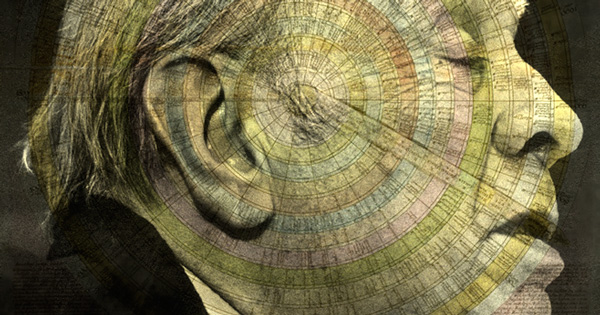
Borges identifies a logical inconsistency in this progression. If, as Hume suggests, the "self" is merely a series of discrete mental states, then the "continuity" that links these states—time—must also be scrutinized. Borges argues that if matter and spirit are negated as continuous substances, the chronological "chain" of time has no anchor. He asserts that "outside each mental state spirit does not exist; neither does time exist outside the present moment."
Scientific Context: The Einstein-Bergson Debate of 1922
Borges composed his essay in the mid-1940s, a period still reeling from the radical shifts in physics introduced by Albert Einstein’s Theory of Relativity. A defining moment in the history of temporal philosophy occurred in April 1922 at the Société française de philosophie in Paris, where Einstein met the philosopher Henri Bergson.
Bergson argued for the concept of "duration" (durée)—time as it is lived and experienced by human consciousness, which he viewed as a continuous flow that could not be carved into the discrete units used by physics. Einstein countered with a strictly physicalist view, famously stating, "The time of the philosopher does not exist." Einstein’s relativity demonstrated that "simultaneity" is relative to the observer’s frame of reference, effectively destroying the notion of a universal "now" that applies to the entire universe.
Borges’s essay occupies the intellectual space created by this conflict. While he uses the tools of metaphysics, his conclusion—that the "vast temporal series" is a human invention—aligns with the "Block Universe" theory often associated with Einsteinian physics. In a Block Universe, past, present, and future coexist simultaneously in a four-dimensional manifold, making the "passage" of time a psychological artifact rather than a physical reality.

A Chronology of Temporal Inquiry
The evolution of the philosophy of time can be traced through several key milestones that inform Borges’s perspective:
- 1687: Isaac Newton publishes Principia, defining "absolute, true, and mathematical time" as something that flows equably without relation to anything external.
- 1710: George Berkeley publishes A Treatise Concerning the Principles of Human Knowledge, asserting that time is nothing abstracted from the succession of ideas in our minds.
- 1739: David Hume’s A Treatise of Human Nature denies the existence of a persistent personal identity, describing the self as a "theatre" of fleeting perceptions.
- 1908: Hermann Minkowski introduces the concept of spacetime, unifying the three dimensions of space with a fourth dimension of time.
- 1922: The Einstein-Bergson debate marks the formal split between "clock time" (physics) and "lived time" (philosophy).
- 1946: Borges publishes "A New Refutation of Time," attempting to use logic to dissolve the "river" of time.
- 2010s: Modern neuroscience, through figures like Marc Wittmann, explores how the brain "constructs" time through the integration of bodily signals and memory.
The Literary Analogy: Huckleberry Finn and the Denial of Succession
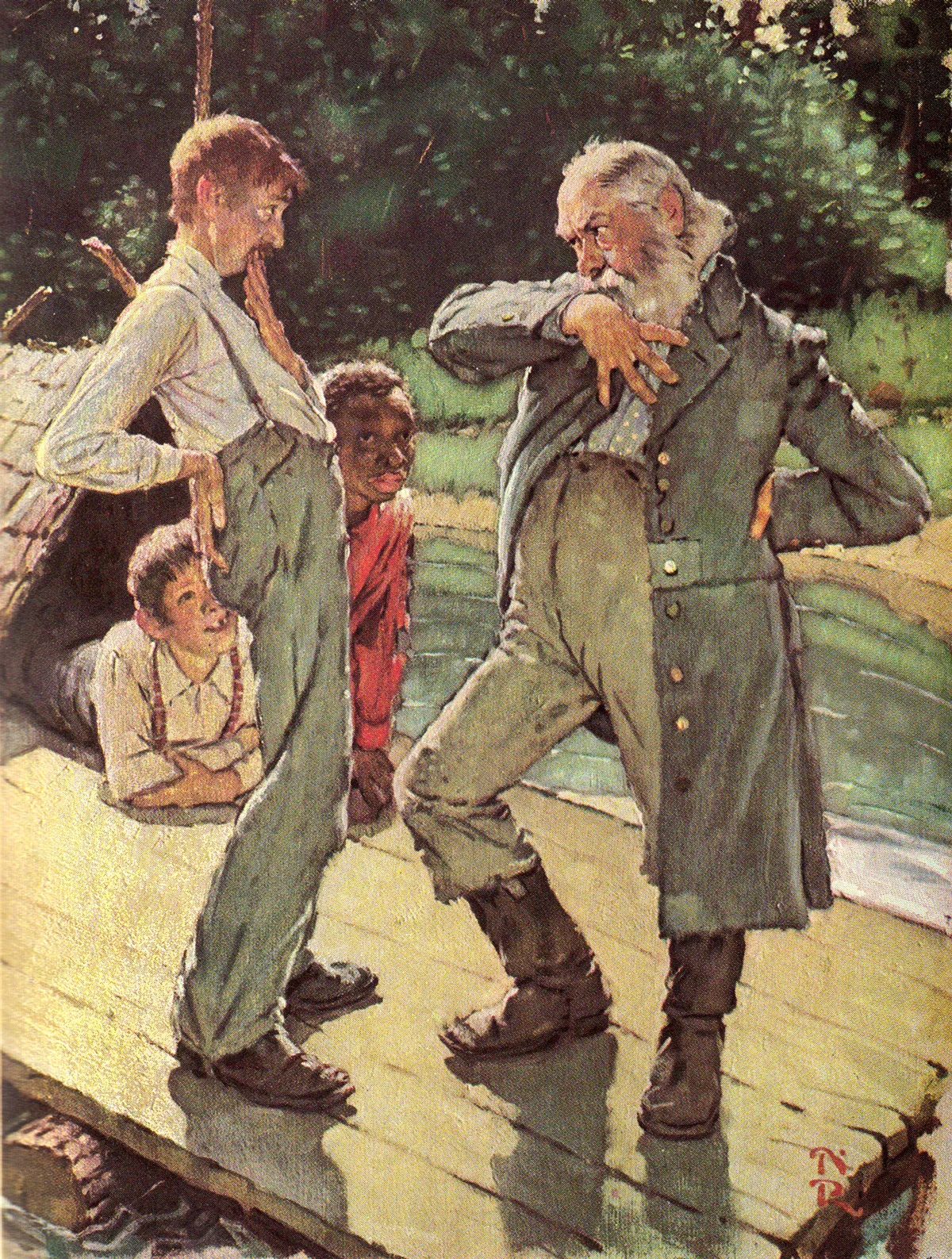
Borges often utilized literary examples to ground his abstract theories. In "A New Refutation of Time," he invokes a scene from Mark Twain’s The Adventures of Huckleberry Finn. He describes Huck awakening on a raft on the Mississippi River, noticing the stars and the sound of the water before drifting back to sleep.
Borges argues that to assign a specific date—such as June 7, 1849—to this moment is an "unjustifiable" addition of chronological precision. For the perceiving subject, the moment is an isolated network of perceptions. By denying the "vast temporal series," Borges suggests that a single moment of perception in the 19th century is, in a metaphysical sense, identical to a similar moment of perception today. If the perceptions are identical, the "time" separating them becomes irrelevant.
This leads to Borges’s humanitarian and ethical observation: that "the vociferous catastrophes of a general order—fires, wars, epidemics—are one single pain, illusorily multiplied in many mirrors." This perspective suggests a radical empathy; if time and the individual self are illusions, then the suffering of one is the suffering of all, occurring in a singular, eternal present.

Implications for Modern Thought and Physics
Borges’s "refutation" resonates with contemporary debates in both philosophy of mind and theoretical physics. In physics, the "Arrow of Time"—the observation that time moves from past to future—is often linked to the Second Law of Thermodynamics (entropy). However, the fundamental laws of physics are "time-reversible," meaning they work just as well backward as forward. This creates a "Time Paradox" that Borges anticipated: the conflict between the "iron-clad" reality of our experience and the mathematical absence of time’s flow.
In the realm of psychology, Borges’s denial of the self finds support in modern "Bundle Theory" and the study of episodic memory. Patients with severe amnesia, such as the famous case of Henry Molaison (H.M.), live in a "permanent present tense." Their experience validates Borges’s claim that without the "ideal architecture" of memory and succession, the self as a continuous entity ceases to exist.
The "Borges" Paradox: Reality vs. Metaphysics
The conclusion of Borges’s essay is widely considered one of the most poignant passages in 20th-century literature. Despite his rigorous logical dismantling of time, Borges ultimately concedes to the tragedy of the human condition. He writes:
"And yet, and yet… Time is the substance I am made of. Time is a river which sweeps me along, but I am the river; it is a tiger which destroys me, but I am the tiger; it is a fire which consumes me, but I am the fire."

This admission highlights the "secret consolation" and "apparent desperation" of his project. While metaphysics may allow one to "deny" time intellectually, the physical reality of aging, decay, and death remains "irreversible and iron-clad." Borges acknowledges that his "refutation" is a "feeble artifice" when confronted with the biological reality of existence.
Conclusion and Broader Impact
Jorge Luis Borges’s "A New Refutation of Time" serves as a bridge between the rigid certainties of 19th-century Newtonian physics and the fluid, subjective complexities of the modern era. It challenges readers to consider that their most intimate experience—the passage of moments—may be a sophisticated illusion generated by the structure of human consciousness.
The essay’s legacy is visible in the works of later thinkers like Hannah Arendt, who explored the "thinking ego" as a force that interrupts the "stream of sheer change" to create the concept of time. It also prefigures the "ongoingness" described by contemporary memoirists and the "elasticity" of time noted by Virginia Woolf.
Ultimately, Borges’s work suggests that while we may be trapped within the "river" of time, the act of questioning that river is what defines the human spirit. The "maze of metaphysics" does not provide an escape from destiny, but it offers a profound way to understand the "substance" of our lives. As a masterwork of rhetoric and reason, "A New Refutation of Time" remains an essential text for anyone seeking to understand the paradoxical nature of being.