The recent sighting of a critically endangered white-rumped vulture in Cambodia’s Lomphat Wildlife Sanctuary marks a significant, yet bittersweet, milestone for regional conservation efforts. For the first time in a decade, surveyors from the non-governmental organization NatureLife Cambodia recorded the presence of the species (Gyps bengalensis) during a coordinated census in June 2026. While the return of this rare avian scavenger signals a potential recovery for the local ecosystem, the sanctuary simultaneously faces a convergence of industrial pressures, including unregulated mining and a massive hydropower project, that threaten to undo years of environmental protection.
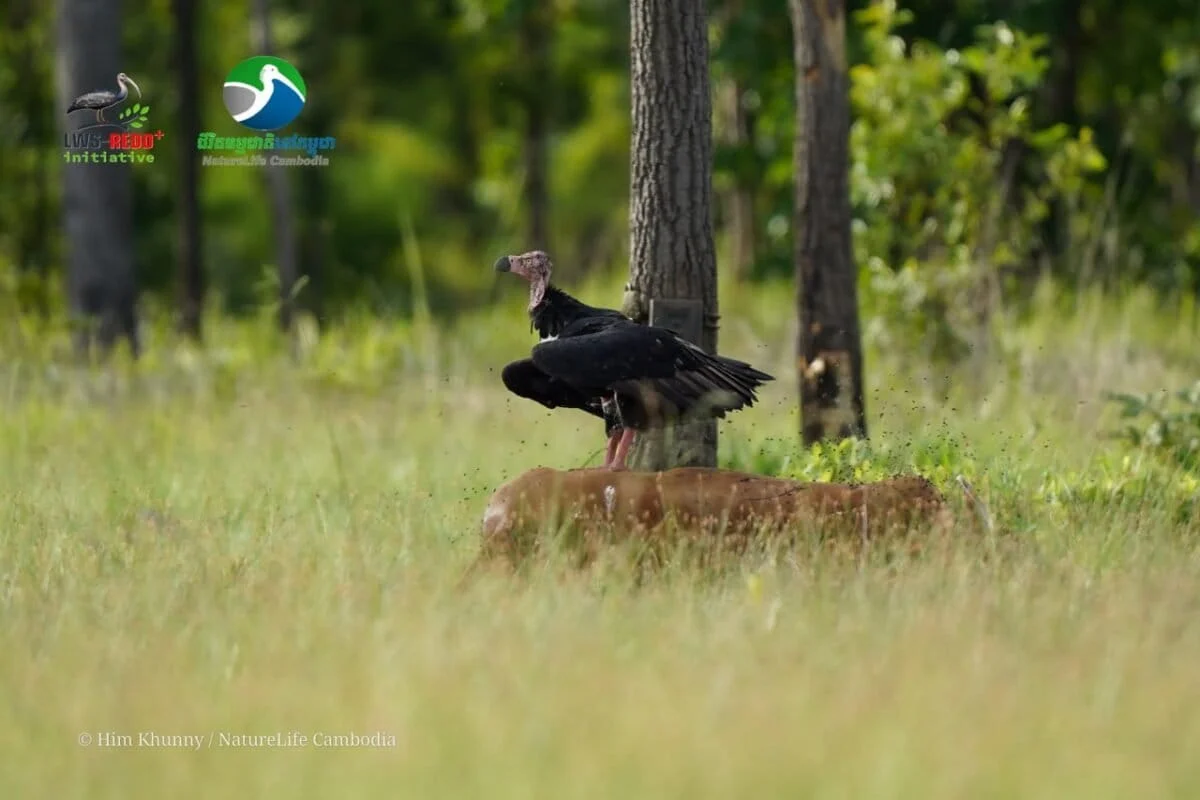
The white-rumped vulture was identified at a supplementary feeding station, colloquially known as a "vulture restaurant," which is strategically managed to provide safe, toxin-free carcasses for these birds. This sighting was accompanied by the confirmation of five red-headed vultures (Sarcogyps calvus), including two juveniles. The presence of young red-headed vultures is particularly encouraging for ornithologists, as it serves as empirical evidence of successful breeding within the sanctuary’s borders. However, the joy surrounding these biological victories is tempered by the reality of a landscape undergoing rapid industrial transformation.
The Biological Significance of the White-Rumped Vulture
The white-rumped vulture was once one of the most populous large birds of prey in the world. However, the species suffered a catastrophic population collapse across South Asia beginning in the 1990s, primarily due to the veterinary use of diclofenac, a non-steroidal anti-inflammatory drug used in cattle that is lethal to vultures who consume the carcasses. While Cambodia’s vulture populations were largely spared from the diclofenac crisis, they have faced different, equally pressing threats: habitat loss, the depletion of wild ungulate populations, and intentional or accidental poisoning from agricultural chemicals.
Lomphat Wildlife Sanctuary, spanning approximately 356,087 hectares across the Ratanakiri and Mondulkiri provinces, represents one of the last bastions for these birds. The sanctuary’s open deciduous dipterocarp forests provide the ideal nesting and foraging grounds for vultures. The return of the white-rumped vulture after a ten-year absence suggests that the "vulture restaurant" program—which provides a reliable, monitored food source—is successfully drawing individuals back to historical ranges. Bou Vorsak, CEO of NatureLife Cambodia, noted that this return is a testament to the efficacy of habitat management and the stabilization of food security for the species.
Industrial Encroachment and the Erosion of Protected Zones
Despite the sanctuary’s status as a protected area, the integrity of its borders is increasingly compromised by industrial interests. A central point of contention is the Veal Kambor Community Protected Area (CPA). CPAs are designed to empower local residents by granting them management rights over forest resources for a duration of 15 years, fostering a symbiotic relationship between human livelihoods and conservation.
However, reports and satellite imagery indicate that this balance is being systematically dismantled. Since 2020, the Cambodian government has issued at least five mining concessions within or adjacent to these community-protected zones. One notable actor, CHHC Investment Co., has been identified as continuing marble quarrying operations within conservation areas. Disturbingly, reports suggest that the licenses for these activities may have expired as early as 2022, yet the environmental degradation persists.
For the local communities, the impact is both economic and cultural. Residents have reported the loss of fallow rice fields and restricted access to non-timber forest products, which are essential for their subsistence. Compensation for these losses has been described as negligible or non-existent, leading to a sense of disenfranchisement among those who were promised a role in the sanctuary’s stewardship.
The Lower Srepok 3 Hydropower Project: A Looming Crisis
While mining poses a localized threat, the proposed 376-megawatt Lower Srepok 3 hydropower dam represents a systemic danger to the sanctuary’s core ecology. If the project moves forward as planned, the resulting reservoir is expected to flood a significant portion of the sanctuary’s core zone.
The inundation would not only submerge the Veal Kambor CPA but also threaten the viability of a high-profile REDD+ (Reducing Emissions from Deforestation and Forest Degradation) project. REDD+ is an international framework that allows developing nations to receive financial incentives for maintaining forest cover and sequestering carbon. By flooding areas protected under this scheme, the hydropower project creates a direct conflict between Cambodia’s renewable energy goals and its international climate commitments.

The ecological fallout of the dam would be profound. The Srepok River is a vital artery for the sanctuary, and its seasonal flooding cycles maintain the wetlands that many species, including the white-rumped vulture, depend on. The loss of lowland forest to a reservoir would permanently destroy nesting sites and disrupt the food chain, potentially driving the newly returned vultures back into extinction within the region.
A History of Land Concessions and Habitat Fragmentation
The current threats from mining and dams are part of a longer trajectory of land exploitation within Lomphat. In the 2010s, the sanctuary was the site of several Economic Land Concessions (ELCs). The government awarded at least six concessions totaling more than 47,500 hectares to various companies for the development of rubber and palm oil plantations.
These concessions led to the fragmentation of what was once a continuous forest block. Habitat fragmentation is particularly detrimental to large-ranging species like vultures, which require vast, undisturbed landscapes to forage. The transition from diverse natural forests to monoculture plantations has significantly reduced the availability of wild prey and nesting trees, making the remaining core zones of the sanctuary even more critical for the survival of the "Big Three" vulture species (white-rumped, slender-billed, and red-headed).
The Conflict of Interest: Development vs. Conservation
The situation in Lomphat highlights a broader tension within Cambodia’s national strategy. On one hand, the Ministry of Environment is tasked with expanding protected areas and promoting eco-tourism and carbon credit sales. On the other hand, the Ministry of Mines and Energy, along with the Council for the Development of Cambodia, continues to prioritize heavy infrastructure and extractive industries as drivers of economic growth.
The "vulture restaurants" operated by NatureLife Cambodia and other partners are a localized solution to a global problem. They provide a "clean" food source in an environment where natural carcasses are increasingly scarce or contaminated. However, these efforts are secondary to the need for large-scale habitat preservation. If the core zone of Lomphat is compromised by the Srepok 3 dam, no amount of supplementary feeding will be able to sustain a viable population of vultures in the long term.
Analysis of Implications and Future Outlook
The return of the white-rumped vulture should be viewed as an indicator of ecological potential. It proves that if given a reprieve from human interference, even the most critically endangered species can reclaim their former habitats. However, the timing of this return serves as a stark warning. The sanctuary is at a crossroads where the decisions made in the next 24 to 48 months regarding the Lower Srepok 3 dam and mining renewals will determine the fate of the region’s biodiversity.
From a policy perspective, the encroachment on the REDD+ project areas poses a reputational risk for Cambodia in the global carbon market. If investors perceive that protected "carbon sinks" can be arbitrarily flooded for hydropower, the value and credibility of Cambodian carbon credits may plummet, drying up a potential source of sustainable revenue that could have funded conservation indefinitely.
Furthermore, the displacement of thousands of families due to the dam project introduces a social dimension to the environmental crisis. The loss of community-protected areas undermines the trust between the state and its rural citizens, making future conservation initiatives harder to implement.
In conclusion, the white-rumped vulture’s return to Lomphat Wildlife Sanctuary is a fragile victory. It is a reminder of the resilience of nature and the effectiveness of dedicated conservationists. Yet, as marble is quarried and rivers are dammed, the shadow of industrialization looms large over the sanctuary. For the white-rumped vulture to truly thrive, the sanctuary must be more than a line on a map; it must be a landscape where the laws of conservation take precedence over the demands of extraction. The world is watching to see if Cambodia will prioritize its unique natural heritage or sacrifice it for short-term industrial gains.