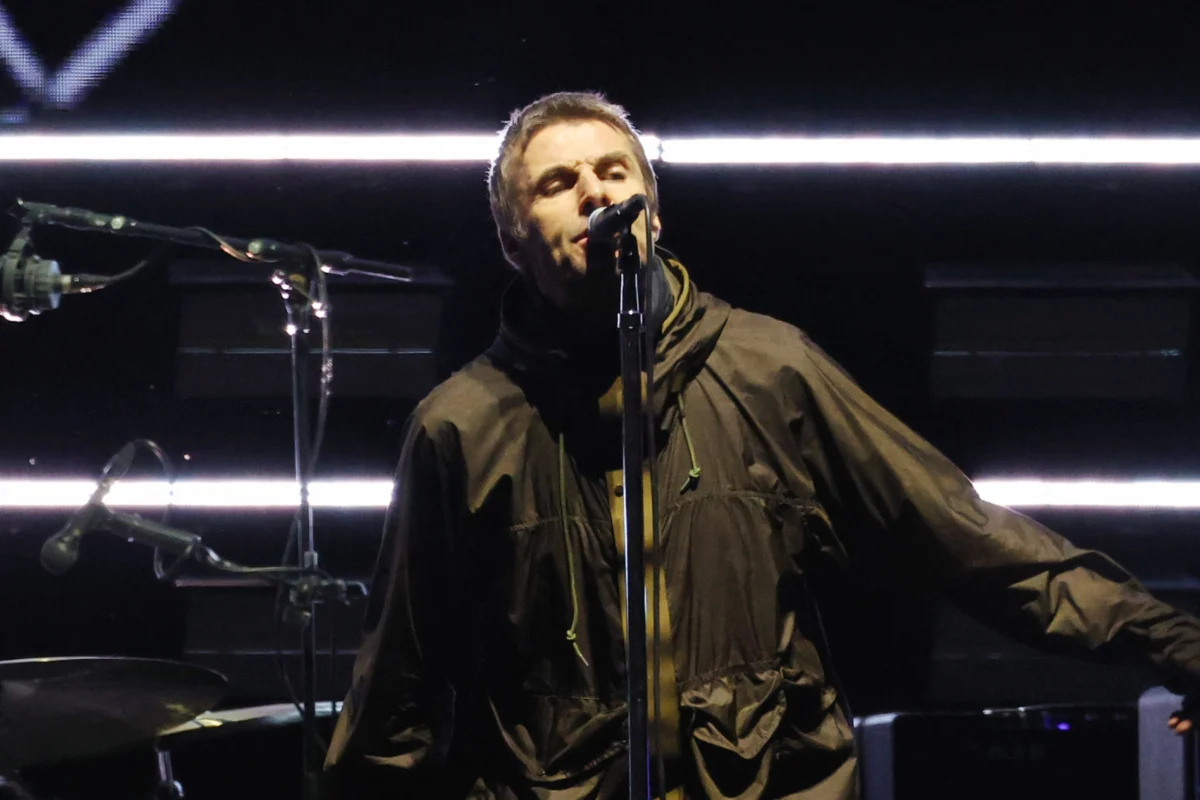
The crescendo of the FIFA World Cup final, a match pitting the titans of Spain and Argentina against each other, was punctuated by a halftime spectacle that aimed to captivate a global audience. However, for Oasis frontman Liam Gallagher, the elaborate performance featuring a constellation of music and entertainment icons devolved into a disorienting and unwelcome experience. Gallagher, a vocal supporter of the England national team throughout the tournament, did not mince words on social media, describing the halftime show as akin to a "bad trip" and suggesting it was a near-disaster for his own mental equilibrium. The performances, which included global superstars Madonna, Justin Bieber, Shakira, and the K-Pop sensation BTS, along with Nigerian artist Burna Boy, conductor Gustavo Dudamel, and even the beloved Muppets, failed to resonate with the outspoken rock star.
The halftime show, a highly anticipated segment designed to entertain millions of viewers worldwide and serve as a grand interlude in the high-stakes sporting drama, commenced with a dramatic entrance by pop icon Madonna. Riding through the subterranean passages of New York New Jersey Stadium in a golf cart, reportedly chauffeured by Brazilian football legends Ronaldo and Ronaldinho, Madonna delivered a medley of her hits. She performed a reimagined version of her 2000 chart-topper "Music" and her recent single "Danceteria," a track from her latest release, Confessions II. The performance was designed to blend the queen of pop’s enduring legacy with contemporary flair, a common strategy for such high-profile global events. However, the fusion of elements, from musical acts to unexpected guest appearances, proved to be a point of contention for some observers, including Gallagher.
The eclectic lineup continued with a brief but impactful cameo from BTS, who offered a snippet of their global hit "Dynamite." This segment was followed by a thematic interlude inspired by the popular television series "Ted Lasso." Actor Jason Sudeikis, reprising his role as the optimistic American football coach, appeared on the pitch alongside his loyal assistant Coach Beard (Brendan Hunt). Their purpose was to deliver a motivational pep talk to pop sensation Justin Bieber. Bieber then took center stage to perform his song "Everything Hallelujah," a moment intended to inject a more introspective and perhaps spiritual tone into the proceedings. The inclusion of fictional characters in a real-world sporting event underscored the production’s ambitious, and for some, perplexing, creative choices.
Further diversifying the halftime entertainment, Shakira and Burna Boy collaborated on a performance of their track "Dai Dai." Adding a unique educational and community element, the PS 22 Chorus, a choir composed of fourth and fifth graders from a Staten Island public elementary school, performed a song titled "We Dance." This song was reportedly written by Coldplay frontman Chris Martin, who also made an appearance to join the young performers. The inclusion of children’s choirs in major international events often aims to promote a message of unity and hope, but in the context of Gallagher’s critique, even these earnest contributions were swept up in his overall dissatisfaction.
Gallagher’s sharp critique on the social media platform X (formerly Twitter) highlighted his visceral reaction. He posted, "This is like a bad trip. It’s a good job I’ve got my spiritual socks on or that halftime entertainment could have tipped me over the edge." The comment, accompanied by a screenshot of his post, went viral among his followers and ignited a wider conversation about the nature of halftime entertainment at major sporting events. The reference to "spiritual socks" suggests a need for a protective buffer against what he perceived as an overwhelming or unsettling sensory experience.
Background: The World Cup Halftime Show and its Evolution
The halftime show at the FIFA World Cup final is a tradition that has evolved significantly over the decades. Initially a more subdued affair, often featuring marching bands and local cultural performances, it has transformed into a global stage for some of the world’s biggest musical artists. The objective is multifaceted: to entertain a massive, diverse, and geographically dispersed audience, to generate significant media buzz, and to create a memorable moment that transcends the sport itself. Historically, artists like Shakira, Jennifer Lopez, and even the Black Eyed Peas have graced the World Cup halftime stage, showcasing a blend of popular music genres. However, the scale and ambition of these productions have grown, often incorporating elaborate staging, guest appearances, and thematic elements, as seen in this year’s event. The inclusion of K-Pop, Afrobeats, and Hollywood figures alongside established pop royalty reflects a strategy to appeal to a broader demographic and leverage the global reach of these cultural phenomena. The financial investment in these shows is substantial, with organizers aiming for a return in terms of viewership engagement and brand association.
Chronology of the Halftime Spectacle
The halftime show at the FIFA World Cup final unfolded in a carefully orchestrated sequence:
- Opening Act: Madonna kicked off the proceedings with her energetic performances of "Music" and "Danceteria." The visual of her journey through the stadium’s tunnels added a theatrical element.
- K-Pop Interlude: A brief but impactful appearance by BTS, performing a snippet of "Dynamite," captured the attention of their vast global fanbase.
- Hollywood Crossover: Jason Sudeikis and Brendan Hunt, in character as Ted Lasso and Coach Beard, delivered a motivational segment aimed at Justin Bieber.
- Pop Performance: Justin Bieber followed with his rendition of "Everything Hallelujah," a more contemporary and personal performance.
- Global Collaboration: Shakira and Burna Boy joined forces for "Dai Dai," showcasing a blend of Latin pop and Afrobeats.
- Youthful Harmony: The PS 22 Chorus, accompanied by Chris Martin of Coldplay, presented their song "We Dance," offering a message of unity.
- Concluding Elements: The show likely concluded with a collective finale or a transition back to the football match, though specific details of the closing moments were not elaborated upon in the initial report.
Liam Gallagher’s World Cup Connection and Previous Statements
Liam Gallagher’s strong opinions on football, particularly concerning the England national team, are well-documented. His connection to the sport runs deep, with Oasis’s iconic anthem "Wonderwall" having become an unofficial anthem for England during previous tournaments, a phenomenon he actively embraced and promoted. Leading up to the final, Gallagher had expressed his fervent support for England, writing, "Cmon England cmon Wonderwall," in anticipation of their match against Spain. The eventual loss of England in the semi-finals, which paved the way for Argentina to face Spain in the final, likely contributed to his heightened emotional state and perhaps his critical outlook on the surrounding fanfare.
His commentary on the halftime show is consistent with his often blunt and unvarnished public persona. Gallagher is known for his outspoken nature, frequently sharing his thoughts on music, culture, and current events with a distinct lack of filter. His critique of the halftime show, therefore, is not entirely surprising to those familiar with his public discourse. It reflects a preference for raw authenticity over polished, multi-artist productions, a sentiment that resonates with a segment of his fanbase who appreciate his no-nonsense approach.
Analysis of the Halftime Show’s Artistic and Commercial Intent
The lineup for the FIFA World Cup halftime show suggests a strategic effort to appeal to a broad spectrum of global demographics and musical tastes. The inclusion of Madonna represents legacy pop appeal, while BTS taps into the immense power of the K-Pop phenomenon and its dedicated international following. Shakira and Burna Boy bring in Latin American and Afrobeats audiences, respectively, reflecting the increasing global influence of these genres. Justin Bieber remains a significant force in contemporary pop music, and the unexpected inclusion of characters from "Ted Lasso" points to a desire to cross-promote popular culture and inject humor and narrative into the event. The participation of a children’s choir, with a song penned by a prominent rock figure, adds an element of aspirational messaging about unity and the future.
From a commercial standpoint, such a star-studded event serves as a massive advertising platform. The artists involved leverage the global exposure to promote their music, tours, and associated merchandise. FIFA and its sponsors benefit from the unparalleled viewership, generating revenue through advertising and brand partnerships. The diverse lineup can be seen as an attempt to maximize engagement across various cultural and age groups, ensuring that the event remains relevant and captivating to a worldwide audience. However, as Liam Gallagher’s reaction illustrates, the very ambition to please everyone can sometimes lead to a disjointed or overwhelming experience for some viewers, particularly those with more specific or traditional tastes.
Broader Impact and Fan Reactions
While Liam Gallagher’s comments provided a notable dissenting voice, the overall reaction to the halftime show was varied. Millions of viewers likely found elements of the performance to be entertaining and celebratory, aligning with the event’s objectives. Social media platforms were abuzz with discussions, memes, and reactions, reflecting the diverse opinions on the artistic choices made. For many fans of the featured artists, their brief appearances were highlights, allowing them to engage with their favorite performers on a global stage.
The juxtaposition of a high-energy, multi-artist performance with the intense pressure of a World Cup final can create a unique dynamic. Some viewers appreciate the spectacle as a welcome diversion, while others, like Gallagher, may find it detracts from the sporting drama. The inclusion of elements like the Muppets and fictional characters also sparks debate about the appropriate tone and content for such a significant global event. The controversy, however small, highlights the subjective nature of entertainment and the challenge of creating a universally acclaimed spectacle.
Upcoming Releases and Future Implications
Coinciding with this period of high-profile sporting events, Oasis is set to release Don’t Look Back in Anger, a documentary that delves into the complex relationship and potential reunion of the Gallagher brothers. The film, produced by Steven Knight of "Peaky Blinders" fame, is slated for an IMAX and cinema release before becoming available on streaming platforms. This documentary’s release date in September further places the Gallagher brothers in the public consciousness, making Liam’s outspoken commentary on unrelated cultural events particularly noteworthy. His continued engagement with public discourse, whether through music or social media, reinforces his status as a significant cultural commentator. The success and reception of the Oasis documentary could also shed light on the enduring appeal of the band and the dynamics that have shaped Liam and Noel Gallagher’s careers, potentially influencing how their past and future endeavors are perceived.
The FIFA World Cup halftime show, in its continuous effort to innovate and expand its reach, often treads a fine line between groundbreaking entertainment and potential overreach. The diverse array of talent, from pop royalty to emerging global stars and even beloved children’s characters, underscores a commitment to reflecting the multifaceted nature of contemporary culture. Yet, as Liam Gallagher’s pointed critique demonstrates, the pursuit of a universally appealing spectacle can sometimes alienate those who prefer a more focused or traditional approach. The lingering question for future events remains: how can these halftime shows continue to evolve and captivate a global audience without sacrificing artistic coherence or alienating segments of their viewership? The answer likely lies in a delicate balance between celebrating diverse artistic expressions and maintaining a clear, resonant message that complements, rather than competes with, the sporting drama unfolding on the field.