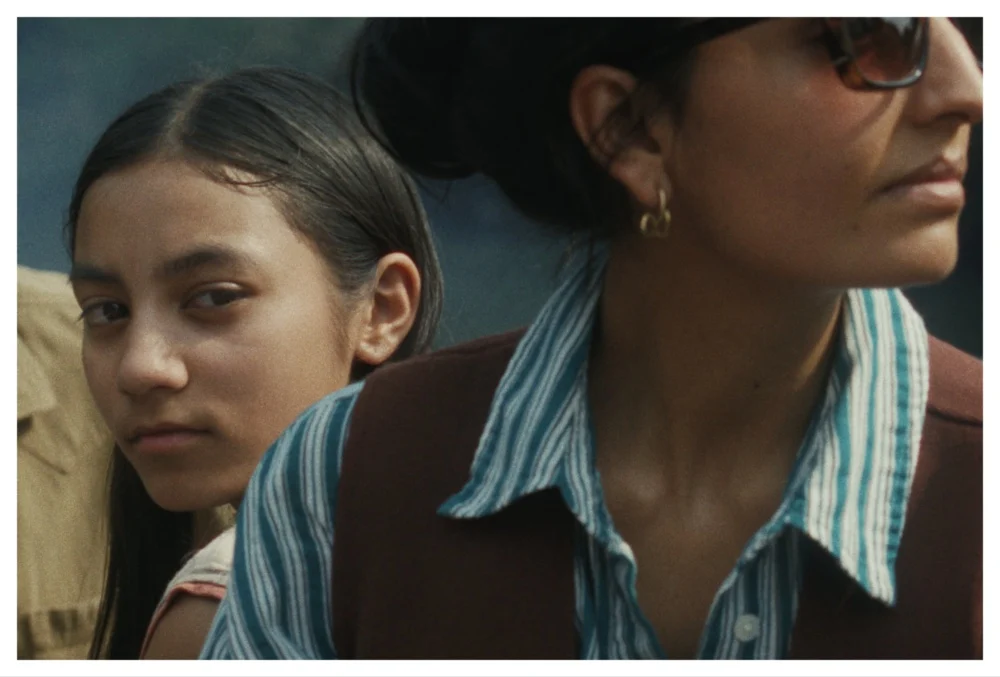
The Venice Film Festival’s prestigious Critics’ Week, a vibrant platform dedicated to showcasing groundbreaking first-time directorial efforts from around the globe, has unveiled its compelling lineup for its upcoming edition. Among the standout selections, London-based Chilean-Indian director Shalini Adnani’s debut feature, "Our Share of Sand," is poised to captivate audiences with its poignant narrative of a 12-year-old girl named Maya’s journey back to rural India to mend ties with her estranged father. This deeply personal story is set to compete for critical acclaim within this esteemed section of the festival.
The Critics’ Week, known for its keen eye on emerging cinematic talent, presents a diverse array of films that push creative boundaries and explore pressing global themes. This year’s selection is no exception, offering a rich tapestry of stories from various continents, each helmed by a director making their feature-length debut. The section, a vital incubator for new voices in cinema, is scheduled to run concurrently with the main Venice Film Festival, from September 2nd to September 12th, 2023. The 83rd edition of the Venice International Film Festival, one of the world’s oldest and most influential cinematic gatherings, provides a crucial international stage for these nascent cinematic endeavors.
A Global Showcase of Debut Filmmaking
This year’s Venice Critics’ Week competition is a testament to the burgeoning talent pool across the international film landscape. The seven features vying for attention are all world premieres, underscoring the section’s commitment to unveiling fresh perspectives and innovative storytelling.
Colombia makes a significant presence with two distinct entries. "The End of Times," a bold fiction-documentary hybrid, is a politically charged work co-directed by Bibiana Rojas Gómez and Juan David Cárdenas. This film leverages artificial intelligence to delve into the complex historical legacies of colonialism and capitalism within Colombia’s past. Following closely is Sebastián Múnera’s drama, "Meteorite." This narrative explores the controversial plans to construct an amusement park on the former estate of notorious drug lord Pablo Escobar, raising questions about memory, legacy, and the repurposing of historical sites. The inclusion of these two Colombian films highlights the region’s growing impact on the international arthouse cinema circuit.
Italy, a nation with a storied cinematic heritage, also features prominently. Tommaso Usberti, based in Paris, presents "Before the War" (original title "Prima Della Guerra"). This film, set within a competition slot, centers on Guido, a young man raised in a Northern Italian milieu marked by racism, whose life takes an unexpected turn when he falls in love with Sonia, a Kosovar immigrant. The film promises a nuanced exploration of prejudice, love, and societal divisions.
Opening and Closing the Festival with Distinctive Flavors
Beyond the competitive slate, Venice Critics’ Week will open with the existential noir "Giaffa the Great" (original title "Il Grande Giaffa"), directed by Marco Santi. This Italian production, presented out of competition, sets a contemplative tone for the festival’s opening. The closing film, also out of competition, is the Italian rap musical "Rider," co-directed by Roan Johnson and the acclaimed local music producer Dade (Davide Pavanello). "Rider" follows the journey of a young food delivery driver whose mundane evening takes an extraordinary turn when he delivers a substantial sushi order to a lavish villa on the outskirts of Milan, leading to an unexpected invitation to stay for the night. This eclectic choice for the closing ceremony signals the section’s embrace of diverse genres and contemporary cultural expressions.
Diverse Narratives and Societal Reflections
The competitive lineup further expands to include a range of compelling narratives. Kamel Laaridhi’s Tunisian dystopian drama, "The H@llow Man," transports viewers to the year 2059, where a biochip meticulously regulates memory and suppresses emotion, offering a chilling glimpse into a technologically controlled future. From China, Dong Jie’s drama "Zoom In, Zoom Out" follows a young video game designer on a quest to find his missing roommate, Gao, after discovering a cryptic clue hidden within an online game. This film speaks to the interconnectedness of digital and physical realities in contemporary life. Finally, the Brazilian drama "London," by Victor Di Marco and Márcio Picoli, tackles the complex dilemma faced by a young adult with a disability, promising a sensitive and insightful portrayal of individual challenges and resilience.
The inclusion of these films signifies a commitment to showcasing stories that are both globally relevant and deeply personal. From exploring the impact of technology and societal structures to examining themes of identity, prejudice, and human connection, the selected films collectively reflect the current anxieties and aspirations of a world in flux.
The Lion of the Future: A Prize for Emerging Talent
All films competing in Venice Critics’ Week will also be eligible for the prestigious Lion of the Future award. This significant prize, worth $100,000, is awarded to the best first feature film presented across all sections of the Venice Film Festival. The inclusion of Critics’ Week entries in this competition underscores the festival’s dedication to fostering and recognizing new cinematic talent on a grand scale. The Lion of the Future has historically served as a launchpad for many acclaimed directors, solidifying its role as a crucial endorsement of emerging filmmakers.
A Statement of Cinematic Vitality
Beatrice Fiorentino, General Delegate of Venice Critics’ Week, articulated the significance of this year’s selection in a statement, asserting that "Whilst the industry at large is grappling with its crises, these works are proof that cinema never stopped asserting its own cruciality." She further emphasized the nature of the films presented, describing them as "fierce and independent, daring and vibrant, resolute in its reminder that our collective imagination can, and indeed must, continue to be rewritten." This statement resonates with the broader context of the film industry, which has faced numerous challenges in recent years, from evolving distribution models to the impact of global events. The Venice Critics’ Week lineup, in this light, represents a powerful assertion of cinema’s enduring relevance and its capacity for reinvention.
The festival itself, running from September 2nd to September 12th, 2023, is a cornerstone of the international film calendar. Its rigorous selection process, particularly for a dedicated section like Critics’ Week, ensures that only the most promising and artistically significant debut films are presented to a global audience of critics, industry professionals, and cinephiles. The official selection lineup for the main festival is slated for announcement shortly, promising further cinematic discoveries.
Contextualizing the Venice Film Festival and Critics’ Week
The Venice Film Festival, established in 1932, is not merely a showcase for films but a vital hub for the global film industry. It serves as a platform for major premieres, a marketplace for acquisitions, and a forum for discussions about the future of cinema. The Critics’ Week (Settimana Internazionale della Critica) is an independent parallel section of the festival, initiated in 1984 by the National Union of Italian Film Critics (SNCCI). Its primary objective is to champion and promote emerging filmmakers by presenting their first feature-length films in a competitive and supportive environment. The section’s focus on debut works ensures that it acts as a crucial bellwether for the future direction of international cinema.
The historical significance of Venice Film Festival can be traced back to its role in fostering artistic exchange and promoting cinema as an art form. Its various sections, including the main competition, Un Certain Regard, and the parallel sections like Critics’ Week, offer a comprehensive overview of contemporary filmmaking trends and artistic explorations. The Critics’ Week, in particular, has a strong track record of launching the careers of directors who have gone on to achieve international acclaim. By providing a dedicated space for first-time directors, it allows their unique visions to be discovered and celebrated without the immediate pressure of established commercial expectations.
The selection process for Venice Critics’ Week is highly competitive. Films are typically submitted by production companies, distributors, or directly by filmmakers, and a curated committee of critics reviews hundreds of submissions. The emphasis is on artistic merit, originality of vision, and the potential for these debut films to leave a lasting impact. The fact that all seven competing films are world premieres signifies the section’s role in premiering new cinematic voices on a global stage, often before they gain wider international recognition.
Supporting Data and Industry Trends
The global film industry, while experiencing shifts, continues to invest in and discover new talent. Data from industry reports consistently highlights the importance of festivals like Venice for emerging filmmakers. For instance, the European Audiovisual Observatory often reports on the diversity of co-productions and the increasing international reach of European cinema. The presence of films from Colombia, Tunisia, China, and Brazil alongside European productions in the Critics’ Week lineup reflects this growing global interconnectedness in filmmaking. The rise of streaming platforms has also changed the landscape, making festival premieres even more critical for films seeking distribution and audience engagement. Venice, as one of the "Big Three" European film festivals (alongside Cannes and Berlin), retains its power to generate significant buzz and secure distribution deals.
The thematic concerns addressed by the films in this year’s Critics’ Week – artificial intelligence, colonialism, environmental concerns, social divisions, and personal identity – are not only contemporary but also indicative of broader societal dialogues that filmmakers are keen to explore. The use of innovative techniques, such as AI in "The End of Times," further underscores the evolving nature of filmmaking and the willingness of new directors to experiment with technology to tell their stories.
Analysis of Implications
The inclusion of these diverse and thematically rich films in Venice Critics’ Week carries several implications. Firstly, it signals a continued commitment by major film festivals to provide a platform for independent and debut filmmakers, ensuring that a wider range of stories and perspectives can reach international audiences. Secondly, the thematic breadth of the selected films suggests that contemporary cinema is actively engaging with pressing global issues, using artistic expression as a means of commentary and reflection. The fact that these are all first-time features means that audiences are being introduced to entirely new creative voices, whose future work will be closely watched.
The competitive nature of the Critics’ Week, coupled with eligibility for the Lion of the Future, provides significant impetus for these emerging directors. Winning or even being nominated for such awards can lead to increased distribution opportunities, critical acclaim, and the potential for securing funding for future projects. This support is crucial for independent filmmakers navigating a challenging industry.
Furthermore, the inclusion of films that address complex historical and social issues, such as colonialism in Colombia or racism in Italy, highlights cinema’s enduring role as a tool for social commentary and historical re-examination. These films are not just entertainment; they are invitations to engage with difficult truths and to foster a deeper understanding of diverse cultural contexts. The Venice Film Festival, through its Critics’ Week, continues to champion cinema that is not only artistically innovative but also socially conscious and intellectually stimulating. The curated selection this year promises a rich and thought-provoking cinematic experience for all attendees.