The night sky, a canvas of celestial wonder that has inspired humanity for millennia, faces an unprecedented threat from an escalating surge of private satellite ventures. Astronomers are sounding the alarm, warning that ambitious plans to launch hundreds of thousands, potentially millions, of satellites for data centers and solar power reflection could irrevocably alter the view of the cosmos, creating an artificial "Saturn’s ring" that would outshine every star and planet.
The Looming "Saturn’s Ring"
The core of the concern lies in the proposed orbital data center constellations and vast arrays of space mirrors. To maintain constant solar power and connectivity, these satellites are designed to orbit Earth along the terminator line – the dynamic boundary between day and night. This specific orbital path means they would primarily traverse the polar regions, stacking above each other in a densely packed plane.
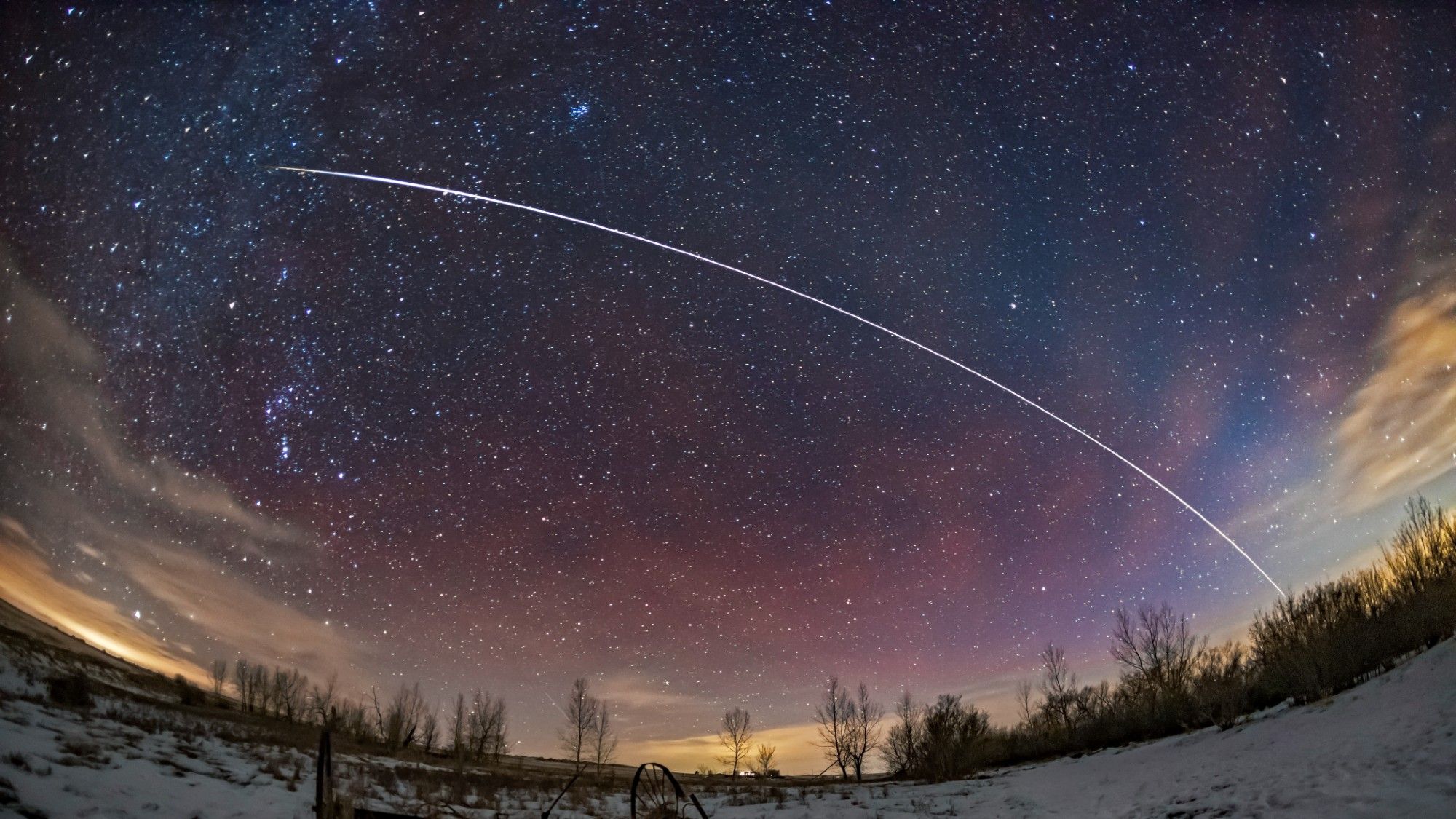
Professor Hugh Lewis, an astronautics expert at the University of Birmingham in the UK, articulated the severity of this planned orbital architecture. "The only way to accommodate the high number of data center constellations that have been proposed is to stack them above another in orbit above the boundary between day and night," Lewis explained to Space.com. This concentration of artificial objects would create a luminous band across the sky, a veritable "Saturn’s Ring" of satellites, projected to be significantly brighter than any celestial body currently visible to the naked eye, including the full moon.
"If you were to look up at night, they would be all in one plane, really close together, going in the same direction," Lewis emphasized. "The impact on the night sky would be absolutely catastrophic."
This projection paints a stark future for stargazing. The serene, star-filled expanse, a source of scientific discovery and profound contemplation, could be replaced by a persistent, artificial glow, diminishing the visibility of galaxies, nebulae, and the very constellations that have guided navigators and fueled myths since the dawn of human consciousness.
A Rapidly Accelerating Orbit of Ambition
What was once a science fiction trope has rapidly materialized into a tangible possibility over the past year, driven by what experts are calling an "orbital data center frenzy." Numerous private entities have submitted applications to the U.S. Federal Communications Commission (FCC) for licenses to deploy massive satellite networks.
Leading this charge are companies like SpaceX, Starcloud, Cowboy Space, Orbital, and Blue Origin, collectively seeking approval for over a million data center satellites. This ambition is not confined to the United States; China has also announced its intention to develop a space-based data center network within the next five years, indicating a global race to establish a significant orbital presence.
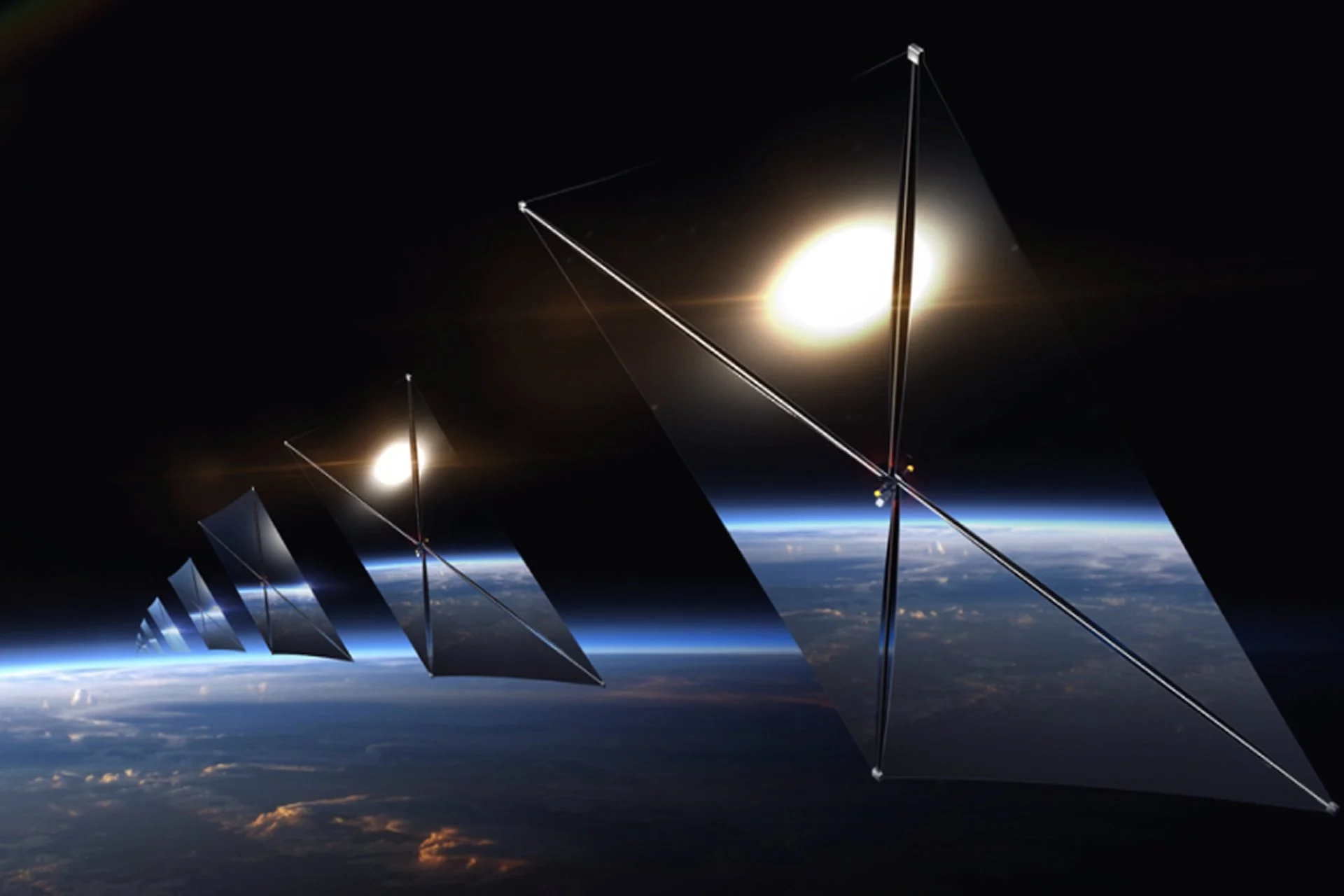
Adding another layer to this orbital congestion are proposed solar power reflection projects. Reflect Orbital, a California-based company, has plans to launch 50,000 orbiting mirrors into space. These mirrors are designed to reflect sunlight to terrestrial solar power plants after dusk, effectively extending their operational hours. Reflect Orbital recently received its license from the FCC to deploy the first of these mirrors, a 60-by-60-foot (18-by-18 meter) demonstration satellite named Earendil-1, with a launch anticipated by the end of the current year.
The Science Behind the Shadow
The necessity for these satellites to occupy a specific orbital plane is rooted in their functional requirements. Both orbital data centers and Reflect Orbital’s proposed mirrors rely on continuous sunlight for their operations. To achieve this, they must orbit Earth in a way that consistently follows the dawn-dusk line, traversing the planet’s poles.
"Orbital data centers and Reflect Orbital all tend to rely upon what these operators call 24 hours of sunlight in space," Lewis elaborated. "To have that, you have to be in a particular orbit, which follows the dawn-dusk line. It’s not like the Starlink megaconstellation, which is distributed around the Earth." This fundamental difference in orbital strategy is what leads to the predicted "ring" effect, as opposed to a more dispersed satellite presence.
Samantha Lawler, an astronomer at the University of Regina in Saskatchewan, Canada, has been actively involved in modeling the potential impact of these constellations. Her research, along with that of her colleagues, has utilized computer simulations to visualize the effects of proposed fleets, including SpaceX’s Starmind, Blue Origin’s Project Sunrise, and Cowboy Space’s Stampede constellation.
Visualizing the Catastrophe
The visualizations generated by Lawler’s team paint a concerning picture. Satellites visible from Earth’s surface are not only projected to outshine individual stars but to outnumber them significantly. As the Earth rotates beneath this terminator orbit, the "Saturn’s ring" of satellites would sweep across the sky twice daily: once in the early evening, typically between 6 and 8 p.m., and again just before dawn.
"The ring would pass overhead at the same time every night," Lawler stated. "That means its effect would be worse during winter time than the summer time." This consistent passage during peak viewing hours exacerbates the potential for light pollution.
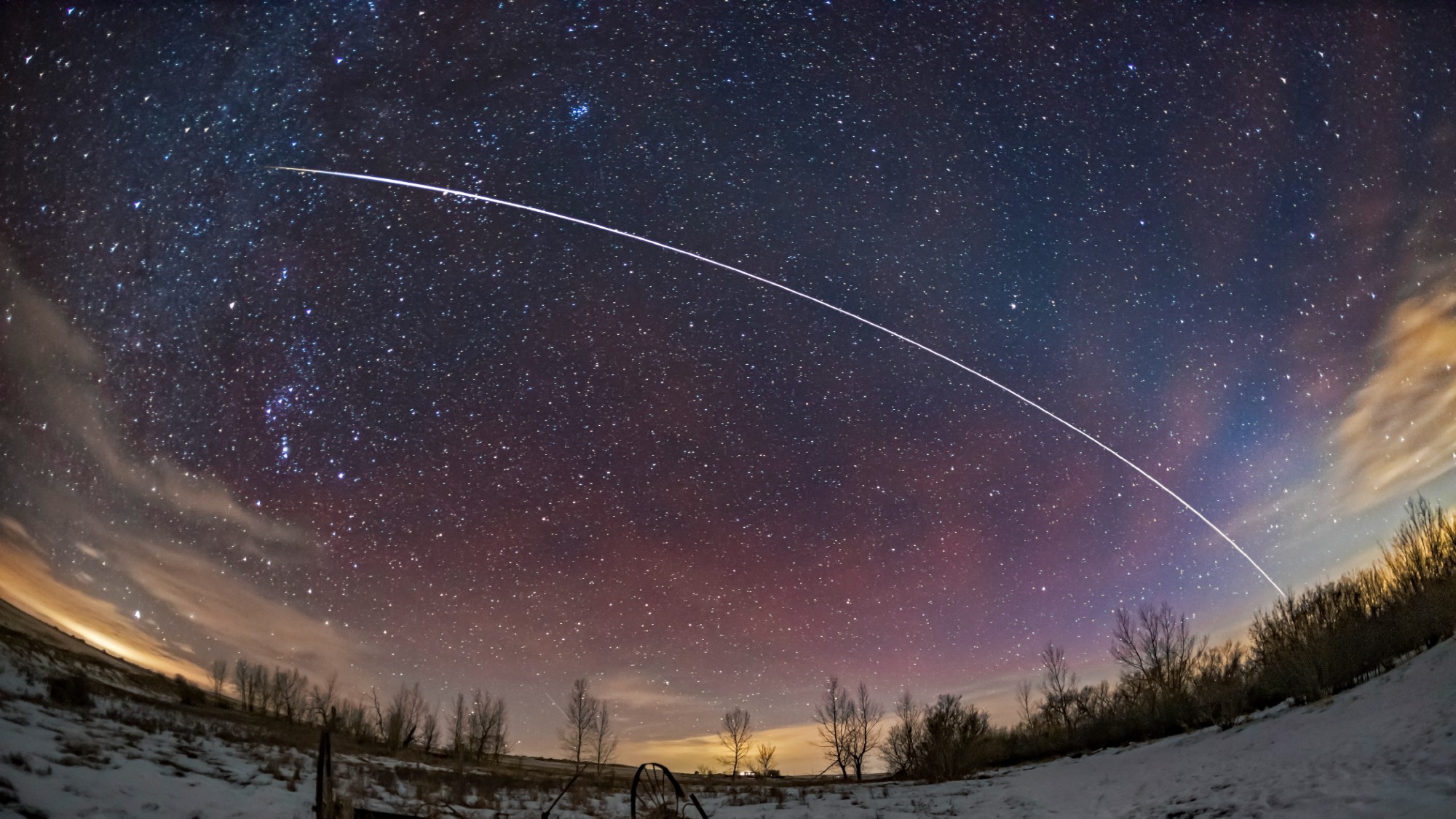
While Lawler cautions that these visualizations are based on publicly available data and have not yet undergone peer review, the implications are profound. The scattered light from this dense ring would extend the twilight period, continuing to brighten the sky for up to two hours after the sun has set below the horizon.
"It would make our taxpayer-funded telescope time much less effective," Lawler warned. "We could do a lot less science for the same cost, and many science cases, including the search for dangerous near Earth asteroids, would be seriously compromised." The ability to detect faint objects and subtle celestial phenomena would be severely hampered, impacting critical scientific endeavors.
A Global Phenomenon with No Escape
The impact of these proposed satellite constellations would be global, with no geographical refuge from the illuminated night sky. Modeling suggests that certain constellations, particularly Blue Origin’s Project Sunrise, plan to deploy satellites in additional orbital inclinations. This strategy could create an "X" shape superimposed on the main "Saturn’s ring," further intensifying the visual disruption.
"If you were close to the equator, you would virtually have this X shape of crawling satellites come up in the sky early in the morning and after sunset," Lawler described. "Further up north, you would see this as two separate bands. One band would come up in the morning and the other would emerge as the sun sets."
The ultimate brightness of this artificial ring hinges on the precise number of satellites deployed. However, the prospect of even a fraction of the proposed deployments is alarming. Each of Reflect Orbital’s space mirrors, for instance, is projected to be at least as bright as Venus, the brightest object in the sky after the full moon. This suggests an extreme level of luminosity for the entire band.
An earlier study by the European Southern Observatory projected that a constellation of 50,000 Reflect Orbital mirrors could increase the brightness of the night sky by up to 300 percent. Such an increase would render the world’s most advanced and expensive telescopes effectively useless for their intended purpose.
John Barentine, an astronomer and advocate for dark skies, commented on the escalating situation: "Humanity has already fundamentally altered the cosmos to the point where Earth is now an artificial ‘ringed planet’ choked by satellites and space debris. But projects like Reflect Orbital will turn those mostly now invisible rings into bright reflective tracks. We aren’t talking about a just scattered field of bright, moving dots anymore." He added, "Rather, this is a permanent, artificial ‘ring of Saturn’ effect cutting right through the most critical twilight observing windows for global astronomy."
The Allure of Space-Based Infrastructure
The rationale behind these ambitious space ventures is not without merit. Data centers on Earth occupy valuable land, require immense quantities of water for cooling, place significant strain on power grids, and contribute to greenhouse gas emissions. In contrast, space offers seemingly free cooling and access to unlimited electrical power from solar sources.
Reflect Orbital, for example, envisions its mirrors providing essential services such as delivering sunlight to terrestrial solar plants after dark, thereby increasing their energy yield. They also propose offering sustainable lighting for construction sites and illuminating disaster zones to aid in search and rescue operations. A spokesperson for Reflect Orbital stated that the company is "actively commissioning independent, third-party research on the impacts of our technology" and that "every stage of our development is guided by data – testing, measuring, listening and adapting."
The Irreconcilable Conflict
Despite these stated intentions, astronomers remain largely unconvinced, asserting that the presence of such reflective satellites is fundamentally incompatible with astronomical observation. "If we have mirrors in orbit, astronomy is over," Lawler declared unequivocally.
The American Astronomical Society (AAS) has publicly voiced its strong disapproval of the FCC’s decision to grant Reflect Orbital a license for its test satellite. In a formal statement, the AAS criticized the FCC’s action, asserting that Reflect Orbital’s proposed satellite "carries the potential for significant harm to our members and the broader community of those who depend on a dark night sky." The society highlighted potential risks including damage to sensitive research telescope equipment, flash-blinding incidents for pilots and drivers, and, as admitted by Reflect Orbital itself in FCC filings, the potential for permanent eye damage to individuals viewing through mid-sized telescopes.
A Precedent and a Plea
Astronomers had previously lauded SpaceX’s efforts to mitigate the reflectivity of its Starlink satellites, which included the use of dark paint and specialized visors. However, these efforts have been largely undermined by SpaceX’s concurrent strategy of increasing the size and lowering the orbits of its satellites. While early Starlink satellites weighed around 260 kilograms (570 pounds), the latest generation now exceeds 2,000 kilograms (4,400 pounds).
"They did a lot of work to make the satellites darker, but then they also made them bigger and put them on lower orbits, and that has made them much, much brighter," Lawler observed. "You can see Starlink satellites everywhere even with the naked eye. They are very visible and they are all over the sky."
The FCC’s justification for granting Reflect Orbital’s license explicitly stated that "impacts on optical astronomy fall outside [FCC’s] review and authorization." The commission further elaborated that its rules do not encompass the protection of optical astronomy. This stance has drawn sharp criticism from astronomers, who point out that no other regulatory body in the U.S. or internationally possesses the authority to review satellite license applications for their environmental and astronomical impacts.
"The FCC is the only agency that’s regulating American satellite launches," Lawler stated, posing a critical question: "But if the FCC says that this is not their problem, then whose problem is it?"
The AAS has implored the FCC to reconsider its narrow interpretation of its mandate and to "consider all of the impacts of the satellite’s use case." The society emphasized that in the absence of another regulatory agency capable of addressing these concerns, it is incumbent upon the FCC to consider the full spectrum of impacts.
Robert Massey, Executive Director of the U.K. Royal Astronomical Society, echoed this sentiment, calling the FCC’s decision a "bad precedent" that could pave the way for the full deployment of constellations reaching 50,000 satellites within a few years. He expressed profound disappointment in the FCC’s authorization of the Reflect Orbital mission. The future of the night sky, a shared global heritage, hangs precariously in the balance as commercial ambitions continue to push the boundaries of orbital activity.