The United States military announced late Monday its tenth consecutive night of aerial strikes against targets within Iran, marking a significant escalation in a rapidly deteriorating regional conflict. These renewed bombings are explicitly aimed at compelling the reopening of the crucial Strait of Hormuz, a vital international waterway for global energy supplies. The intensified campaign follows the tragic death of another American service member and comes in the wake of Iranian-launched attacks against key American allies in the region: Kuwait, Jordan, and Bahrain, the latter hosting the U.S. Navy’s 5th Fleet.
U.S. Central Command (CENTCOM) articulated its strategic objectives via social media, stating that the latest wave of strikes "are designed to further degrade Iranian military capabilities used to attack commercial shipping" in the Strait. This declaration underscores a clear intent to dismantle Iran’s capacity to disrupt maritime trade, which has largely stalled through the Strait of Hormuz, a choke point through which approximately one-fifth of the world’s oil transits daily. The current military actions represent a stark departure from previous periods of tension, with both the U.S. and Iran inching dangerously closer to an all-out war, a prospect that has sent tremors across international capitals and global markets.
The Arc of Escalation: A Chronology of Intensifying Conflict
The current military escalation is the culmination of a series of destabilizing events that have unraveled an interim peace deal signed just last month. That agreement, intended to halt the fighting and resolve outstanding issues within 60 days, has now demonstrably crumbled, paving the way for renewed hostilities.
The recent surge in conflict gained significant momentum following a deadly attack on a U.S. outpost in Jordan, which claimed the lives of two American soldiers, later identified by the military, and left a third missing. Separately, another U.S. service member died in Iraq on Saturday during the "controlled detonation" of a downed Iranian drone, bringing the total number of U.S. service members killed since the conflict began on February 28 to 17. President Donald Trump, reacting strongly to the casualties, utilized social media to issue a stern warning: "Every time Iran kills an American Soldier they will pay for that killing many times over!" President Trump was scheduled to attend a solemn ceremony at Dover Air Force Base, where the remains of at least one fallen service member were expected to arrive, highlighting the human cost of the escalating tensions.
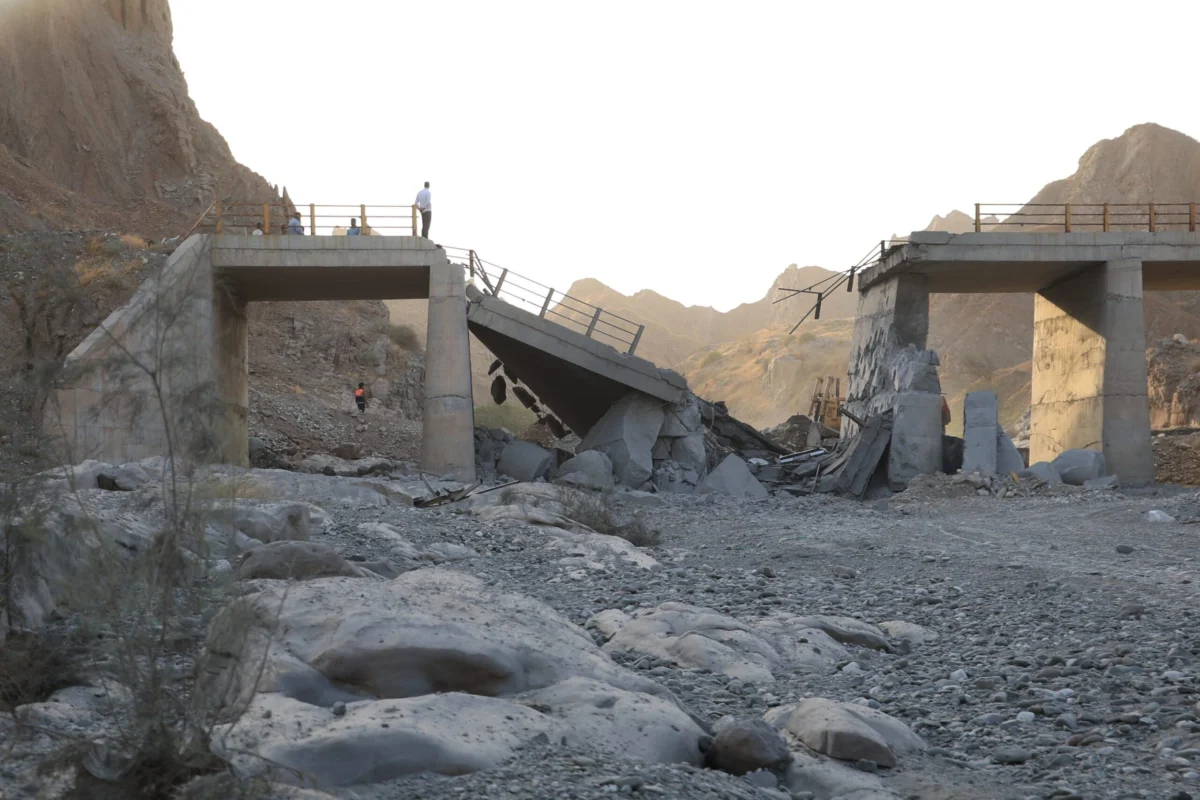
In response to the perceived Iranian provocations and direct attacks, the U.S. military has systematically targeted strategic sites across Iran. Sunday’s airstrikes, as detailed by U.S. Central Command, focused on a broad array of Iranian military infrastructure, including "Iranian military command centers, air defense and coastal surveillance sites, maritime capabilities, missile and drone launch sites and communications networks." These operations followed earlier strikes last week that reportedly hit bridges and a tower at an Iranian port, indicating a deliberate strategy to cripple Iran’s logistical and offensive capabilities.
Iranian state media, specifically the Islamic Republic News Agency (IRNA), reported that these American strikes have resulted in at least one fatality near Tabriz, a northwestern city approximately 520 kilometers (325 miles) from Tehran. Tabriz is widely believed to house critical underground missile bases operated by Iran’s paramilitary Revolutionary Guard Corps (IRGC), a powerful and influential arm of the Iranian military. IRNA also indicated that U.S. strikes likely impacted other key locations, including Bandar Imam Khomeini in Khuzestan province, Sirik and Jask in Hormozgan province, and Konarak and Chahbahar in Sistan and Baluchistan province, all strategically important coastal or industrial areas.
Beyond direct military exchanges, the conflict has manifested in increased threats to maritime navigation. The British military’s United Kingdom Maritime Trade Operations (UKMTO) center reported a second ship attack in the Strait of Hormuz on Monday evening, occurring off the coast of the United Arab Emirates. This incident followed an earlier attack on another vessel, which caught fire after being hit by a projectile near Oman’s coastline. The crew was forced to abandon the burning ship, which remained adrift and ablaze for hours. The route around Oman had previously been encouraged by the U.S. military as an alternative to avoid areas under direct Iranian control, underscoring the widening reach of the maritime threats. The IRGC later claimed responsibility for targeting tankers in the Strait, asserting its control over the vital waterway.
Iran, in turn, has not limited its actions to direct confrontations with the U.S. military or commercial shipping. Tehran has actively targeted U.S.-allied countries throughout the Middle East, further destabilizing an already volatile region. Kuwait reported its air defenses engaging an incoming barrage, while Jordan’s armed forces confirmed shooting down three Iranian missiles on Monday evening, with no reported material damage or casualties. Bahrain’s Foreign Ministry strongly condemned Iranian drone strikes that targeted the country’s air traffic systems, decrying them as a threat to civilian travel and regional stability.
The Geopolitical Chessboard: Strait of Hormuz and Red Sea at the Forefront
The Strait of Hormuz remains unequivocally central to this escalating conflict. Its strategic importance cannot be overstated, acting as the sole sea passage from the Persian Gulf to the open ocean, making it a critical chokepoint for global oil and liquefied natural gas (LNG) shipments. Approximately 21 million barrels of oil per day, representing about 21% of global petroleum liquids consumption, transited through the Strait in 2018, making any disruption here a matter of grave international concern. The current cessation of shipping through this vital artery has profound implications for global energy security and supply chains.
A new and ominous pressure point for world energy markets emerged Monday with the announcement by Yemen’s Houthi rebels, who are backed by Iran, of a maritime embargo against Saudi Arabia. The Houthis declared their intent to block shipping between the Red Sea and the Gulf of Aden. This move is presented as a response to a recent attack on Sanaa International Airport, which they attribute to Saudi Arabia.
With the Strait of Hormuz effectively blocked, Saudi Arabia has been heavily reliant on a pipeline that transports millions of barrels of oil to the Red Sea for export. The Houthi threat to this alternate route is particularly concerning given their demonstrated capability to disrupt shipping in the Red Sea. Earlier, the Houthis launched numerous attacks on vessels for months in response to the Israel-Hamas war in Gaza, targeting over 100 ships and significantly impacting maritime trade through the Bab el-Mandeb Strait, another crucial chokepoint connecting the Red Sea to the Gulf of Aden. This previous campaign showcased their ability to effectively weaponize maritime routes, posing a credible threat to Saudi oil exports and, by extension, global energy markets. As of writing, there has been no immediate official response from Saudi Arabia to this latest Houthi threat.
The U.S. stance, articulated by President Trump, has consistently threatened to target Iran’s power stations and bridges to compel Tehran to relinquish its grip on the Strait of Hormuz. Recent U.S. military actions, including strikes on infrastructure targets, suggest that the U.S. military is indeed executing components of this plan. Furthermore, the U.S. reimposed a naval blockade on Iranian ports over the past week, aimed at halting its crude oil shipments. The military claims to have redirected seven ships and disabled one since the blockade’s implementation, indicating a concerted effort to economically pressure Iran.
Economic Ripple Effects and Global Market Instability
The escalating tensions have had immediate and significant repercussions on global energy markets. Oil prices have surged in recent weeks, reflecting investor anxiety over supply disruptions. Benchmark Brent crude, a global marker, traded above $88 a barrel on Monday, a notable increase from earlier periods. This upward trend directly impacts consumers, with regular gasoline prices in the U.S. climbing to an average of $4 a gallon. This rise in fuel costs adds considerable pressure on American households, particularly ahead of the midterm elections scheduled for this fall, potentially making energy prices a key political issue.
Beyond the direct costs, the disruption of shipping through major waterways like the Strait of Hormuz and the potential threat to the Red Sea route carry broader economic implications. Global supply chains, already strained by various geopolitical events and post-pandemic recovery challenges, face further destabilization. Businesses reliant on timely and cost-effective maritime transport will experience delays, increased freight costs, and potential shortages, leading to inflationary pressures across various sectors. The uncertainty generated by the conflict deters investment and can trigger a broader economic slowdown globally, impacting everything from manufacturing to consumer goods.
A Glimmer of Hope Amidst the Darkness: Diplomatic Efforts
Despite the alarming military escalation, a faint glimmer of hope for diplomacy has appeared on the horizon. Pakistan, a nation with historical ties to both Iran and the United States, has intensified its diplomatic efforts in recent days to resuscitate the interim ceasefire agreement reached last month. This truce had aimed to establish a framework for resolving remaining issues tied to the war within a 60-day window, but its collapse underscores the deep-seated mistrust and complex grievances between the warring parties.
In a notable diplomatic move, Iranian Interior Minister Eskandar Momeni arrived in Islamabad on Monday for two days of talks with Pakistani Prime Minister Shehbaz Sharif and other senior officials. This visit highlights Pakistan’s crucial role as a potential mediator in the conflict. Momeni’s counterpart, Pakistani Interior Minister Mohsin Naqvi, expressed cautious optimism regarding the prospects of these discussions, stating, "God willing, we will have good news," suggesting that behind-the-scenes efforts are underway to find a path to de-escalation.
The U.S. has also signaled its openness to diplomatic engagement, albeit with clear conditions. On Sunday, U.S. Secretary of State Marco Rubio told reporters that while the U.S. remains open to negotiating with Iran, such diplomacy "has to be real." He elaborated on the conditions for a constructive dialogue: "If the door opens to diplomacy — if the guys that want to do something productive for Iran win and take control of that system, or take control of the negotiations — that’ll be a very positive development." However, Rubio tempered this optimism with a dose of realism, concluding, "That’s not where we are tonight, unfortunately," underscoring the significant hurdles that remain in bridging the divide between Washington and Tehran.
The current diplomatic overtures face formidable challenges. The breakdown of the previous interim deal suggests a lack of trust and fundamental disagreements on core issues. For any new diplomatic initiative to succeed, it would likely require significant concessions and credible commitments from both sides, something that appears increasingly difficult amidst the ongoing military actions and heightened rhetoric. The involvement of regional mediators like Pakistan, however, offers a crucial channel for communication that could potentially prevent further escalation and lay the groundwork for a more lasting resolution.
Broader Implications and the Path Forward
The current crisis between the United States and Iran carries profound implications for regional stability, global energy markets, and international relations. The Middle East, already a crucible of conflicts and proxy wars, faces the prospect of an even wider and more devastating conflagration. The targeting of civilian infrastructure, as mentioned in the initial reports, raises concerns about the humanitarian impact of intensified fighting, potentially leading to displacement, loss of life, and severe disruption to essential services for millions of people.
The conflict also tests the resilience of international alliances. The attacks on Kuwait, Jordan, and Bahrain underscore the vulnerability of U.S. partners in the region and highlight the need for a coordinated approach to security. The U.S. 5th Fleet, headquartered in Bahrain, plays a critical role in maintaining maritime security in the Persian Gulf, Red Sea, Arabian Sea, and parts of the Indian Ocean, and its presence is a significant factor in regional deterrence.
Looking ahead, the path to de-escalation is fraught with uncertainty. The immediate priority for international actors remains preventing the conflict from spiraling into an all-out war. This will require sustained diplomatic efforts, potentially involving multiple international mediators, to establish clear communication channels and build confidence-building measures. However, as long as both sides continue to engage in military strikes and issue strong warnings, the risk of miscalculation or accidental escalation remains dangerously high. The fate of global energy markets, regional stability, and indeed, a significant portion of the world economy, hinges precariously on the evolving dynamics of this perilous confrontation.