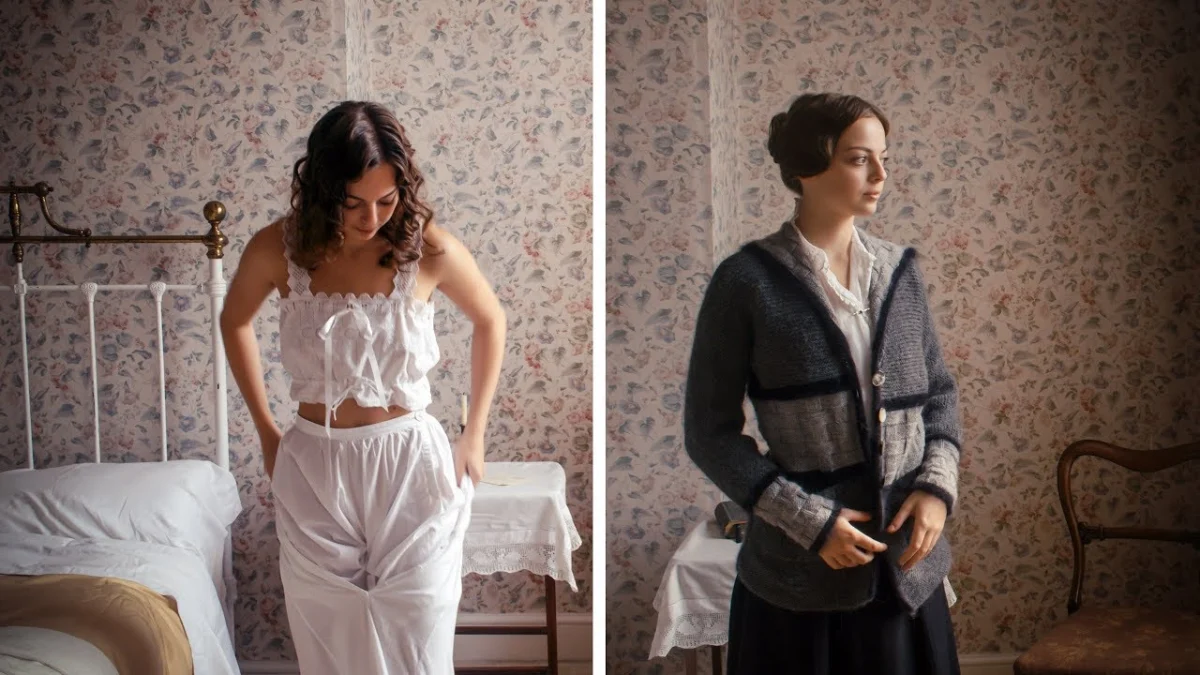
The First World War, a conflict of unprecedented scale and industrial mechanization, fundamentally altered the fabric of global society, extending its influence far beyond the trenches and into the very closets of both combatants and civilians. While history often focuses on the tactical maneuvers of the Great War, the logistical and sociological evolution of clothing during the period between 1914 and 1918 offers a profound look at the era’s technological limitations and shifting cultural norms. From the heavy, sodden wool of the British infantryman to the utilitarian liberation of the female workforce, the garments of WWI were defined by necessity, scarcity, and a slow march toward modernity.
The Material Realities of the Front Lines
For the British soldier, the experience of war was inextricably linked to the performance of wool. Decades before the advent of high-performance synthetic fibers like Gore-Tex or polyester fleece, the British Army relied on the 1902 Pattern Service Dress, a uniform comprised almost entirely of heavy wool serge. While wool possesses natural insulating properties and can remain warm even when damp, its weight and hygroscopic nature presented a significant burden in the waterlogged environments of the Western Front.
A standard British uniform included a tunic, trousers, and "puttees"—long strips of woolen cloth wrapped spirally from the ankle to just below the knee. These puttees were designed to provide support and protection, yet in the muddy trenches, they often became saturated with water and filth. Once wet, a soldier’s woolen gear could double in weight, leading to chronic exhaustion and a distinctive, pervasive odor. The lack of effective waterproofing meant that moisture from the freezing puddles of Flanders and the Somme would seep through leather boots and wool socks, leading to the widespread medical crisis known as "trench foot," a condition caused by prolonged exposure to damp, unsanitary, and cold conditions.
The plight of the Highland regiments was particularly severe. These units, known by the Germans as the "Ladies from Hell," wore traditional kilts into combat. While the kilt offered mobility, it proved disastrous in the winter. When the heavy wool of the kilt became wet and subsequently froze, the stiffened material would chafe and cut into the backs of the soldiers’ legs, creating open wounds that were highly susceptible to infection in the bacteria-rich mud.
The Domestic Mobilization: Knitting for the Front
The inability of the industrial supply chain to keep up with the sheer demand for warm clothing led to a massive mobilization of the civilian population. In what became known as the "knitting craze," an army of women across the British Empire and the United States dedicated themselves to producing "comforts" for the troops. This was not merely a sentimental gesture but a vital logistical supplement to the official military supply.
Hand-knitted items included gloves, scarves, balaclavas, and, most importantly, seamless socks. The British War Office emphasized the need for socks that could withstand three days of continuous marching. Patterns were standardized to ensure that the socks lacked internal seams, which could cause debilitating blisters over long distances. In the United Kingdom, organizations like the Queen Mary’s Needlework Guild coordinated the production and distribution of millions of these garments. By the end of the war, it is estimated that civilian knitters had provided a significant percentage of the supplemental warm wear required to keep the frontline troops functional during the harsh European winters.
The Transformation of Women’s Fashion and the Red Cross
While men were defined by the rigidity of military service, women’s lives—and wardrobes—underwent a radical transformation. As men departed for the front, women entered the workforce in unprecedented numbers, serving as conductors, factory workers, and nurses. This shift necessitated a move away from the restrictive, multi-layered silhouettes of the Edwardian era toward a more utilitarian aesthetic.
One of the most significant shifts occurred within the Voluntary Aid Detachment (VAD) and the British Red Cross. Upper-class women, who were previously accustomed to elaborate gowns and the assistance of ladies’ maids, found themselves dressing in functional uniforms. These consisted of cotton dresses, sturdy aprons, sleeve protectors, and flat, rubber-soled shoes designed for long hours of standing on hospital floors.
The nursing uniform also saw a shift in headgear. While some adhered to the traditional "Sister Dora" caps—stiff, bonnet-like structures—many nurses preferred the more practical and flattering army-style nursing veils. This transition was more than aesthetic; it represented the professionalization of women’s roles in a high-stakes environment. The physical demands of nursing made the traditional, torso-smashing corsets of the early 20th century entirely impractical, leading to a surge in the popularity of "front-fastening" corsets that were lighter and offered a greater range of motion.
The Strategic Importance of Steel and the Death of the Corset
The decline of the corset was not solely a matter of comfort; it was a matter of national security. Before the war, corsets were reinforced with significant amounts of whalebone or, more commonly, steel. As the war progressed, the demand for steel for the production of munitions, tanks, and ships became a primary concern for the warring governments.
In 1917, the United States War Industries Board made a formal request to American women to stop buying corsets to divert steel to war production. This initiative reportedly saved approximately 28,000 tons of steel—an amount cited by contemporary officials as being sufficient to build two entire battleships. This patriotic "sacrifice" effectively accelerated a fashion trend that was already beginning to take hold, permanently altering the female silhouette and moving society toward the "flapper" styles of the 1920s, which favored a straight, un-corseted torso.
Chronology of Wartime Fashion Evolution
- 1914: Outbreak of war; British soldiers arrive in France wearing the 1902 Pattern Service Dress. The "Knitting for Victory" movement begins in earnest.
- 1915: The introduction of the "trench coat" by firms like Burberry and Aquascutum. Originally designed for officers, these coats utilized chemically proofed gabardine to offer better protection than traditional wool greatcoats.
- 1916: As the war of attrition deepens, the practicality of women’s dress increases. Hemlines begin to rise above the ankle to facilitate movement in industrial and medical settings.
- 1917: The U.S. enters the war; the War Industries Board’s ban on steel in corsets marks the beginning of the end for Victorian-era undergarments.
- 1918: Post-war fashion begins to emerge, characterized by simpler lines, the use of jersey fabrics (popularized by Coco Chanel), and a permanent shift toward more casual, athletic attire.
Societal Implications and the Path to Modernity
The clothing of WWI served as a precursor to modern garment technology and social liberation. The war forced a rethink of how clothes were manufactured and worn. For men, the "trench coat" became a staple of civilian fashion, transitioning from a piece of military hardware to a symbol of sophisticated urban wear. For women, the war provided a "trial run" for physical and social autonomy. The necessity of shorter skirts for safety in factories led to the normalization of showing the lower leg, which in turn gave rise to the hosiery industry and the modern practice of leg shaving.
Furthermore, the war years saw the rise of the "jumper" or cardigan. Originally a utilitarian item for warmth, the knitted sweater became a trendy piece of leisurewear, bridging the gap between the domestic effort of knitting and the burgeoning ready-to-wear fashion industry.
Conclusion and Analysis
The evolution of dress during World War I reflects a society in the midst of a violent transition. The "horrors of wet wool" described by veterans were not merely discomforts; they were logistical failures that dictated the pace of military operations. Conversely, the "liberation" of the female silhouette was not just a change in taste, but a direct result of industrial necessity and the reallocation of raw materials.
Ultimately, the Great War stripped away the ornamental excesses of the 19th century. By 1918, the world had learned that clothing must, above all, be functional. The seamless socks, the front-fastening brassieres, and the waterproof gabardine coats were the quiet victories of a period marked by loud destruction. These innovations laid the groundwork for the 20th century’s focus on sportswear, synthetic textiles, and the democratization of fashion, proving that even in the darkest periods of human history, the way we clothe ourselves remains a vital indicator of our progress and our resilience.