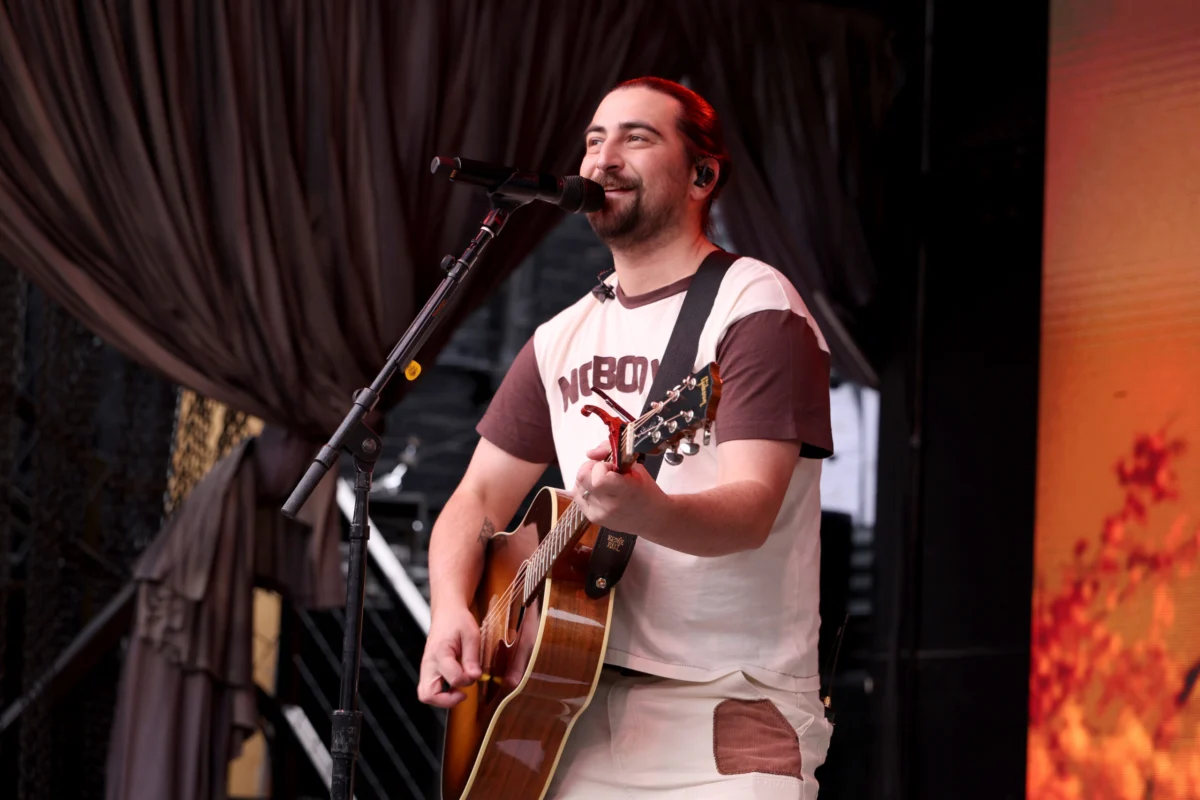
A formidable coalition of some of New England’s most celebrated recording artists has collectively penned an impassioned letter urging Massachusetts lawmakers to approve recently introduced legislation aimed at curbing the rampant practice of ticket scalping. The proposed bill, aptly named "The Great Divide Act" after a hit album by prominent signatory Noah Kahan, seeks to establish a cap on the resale price of concert and event tickets, a move championed by artists who argue that live performances are increasingly becoming an inaccessible luxury.
The influential group, whose signatories include Grammy-nominated folk-pop sensation Noah Kahan, indie rock icon Aimee Mann, legendary alternative band The Pixies, jam-band favorites Goose, and the beloved Celtic punk group Dropkick Murphys, voiced their strong support for the legislation in a unified statement released on Wednesday. Their collective plea underscores a growing frustration within the music industry regarding the exploitative nature of the secondary ticket market, where exorbitant markups by scalpers often eclipse the original face value of tickets, leaving dedicated fans priced out of experiencing live music.
"Live performance should not be a luxury," the 16 artist-signees declared in their public appeal. "Our art is not a commodity to be bought and resold at extreme markups against our wishes. People who contribute nothing to live performance should not profit more than the artists, venues, crews, and workers who bring these shows to life." This sentiment directly addresses the core issue: that individuals and entities engaging solely in the resale of tickets are disproportionately benefiting from the cultural and economic activity generated by artists and the entire live entertainment ecosystem.
The artists’ public advocacy comes on the heels of Governor Maura Healey’s formal announcement of "The Great Divide Act" just a week prior. The legislation, a direct response to mounting pressure from artists and fans alike, proposes a stringent cap on resale prices, limiting them to a maximum of 110 percent of the original face value. This means that a ticket originally priced at $100 could, under the proposed law, only be resold for a maximum of $110. Beyond setting a ceiling for resale prices, the bill also aims to rein in excessive fees charged by secondary ticketing platforms and explicitly outlaw speculative ticketing. Speculative ticketing is a contentious practice where brokers list tickets for sale that they do not yet possess, often before they are even officially released to the public, creating artificial demand and further inflating prices.
The artists’ letter eloquently articulated the profound personal impact of this issue, stating, "Few things hurt an artist more than seeing a fan exploited by a ticket reseller. It’s heartbreaking to read comments from fans who paid outrageous resale prices, knowing there’s little we can do to help. Every artist signing this letter has experienced that feeling. Predatory resale, scalping, ticket touting, whatever you choose to call it, does more than exploit fans financially. It erodes the trust between artists and the people who support us." This highlights the emotional toll on performers who witness their dedicated fan base being subjected to financial hardship and disillusionment due to the practices of ticket resellers.
Noah Kahan, whose recent surge in popularity has amplified his voice in this debate, has been particularly vocal in his advocacy for ticket reform. His active engagement extends beyond the current Massachusetts bill; he has also lent his considerable support to a similar ticketing law recently enacted in his home state of Vermont. This dual focus underscores his commitment to addressing the issue on a broader, regional scale, recognizing it as a pervasive problem affecting artists and fans across different jurisdictions.
The artistic voices are not alone in this push for reform. "The Great Divide Act" has garnered significant backing from a range of influential industry organizations. These include the Music Artist Coalition, a powerful advocacy group representing thousands of musicians; the National Independent Talent Organization, which supports independent artists and their representatives; and the Future of Music Coalition, an organization dedicated to promoting policies that benefit musicians and fans.
Ron Gubitz, Executive Director of the Music Artist Coalition, emphasized the shared goals of artists and fans in a statement accompanying the artists’ letter. "Artists and fans want the same thing: a fair shot at getting into the room where the music happens," Gubitz remarked. "Speculative tickets and runaway resale fees break that deal for everyone except the industrial-scale ticket flippers. The Great Divide Act draws that line clearly. Massachusetts, led by Gov. Healey and Sen. Fernandes, is leading the country here with this strong set of reforms." His statement underscores that the proposed legislation aligns the interests of artists and their supporters against those of professional ticket resellers.
The Massachusetts bill reflects a growing national movement to address the inequities of the ticket resale market. Several states and jurisdictions have recently taken steps to implement similar measures. Maine, for instance, introduced price caps on resale tickets last year. This year, both California and New York have seen similar legislative proposals emerge. In a notable development last week, Washington, D.C., approved a price cap on concert ticket resales, signaling a broader trend towards regulatory intervention in the secondary ticketing market.
The Artists’ Call to Action: A Deeper Dive into the Letter
The full text of the letter penned by the New England artists provides a comprehensive articulation of their concerns and their vision for a more equitable ticketing system. It opens with a profound statement about the intrinsic value of live performance: "We write as artists who believe deeply in the power of live performance. Shows are where families make memories, where young people discover who they are, and where entire rooms of people share something that cannot be recreated anywhere else." This sets the stage for their argument that such fundamental human experiences should not be commodified and made inaccessible.
The letter directly challenges the current market dynamics: "Live performance should not be a luxury. Our art is not a commodity to be bought and resold at extreme markups against our wishes. People who contribute nothing to live performance should not profit more than the artists, venues, crews, and workers who bring these shows to life." This passage powerfully contrasts the value generated by those who create and facilitate live events with the value extracted by those who merely mediate their resale.
The emotional toll on fans is further detailed: "Few things hurt an artist more than seeing a fan exploited by a ticket reseller. It’s heartbreaking to read comments from fans who paid outrageous resale prices, knowing there’s little we can do to help. Every artist signing this letter has experienced that feeling." The artists acknowledge their own helplessness in many instances, which fuels their determination to seek legislative solutions. They explicitly link predatory resale practices to a broader erosion of trust, stating, "Predatory resale, scalping, ticket touting, whatever you choose to call it, does more than exploit fans financially. It erodes the trust between artists and the people who support us."
A key theme of mutual support is also highlighted: "We know how much our fans give to be part of these moments. They plan, they save, and they show up. Our fans support us without hesitation, and we owe it to them to stand up for a system that doesn’t shut them out." This reciprocal relationship between artists and fans is presented as the foundation upon which a fair ticketing system should be built.
The letter concludes with a direct appeal to Massachusetts legislators: "Massachusetts is acting to protect our fans by capping resale at 110%, banning speculative tickets and cracking down on deceptive websites. We respectfully ask Massachusetts legislators to stand up for their constituents by protecting fair access to live performances and supporting these reforms." This serves as a clear call to action, urging lawmakers to prioritize the interests of their constituents and the integrity of the live music experience.
The signatories of this impactful letter represent a diverse cross-section of the New England music scene, including:
- Noah Kahan
- Dropkick Murphys
- The Pixies
- Goose
- Aimee Mann
- Killswitch Engage
- Shadows Fall
- Four Year Strong
- New England Metal and Hardcore Fest
- A Loss For Words
- All That Remains
- Flawed Mangoes
- Mark Erelli
- Melissa Ferrick
- Mission of Burma
- Ryan Montbleau
Background and Chronology of the Ticket Reform Movement
The current push for legislative action in Massachusetts is part of a longer, evolving narrative concerning the impact of technology and market forces on the accessibility of live entertainment. For decades, ticket scalping has been a persistent issue, but the advent of the internet and sophisticated bot technology has dramatically amplified the scale and efficiency of this practice.
Early 2000s – Present: The rise of online ticketing platforms and the proliferation of secondary market websites like StubHub and Ticketmaster’s own resale marketplace created a more accessible, albeit often unregulated, environment for ticket reselling. Early concerns were often raised by individual artists and fan groups, but lacked the cohesive industry-wide pressure seen today.
Mid-2010s: As ticket prices for major events, particularly concerts, began to skyrocket, public and media attention intensified. The phenomenon of "sold out" tickets being immediately relisted at significantly higher prices became a common frustration, leading to increased calls for regulation.
Late 2010s – Early 2020s: Advocacy groups like the Music Artist Coalition began to gain traction, lobbying for legislative changes at both state and federal levels. This period saw sporadic legislative efforts in various states, with varying degrees of success. Some states enacted minor reforms, while others saw bills stall in legislative committees.
2023 – Present: The movement for ticket reform has gained significant momentum. Several high-profile artists, including those from New England, have become increasingly vocal.
- Early 2023: Discussions around ticket reform intensify across the industry.
- Mid-2023: Vermont passes a significant ticketing reform law, partly influenced by the advocacy of Noah Kahan and other artists.
- Late 2023: Maine introduces price caps on resale tickets.
- Early 2024: Massachusetts Governor Maura Healey announces "The Great Divide Act."
- February 2024: A coalition of New England artists, including Noah Kahan, Aimee Mann, The Pixies, Goose, and Dropkick Murphys, sign and release a letter urging Massachusetts legislators to pass "The Great Divide Act."
- February 2024: Washington D.C. approves a price cap on concert ticket resales.
- March 2024: California and New York introduce similar ticketing reform bills.
This timeline illustrates a growing consensus and coordinated effort to address what is perceived as a systemic problem within the live entertainment industry, moving from individual complaints to organized legislative campaigns.
Supporting Data and Industry Context
The economic impact of ticket scalping is substantial, though precise figures are difficult to quantify due to the opaque nature of the secondary market. However, several indicators point to the scale of the issue:
- Average Resale Markups: Studies and anecdotal evidence suggest that resale prices can often be 200-500% higher than face value for popular events. For instance, a $100 ticket might be resold for $300-$600 or more.
- Market Size: The global secondary ticket market is estimated to be worth billions of dollars annually, a significant portion of which accrues to resellers rather than artists, venues, or supporting industries.
- Fan Frustration: Surveys consistently show high levels of dissatisfaction among consumers regarding ticket prices and the difficulty of acquiring tickets at face value. A 2022 study by Ipsos found that a majority of surveyed Americans believed ticket prices were too high and that the resale market was unfair.
- Artist Revenue: While artists earn revenue from ticket sales, a significant portion of the total consumer spending on tickets goes to resellers, diminishing the overall economic benefit to the artist and their creative endeavors. This also impacts ancillary revenues like merchandise sales, as fewer fans are able to attend shows.
The proposed 110% cap in Massachusetts aims to directly address these issues by ensuring that the primary beneficiaries of a ticket’s value remain the creators and facilitators of the event, with a modest allowance for genuine resale. The outlawing of speculative ticketing is also crucial, as it targets a practice that artificially inflates prices and creates a sense of scarcity before tickets are even widely available.
Broader Implications and Analysis
The movement led by New England artists and supported by industry groups carries significant implications for the future of live entertainment accessibility.
For Artists: The legislation, if passed, could help restore a more direct and equitable financial relationship between artists and their fans. By reducing the amount of money siphoned off by scalpers, artists could potentially see increased revenue, which can be reinvested in their careers, music production, and touring. More importantly, it addresses the erosion of trust and goodwill with their fan base, a crucial element for long-term career sustainability.
For Fans: The most immediate impact for fans would be greater affordability and accessibility. The 110% cap, coupled with measures against speculative ticketing, would make it easier for genuine fans to purchase tickets at prices closer to their original value, allowing more people to experience live music and cultural events. This could lead to a more diverse and engaged audience attending shows.
For the Live Entertainment Industry: The legislation could foster a healthier ecosystem. Venues, promoters, and support staff who rely on a robust fan base would benefit from increased attendance. It could also encourage greater innovation in ticketing solutions that prioritize fan experience over speculative profit. However, some secondary ticketing platforms may face reduced revenue if their business models rely heavily on high resale margins and fees.
For State Economies: By making live events more accessible, states like Massachusetts could see increased tourism and local economic activity associated with concert-goers. A more robust and accessible arts and culture scene can be a significant economic driver.
National Trend: The actions in Massachusetts are indicative of a broader societal conversation about fairness and equity in consumer markets, particularly those driven by digital technologies. If successful, "The Great Divide Act" could serve as a model for other states looking to implement similar reforms, potentially leading to a national shift in how tickets are bought, sold, and experienced. The legislative momentum suggests that the era of largely unchecked ticket scalping may be drawing to a close, as policymakers, artists, and fans increasingly demand a more balanced and fan-friendly approach.