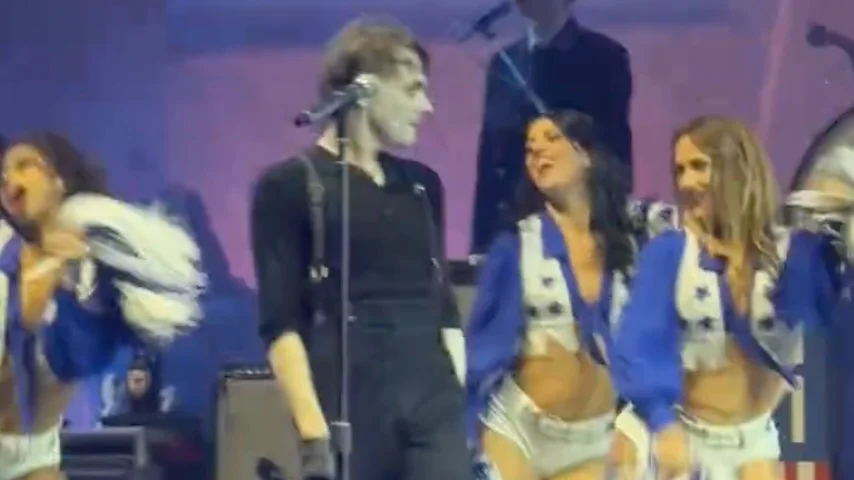
The long-standing intersection of pop culture and intellectual property law has reached a new, contentious milestone as Pro Silver Star Ltd., the corporate entity governing the Dallas Cowboys Cheerleaders (DCC) brand, filed a formal lawsuit against the rock band My Chemical Romance (MCR). The legal action, initiated in late October 2026, stems from a high-profile theatrical performance at the Hollywood Bowl, where the band utilized costumes that closely mimicked the iconic, protected uniforms of the world-famous cheerleading squad. The filing seeks both a temporary restraining order and an injunction, citing concerns over brand dilution, trademark infringement, and the association of the brand with simulated violence.
The Hollywood Bowl Incident: A Theatrical Staging
The controversy originated during the opening night of My Chemical Romance’s five-night residency at the historic Hollywood Bowl on October 21, 2026. As part of their celebrated The Black Parade tour, the band incorporated a narrative-heavy production that depicted a dystopian landscape characterized by a fictional dictatorship. During the performance of their hit song "Teenagers," a group of dancers entered the stage wearing apparel that significantly resembled the recognizable DCC uniform—a design protected by various trademarks, including the distinctive blue-and-white color scheme, the star-studded vest, and the specific silhouette associated with the organization since the 1970s.
According to court documents, the performance took a turn that triggered the legal response when these dancers, while donned in the near-identical outfits, brandished rifles and engaged in a choreographed sequence involving simulated combat. The staging reached a climax when the performers were depicted being "shot" during the firefight. The spectacle, while intended as a commentary on militarization and societal decay, prompted immediate concern from the rights holders of the DCC brand, who argue that the unauthorized use of their intellectual property in such a violent context irreparably harms the brand’s image.
Chronology of the Legal Conflict
The timeline of the dispute began almost immediately following the conclusion of the October 21 performance. By the morning of October 22, footage of the performance had proliferated across social media platforms, including X (formerly Twitter), TikTok, and Instagram.
- October 21, 2026: My Chemical Romance performs the first show of their Hollywood Bowl residency. The "Teenagers" segment features dancers in uniforms resembling the Dallas Cowboys Cheerleaders.
- October 22, 2026: Social media discourse begins to conflate the performance with the actual Dallas Cowboys organization. Several viral posts suggest that the real DCC members were involved in the show, leading to widespread public confusion.
- October 23, 2026: Pro Silver Star Ltd. internal legal counsel reviews the performance footage and determines that the unauthorized use constitutes a breach of trademark protections.
- October 24, 2026: Pro Silver Star Ltd. files a lawsuit in federal court, seeking a temporary restraining order to prevent the continuation of this specific act during the remaining four sold-out nights of the residency.
- October 25, 2026: Legal representatives for the band and the plaintiffs begin discovery and preliminary negotiations, while the band proceeds with scheduled performances, though the specific visual elements of the controversial segment face intense scrutiny.
Trademark Protections and Brand Integrity
At the core of the lawsuit is the concept of trademark dilution. The Dallas Cowboys Cheerleaders are not merely a performance group; they are a global commercial entity with a history spanning decades. The DCC brand generates millions in revenue through merchandise, licensing deals, and public appearances.
In their filing, Pro Silver Star Ltd. emphasized that they are not seeking to censor the artistic expression of the band. "Silver Star is not litigious, and it takes no issue with MCR’s music, its artistic ambitions, or any message Defendants seek to convey," the statement reads. The argument rests on the principle of consumer confusion. Because the uniforms are so visually distinctive, the plaintiffs argue that a reasonable observer would conclude that the actual DCC organization consented to, or participated in, a performance involving firearms and simulated death.
Legal experts point out that the "likelihood of confusion" is a standard benchmark in trademark law. If a consumer believes there is an affiliation between the band and the brand, the owner of the trademark has the right to demand that the association be severed. The plaintiffs contend that they have no control over the content of MCR’s shows, and therefore, cannot be held liable for the "reputational damage" caused by associating their brand with the specific imagery of the The Black Parade narrative.
Broader Implications for Performers and Intellectual Property
The lawsuit raises significant questions regarding the boundaries of artistic parody and transformative use. While "fair use" is a common defense in copyright law, it is notoriously more difficult to apply in trademark cases, particularly when the commercial nature of the performance is clear.
For the music industry, this incident serves as a cautionary tale regarding the staging of large-scale productions. As concerts have become increasingly immersive and narrative-driven, artists are pushing the boundaries of what is visually represented on stage. However, when those visuals involve iconic, real-world commercial designs, the risk of litigation increases significantly.
Industry analysts note that if the court rules in favor of Pro Silver Star Ltd., it could set a precedent that requires concert production companies to perform more rigorous "trademark clearance" for costumes and set dressing. This would add a layer of legal review to the creative process, potentially limiting the use of cultural iconography in live performance art.
Response and Public Sentiment
The reaction from the fan base of My Chemical Romance has been largely defensive, with many supporters characterizing the performance as clear satire, shielded by the First Amendment. Fans argue that the dystopian nature of the show makes the satirical intent obvious to anyone familiar with the band’s aesthetic and historical thematic focus.
Conversely, the Dallas Cowboys organization and their legal representatives remain firm in their stance that the brand is a distinct asset that must be defended regardless of the intent behind the infringement. By allowing the unauthorized use of the uniforms, the organization risks "losing" its trademark through abandonment or weakening. In the world of intellectual property, failing to police one’s own trademark can lead to a legal environment where the mark no longer carries the exclusive legal weight it once possessed.
The Path Forward: Seeking Damages and Injunctions
Pro Silver Star Ltd. is pursuing unspecified monetary damages in addition to the injunction. These damages are intended to compensate for the "degradation" of the brand and the cost of responding to the public confusion caused by the performance. The lawsuit specifically asks that the band refrain from using the DCC uniforms for the duration of the The Black Parade tour.
As the litigation proceeds, the focus will likely shift to the discovery phase, where the court will examine whether the costume designers for the tour intentionally copied the DCC uniform or if the similarities were accidental. The outcome of this case will likely influence how major touring acts approach the design of theatrical props and costumes, emphasizing the importance of creative originality over the appropriation of recognizable commercial imagery.
For now, the legal battle highlights the friction between the unbridled nature of rock-and-roll performance art and the rigid, protective structures of modern corporate branding. Whether the court finds the costumes to be a protected form of artistic parody or a clear violation of trademark law remains to be seen, but the case is already shaping up to be a defining moment in the legal history of the music industry in the late 2020s. As both parties prepare for potential hearings, the broader cultural conversation about who "owns" the visual symbols of American pop culture continues to intensify.