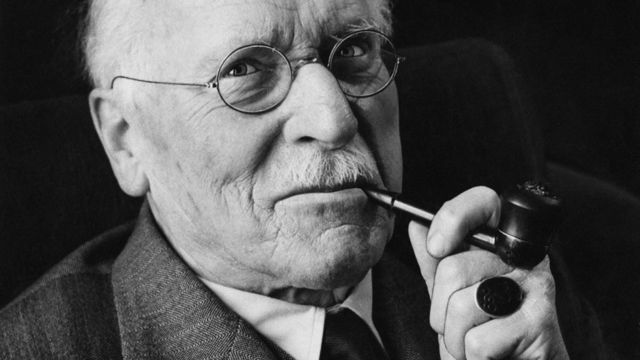
The mystery of human creativity—the capacity to synthesize personal experience into works of enduring beauty—remains one of the most profound inquiries in the history of psychology. While modern neuroscience attempts to map the creative process through functional magnetic resonance imaging (fMRI) and the study of neural pathways, the foundational theories regarding the "why" and "how" of art often trace back to the early 20th century. Central to this exploration is the work of Swiss psychiatrist Carl Jung, particularly his 1939 treatise, Modern Man in Search of a Soul. Writing during a period of global upheaval, Jung posited that creativity is not merely a cognitive function but a "periscope" through which the unconscious mind interacts with and renders the world.
Jung’s analysis of the creative spirit moves beyond the mechanical and the biological, suggesting that a work of art is as much a portrait of the "seer" as it is of the "seen." He argued that the human psyche serves as the "womb of all the sciences and arts," establishing the unconscious as the essential undercurrent of every creative act. In doing so, Jung positioned the creative imagination as the primary reality of the human experience, suggesting that all other scientific and rational interpretations of life are secondary derivatives of this primordial phenomenon.
Historical Context: The Intersection of Mysticism and Science
The publication of Modern Man in Search of a Soul occurred during a liminal epoch in intellectual history. The early 20th century was marked by a transition from the age of mysticism—where creativity was viewed as a divine gift bestowed by muses or shamans—to the age of rigorous science. Jung occupied a unique space in this transition. While he was a systematic and rigorous practitioner of psychology, he remained staunchly opposed to the reductionism that characterized much of the emerging scientific discourse.
In 1939, as the world descended into the destruction of World War II, Jung’s focus on the "soul" was both a psychological inquiry and a philosophical rebellion. He critiqued the tendency of science to "microscopize" the human experience, famously writing that the creative act would "forever elude the human understanding" in its entirety. This period also marked the culmination of Jung’s departure from his former mentor, Sigmund Freud. Where Freud viewed art through the lens of personal neurosis and repressed trauma, Jung sought a more expansive, impersonal explanation rooted in the "collective unconscious."
The Two Modes of Artistic Creation
A cornerstone of Jung’s theory is the distinction between two primary modes of artistic creation: the psychological and the visionary. These modes represent different depths of the human psyche and make distinct demands on the artist.

The Psychological Mode
The psychological mode of creation draws from the realm of conscious human experience. It utilizes materials that are familiar to the general population: the lessons of life, emotional shocks, the experience of passion, and the crises of human destiny. In this mode, the artist—or "poet," as Jung often termed creators—assimilates these common experiences and raises them to the level of poetic expression.
According to Jung, the psychological mode clarifies human insight by bringing into focus that which the average person ordinarily evades or senses only as "dull discomfort." Because these themes—sorrow, joy, and human struggle—repeat themselves millions of times across history, they require little explanation. They are "ineluctable experiences" that are psychically assimilated and rendered in a way that is immediately recognizable to the audience.
The Visionary Mode
In contrast, the visionary mode of creation reverses these conditions. The material for such art is no longer familiar; it is a "strange something" that derives from what Jung called the "hinterland" of the mind. This mode evokes the "abyss of time" or a "super-human world of contrasting light and darkness."

Jung described the visionary mode as a "primordial experience" that surpasses rational understanding. While the psychological mode deals with the "foreground of life," the visionary mode rends the "curtain upon which is painted the picture of an ordered world." This type of art allows a glimpse into the "unfathomed abyss of what has not yet become." Jung compared these works to dreams—"eclipses of consciousness" that confuse the sense of reality and demand interpretation because they do not explain themselves.
The Collective Unconscious and the Impersonal Channel
Jung’s most significant contribution to the study of creativity was his insistence that great art is fundamentally impersonal. This stood in direct opposition to the Freudian school of thought, which sought to explain a work of art by analyzing the artist’s personal biography and childhood traumas. Jung referred to such reductive analysis as a "virulent poison" for the creative spirit.
Instead, Jung proposed that the raw material of great art is the "collective unconscious"—a reservoir of archetypes and universal experiences shared by all of humanity. He argued that the creative person is a duality: a human being with a personal life on one side, and an impersonal, creative process on the other.

"Art is a kind of innate drive that seizes a human being and makes him its instrument," Jung wrote. In this view, the artist is not a person endowed with free will seeking their own ends, but a "collective man" who carries and shapes the unconscious, psychic life of mankind. This "more-than-personal" vocation allows the artist to act as a compensatory force for their era. Just as an individual may require a dream to balance their conscious outlook, an entire epoch may require a "visionary" to show the way toward what the culture "blindly craves and expects."
The Cost of the Creative Fire
Despite his rejection of the "tortured genius" myth—which he dismissed as a "bungling" of the creative process—Jung acknowledged that the creative life is inherently fraught with conflict. He suggested that every individual is born with a finite "capital of energy." When a significant portion of this energy is directed toward a "ruthless passion for creation," it inevitably results in a drain from other areas of life, such as personal happiness, security, or social stability.
The artist’s psyche is thus sundered by the tension between the personal human longing for a normal life and the subterranean current of the unconscious that sweeps the "ego" along. Jung’s analysis suggests that the "weal or woe" of the individual artist is secondary to the work itself. This perspective offers a historical counterpoint to contemporary moral debates regarding the separation of the artist from the art. Jung argued that because great art is objective and impersonal, the personal life of the creator is "at most a help or a hindrance," but never essential to the substance of the work.

Analysis of Implications: From 1939 to the Digital Age
Jung’s reflections on creativity also touched upon the "signal-to-noise ratio" of public discourse. Even in the 1930s, Jung lamented that the "voice of the single individual is almost completely drowned out in the chaos of newspapers and the flood of books." This observation resonates with modern concerns regarding the "attention economy" and the saturation of digital media.
However, Jung’s work provides a sense of "assurance for the half-defeated visionaries." He suggested that while the "noise of now" may muffle the voice of the individual, works that tap into the collective unconscious possess a timeless quality that allows them to "bellow into the centuries."
Supporting Data and Later Developments
Jung’s theories paved the way for subsequent psychological frameworks. In the decades following Modern Man in Search of a Soul, other scholars expanded on these concepts:

- Jerome Bruner (1960s): Identified the "six pillars of creativity," emphasizing the "effective surprise" that occurs when an artist connects previously unrelated ideas—a concept that mirrors Jung’s "psychical assimilation."
- Oliver Sacks (2017): Explored the "three essential elements" of creativity (imitation, variation, and synthesis), grounding the "visionary" experience in the biological "river of consciousness."
- Contemporary Consciousness Studies: Some modern theorists, such as Annaka Harris, have begun to revisit the idea that consciousness may be fundamental to the universe, echoing Jung’s question of whether the psyche is a "door that opens upon the human world from a world beyond."
Conclusion
Carl Jung’s exploration of the creative spirit remains a vital framework for understanding the intersection of the individual and the universal. By distinguishing between the psychological and visionary modes, and by identifying the artist as a conduit for the collective unconscious, Jung provided a map for the "warp and weft of the mind."
His work suggests that creativity is not a mere reaction to external stimuli, but a proactive rendering of the deepest recesses of the psyche. In an age characterized by rapid technological change and the "noise" of instant communication, Jung’s insistence on the "impersonal" nature of great art serves as a reminder that the most enduring works are those that touch the "pleroma"—the hidden, timeless depths of human existence. As Jung himself transitioned from a frustrated writer in an "obscure journal" to a global visionary, his life and work stand as a testament to the power of the creative fire to transcend the limitations of the personal and speak to the soul of humanity.