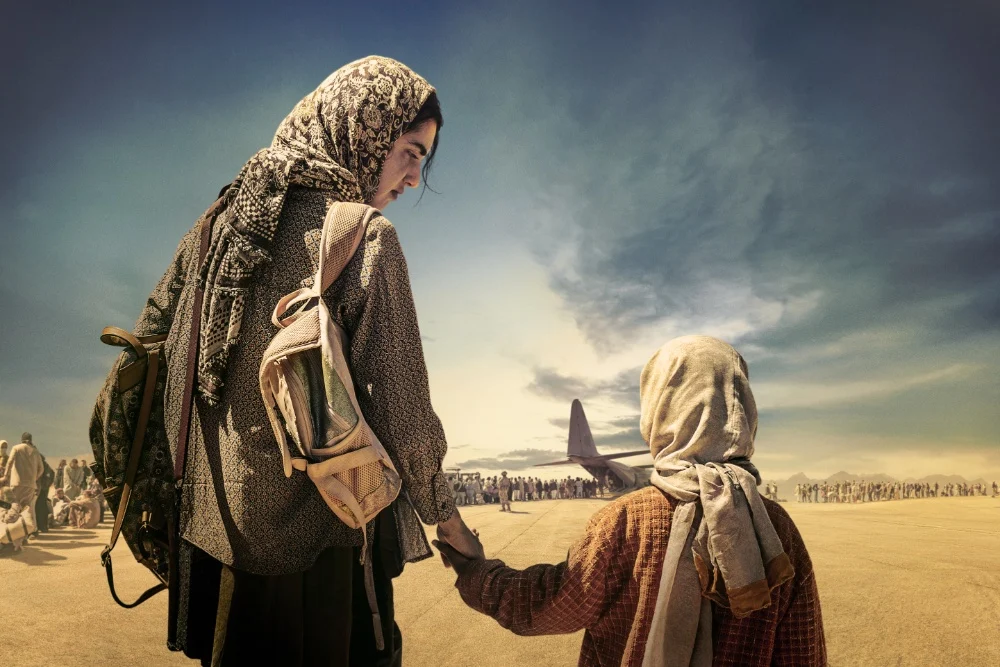
The British Broadcasting Corporation (BBC) has announced its acquisition of the gripping thriller series "Kabul," a six-part drama that plunges viewers into the heart of the chaotic withdrawal of U.S. troops from Afghanistan and the subsequent return of the Taliban to the capital city. The series, slated for release on BBC iPlayer on August 2nd and broadcast on BBC Four starting August 15th, features a compelling cast led by the late Eric Dane, known for his impactful roles, and Shervin Alenabi, who gained prominence for his work on the acclaimed series "Tehran." The acquisition, brokered by Mediawan Rights, signifies the BBC’s commitment to bringing high-stakes international drama to its audience, offering a visceral portrayal of a pivotal moment in recent global history.
"Kabul" promises to be a powerful exploration of human resilience and desperation against the backdrop of immense geopolitical upheaval. The narrative centers on the harrowing evacuation of a diverse group of individuals, including diplomats, soldiers, and civilians, as the Taliban swiftly reasserted control over the city. The synopsis paints a stark picture: "Kabul, August 15, 2021. As American troops withdraw, the Taliban enter the city. The Nazany family, like many civilians, is forced to flee, fearing retaliation. In this desperate and chaotic situation – shadowed by the looming threat of an attack by ISIS – French police officers, Italian diplomats, German military personnel, and American intelligence services must somehow coordinate to manage the influx of civilians. How will each of them manage to save their own lives? The countdown has begun." This chilling summation underscores the series’ focus on the intensely personal struggles within a macro-historical event.
A Deep Dive into the Production and Cast
The six-part series is a collaborative production between France’s 24 25 Films and Cinétévé, highlighting the growing trend of international co-productions in delivering sophisticated storytelling. The ensemble cast is bolstered by a roster of talented actors, including Jonathan Zaccaï, known for his role in "Le bureau des légendes," Thibault Evrard from the critically acclaimed "The Night of the 12th," Vassilis Kukalawi, who appeared in "Kandahar," Jeanne Goursaud of "Pax Massilia," Gianmarco Saurino from "L’estate più Calda," and Valentina Cervi, recognized for her work in "Medici: Masters of Florence." This diverse cast brings a wealth of experience and gravitas to the project, promising nuanced performances that will draw audiences into the complex emotional landscape of the characters.
The directorial vision for "Kabul" is helmed by Kasia Adamik, whose previous work includes "No Escape," and Olga Chajdas, director of "Imago." Their combined expertise in crafting suspenseful and character-driven narratives is expected to lend a distinct and compelling visual style to the series. The screenplay is a collaborative effort, penned by Olivier Demangel, whose credits include the acclaimed "Atlantics" and "November," Thomas Finkelkraut, and Joey Lavy, known for "The Shift." This team of writers brings a diverse range of perspectives and experiences, suggesting a script that is both historically informed and deeply human.
The BBC’s Perspective: High Stakes and Human Focus
Nick Lee, the BBC’s Head of Program Acquisition, articulated the broadcaster’s enthusiasm for the series, emphasizing its immediate relevance and profound emotional impact. "‘Kabul’ is a tragedy of the highest stakes," Lee stated. "A warzone story which is propelled by the real ticking clock of the evacuation that was just five years ago this summer. Global politics remain complex, but ‘Kabul’ dramatises the biggest view of history through the smallest window of a human family." This statement underscores the BBC’s strategic approach to programming, seeking out content that not only entertains but also educates and provokes thought by connecting grand historical narratives to individual human experiences. The proximity of the events depicted to the present day further enhances the series’ potential to resonate with audiences, offering a chance to reflect on a significant period of recent history.
The production credits are equally impressive, with Fabienne Servan-Schreiber and Charlotte Ortiz at Cinétévé, and Matthias Weber and Thibault Gast at 24 25 Films (a Mediawan Company) serving as producers. Sandrine Paquot takes on an executive producer role. The series was developed in collaboration with the European Alliance, a testament to its pan-European appeal and production value. Mediawan Rights, a prominent player in international content distribution, is handling the global sales of "Kabul," ensuring its reach to audiences worldwide.
Contextualizing the Event: The Fall of Kabul and the August 2021 Evacuation
The events depicted in "Kabul" are rooted in the dramatic and swift collapse of the Afghan government in August 2021, following the withdrawal of U.S. and NATO forces after a two-decade presence. For years, Afghanistan had been a focal point of international attention, marked by ongoing conflict, nation-building efforts, and complex political dynamics. The Taliban, an Islamic fundamentalist movement that ruled Afghanistan from 1996 to 2001, had been engaged in an insurgency against the U.S.-backed government and its international allies.
As the withdrawal deadline approached in the summer of 2021, the Taliban made rapid military gains, culminating in the capture of provincial capitals across the country. The speed of their advance surprised many observers and caught the Afghan security forces off guard. On August 15, 2021, the Taliban entered Kabul with little resistance, leading to the effective collapse of the Afghan Republic. This marked a critical turning point, plunging the nation into uncertainty and triggering a mass exodus of Afghans fearing for their safety and future.
The subsequent evacuation efforts were some of the largest and most complex in recent history. Airports, particularly Hamid Karzai International Airport in Kabul, became scenes of intense activity and desperation as foreign governments, international organizations, and Afghan allies scrambled to evacuate their citizens and personnel. The operation involved the coordinated efforts of military forces from multiple nations, working under immense pressure and facing significant security challenges, including the ever-present threat of terrorist attacks, as highlighted by the synopsis’s mention of ISIS.
The period of the evacuation, which largely occurred in the two weeks following the Taliban’s takeover of Kabul, was characterized by chaos, long queues, and a palpable sense of fear. Thousands of individuals, including those who had worked with foreign forces or organizations, faced the terrifying prospect of being left behind. The humanitarian crisis that ensued, with millions displaced and facing economic hardship and political repression, continues to be a major concern. The series "Kabul" aims to capture this critical period, offering a ground-level perspective on the human cost of such monumental geopolitical shifts.
Timeline of Key Events Leading to and During the Kabul Evacuation:
- April 2021: U.S. President Joe Biden announces the full withdrawal of U.S. troops from Afghanistan by September 11, 2021, initially extending the deadline.
- May 2021: The Taliban launch their spring offensive, significantly increasing attacks across the country.
- June-July 2021: The Taliban rapidly capture numerous districts and provincial capitals, often with minimal resistance from Afghan security forces.
- August 6, 2021: The Taliban capture their first provincial capital, Zaranj. This is followed by a cascade of other cities falling to the Taliban in the subsequent days.
- August 15, 2021: The Taliban enter Kabul. Afghan President Ashraf Ghani flees the country, signaling the collapse of the Afghan government.
- August 15-31, 2021: The international community engages in a massive, urgent evacuation operation from Hamid Karzai International Airport in Kabul. This period is marked by intense chaos, overcrowding, and security concerns, including the suicide bombing at Abbey Gate on August 26, 2021, which killed 13 U.S. service members and over 170 Afghans.
- August 31, 2021: The final U.S. troops withdraw from Afghanistan, officially ending the nearly 20-year U.S. military presence in the country.
Supporting Data and Analysis: The Scale of the Crisis
The humanitarian crisis following the Taliban’s return to power has been substantial. According to the United Nations, prior to the Taliban takeover, Afghanistan was already facing a severe humanitarian situation, with millions requiring assistance. The political and economic instability that followed exacerbated these challenges. The displacement of people within Afghanistan and the subsequent refugee flows to neighboring countries have been significant.
The international evacuation efforts involved an unprecedented mobilization of resources. The U.S. military, for instance, airlifted over 120,000 people, including American citizens, allied nationals, and Afghan partners, in a matter of weeks. Other nations also conducted significant evacuation operations, underscoring the global concern and the shared responsibility in responding to the crisis.
The implications of the fall of Kabul and the subsequent events extend far beyond Afghanistan’s borders. The rise of the Taliban has raised concerns about regional security, the potential resurgence of extremist groups, and the future of human rights, particularly for women and girls, in the country. The withdrawal also marked a significant shift in international diplomacy and the perception of Western intervention in complex geopolitical landscapes. The series "Kabul" provides a crucial opportunity for audiences to engage with these broader implications through the lens of individual stories, making the abstract geopolitical events relatable and emotionally resonant.
The BBC’s acquisition of "Kabul" reflects a growing appetite for international dramas that tackle complex, real-world issues. By bringing this series to its platforms, the BBC not only offers compelling entertainment but also contributes to public understanding of critical global events. The series’ focus on the human element amidst the chaos of evacuation promises to be a powerful and timely addition to the BBC’s programming lineup. The choice to air the series commencing on August 15th, the anniversary of the Taliban’s re-entry into Kabul, further emphasizes its topicality and the BBC’s intent to provoke reflection on this significant historical moment.