Astronomers, utilizing the unparalleled observational capabilities of NASA’s Hubble Space Telescope, have unveiled a dramatic cosmic spectacle within our own Milky Way galaxy. The helium nova V445 Puppis, which first erupted in 2000, has been observed to be ejecting material at an astonishing velocity of 20 million miles per hour, manifesting as a stream of what scientists are calling "cosmic bullets." For two decades, the precise nature of this celestial outburst and its peculiar phenomena remained obscured by a dense shroud of dusty debris. However, as this veil has finally dissipated, a sophisticated analysis using Hubble, NASA’s Transiting Exoplanet Survey Satellite (TESS), the European Southern Observatory’s Very Large Telescope (VLT), and a suite of other instruments has allowed researchers to peer into the heart of this enigmatic system, revealing both the source of these high-velocity projectiles and the extraordinary binary system driving the explosion.
A Rare Stellar Dance and a Mysterious Outburst
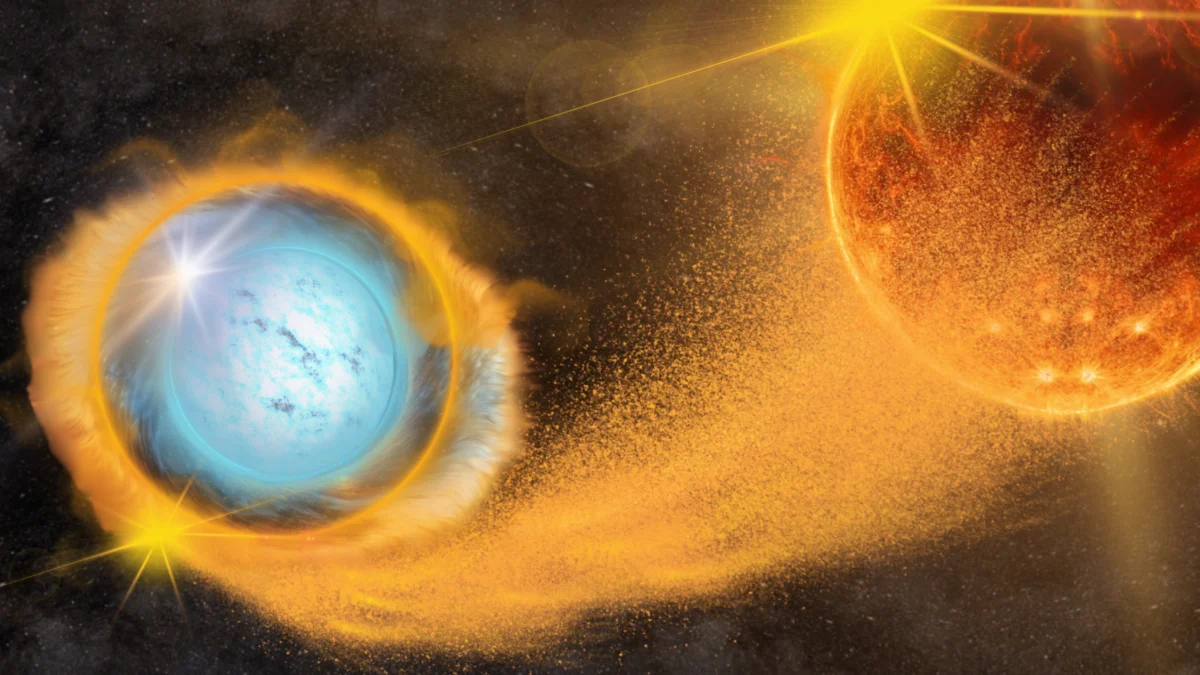
V445 Puppis stands as a unique celestial object in our galaxy, being the sole known "helium nova." Unlike more common hydrogen-rich novas, helium novas are a rarer class of stellar explosion, offering scientists a precious opportunity to study extreme astrophysical processes. The system itself is a binary, composed of a dead star, a white dwarf, that is actively accreting matter from its companion star. This companion is itself a rare find: a "helium star," which has already shed its outer hydrogen envelope, exposing its inner helium-rich layers.
The phenomenon of a nova occurs when a white dwarf star in a binary system gravitationally pulls material from its companion. This stolen matter, primarily hydrogen, accumulates on the white dwarf’s surface. As this layer grows, the immense pressure and temperature eventually trigger a runaway thermonuclear fusion reaction, leading to a spectacular, albeit temporary, brightening of the star – the nova event.
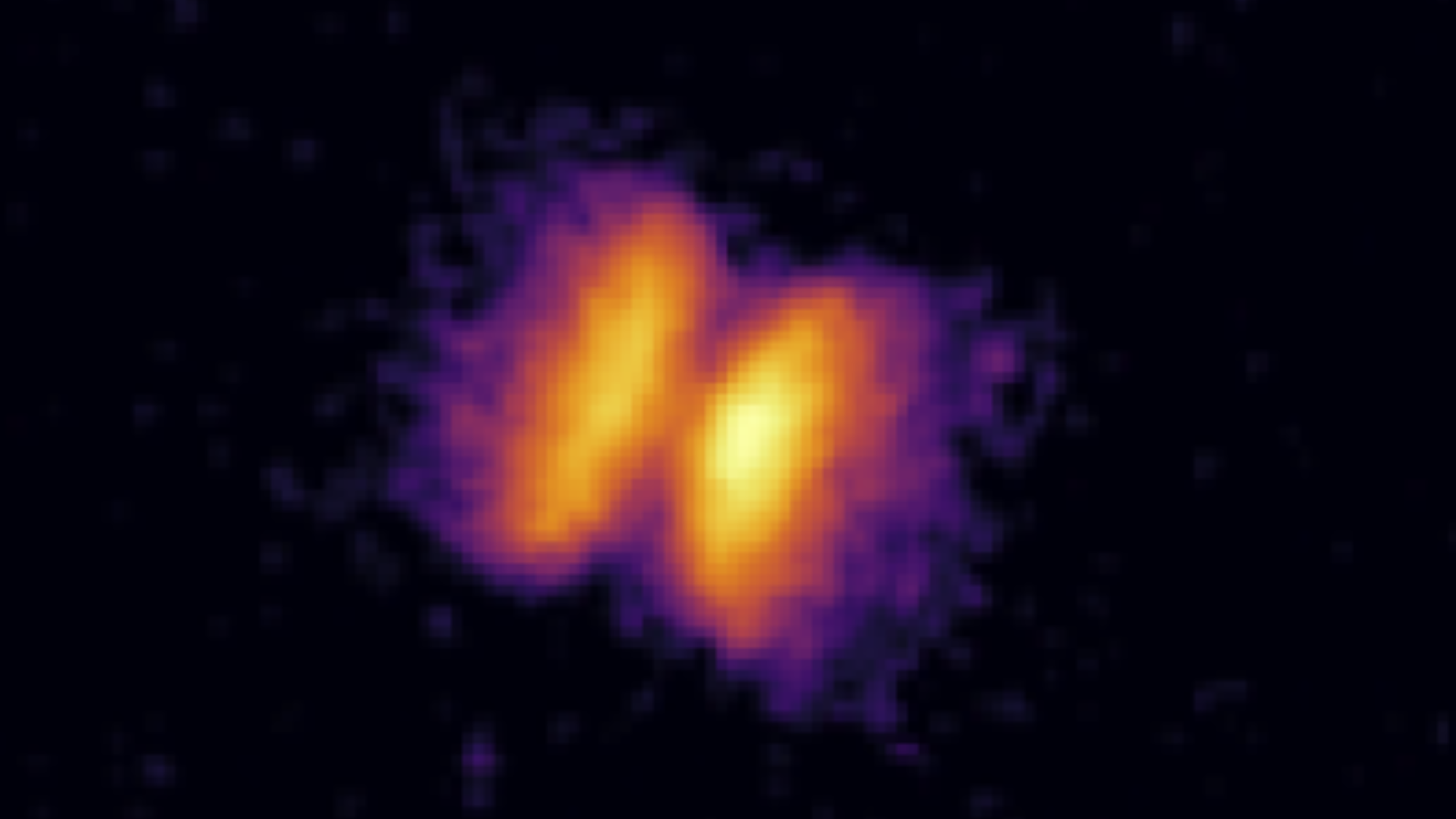
In the case of V445 Puppis, the process is slightly different, and significantly rarer. The white dwarf is feeding on a helium-rich companion, leading to the accumulation of helium on its surface. This triggers a helium nova, a less understood but equally powerful stellar explosion. The initial eruption of V445 Puppis in late 2000 was characterized by the ejection of vast, twin plumes of debris, resembling colossal butterfly wings. These bipolar outflows, spanning over a trillion miles, were initially detected in infrared light. Crucially, the nova also generated a thick disk of dust that completely enveloped the binary system, rendering it invisible to optical telescopes for more than two decades.
The Clearing Debris and the Unveiling of Cosmic Projectiles
The prolonged obscuration posed a significant challenge to astronomers seeking to understand the origin and nature of the expanding debris. However, the gradual dissipation of this dusty shroud has been a boon for astrophysical research. The recent observations, combining data from multiple advanced telescopes, have not only clarified the composition of the ejected material but have also provided unprecedented insights into the binary system itself.
"The origin of these ‘bullets’ is a mystery," stated John Mills, a researcher at the University of Warwick in the UK and a key member of the research team. "We suspect that these originated post-outburst, but ‘bullets’ of this kind have not been observed in any other nova." These "bullets" are clumps of gas, potentially rich in oxygen, being hurled outwards at speeds that defy typical nova ejecta velocities. Their precise formation mechanism is still under intense investigation, but their existence adds another layer of intrigue to V445 Puppis.
The clarity afforded by the clearing debris allowed the team to definitively identify the binary companions. The discovery confirmed that V445 Puppis is indeed a helium nova resulting from a helium star accreting onto a white dwarf. This configuration represents one of the rarest types of binary systems and consequently, one of the rarest cosmic explosions known.
Understanding Helium Novae: A Deeper Dive
To fully appreciate the significance of V445 Puppis, it’s essential to understand the distinction between helium novas and their more common hydrogen counterparts.
Ordinary (Hydrogen) Novae:
- Fuel: Primarily hydrogen, stolen from a companion star.
- Mechanism: Accumulation of hydrogen on the white dwarf’s surface leads to runaway fusion.
- Frequency: Relatively common, with several occurring in our galaxy each year.
Helium Novae (like V445 Puppis):
- Fuel: Primarily helium, stolen from a companion helium star.
- Mechanism: Accumulation of helium on the white dwarf’s surface triggers a fusion event.
- Frequency: Extremely rare, with V445 Puppis being the only known example in the Milky Way.
The process involves a white dwarf, the dense remnant of a star like our Sun after it has exhausted its nuclear fuel, drawing material from a companion. In the case of a helium star, the companion has already undergone significant evolution, shedding its outer hydrogen layers and exposing a core rich in helium. This helium-rich material is then accreted by the white dwarf. As this helium builds up, it can reach critical conditions for thermonuclear runaway, leading to the nova explosion.
The initial eruption of V445 Puppis in late 2000 was a pivotal event, but its full implications were masked by the thick dust cloud. This obscuring material, a byproduct of the nova’s explosive force, persisted for over two decades, acting as a cosmic curtain. The clearing of this curtain has been akin to a celestial reveal, allowing astronomers to finally examine the core of this unique stellar event.
The Mystery of the Cosmic Bullets and Future Eruptions
The discovery of the "cosmic bullets" ejected at such extreme velocities presents a compelling puzzle for astrophysicists. "Bullets’ of this kind have not been observed in any other nova," Mills emphasized, highlighting the unique nature of this phenomenon. While the precise origin is still being investigated, the leading hypothesis suggests these projectiles may have formed in the aftermath of the initial outburst, perhaps through complex shockwave interactions or instabilities within the ejected material. The potential oxygen-rich composition of these bullets could offer further clues into the nucleosynthetic processes occurring during the nova event.
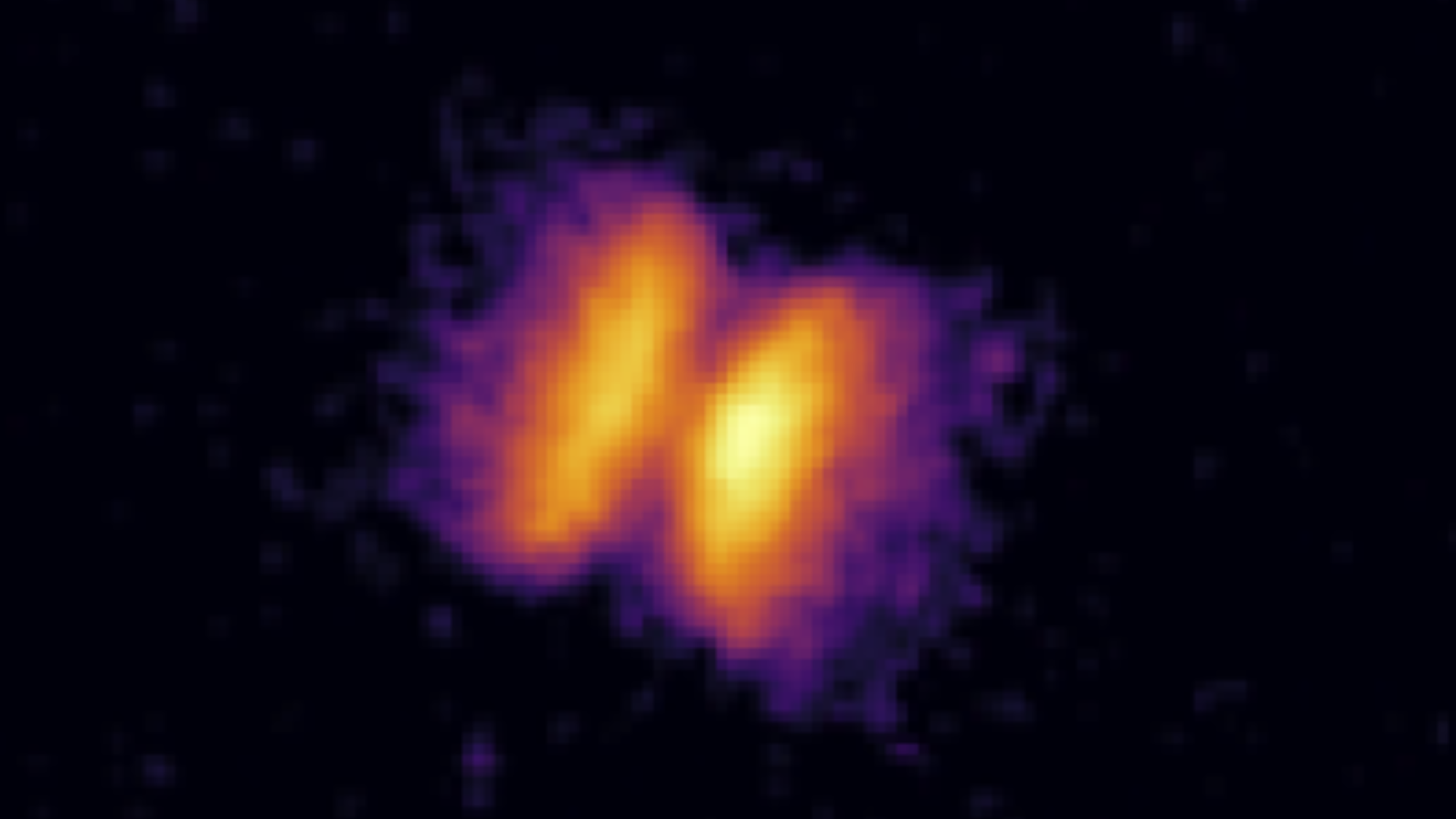
Beyond the mystery of the bullets, the recent observations have revealed an even more startling possibility: V445 Puppis may be on the verge of another eruption. This prediction stems from the observation that the white dwarf in the binary system appears to have resumed its feeding frenzy, actively accreting material from its helium companion once more. This renewed accretion process is the very mechanism that led to the initial helium nova.
Implications for Supernovae and Cosmic Distance Measurement
The potential for V445 Puppis to undergo another helium nova has profound implications for our understanding of stellar evolution and the broader universe, particularly concerning Type Ia supernovae.
Type Ia supernovae are a distinct class of stellar explosion that occurs when a white dwarf in a binary system accumulates sufficient mass to exceed the Chandrasekhar limit (approximately 1.4 times the mass of our Sun). At this critical point, a runaway carbon fusion reaction is triggered, completely destroying the white dwarf in an immensely powerful explosion.
Scientists have long theorized that repeated helium nova eruptions from a white dwarf could, over time, lead to the accumulation of enough mass to eventually trigger a Type Ia supernova. If V445 Puppis is indeed heading towards another nova, and potentially a series of them, it provides an invaluable opportunity to:
- Observe the precursor to a Type Ia Supernova: By studying the ongoing processes in V445 Puppis, astronomers can gain direct insights into the conditions that precede these cataclysmic events. This could help refine models of mass transfer and accumulation in binary systems.
- Understand the "Standard Candles" of the Universe: Type Ia supernovae are critical tools in cosmology. Their consistent peak luminosity allows them to be used as "standard candles" for measuring vast cosmic distances. Understanding the mechanisms that lead to their formation, including the role of repeated helium novas, is crucial for improving the accuracy of these measurements. This, in turn, aids in our understanding of the universe’s expansion rate, the influence of dark energy, and the overall age of the cosmos.
"I look forward to seeing how this result may help us uncover what powers other similar hydrogen-poor astronomical explosions, such as the famous Type Ia supernovas," Mills expressed, underscoring the broader scientific impact of these findings.
The research team presented their groundbreaking findings at the Royal Astronomical Society’s National Astronomy Meeting in Birmingham, UK, sharing their insights into this uniquely active and enigmatic stellar system. The continued observation of V445 Puppis promises to shed further light on the violent and fascinating life cycles of stars and the fundamental forces that shape our universe.