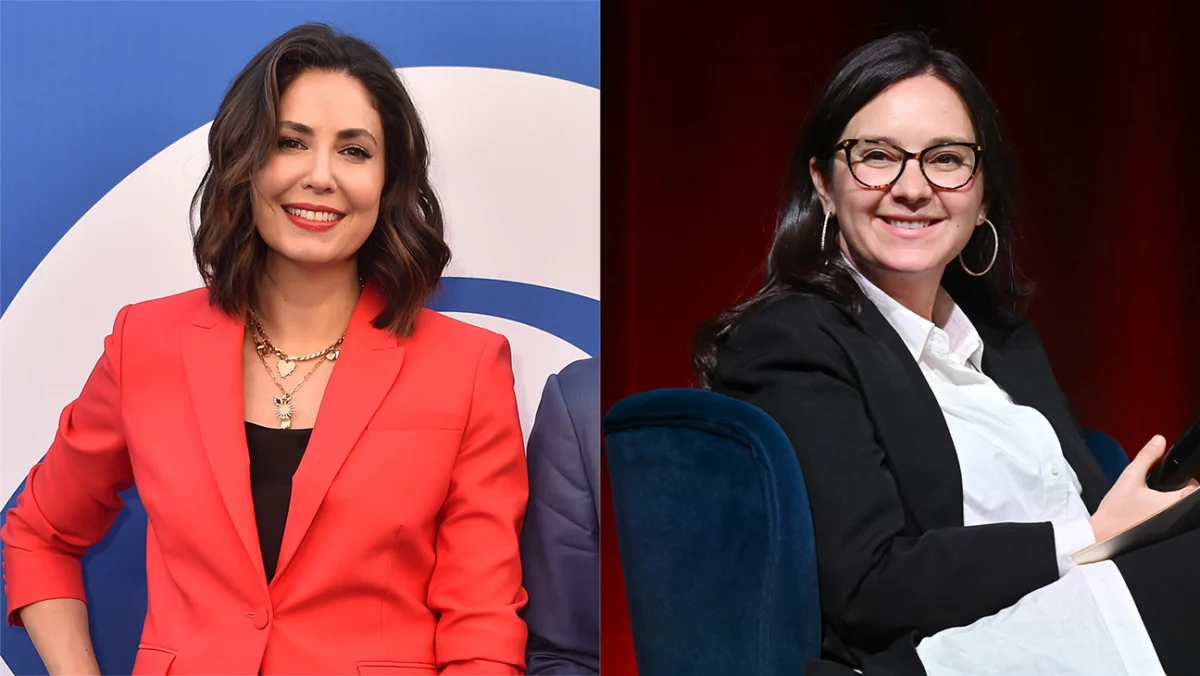
Cecilia Vega, a former correspondent for the esteemed newsmagazine "60 Minutes," has broken her silence following her dismissal in May, alleging that she faced pressure from "60 Minutes" higher-ups to inject political bias into segments that ultimately did not air. Her candid remarks, delivered at the National Association of Hispanic Journalists conference, shed further light on a turbulent period of significant leadership changes and alleged ethical compromises within CBS News. The accusations echo concerns previously raised by other prominent figures associated with the program, suggesting a pattern of alleged interference that could have far-reaching implications for journalistic integrity.
Vega’s Specific Allegations of Bias
Speaking with ABC News’ John Quiñones at the conference, Vega detailed three specific instances from this year where she claims she was asked to alter her reporting in ways that compromised its objectivity. These requests, she stated, were not the usual editorial refinements but rather aimed at steering narratives with a distinct political slant.
In a January segment focusing on Immigration and Customs Enforcement (ICE), Vega recounted being asked by executives to incorporate footage of protestors allegedly attacking citizens perceived as ICE agents. However, Vega asserted that she was unable to find any verifiable video evidence to support such an incident. This request, she implied, sought to portray a specific, potentially inflammatory, narrative without factual substantiation.
Another instance involved a segment on poverty in West Virginia, aired in February. Vega reported that she was instructed to mention Vice President JD Vance, due to his previous writings on poverty in Ohio. Vega reportedly pushed back on this suggestion, arguing that the focus of the piece was not on politicians or political voices, but rather on the lived experiences of those affected by poverty. The request, according to Vega, was to insert a political figure into a story where he was not organically central to the narrative being explored.
The third alleged instance of attempted political insertion concerned a segment about Iran. Vega stated she was asked to include a line asserting that Iran was outgunned by the United States and Israel. Vega characterized this as an "administration talking point," implying it was a directive to echo a specific government stance rather than a journalistically vetted observation. She emphasized that she could not find supporting evidence for this assertion and that it felt like an attempt to push a particular geopolitical narrative.
"I’ve gone head-to-head with editors for 25 years in this business," Vega stated at the conference, highlighting her extensive experience. "But never in my career, until now, have I felt that those edits, that those suggestions, came from a place of misinformation or politics." Her statement underscores a perceived shift in editorial directives, moving beyond standard journalistic refinement to what she described as politically motivated manipulation.
A Pattern of Discontent and Overhaul
Vega’s current allegations are not entirely new, nor are they isolated. In a statement released after her dismissal, she had previously alluded to "efforts to insert political bias into our stories." At that time, she also stated that "reporting teams have held back on submitting story pitches about important news topics out of fear of the internal repercussions." This suggests a climate of apprehension within the newsroom, where journalists may have felt stifled in pursuing certain stories or presenting them with complete editorial freedom.
Vega’s strong denunciation of the alleged practices at "60 Minutes" extended to labeling them as "censorship, both imposed and self-driven." She further warned of the dangers this posed, stating, "It is dangerous for the show and dangerous for democracy." This framing positions the alleged interference not just as an internal editorial dispute, but as a threat to the fundamental role of investigative journalism in a democratic society.
CBS News, in response to Vega’s earlier statement, issued a brief rebuttal: "We respect Ms. Vega and her contributions, but her claims are not based in reality." This official response contrasts sharply with the detailed accusations now being made public by Vega, indicating a significant disconnect between the former correspondent’s experience and the network’s public stance.
The Broader Context of CBS News Leadership Changes
Cecilia Vega’s departure from "60 Minutes" occurred amidst a significant restructuring of CBS News, initiated by CBS News editor-in-chief, Bari Weiss. This overhaul saw the dismissal of several other prominent figures, including executive producer Tanya Simon and veteran correspondent Scott Pelley. The timing of Vega’s revelations also coincides with the fallout from the exit of Scott Pelley, who himself made strong accusations against the new leadership.
Pelley, in a statement following his dismissal, accused Weiss of "incompetence and unprofessionalism." He further claimed that CBS News management "instructed me to inject falsehoods and bias into a politically sensitive story." This accusation directly mirrors Vega’s concerns about political interference and the pressure to present biased narratives. Pelley’s departure was reportedly precipitated by a heated meeting with Nick Bilton, the new executive producer of "60 Minutes," where Pelley expressed severe criticism of Weiss’s leadership, stating she was "murdering ’60 Minutes’" and was brought in "to kill it." He also questioned Bilton’s qualifications for the role.
Bari Weiss, in turn, publicly pushed back against Pelley’s criticisms, arguing that he had broken "trust and mutual respect" during a staff call. This public disagreement between a key figure of the new leadership and a long-standing, respected correspondent highlights the deep divisions and tensions within CBS News during this transition period.
Timeline of Events and Allegations
The sequence of events leading to these public accusations provides crucial context:
- January 2024 (approx.): Vega allegedly asked to insert unverified protestor footage into an ICE segment.
- February 2024 (approx.): Vega allegedly asked to mention VP JD Vance in a poverty segment focused on lived experiences.
- Undisclosed Date (prior to May 2024): Vega allegedly asked to include an "administration talking point" about Iran’s military standing.
- May 2024: Cecilia Vega is fired from "60 Minutes" as part of a broader CBS News overhaul. She releases a statement alleging efforts to insert political bias and instances of censorship.
- May 2024 (following Vega’s statement): CBS News spokesperson states Vega’s claims are "not based in reality."
- May/June 2024 (approx.): Scott Pelley is dismissed from "60 Minutes," subsequently accusing leadership of instructing him to inject bias and falsehoods.
- June 2024: Bari Weiss publicly refutes Pelley’s claims.
- [Current Date]: Cecilia Vega speaks at the National Association of Hispanic Journalists conference, detailing specific instances of alleged political interference, as reported by The New York Times and confirmed by The Status newsletter.
This chronology illustrates a series of allegations emerging from individuals who were part of or closely associated with "60 Minutes" during a period of significant editorial and leadership shifts.
Implications for Journalism and Public Trust
The repeated accusations of political bias and interference at a program as historically significant and influential as "60 Minutes" raise serious questions about the state of journalistic standards within major news organizations. If confirmed, these allegations could erode public trust in CBS News and "60 Minutes" as impartial sources of information.
The pressure to present specific narratives or "talking points" rather than objective reporting can lead to a distorted public understanding of complex issues. In an era already grappling with widespread misinformation and declining trust in media, such allegations are particularly concerning. The assertion that reporting teams may be self-censoring out of fear of repercussions further suggests a potentially chilling effect on investigative journalism.
Furthermore, the emphasis on political framing over factual reporting can have significant societal consequences. For instance, the alleged request to frame the Iran segment in a particular geopolitical light could influence public opinion on international affairs without the benefit of thorough, unbiased reporting. Similarly, misrepresenting protests or the impact of poverty through biased lenses can shape public policy and perception.
The involvement of prominent journalists like Cecilia Vega and Scott Pelley lends significant weight to these concerns. Their established reputations and years of experience in the field make their accusations difficult to dismiss. The differing responses from CBS News highlight the ongoing conflict and the difficulty in reconciling these contrasting perspectives.
Broader Impact on Media Landscape
The turmoil at "60 Minutes" and CBS News occurs at a critical juncture for the media industry. As legacy news organizations face economic pressures and evolving audience consumption habits, the temptation to prioritize sensationalism or partisan narratives for engagement can be significant. However, compromising core journalistic principles for such gains carries substantial long-term risks to credibility.
The National Association of Hispanic Journalists conference, where Vega made her remarks, is a platform for discussing critical issues facing journalists, particularly those from underrepresented communities. Vega’s willingness to speak out, despite the potential personal and professional ramifications, underscores the perceived gravity of the situation. Her focus on the lack of verifiable evidence for requested additions and the characterization of certain requests as "administration talking points" points to a fundamental challenge to the journalistic process.
As "60 Minutes" navigates this period of transition, the allegations made by Vega and others will undoubtedly be closely scrutinized. The integrity of its reporting, the editorial independence of its journalists, and ultimately, its role as a trusted purveyor of news to the public, hang in the balance. The industry will be watching to see how CBS News addresses these serious concerns and whether it can restore confidence in its commitment to objective journalism. The potential for further revelations or responses from CBS News remains high as this complex situation continues to unfold.