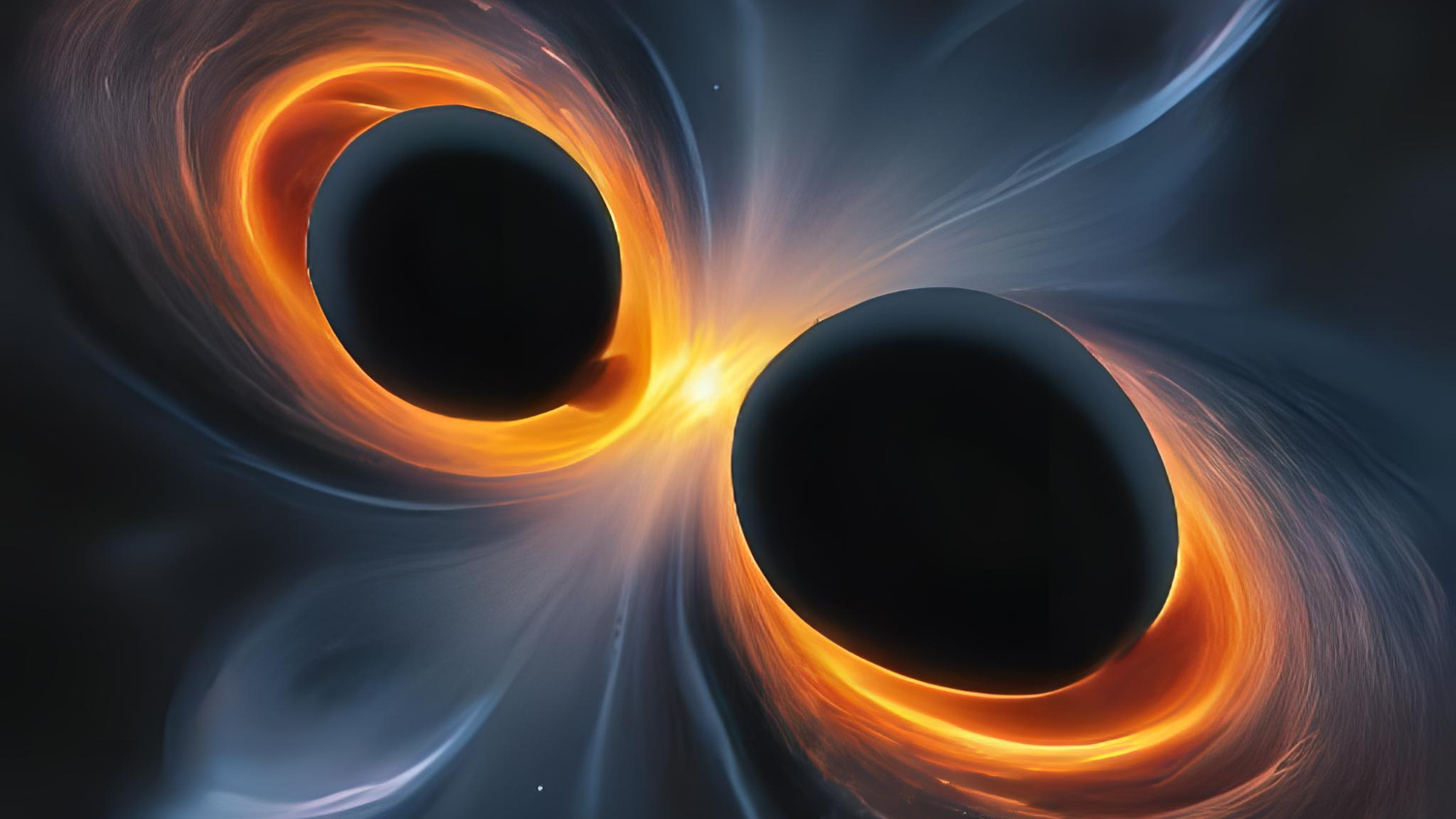
In the rapidly evolving field of gravitational wave astronomy, researchers have often encountered signals that challenge our understanding of stellar evolution. One such anomaly, the gravitational wave event designated GW231123, initially stunned the scientific community when it was detected on November 23, 2023. At the time of its discovery, the signal suggested a catastrophic collision between two black holes of such staggering mass—140 and 100 solar masses, respectively—that it defied the prevailing models of how stars live, die, and ultimately collapse. However, a groundbreaking study published on August 25 in the Astrophysical Journal Letters offers a compelling, elegant solution to this cosmic puzzle: the event may not have been a violation of physics, but rather a sophisticated optical illusion caused by the warping of spacetime itself.
The Anatomy of an Astronomical Anomaly
When the Laser Interferometer Gravitational-Wave Observatory (LIGO) recorded the data for GW231123, the signal was characterized by high-frequency ripples that indicated an exceptionally heavy binary system. In contemporary astrophysics, there is a theoretical limit known as the "pair-instability mass gap." According to this model, stars within a certain mass range are expected to undergo a runaway thermonuclear explosion that completely disrupts them, leaving behind no black hole at all. Therefore, finding black holes that fall squarely within or above this gap—particularly a 140-solar-mass behemoth—is considered "forbidden."
Beyond the mass issue, the detected signal suggested that these black holes were spinning at relativistic speeds that seemed uncharacteristic for such massive objects. This created a dual dilemma for astrophysicists: they were not only struggling to explain how such large black holes could form in the first place, but also how they could maintain such high orbital angular momentum. For months, the community debated whether current theories of stellar formation were fundamentally flawed or if this was an entirely new class of object.
The Einsteinian Explanation: Gravitational Lensing
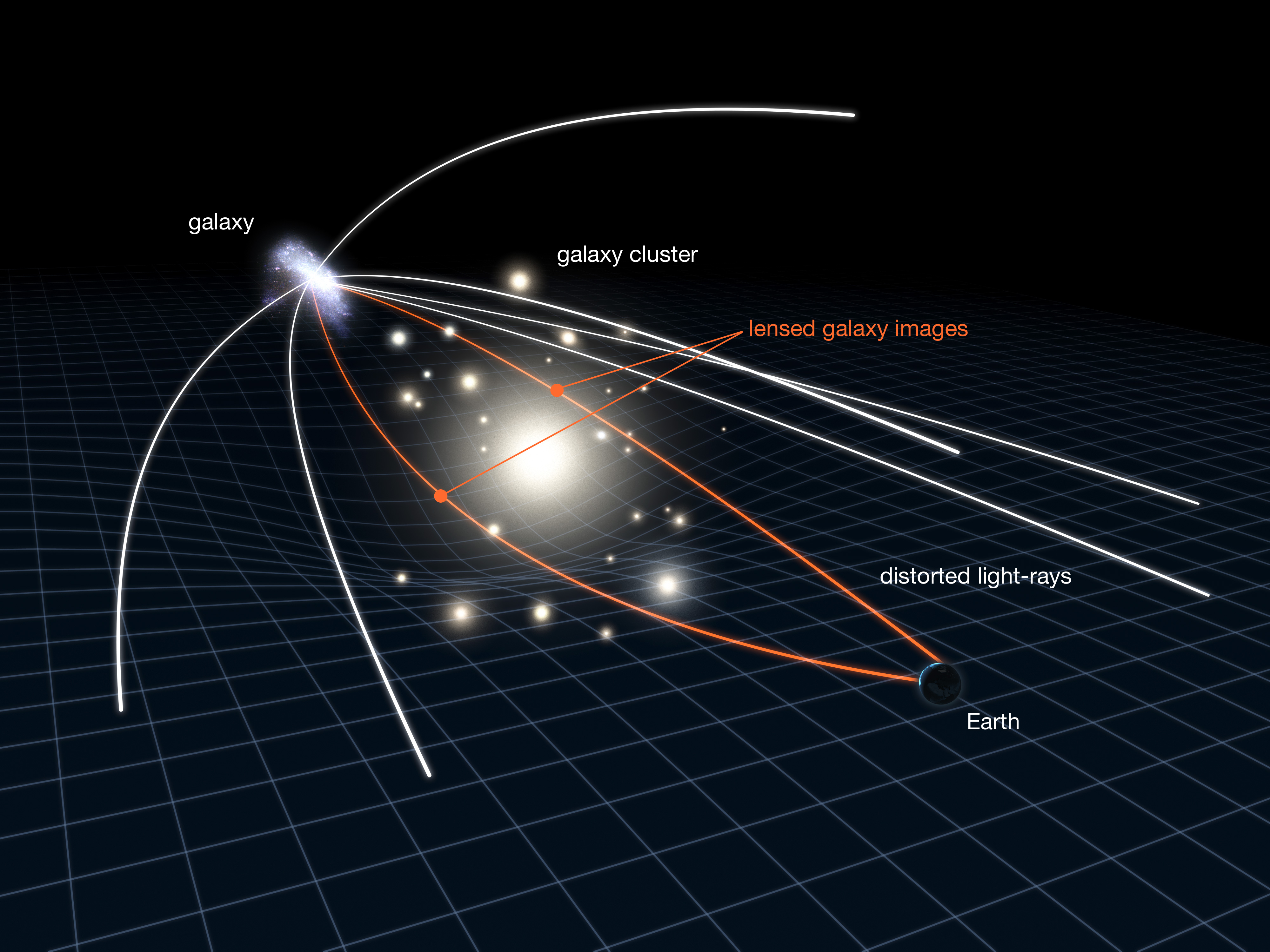
The new research, led by an international team of scientists including Miguel Zumalacárregui from the Albert Einstein Institute (AEI), proposes that we have been misinterpreting the "weight" of these objects. The team argues that the phenomenon of gravitational lensing—a cornerstone of Albert Einstein’s 1915 Theory of General Relativity—is the key to unlocking the mystery.
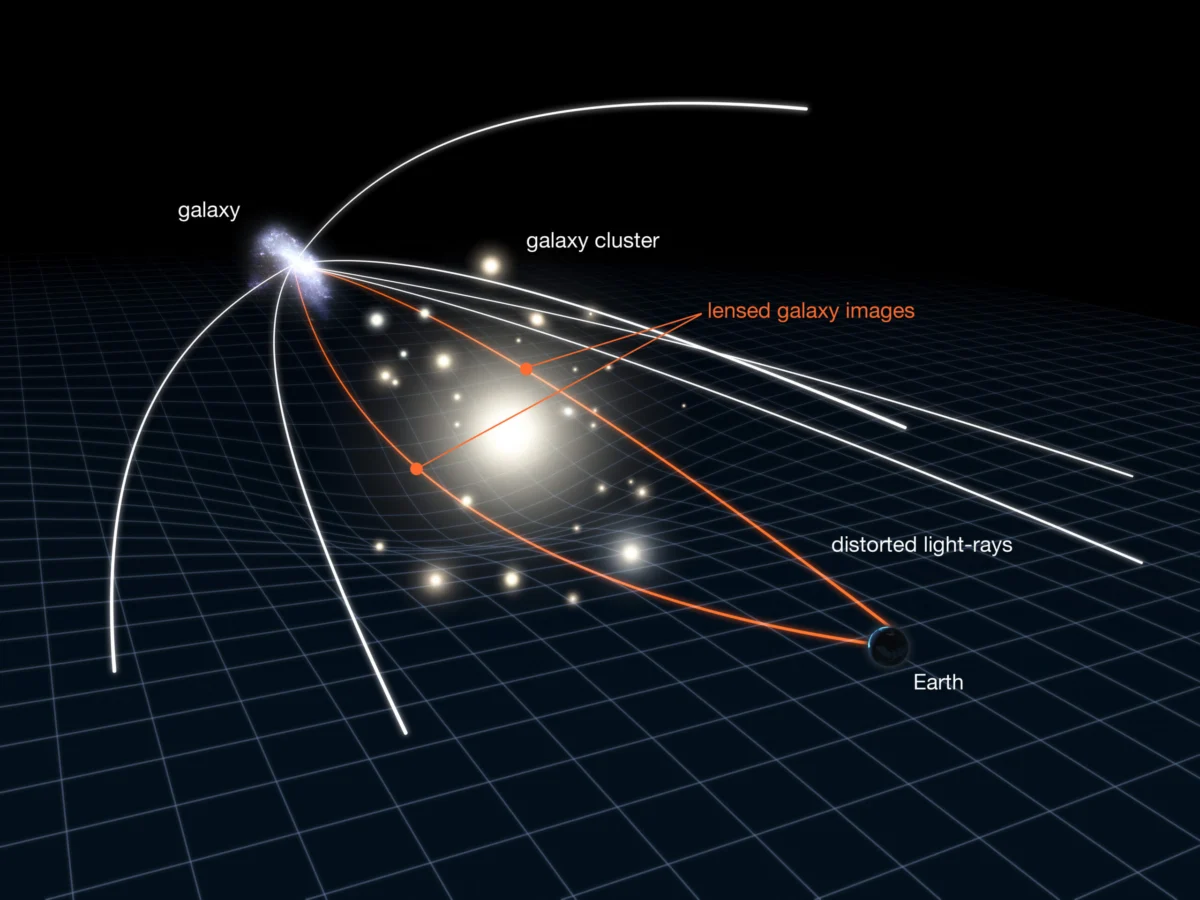
General Relativity posits that massive objects possess the ability to curve the fabric of spacetime. When light or other forms of radiation, such as gravitational waves, pass through these warped regions, their path is bent. This effect is well-documented in optical astronomy, where galaxies behind massive clusters appear magnified, distorted, or even multiplied. The researchers suggest that the gravitational waves from a standard, lower-mass merger were passing through a "lens"—a massive, compact object or structure—located between the source and Earth.
As the waves traveled through the gravitational field of this intervening mass, they were diffracted and amplified. This amplification makes the background event appear much more significant than it truly is, inflating the perceived mass and energy of the collision. By applying this lens-correction model, the researchers calculated that the original system was likely closer to a standard, non-forbidden mass range, potentially involving a total mass of 140 solar masses for the entire system rather than the massive, outlier figures previously assumed.
Implications for Future Observations
The transition from a "forbidden" event to a "lensed" event has profound implications for how we interpret data from LIGO, Virgo, and KAGRA. If a significant percentage of detected gravitational wave signals are being magnified by intervening matter, our current census of the black hole population in the universe may be skewed.
"Like light, gravitational waves can also be deflected, magnified and split into multiple signals by massive objects," Miguel Zumalacárregui noted in a recent statement. "For gravitational waves, diffraction and interference effects give us an additional way to identify and study lensed signals."
This realization opens a new window into the "dark" side of the universe. If we can identify more lensed gravitational wave signals, we can use them as tools to map the distribution of matter—even invisible dark matter—that acts as the lens. This turns the problem of signal interference into a powerful new technique for cosmology, allowing us to see further into the deep past of the universe than ever before.
Technical Challenges and The Search for the Lens
Despite the success of the model in explaining the GW231123 anomaly, the nature of the lens itself remains a mystery. The team estimates that the lensing object would need to be a compact mass of approximately 190 to 850 solar masses, or perhaps a more diffuse structure like a dense globular cluster. Such objects are statistically rare in the regions of space where these mergers typically occur.
Srashti Goyal, a key member of the research team, highlighted the complexity of this identification process. "The lensing interpretation does not require unusually high spins, which makes the physics far more consistent with our current stellar evolution models," Goyal explained. However, identifying the specific "lens" requires pinpointing the exact coordinates in the sky where the lensing event occurred—a task that remains notoriously difficult for gravitational wave detectors, which lack the pinpoint precision of optical telescopes.
The Future of Gravitational Wave Astronomy
As detector sensitivity continues to improve, the scientific community expects to see an increase in the number of recorded mergers. With a larger sample size, researchers hope to perform statistical analyses to determine how common gravitational lensing is in the gravitational wave regime. If the rate of these "lensed" events is higher than expected, it could lead to a massive revision of how we calculate the distribution of black holes across the cosmic timeline.
The resolution of the GW231123 mystery serves as a reminder of the power of theoretical physics to reconcile data with observation. It highlights a critical shift in the field: moving from simply identifying "extraordinary" events to understanding the environmental factors that influence how we perceive them. As we refine our detection software and increase the resolution of our gravitational wave observatories, we are moving toward a time where we can filter out these cosmic illusions to get a clearer, more accurate picture of the most energetic events in our universe.
Conclusion
The "forbidden" merger of 2023 stands as a pivotal moment in modern astrophysics. By moving past the initial shock of finding a "physically impossible" event, researchers have uncovered a new layer of complexity in the way we observe the universe. The application of gravitational lensing as an explanation for signal distortion not only saves our existing theories of stellar evolution but also provides a roadmap for future discoveries.
The work published in the Astrophysical Journal Letters underscores the necessity of continuous, rigorous testing of our foundational theories. As we look toward the next generation of gravitational wave detectors, such as the proposed space-based LISA (Laser Interferometer Space Antenna), the ability to differentiate between intrinsic stellar properties and extrinsic lensing effects will become a mandatory skill for the next generation of astronomers. The universe, it seems, is not breaking its own rules; we are simply learning to account for the way it bends the truth on its way to our detectors.