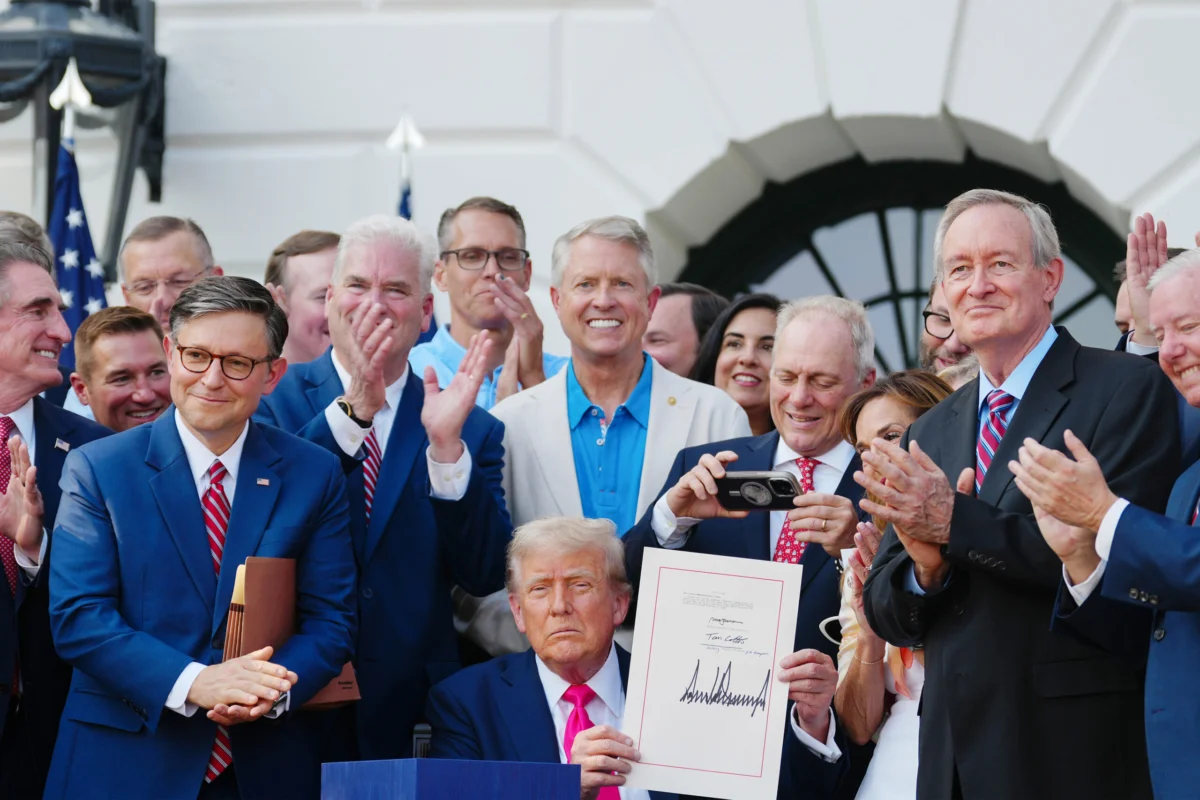
During the recent Republican midterm convention, President Trump made a significant policy pledge, asserting that his administration would move to slash "out-of-control" credit card swipe fees. The President specifically claimed that such an action would save the average American family approximately $1,200 per year. He further argued that U.S. consumers are currently burdened by fees that are seven to eight times higher than those paid by consumers in other developed nations. However, a rigorous examination of the legislative proposal currently endorsed by the White House, known as the Credit Card Competition Act, suggests that these claims lack a direct causal link to the bill’s actual mechanisms and may misrepresent how the payments ecosystem functions.
Legislative Background and the Credit Card Competition Act
The Credit Card Competition Act, championed by Senator Dick Durbin (D-IL) and supported by a bipartisan group of legislators including Senator Roger Marshall (R-KS), represents a significant attempt to alter the routing of electronic credit transactions. The core of the bill targets large financial institutions, specifically those with assets exceeding $100 billion. Under the proposed legislation, these banks would be mandated to offer at least two unaffiliated payment networks on their credit cards. This would effectively require that one of these networks be something other than the dominant duopoly of Visa or Mastercard.
The legislation grants merchants the authority to select which network routes a specific transaction. By allowing retailers to choose the lowest-cost provider for each purchase, proponents argue that market pressure will force a reduction in interchange fees. Notably, American Express and Discover cards are explicitly exempted from these requirements. Historically, this legislative effort has seen multiple iterations, with early support from figures such as J.D. Vance during his tenure as a U.S. Senator. The fundamental shift here is the transition from a model where networks compete for issuer relationships through innovation, technology, and marketing to a model where the network is selected primarily based on cost-efficiency at the point of sale.
The Math Behind the $1,200 Claim
The figure of $1,200 in annual savings per household appears to originate from lobbying materials produced by the merchant sector rather than a government-issued economic impact study. Senator Roger Marshall has publicly stated that the average family pays roughly $1,200 a year in hidden swipe fees embedded within the prices of retail goods. While the National Retail Federation (NRF) has been a vocal proponent of the legislation, arguing that it will curb excessive costs, their own internal projections tell a more complex story.
On the NRF’s advocacy portal, the organization estimates that the total annual savings nationwide would be approximately $15 billion. If one were to divide this total by the number of households in the United States, the result is significantly lower than the $1,200 figure cited by the President. Furthermore, even if the entirety of that $15 billion were passed directly to consumers—an outcome that economic history suggests is unlikely—the per-household savings would equate to roughly $174 annually. There is no legislative mechanism within the Credit Card Competition Act that mandates retailers lower their prices once interchange fees are reduced, leading many economists to suggest that these savings may simply be absorbed into merchant profit margins rather than passed on to the public.
Global Precedents and Economic Implications
When analyzing the impact of regulating interchange fees, observers often point to international markets that have already implemented similar caps. In countries such as Australia, the Reserve Bank has implemented rigorous interchange regulation. Data from these markets indicate that when merchant fees are artificially suppressed, the primary consequence is not lower prices for consumers, but rather a contraction in the rewards and benefits offered by credit card issuers.
The Reserve Bank of Australia has explicitly stated that its regulatory framework was intended to prioritize lower merchant costs, even at the expense of card features. As a result, consumers in regulated markets have seen a decline in the value of points, lower cashback percentages, and a reduction in premium card services. In the United States, a New York Federal Reserve analysis of approximately 550 million card accounts—representing 90% of the U.S. market—revealed that for every 1.82% of purchase volume collected in fees, issuers spend roughly 1.57% on consumer rewards. Should the Credit Card Competition Act force a significant reduction in these fees, the economics of card issuance would likely shift to compensate for the lost revenue, leading to the erosion of the very programs that incentivize card usage for millions of Americans.
Impact on Credit Access and Financial Inclusion
Beyond the reduction of rewards, there is a broader concern regarding the profitability of credit extension. If the revenue generated from interchange fees is significantly curtailed, banks may be forced to restrict access to credit, particularly for marginal borrowers. For consumers with lower credit scores, the loss of credit card options may drive them toward less favorable financial alternatives, such as payday lending services, which carry higher interest rates and less protection.
Furthermore, the impact on the travel and aviation sectors could be substantial. Many major airlines rely on credit card partnerships to bolster their profitability and fund expansion. Loyalty programs, which are heavily subsidized by the interchange fees generated through co-branded credit cards, are essential for maintaining the affordability of air travel. A reduction in these subsidies could lead to a decrease in the number of available flights, higher base ticket prices, and a general cooling of the travel economy. When companies like Delta or Southwest plan new routes or expand service to new destinations, the revenue generated through credit card partnerships is frequently a key factor in those investment decisions.
The Myth of the Cross-Subsidy
A central argument for the legislation is that credit card fees represent a subsidy from consumers who pay with cash to those who use credit cards for rewards. However, this view fails to account for the actual costs of cash management for businesses. Accepting physical currency involves significant overhead, including the risk of employee theft, the costs of armored car services, insurance premiums, and the labor associated with counting cash and correcting errors.
For many merchants, the administrative cost of handling cash can exceed the percentage-based fees charged by credit networks. Moreover, many low-income consumers utilize credit cards to manage their monthly cash flow, suggesting that the "cross-subsidy" argument is a gross oversimplification of the modern retail environment. By focusing on the gross cost of swipe fees without considering the net cost of payment acceptance, the debate over the Credit Card Competition Act ignores the complex interplay between payment security, convenience, and the actual cost of doing business.

Timeline of the Legislative Debate
The trajectory of this policy began with initial discussions in the early 2020s, gaining momentum as retailers sought relief from rising inflationary pressures. By 2025, the Credit Card Competition Act had become a focal point of lobbying efforts, culminating in its endorsement by major political figures in 2026. As the bill moves through the legislative process, the debate remains polarized between large retail conglomerates and the financial services industry.
Chronologically, the push for this regulation has seen a steady progression:
- Early 2023: Initial legislative drafts were introduced, focusing on network competition.
- Late 2024: The National Retail Federation increased its campaign spending to influence voter perception of swipe fees.
- Early 2026: President Trump signaled his support for the legislation, elevating it to a top-tier campaign issue for the midterm elections.
- Current Status: The bill remains under committee review, with intense debate over the long-term impact on consumer credit and the potential for a "hidden tax" on the rewards ecosystem.
Conclusion and Future Outlook
The pledge to save the average American family $1,200 per year via the Credit Card Competition Act represents a bold political promise, yet it is one that rests on shaky economic foundations. While the reduction of swipe fees is a popular goal, the mechanism by which this is proposed—government-mandated network competition—threatens to destabilize the rewards ecosystem that many American consumers have come to rely on.
As the debate continues, policymakers must weigh the desire to provide relief to merchants against the unintended consequences of reduced credit access and diminished consumer benefits. If the history of international regulation serves as a guide, the end result may not be the windfall promised to families, but rather a restructuring of the payments landscape that prioritizes business margins over consumer value. Without clear evidence that savings will be passed to the end user, the legislation remains a highly contentious intervention in a complex and currently functioning market.