
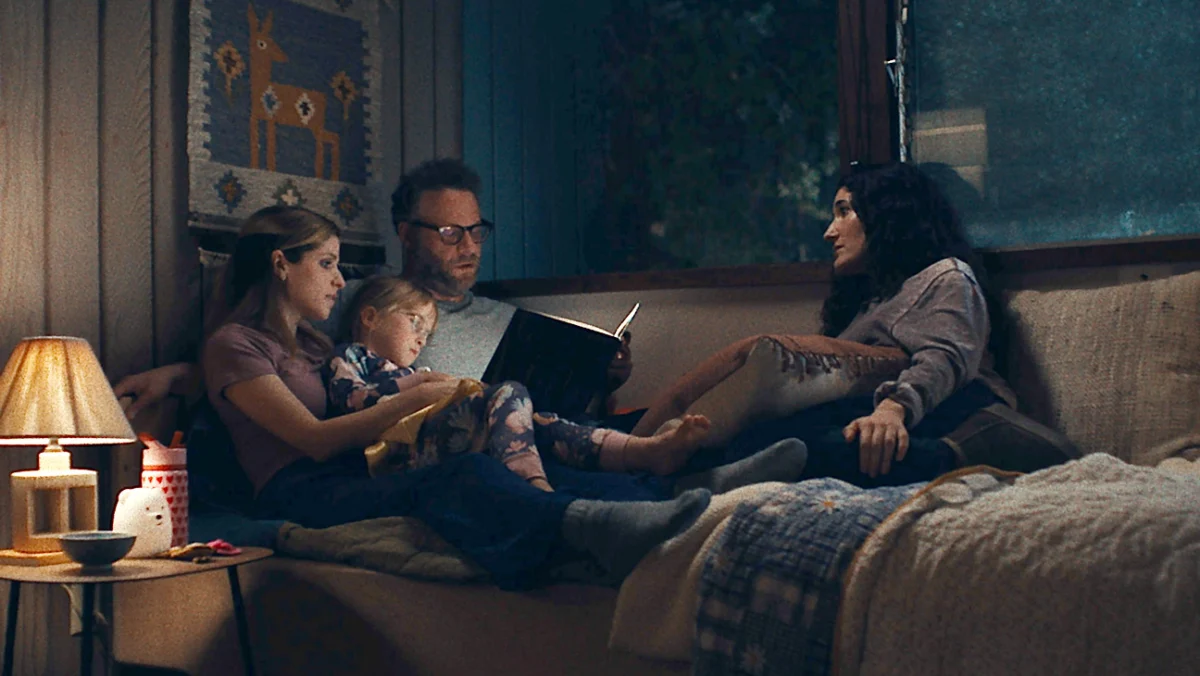
The Toronto International Film Festival (TIFF) has long served as a premier launchpad for cinema that pushes boundaries, sparks cultural conversations, and offers deeply intimate portrayals of human experience. At the heart of this year’s festival, within The Hollywood Reporter’s Studio at 1 Hotel presented by Canada Goose, actor and filmmaker Seth Rogen sat down alongside collaborators to discuss one of the most revealing projects of his career. The film, titled Babies, represents a significant departure from traditional Hollywood romantic comedies and family dramas by directly confronting a modern social taboo: the deliberate choice to live a child-free life. Written and directed by Lauren Miller Rogen and starring Seth Rogen alongside Anna Kendrick, the comedy-drama draws heavily from the couple’s real-life experiences, emotional deliberations, and personal milestones.
As audiences and critics gathered in Toronto for the film’s premiere, the discourse surrounding Babies quickly expanded beyond typical red-carpet banter. The project has emerged as a cultural lightning rod for conversations regarding reproductive autonomy, societal expectations placed on married couples, and the validity of choosing a path divergent from traditional family structures. By weaving autobiographical elements—including the complexities of long-term marriage, friendship dynamics, and profound personal loss—the creators have crafted a narrative that resonates deeply within the contemporary social landscape.
A Mirror to Reality: The Premise and Personal Parallels
At its core, Babies follows the lives of a happily married couple named Annie and Aaron—whose names are directly derived from Lauren and Seth’s middle names. The narrative catalyst occurs when a close friend, portrayed by Kate Berlant, goes through a separation from her husband and moves in with the couple temporarily, bringing her young daughter along for the transition. This close-quarters living arrangement exposes Annie and Aaron to the unfiltered, daily realities of raising a child, testing their preconceived notions and prompting deep introspection about their own future.
For Seth Rogen, seeing his reality adapted for the screen was an unprecedented experience. While the actor has starred in numerous films throughout his extensive career that touch upon biographical elements or shared cultural touchstones, none have mirrored his actual domestic existence with such acute precision. Speaking candidly during the TIFF panel, Seth expressed his admiration for his wife’s creative vulnerability. He noted that the film serves as an honest reflection of their collective thought process as a married couple navigating the societal pressures surrounding family planning. He acknowledged the shock of witnessing such intimate aspects of their lives translated into cinematic fiction, praising the bravery required to present such private internal dialogues to a global audience.
Parallel to the central narrative of parenthood and domestic adjustment, the film also addresses profound emotional trials. Annie’s character navigates her mother’s harrowing battle with Alzheimer’s disease. This plot point is a poignant nod to Lauren Miller Rogen’s own life; the director’s mother tragically passed away from complications related to early-onset Alzheimer’s disease in 2020. By intertwining the existential questions of legacy and caregiving with the realities of modern adulthood, Babies establishes a complex emotional framework that elevates it above a standard comedic setup.
The Genesis of the Project: A Decade-Long Evolution
The conceptual timeline of Babies spans nearly a decade, evolving organically from a real-life domestic situation into a fully realized feature film. Approximately ten years prior to the film’s production, a close friend of Lauren and Seth—a divorced mother with a young child—moved into their home for a full year. Initially, Lauren viewed the unique living situation through the lens of television production. Recognizing the comedic and dramatic potential of housing a child while oneself remained uncertain about entering parenthood, she conceptualized the premise as a potential television series.
However, the project stalled in its early development stages. The primary roadblock was not a lack of creative enthusiasm, but rather a fundamental narrative deficiency: Lauren did not yet know how the story would conclude in her own life. At that juncture, she and Seth had not reached a definitive resolution regarding their stance on having children. Television requires episodic momentum and structural direction, neither of which could be authentically engineered while the creators were still living the questions themselves.
It was only after years of exhaustive internal reflection, extensive conversations, and emotional labor that the couple arrived at a firm, shared conclusion regarding their child-free lifestyle. Once that personal milestone was achieved, the narrative unlocked itself. The transition from concept to script execution happened with remarkable speed. Lauren drafted the screenplay in January 2025, completing the final pages by the spring. Production commenced swiftly in the autumn of that same year, culminating in its high-profile festival premiere.
Cast Reactions and the Boundaries of Vulnerability
Stepping into roles that so closely mirror the lives of their creators presented a unique set of challenges for the cast, particularly for lead actress Anna Kendrick. Known for her sharp comedic timing and dramatic versatility, Kendrick plays the central role of Annie. Speaking to press at the festival, Kendrick offered a humorous yet revealing assessment of the emotional intensity required to inhabit such a raw cinematic space.
Kendrick admitted that bringing such intimate domestic dynamics to life on screen would induce a "dissociative experience" for her personally. She marveled at Lauren’s ability to channel deeply personal vulnerabilities into a structured, communicative art form. Expressing her awe of the director’s composure, Kendrick joked that attempting to execute a project so inextricably linked to her own private life would feel equivalent to "setting myself on fire on set." This sentiment underscores the extraordinary degree of emotional transparency embedded within the screenplay, setting a high standard for authenticity in contemporary relationship-focused cinema.
Kate Berlant, who portrays the displaced friend seeking temporary refuge within the couple’s home, anchors the comedic and disruptive elements of the narrative. Her character serves as the physical manifestation of parenthood’s chaotic entry into an orderly, child-free household, allowing the script to explore the granular, unglamorous aspects of raising children without resorting to cynical tropes.
Deconstructing Cultural Tropes and the Child-Free Perspective
One of the most notable achievements of Babies is its nuanced critique of cultural language and societal expectations surrounding family structures. Seth Rogen highlighted how the film actively deconstructs everyday idioms, such as the widely accepted yet irritating phrase "dad duty," which he dismissed as "obnoxious." Through the lens of the film, everyday vernacular is scrutinized for the hidden biases and pressures it places on individuals regarding domestic labor and parental obligations.
Furthermore, the film addresses a demographic that is rarely represented with empathy or nuance in mainstream media: individuals who genuinely like children, excel at interacting with them, possess high levels of personal responsibility, and maintain thriving, loving marriages—yet simply do not desire to become parents themselves. Seth emphasized that the film validates this specific perspective, noting that it is a viewpoint rarely shared or understood within broader cultural discourse.
In real life, the Rogens frequently spend time with friends and their children, maintaining rich and loving relationships with the younger generation. This lived reality ensures that Babies avoids falling into the trap of anti-child cynicism. Instead, the narrative carefully distinguishes between an aversion to children and the valid, intentional choice not to parent. Lauren Miller Rogen has been particularly vocal in emphasizing that the film was crafted not only for those considering or embracing a child-free lifestyle, but equally for those who have consciously chosen the path of parenthood. By observing and honoring the beautiful, complex dynamics of their friends’ families, the filmmakers sought to portray parenthood with respect, even as they carved out valid space for alternative choices.
Broader Socio-Cultural Implications and Industry Impact
The arrival of Babies at the Toronto International Film Festival aligns with a broader cultural shift in Western society regarding family planning, demographic trends, and personal autonomy. Statistical data over the past decade indicates a steady decline in birth rates across North America and Europe, driven by economic factors, changing career aspirations, and an increased cultural acceptance of child-free living. Despite these shifting demographics, mainstream media and cinematic storytelling have historically lagged behind, frequently framing the decision not to have children as either a tragic deficit or a temporary phase destined to be corrected.
By tackling this subject through an autobiographical, comedic lens, Babies bridges the gap between sociological shifts and accessible entertainment. Films that successfully humanize demographic trends without becoming didactic hold significant cultural weight. They provide validation to underrepresented segments of the population while fostering cross-perspective empathy among audience members who have chosen traditional family paths.
The strategic partnership with major festival platforms like TIFF and high-profile distribution pathways ensures that the film will reach a vast, diverse audience upon its commercial release. As the industry anticipates the film’s theatrical rollout in 2027, the initial critical reception suggests that Babies will ignite important discussions in living rooms, therapeutic spaces, and cultural forums alike.
Chronology of the Project
- Circa 2016: A close friend of Lauren and Seth Miller Rogen moves into their home for a year with her young child, planting the initial seed for a narrative concept.
- 2016–2024: The creators deliberate on the concept, initially considering a television series format, but delay production while navigating their own personal journey toward a definitive child-free lifestyle.
- January 2025: Lauren Miller Rogen writes the screenplay for Babies at an accelerated pace, completing the draft by the spring.
- Fall 2025: Principal photography begins on the comedy-drama, starring Seth Rogen and Anna Kendrick.
- September 2026: Babies holds its world premiere at the Toronto International Film Festival (TIFF) within The Hollywood Reporter’s Studio at 1 Hotel, presented by Canada Goose.
- 2027: The film is officially scheduled for a theatrical release, bringing its intimate exploration of modern relationships to general audiences.
As the entertainment industry continues to evolve, projects like Babies demonstrate a growing appetite for stories rooted in emotional honesty and lived experience. By translating their private reflections into a public work of art, Seth Rogen and Lauren Miller Rogen have contributed a valuable, humane perspective to the ongoing dialogue surrounding modern adulthood, friendship, and the diverse ways individuals choose to define a fulfilling life.








Leave a Reply