

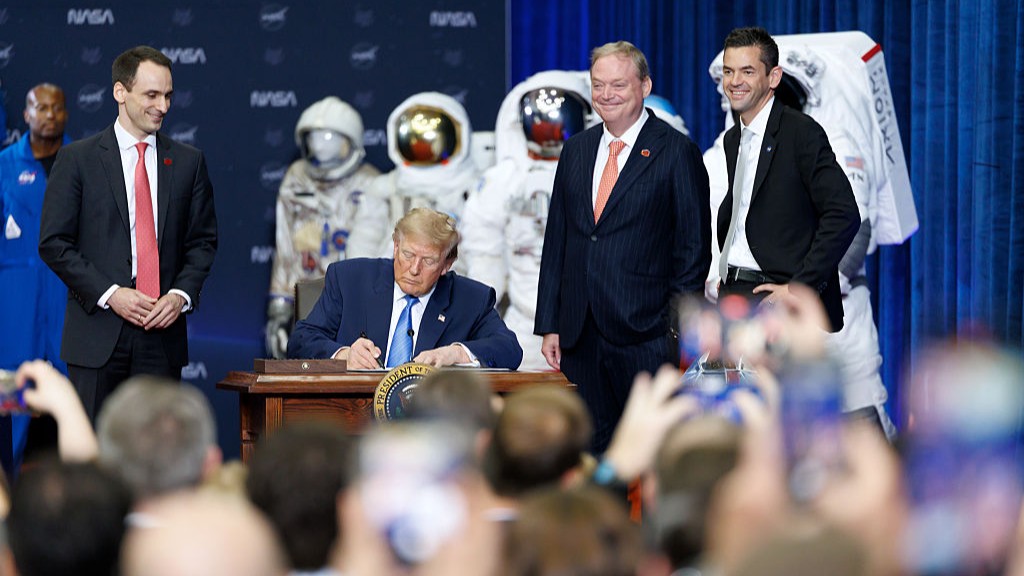
On August 28, 2026, President Donald Trump visited the Johnson Space Center in Houston, Texas, to announce a transformative vision for the future of American extraterrestrial ambitions. Standing against the backdrop of NASA’s historic mission control, the President signed an executive order initiating the formal study of a United States Space Academy. The proposal seeks to establish an elite, centralized institution dedicated to training the next generation of space leaders, theoretically operating in a manner similar to the established service academies like West Point or the U.S. Naval Academy.
The announcement represents a significant shift in how the United States approaches the cultivation of its aerospace workforce. By envisioning an academy that serves the needs of both the U.S. Space Force and the civilian-led National Aeronautics and Space Administration (NASA), the administration is wading into a long-standing, delicate policy debate regarding the separation of military and civilian space endeavors.
A Chronology of Modern Space Policy Shifts
To understand the weight of this new proposal, one must look at the recent trajectory of American space policy. The Trump administration’s focus on the space domain has been consistent since his first term in office. In 2017, the President signed Space Policy Directive-1, which refocused NASA’s mission on a long-term return to the Moon and subsequent human exploration of Mars under the banner of the Artemis program.
The momentum continued in 2018 when the administration first floated the idea of a dedicated military branch for space operations. By 2019, that concept became reality with the signing of the National Defense Authorization Act, which officially established the United States Space Force—the first new military service branch since 1947. The current proposal for a Space Academy serves as the logical, albeit controversial, next step in this evolution. If the academy is realized, it would mark the first time the federal government has operated a specialized, high-level service academy that bridges the gap between civilian scientific exploration and national security operations.
The Mandate: A 120-Day Feasibility Review
It is critical to note that the executive order signed in Houston does not immediately break ground on a campus. Instead, it mandates the creation of a high-level commission tasked with evaluating the operational, structural, and financial feasibility of such an institution.
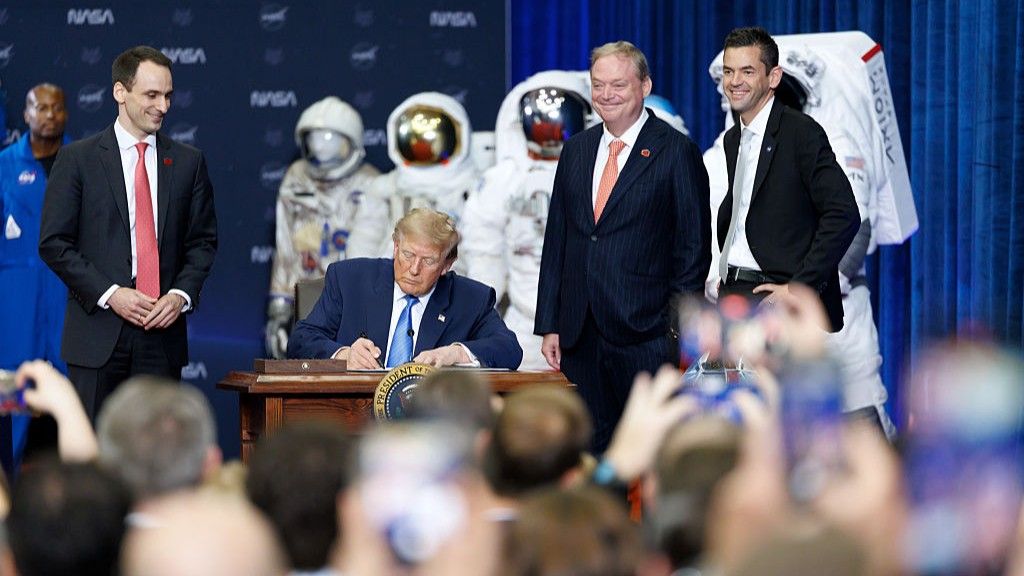
The commission is to be led by NASA Administrator Jared Isaacman, a figure known for his deep ties to the commercial space sector. The inclusion of the Secretary of Defense, the National Security Advisor, and the Director of the Office of Management and Budget (OMB) indicates that the administration views this project as a cross-departmental priority. The commission has been granted a 120-day window to report its findings back to the White House. This report is expected to address key logistical hurdles, including curriculum development, site selection, and the integration of civilian and military training protocols.
Financial and Bureaucratic Challenges
The path to establishing a new federal academy is fraught with legislative and fiscal obstacles. According to current estimates from policy analysts and members of Congress, the annual operating cost of a standard military service academy averages roughly $1 billion. Creating an institution from the ground up—including the construction of laboratories, high-tech flight simulators, housing, and administrative infrastructure—would require a massive initial capital outlay.
Funding remains the most significant hurdle. NASA’s budget is non-mandatory and subject to the annual congressional appropriations process, making it susceptible to political fluctuations. Critics of the plan argue that diverting funds to build a new academy could cannibalize existing budgets for scientific research, climate monitoring, or the ongoing Artemis missions. Furthermore, the legislative authority to establish a new federal institution rests solely with Congress. Without significant bipartisan support, the President’s executive order may struggle to move beyond the study phase.
The Debate: Civilian Science vs. National Security
The primary tension surrounding the proposed academy lies in the philosophical and legal separation of civilian and military space assets. Since the passage of the National Aeronautics and Space Act of 1958, the United States has maintained a strict division between civilian space programs (NASA) and those under the Department of Defense. This policy was designed to reassure the international community that American space exploration was rooted in peaceful scientific discovery rather than clandestine military expansion.
The proposed U.S. Space Academy risks blurring these lines. By training personnel who may oscillate between roles in the Space Force and positions within NASA or private aerospace companies, the institution could inadvertently militarize the perception of civilian research. If the academy adopts a curriculum heavily weighted toward military defense, national security, and warfare, it could complicate international collaborations with partner nations that maintain strictly non-military space policies.
Potential Benefits to the Aerospace Ecosystem
Proponents of the academy argue that such a facility is necessary to address a growing skills gap in the aerospace sector. As the global space economy expands—driven by the rapid proliferation of satellite constellations, GPS-dependent infrastructure, and the rise of commercial spaceflight—the demand for highly specialized engineers, mission controllers, and data analysts is at an all-time high.
An academy could provide a standardized pipeline of talent, ensuring that graduates are proficient in both the technical aspects of rocket science and the operational realities of modern orbital management. If the institution successfully integrates civilian and military curricula, it could create a "dual-use" workforce capable of navigating the complex regulatory and technological landscape of 21st-century spaceflight.
Expert Perspectives and Legislative Skepticism
The response from the aerospace community has been mixed. Former NASA officials have expressed concern that the agency’s identity as an exploratory, scientific body could be diluted if it is forced to adopt the organizational culture of a military branch. In Congress, members have voiced skepticism regarding the necessity of a new academy when top-tier engineering universities and existing military programs already produce high-quality candidates for the aerospace workforce.
"The idea of a Starfleet Academy for the United States is intellectually appealing, but we must be careful not to reinvent the wheel at the expense of our core missions," noted one legislative aide familiar with space policy. The concern is that if the academy fails to clearly define its purpose—whether as a scientific institution or a military training ground—it may end up as a costly, ill-defined bureaucratic entity.
Looking Toward the Future
As the commission begins its work, the administration faces the task of defining the "civic grounding" mentioned in the executive order. The final design of the academy will reflect the government’s priorities in space for decades to come. If the institution focuses on international cooperation and scientific advancement, it could serve as a beacon for global research. If it focuses heavily on space dominance and defense, it could signal an era of increased friction in the final frontier.
The 120-day reporting period will likely be characterized by intense lobbying from the defense industry, academic institutions, and federal agencies. Regardless of the outcome, the proposal has effectively reignited a national conversation about the purpose of space exploration and the role the United States intends to play in an increasingly crowded and contested orbital environment. The ultimate test for the U.S. Space Academy will be whether it can foster a culture that respects the long-standing tradition of civilian space exploration while acknowledging the undeniable reality of the modern, securitized space domain.









Leave a Reply