
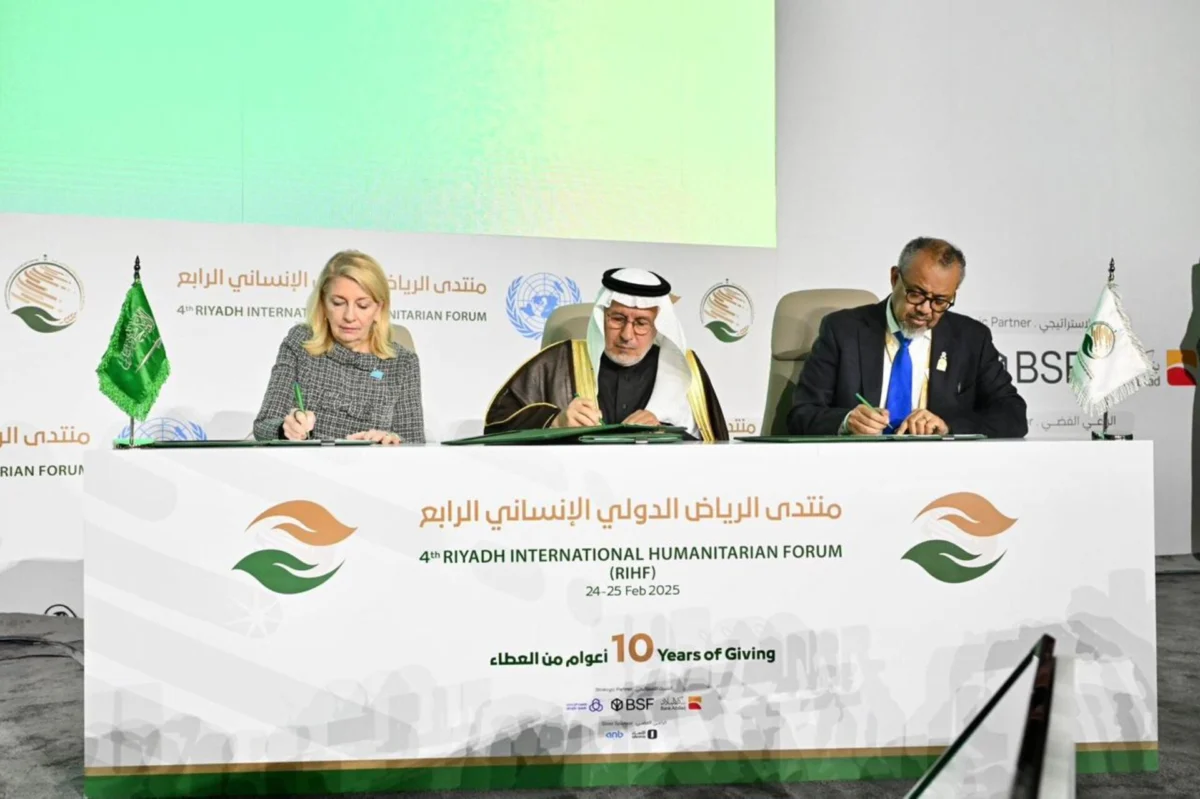
The Riyadh International Humanitarian Forum convened global policymakers, health diplomats, and humanitarian leaders in the Saudi capital on February 24-25, 2025, serving as a critical nexus for addressing compounding international health emergencies. Coinciding with the milestone tenth anniversary of the King Salman Humanitarian Aid and Relief Centre (KSRelief), the two-day high-level summit provided an urgent platform to advance health diplomacy, protect crisis-affected populations, and reinforce the safety and security of humanitarian aid workers operating in volatile environments across the Middle East and beyond.
Against a backdrop of escalating geopolitical instability, climate-induced vulnerabilities, and fragile health systems, the forum yielded a series of high-stakes financial commitments and multilateral partnerships. Most notably, the gathering catalyzed critical funding pacts between the World Health Organization (WHO), UNICEF, and KSRelief, targeting resurgent infectious diseases such as polio, cholera, and malaria, while simultaneously addressing the acute medical needs of displaced populations and refugees fleeing regional conflicts.
Background Context of the Event and the Evolution of KSRelief
Established in May 2015 by royal decree under the guidance of Custodian of the Two Holy Mosques King Salman bin Abdulaziz Al Saud, the King Salman Humanitarian Aid and Relief Centre was conceived as the central arm for Saudi Arabia’s humanitarian outreach. Over the past decade, KSRelief has evolved from a national relief coordinator into a prominent global donor, deploying billions of dollars across dozens of countries to alleviate suffering caused by natural disasters, economic collapses, and protracted armed conflicts.
The 2025 Riyadh International Humanitarian Forum marked a decade of institutional growth for KSRelief, offering an opportune moment to evaluate past interventions and chart a collaborative future with international organizations like the WHO and UNICEF. The forum’s thematic pillars focused heavily on the intersection of health security and human dignity, prioritizing advocacy for vulnerable demographics trapped in active conflict zones. Discussions centered on the operational realities of delivering aid in hostile territories, the protection of medical personnel under international humanitarian law, and the necessity of proactive health diplomacy to bridge geopolitical divides in the pursuit of universal health coverage.
Chronology of Key Agreements and Major Pledges
The two-day forum was structured around high-level plenaries, technical working sessions, and bilateral negotiations that culminated in major funding announcements.
On the opening day, February 24, focus immediately turned to immediate disease outbreaks in the Middle East, particularly in Yemen and the neighboring region impacted by the Sudanese civil war. Dr. Tedros Adhanom Ghebreyesus, Director-General of the WHO, alongside Dr. Abdullah Al Rabeeah, Supervisor-General of KSRelief, engaged in formal bilateral discussions that established the parameters for immediate health sector support.

Following these negotiations, the WHO and KSRelief officially inked a targeted package of bilateral agreements. This package included a US$ 12 million allocation dedicated entirely to comprehensive malaria control initiatives in Yemen, where deteriorating infrastructure and disrupted vector control have spurred transmission rates. Recognizing the intertwined water and sanitation crises in the country, an additional US$ 2.1 million was committed to expand cholera treatment centers, secure clean water supplies, and ensure the steady pipeline of essential rehydration supplies and antibiotics.
Simultaneously, the KSRelief and WHO Egypt Country Office formalized a US$ 3.6 million agreement tailored to the humanitarian fallout of the conflict in Sudan. The funding is specifically earmarked to provide uninterrupted dialysis treatment for Sudanese refugees who were forced to flee their homeland and now reside in Egypt, where chronic disease management for displaced persons has strained local health capacities.
The culmination of the forum’s financial commitments arrived on February 25, when the Kingdom of Saudi Arabia officially operationalized and confirmed a landmark US$ 500 million pledge to the Global Polio Eradication Initiative (GPEI). Initially announced in April 2024, this substantial multi-year investment was formally divided through two distinct subsidiary agreements signed during the forum: US$ 300 million allocated to the WHO and US$ 200 million directed to UNICEF.
Supporting Data and the Global Polio Eradication Campaign
The formalization of the US$ 500 million GPEI contribution represents one of the largest single-donor infusions into global polio eradication efforts in recent history. According to program data, this capital injection will directly bolster an expansive immunization apparatus designed to vaccinate approximately 370 million children annually across multiple high-risk geographies.
Despite decades of global progress that brought the world to the brink of eradicating wild poliovirus type 1, the disease has demonstrated alarming resilience in fragile and conflict-affected environments. The resurgence of polio in regions with compromised health infrastructure—most notably Afghanistan, Pakistan, and the Gaza Strip—has posed an existential threat to global eradication goals.
In conflict zones such as Gaza, where health systems have been severely degraded by ongoing hostilities, and in the endemic border regions of Afghanistan and Pakistan, the disruption of routine immunization campaigns has left millions of infants and young children vulnerable to paralysis. The funding from Saudi Arabia, channeled through the WHO and UNICEF, is engineered to overcome these access barriers through localized vaccination campaigns, cold-chain maintenance, community-based mobilization, and the deployment of specialized mobile health teams capable of reaching children in active conflict pockets.
Official Responses and Statements from Stakeholder Leadership
The convergence of global health leaders in Riyadh produced strong expressions of gratitude and strategic alignment among the heads of the participating international organizations.
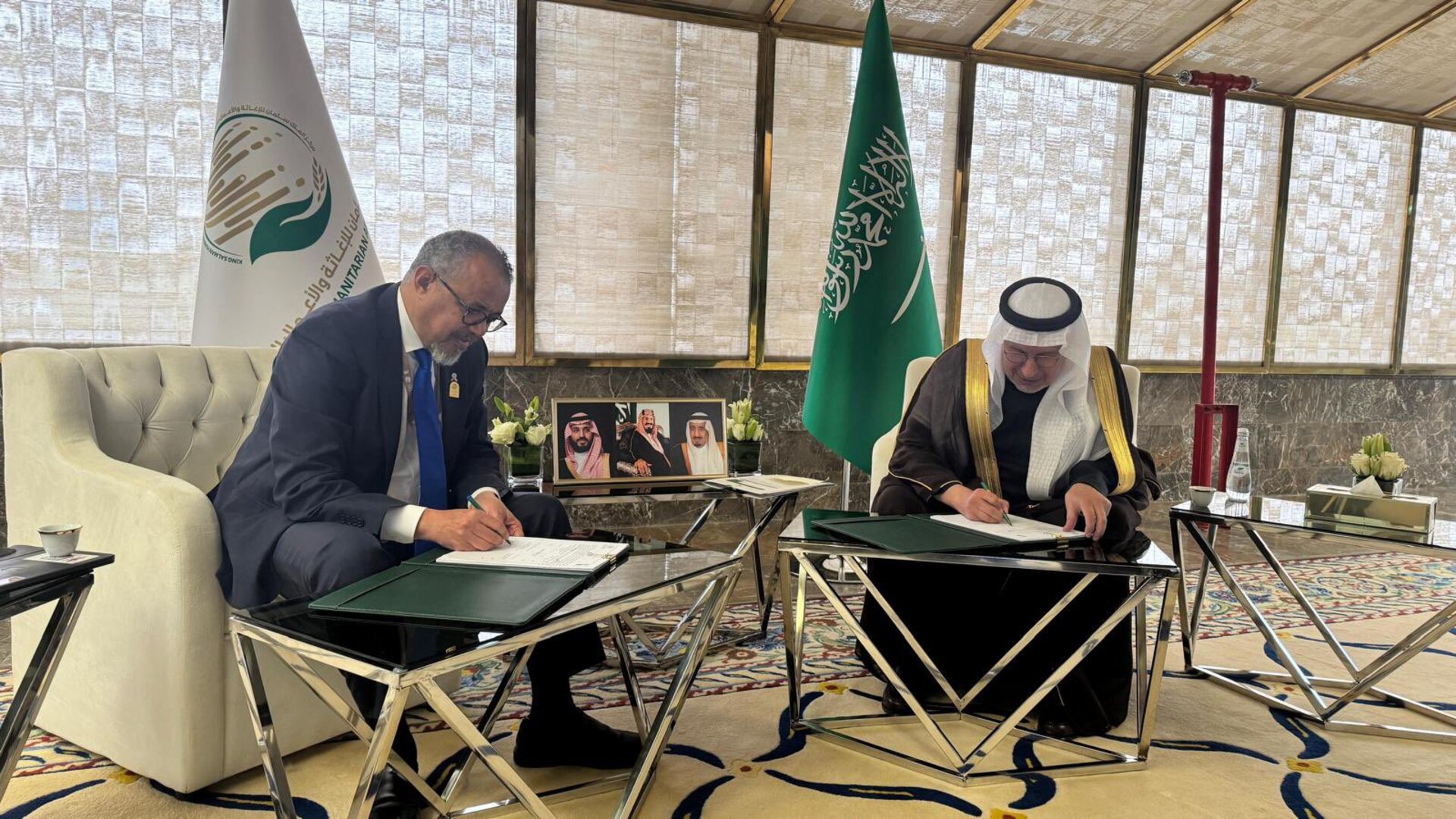
Dr. Tedros Adhanom Ghebreyesus, WHO Director-General, took to digital platforms and official press briefings to praise the strengthened partnership between the United Nations health agency and Saudi Arabia. Emphasizing the theme of health diplomacy discussed during the forum, Dr. Tedros noted that the newly signed agreements are vital not only for disease control in Yemen and Sudan, but also for sustaining global momentum toward eradicating ancient scourges like polio. He stressed that protecting the health of refugees and crisis-affected populations is an indispensable prerequisite for regional stability and global health security.
Dr. Abdullah Al Rabeeah, Supervisor-General of KSRelief, reiterated the Kingdom’s unwavering dedication to alleviating human suffering worldwide, unhindered by political considerations. He highlighted that the ten-year evolution of KSRelief reflects Saudi Arabia’s strategic vision to institutionalize humanitarian action, ensuring that aid is delivered efficiently, transparently, and in direct coordination with reputable multilateral bodies such as the WHO and UNICEF.
Catherine Russell, Executive Director of UNICEF, who participated in the high-level signing ceremony for the GPEI agreement, underscored the life-saving impact of the US$ 200 million allocation to her agency. Russell noted that vaccine hesitancy, operational bottlenecks, and conflict-driven displacement remain formidable obstacles, but emphasized that flexible, multi-million-dollar funding streams allow UNICEF to adapt swiftly on the ground, deploying frontline workers to vaccinate children who would otherwise be left unprotected against a preventable, lifelong disabling disease.
Broader Impact and Implications for International Humanitarian Action
The outcomes of the Riyadh International Humanitarian Forum 2025 carry significant implications for the architecture of international aid and disease control over the coming decade.
First, the targeted investments in Yemen and Egypt highlight a growing recognition that protracted crises require specialized, long-term medical responses. While emergency food and shelter remain foundational elements of disaster relief, the allocation of funds for chronic care—such as dialysis for Sudanese refugees—and targeted vector control for malaria reflect a more sophisticated, comprehensive approach to refugee health management.
Second, the structural backing of the GPEI through the Saudi pledge provides a crucial financial bridge at a time when traditional donor governments face domestic fiscal constraints and competing geopolitical priorities. By securing half a billion dollars for global polio eradication, the initiative gains the predictability required to procure vaccines at scale, maintain cold-chain integrity in remote areas, and retain skilled epidemiologists and vaccinators in high-threat zones.
Ultimately, the forum demonstrated the efficacy of sustained multilateral partnerships between sovereign donors and specialized UN agencies. As the humanitarian community confronts an increasingly complex landscape marked by intertwined climate shocks, infectious disease outbreaks, and intractable conflicts, the agreements forged in Riyadh set a benchmark for collaborative, data-driven, and adequately financed humanitarian interventions designed to preserve human life and dignity.







Leave a Reply