
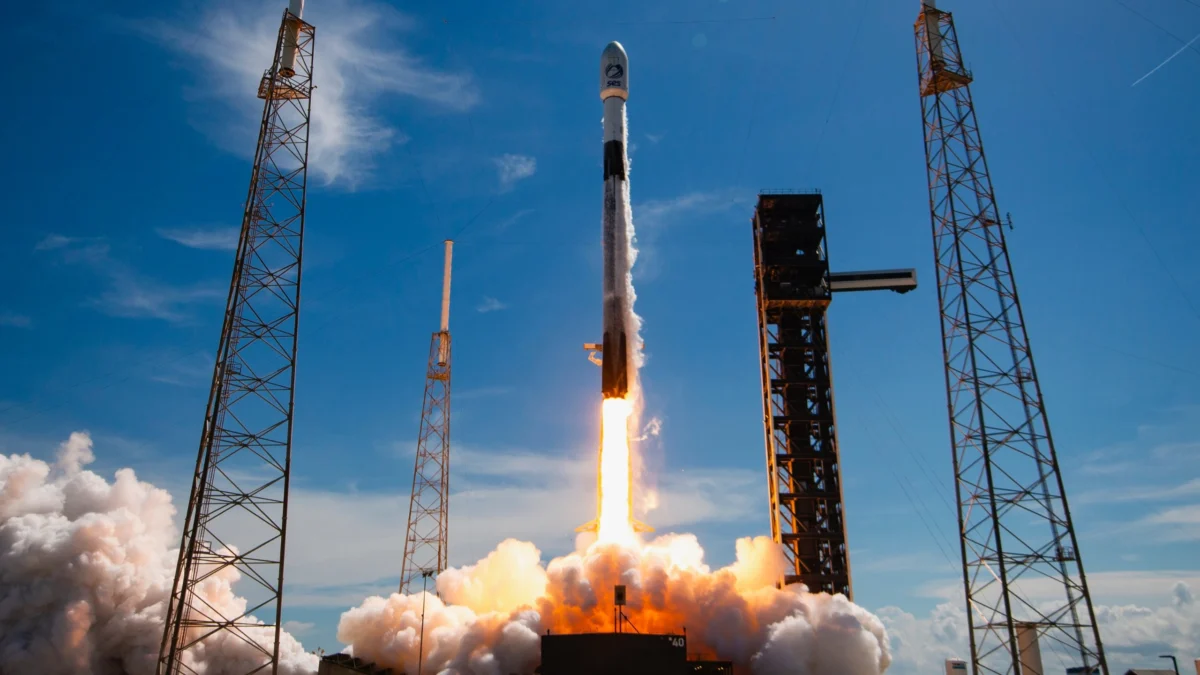
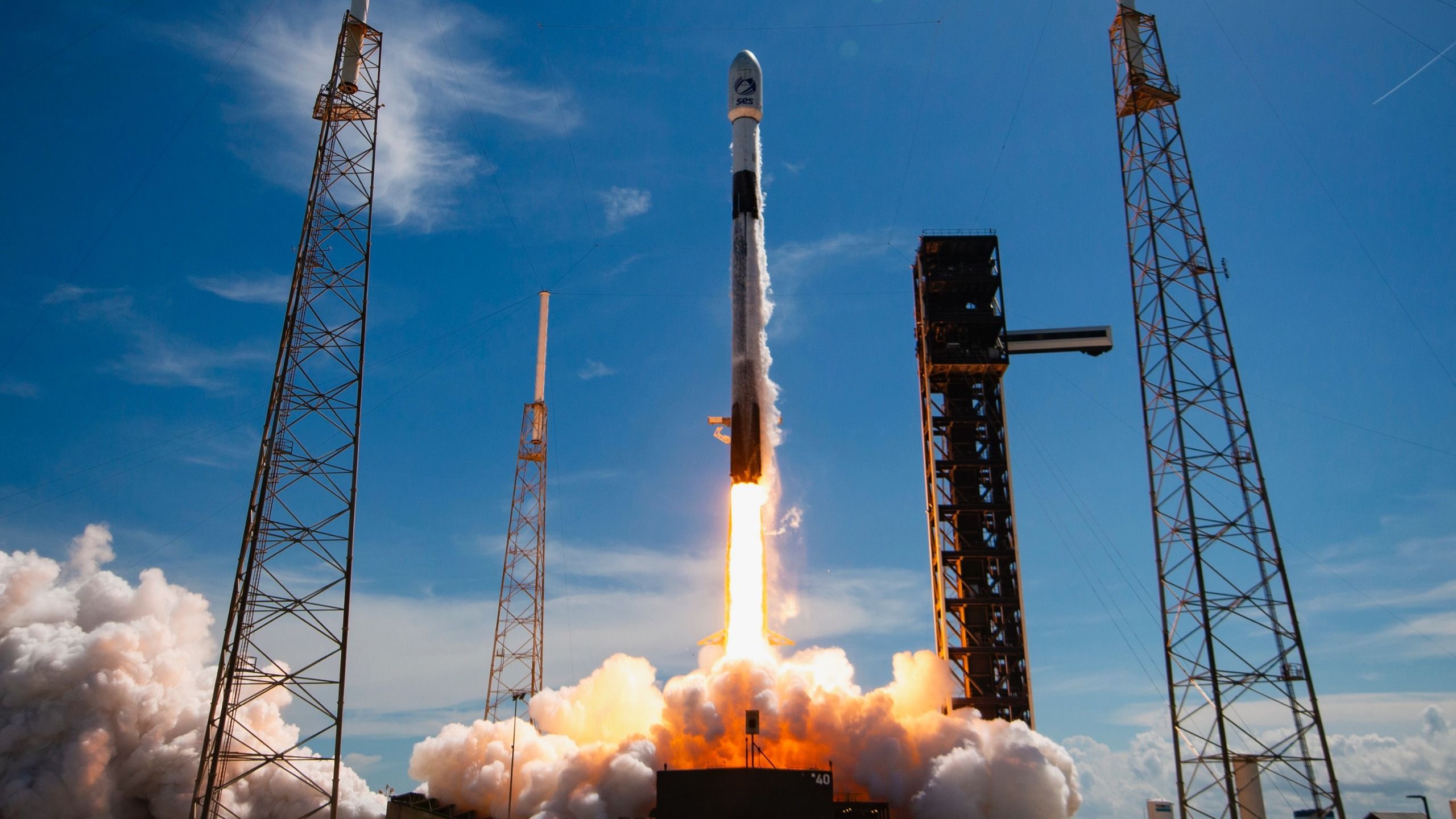
In a landmark achievement for the commercial space industry, SpaceX successfully deployed the final three satellites for the O3b mPOWER constellation on September 13, 2026. The mission, which lifted off from Cape Canaveral Space Force Station in Florida at 2:49 p.m. EDT (1849 GMT), marked the 700th flight of the Falcon rocket family. This accomplishment underscores the rapid evolution of private spaceflight, moving from the experimental days of the early 2000s to a near-routine cadence of orbital deliveries.
The launch was executed by a veteran Falcon 9 booster, identified as B1080, which was completing its 29th flight. Following the successful separation of the first stage, the booster performed a precision landing on the autonomous drone ship "A Shortfall of Gravitas," stationed in the Atlantic Ocean. The second stage of the rocket continued its trajectory into medium Earth orbit (MEO), successfully releasing the three Boeing-built satellites approximately 5,000 miles (8,000 kilometers) above the Earth’s surface.
A Chronology of the Falcon Legacy
The 700-mission milestone is the culmination of two decades of iterative engineering. The journey began in March 2006 with the inaugural flight of the Falcon 1, a small-lift vehicle that served as the testbed for the company’s ambitious vertical integration strategy. After two successful flights and three failures, SpaceX retired the Falcon 1 in 2009 to focus on the development of the Falcon 9.
The transition to the Falcon 9 in 2010 represented a paradigm shift in space logistics. By prioritizing reusability, SpaceX fundamentally altered the economics of access to orbit. The Falcon 9 has since become the industry workhorse, conducting the vast majority of the company’s 700 total flights. The Falcon Heavy, a high-capacity heavy-lift variant, has contributed 13 missions to this total since its debut, providing the capability to lift massive payloads to higher orbits and deep-space trajectories.
The growth in mission frequency has been exponential. While the first 100 missions took nearly a decade to achieve, the company now routinely performs multiple launches per month. As of mid-September 2026, SpaceX has already conducted 107 orbital missions within the calendar year, a rate that would have been considered impossible by industry standards just five years ago.
The O3b mPOWER Constellation: Bridging the Digital Divide
The three satellites launched today complete the O3b mPOWER constellation, operated by Luxembourg-based SES. This network is designed to provide high-throughput, low-latency connectivity to government, maritime, aviation, and energy sectors, as well as to regions where traditional fiber-optic infrastructure is impractical or unavailable.
The mPOWER system represents a departure from traditional geostationary satellites. By operating in MEO, the satellites offer a balance between the wide coverage area of higher orbits and the low latency associated with low Earth orbit (LEO) constellations. With all 13 satellites now in place—including the 10 previously launched across five separate SpaceX missions beginning in December 2022—SES can offer global coverage with increased reliability.
Each satellite, weighing approximately 3,750 pounds (1,700 kilograms), utilizes software-defined technology, allowing SES to dynamically allocate bandwidth to specific geographic areas as demand fluctuates. According to SES representatives, this flexibility is essential for industries where network uptime is a critical operational requirement. The integration of these final units enables the company to ensure guaranteed performance levels, even as global data consumption continues to surge.
Technical Performance and Operational Context
The deployment sequence for the final trio was meticulously choreographed. Following the launch, the upper stage coasted through space for approximately 33.5 minutes before initiating the release of the satellites. The deployment occurred over a 14-minute window, ensuring each spacecraft reached its intended orbital slot.
The use of a 29-flight booster for this mission is indicative of the maturation of SpaceX’s refurbishment process. In the early years of the Falcon 9 program, the recovery of a first stage was considered a risky, high-stakes experiment. Today, the ability to land, inspect, and relaunch a booster nearly 30 times is a standard operational procedure. This capability has not only reduced the per-launch cost but has also allowed SpaceX to maintain a high launch cadence despite supply chain constraints in the aerospace sector.
Beyond the Falcon 9, the company is actively testing its next-generation launch vehicle, Starship. Having conducted two suborbital test flights in 2026, the company is currently preparing for a third mission that aims to reach orbital velocity. The success of the Falcon 9 program provides the necessary financial and operational foundation for the development of Starship, which is expected to drastically increase the mass capacity for future missions.
Implications for the Global Telecom Industry
The completion of the O3b mPOWER constellation signals a broader trend in the telecommunications sector: the shift toward hybrid connectivity solutions. As terrestrial networks struggle to keep pace with the connectivity demands of remote industrial operations, the reliance on high-performance satellite constellations is growing.
Analysts suggest that the success of the O3b mPOWER deployment could serve as a model for other commercial operators. The "purpose-built" nature of the constellation—pairing advanced software-defined satellites with an intelligent ground infrastructure—creates a closed-loop ecosystem. This reduces the latency often associated with satellite internet and provides a level of service quality that is increasingly competitive with terrestrial fiber.
Furthermore, the relationship between SpaceX and SES highlights the vital role of private launch providers in the infrastructure of the digital age. By providing reliable and frequent access to space, SpaceX has enabled SES to build a scalable network that can adapt to changing technological requirements. This partnership demonstrates how private enterprises are increasingly defining the architecture of global communications, independent of state-run space agencies.
Looking Toward the Future
As SpaceX looks toward its next 700 missions, the focus appears to be shifting from the mere achievement of flight to the optimization of orbital logistics. The company’s ability to sustain such a high launch rate is now an essential utility for governments and private entities alike.
The 107 orbital missions conducted in 2026 alone demonstrate a level of operational maturity that has effectively neutralized the "launch gap" that once plagued the industry. With the O3b mPOWER constellation now fully operational, the focus for SES will transition to managing the data throughput and software ecosystem of its network. Meanwhile, SpaceX continues its push toward the next frontier of space transportation, with the Starship program serving as the primary vehicle for its long-term goals of deeper space exploration and orbital colonization.
The successful launch on September 13 was not merely a delivery of hardware; it was a demonstration of a highly refined, industrialized approach to space. As the satellite industry continues to integrate with terrestrial networks, the ability of launch providers to maintain consistent, cost-effective access to orbit will remain the bedrock of global connectivity. The 700th flight of the Falcon rocket is a milestone that confirms the industry has firmly transitioned from the era of exploration to the era of utilization.










Leave a Reply