
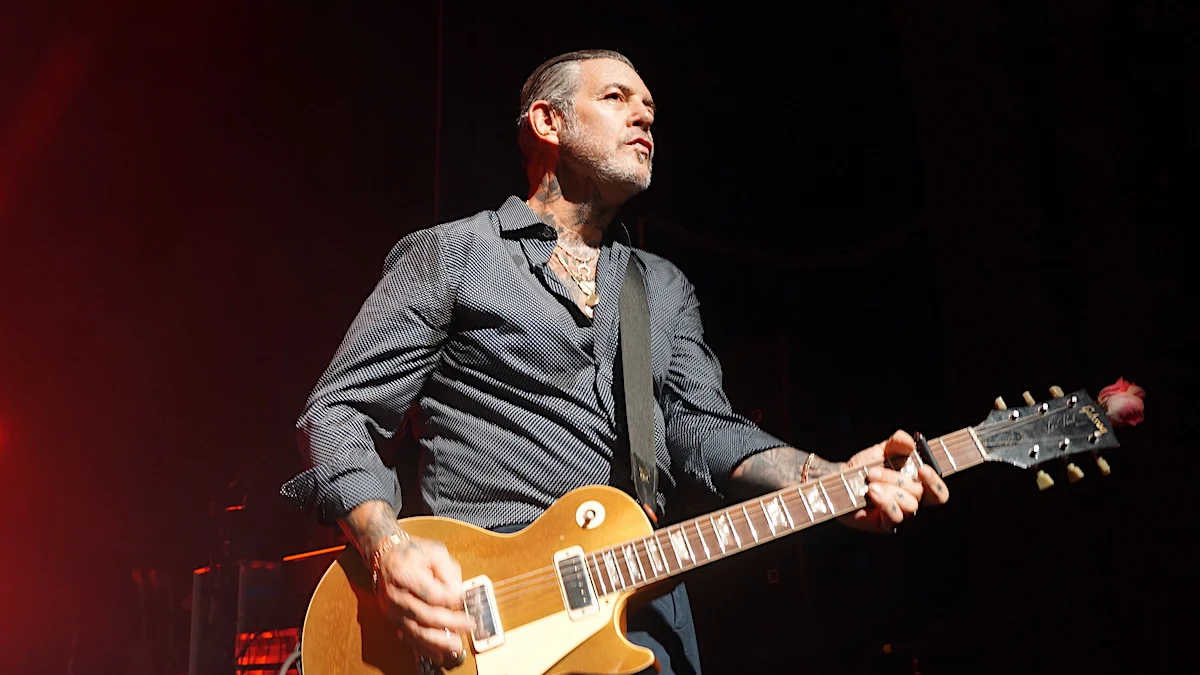
A combined 95 years of California punk rock history converged on the Brooklyn Paramount this past weekend, as two generations of legends and one rising powerhouse of the genre took the stage for a high-octane display of musical endurance. The Saturday, September 12th performance marked the conclusion of a two-night residency at the historic venue, anchoring a tour that highlights the continued relevance of the West Coast punk scene in the modern era.
The Chronology of a Punk Revival
The evening began promptly at 7 p.m. with an opening set by the Australian trio The Chats. Representing the current vanguard of the genre, the band utilized their brief window to showcase the frenetic, garage-punk aesthetic found on their studio albums High Risk Behaviour (2020) and Get Fucked (2022). Their inclusion on the bill serves as a testament to the cross-generational appeal of the tour, effectively bridging the gap between the 1980s pioneers and the contemporary international scene.
Following the opening salvo, the Descendents took the stage at 8 p.m. for a masterclass in efficiency and precision. Over the course of a 50-minute set, the band burned through approximately 25 songs. Frontman Milo Aukerman, whose vocal style and stage presence have remained largely unchanged since the band’s inception, focused heavily on the seminal 1982 album Milo Goes to College and the 1996 commercial breakthrough Everything Sucks. The performance underscored the band’s status as architects of pop-punk, a subgenre they effectively pioneered long before it reached mainstream radio dominance in the early 2000s.
At 9:15 p.m., the headlining act, Social Distortion, assumed their positions. The reception from the Brooklyn audience was particularly significant given the recent health history of frontman Mike Ness. Following a 2023 diagnosis of tonsil cancer, Ness has undergone a rigorous recovery process, returning to the road with a renewed intensity that has become a focal point of the current tour cycle.
A Career-Spanning Retrospective
Social Distortion’s setlist provided a curated walk through four decades of songwriting. The band opened with “Born to Kill,” the title track from their latest studio effort, marking the group’s first full-length release in 15 years. This transition into new material was immediately followed by a rendition of their iconic cover of Johnny Cash’s “Ring of Fire,” a track that effectively cemented the band’s signature blend of rockabilly, outlaw country, and hardcore punk during the early 1990s.
To enhance the live experience, the tour utilizes a synchronized video backdrop. This visual element displays archival footage and historical imagery corresponding to specific tracks, effectively framing the set as a documentary-style retrospective. By integrating these visuals, the band allows newer fans to contextualize the songs within the broader narrative of the American punk movement.
Mid-set, the band reached back to their 1983 debut, Mommy’s Little Monster, performing the title track alongside “The Creeps.” A notable highlight for long-time attendees was the inclusion of “Prison Bound,” a 1988 classic that had been absent from the setlist for the duration of the current year until this specific performance.
The Philosophy of Non-Conformity
The narrative arc of the show culminated with the performance of “Story of My Life,” the gold-certified track from their 1990 self-titled album. Prior to the performance, Ness offered an introspective analysis of the music industry’s historical tendency to categorize artists.
“Punk had changed by the mid-’80s, and there was a lot of us who didn’t know where we fit, so we had to make the hard left and carve out our own sound,” Ness remarked. He reflected on the uncertainty that surrounded the writing process of that era, noting, “I was certain when I wrote this group of songs that no one was gonna like them, because they weren’t just stereotypical punk, they weren’t hardcore, they weren’t heavy metal. Why do we gotta be put in a box anyway?”
This statement serves as a primary source of the band’s ethos: the intentional fusion of American roots music with the aggressive, DIY spirit of punk. Ness concluded by noting the longevity of the connection between the band and their audience, observing that the crowd’s sustained engagement with the material over three decades serves as the ultimate validation of their stylistic departure.
Technical Setlist and Performance Data
The encore, consisting of “Reach for the Sky,” “Bad Luck,” and “Don’t Drag Me Down,” provided a definitive conclusion to the two-night Brooklyn stand. The full setlist for the September 12th show was as follows:
- Born to Kill
- Ring of Fire
- Untitled
- Tonight
- No Way Out
- The Creeps
- Mommy’s Little Monster
- The Way Things Were
- Machine Gun Blues
- Don’t Keep Me Hanging On
- Partners in Crime
- Prison Bound
- Through These Eyes
- Story of My Life
- Reach for the Sky (Encore)
- Bad Luck (Encore)
- Don’t Drag Me Down (Encore)
Broader Industry Implications
The success of this tour, particularly in high-capacity venues like the Brooklyn Paramount, demonstrates the sustained economic viability of legacy punk acts. According to industry tracking, touring demand for established punk bands has seen a resurgence as audiences prioritize high-energy, authentic live experiences over modern, heavily produced pop spectacles.
The inclusion of The Chats suggests a deliberate effort by legacy acts to curate a platform for the next generation, ensuring the longevity of the genre. By maintaining a tour schedule that spans until October 3rd, ending in San Diego, Social Distortion is reinforcing the necessity of live performance as the primary mechanism for fan retention in an era of digital music saturation.
The recovery of Mike Ness from a life-threatening illness also adds a layer of cultural significance to this tour. His ability to resume a grueling schedule of domestic performances is viewed by industry observers as a benchmark for resilience in the rock community. Furthermore, the band’s return to the studio for their latest album proves that their creative output remains a priority, despite their status as an established touring act.
The convergence of these three bands in Brooklyn illustrates that the "punk" label is not merely a genre, but a flexible framework that allows for the integration of folk, rockabilly, and hardcore influences. As the tour progresses toward its conclusion in San Diego, the legacy of these artists continues to serve as a cornerstone for the modern punk scene, providing a roadmap for how to successfully navigate the transition from subcultural phenomenon to a sustained, multi-generational career.
The intersection of history and modern performance on display at the Brooklyn Paramount highlights that while the aesthetic of punk may evolve, the core demand for authenticity and technical proficiency remains constant. For a fan base spanning multiple decades, the show offered a rare opportunity to witness the evolution of a sound that defined the American underground for nearly half a century.







Leave a Reply