
The United States Environmental Protection Agency announced on Monday a sweeping regulatory reversal that will dismantle federal carbon emissions standards for the nation’s electricity sector. The move effectively strips away federal oversight designed to curb greenhouse gases from power plants, allowing utilities to operate coal-fired facilities without mandatory federal caps on carbon output.
The decision marks the latest chapter in a two-decade regulatory tug-of-war between successive Democratic and Republican administrations. It also arrives at a critical technological inflection point, as a historic surge in power demand from artificial intelligence data centers complicates the long-term phaseout of the world’s most carbon-intensive fossil fuel.
The Environmental Toll and Regulatory History of Coal
Coal remains the dirtiest of all major global energy sources, accounting for nearly half of cumulative worldwide carbon emissions since the dawn of the industrial era—a footprint equal to that of oil and natural gas combined. Per unit of energy produced, coal generates significantly higher volumes of carbon dioxide than either oil or gas. Because of this, climate scientists and environmental economists widely agree that phasing out coal-fired electricity generation is the single most impactful lever the world can pull to mitigate global temperature increases.
For nearly twenty years, however, U.S. federal energy policy has swung wildly depending on which political party holds the White House. Following legislative stalemates during the Obama administration that prevented the passage of a national carbon tax, the EPA under President Barack Obama introduced the Clean Power Plan. That policy aimed to compel electric utilities to reduce emissions by transitioning away from coal.
The regulatory framework was subsequently frozen by the Supreme Court and formally repealed during President Donald Trump’s first term. The high court later ruled that the executive branch could not unilaterally force utility companies to abandon specific fuel sources through sweeping regulatory mandates.
To navigate these judicial constraints, the Biden administration crafted a revised rule in 2024. Rather than directly mandating the retirement of coal, the Biden-era framework offered utilities a strategic choice: either decommission their coal plants during the 2030s or equip them with carbon capture and storage (CCS) technology capable of trapping nearly all smokestack emissions. Both compliance pathways were projected to achieve sharp reductions in the power sector’s carbon footprint.
The Trump Administration Reversal and Economic Justifications
Under the newly announced policy, the Trump administration’s EPA is erasing those regulatory pathways. Agency officials stated that the repeal will eliminate all federal rules governing carbon emissions from electricity generation, enabling utilities to determine their own generation mixes without federal carbon constraints.
The EPA invoked the same legal and scientific rationale used earlier this year when it rolled back greenhouse gas regulations for motor vehicles. The agency argued that the scientific consensus surrounding climate change remains uncertain and asserted that removing federal environmental constraints will lower consumer utility bills.
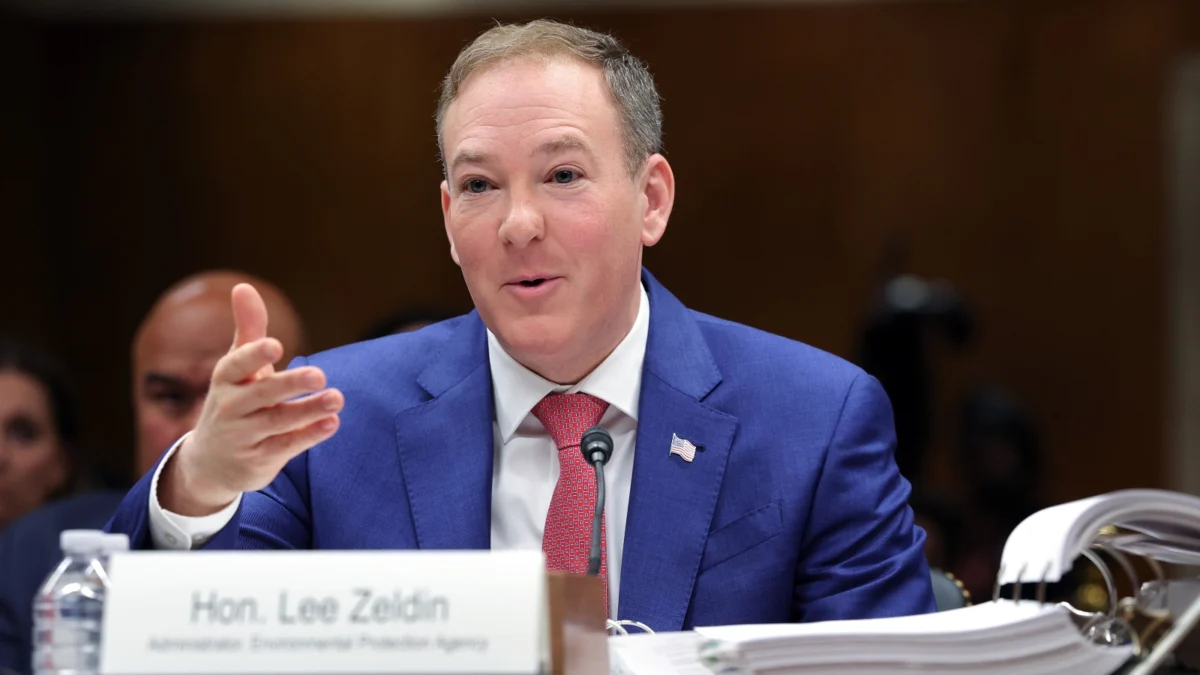
Speaking at an international energy summit in Texas, EPA Administrator Lee Zeldin framed the decision as a decisive break from past policies.
"For over 15 years, the Obama and Biden administrations implemented a war on coal to destroy reliable and affordable energy," Zeldin told attendees. "We are working to go even further so that American energy can be fully unleashed. Realizing the full potential of American energy means more jobs, lower prices, and a more prosperous America."
Industry analysts note that while the policy shift is symbolic and politically potent, the practical impact of successive administrative rules has often been secondary to market forces. Neither the Obama nor the Biden regulations took full legal effect or remained stable long enough to fundamentally reshape the power grid on their own. Instead, federal subsidies under legislation like the Inflation Reduction Act have historically driven more renewable energy adoption, such as wind and solar, than executive branch emissions rules.
Kenneth Gillingham, a professor of environmental economics at Yale University and a former economic adviser to the Obama administration who helped draft the original Clean Power Plan, emphasized the importance of regulatory signals.
"The reason to have a target is that it sends a clear signal to decision-makers in companies," Gillingham said. "If you’re on the fence between choosing two things, you might as well choose the one that’s in line with the target. That’s been undermined. There have to be some teeth behind it."
Market Forces and the Shale Fracking Revolution
Despite the legal instability of federal climate rules, coal-fired electricity generation in the United States has plummeted over the last twenty years. This structural decline was not primarily driven by Washington climate mandates, but rather by the domestic shale fracking boom.
The proliferation of hydraulic fracturing dramatically increased the supply of domestic natural gas, driving down its market price and making it economically advantageous for electric utilities to transition from coal plants to natural gas facilities. Although natural gas combustion still releases carbon dioxide, it does so at a significantly lower rate than coal. This market-driven fuel switch has helped cut overall U.S. power sector emissions by nearly 50 percent over the past two decades.
However, the complete phaseout of coal is now encountering a major structural roadblock: the rapid expansion of artificial intelligence and the massive energy demands of modern data centers.
When the Biden administration drafted its 2024 emissions standards, federal projections anticipated a continued, unassisted decline in coal-fired generation capacity due to eroding economic competitiveness. That landscape changed rapidly as technology companies rushed to build power-hungry data centers to support generative AI infrastructure.
The resulting surge in electricity demand has created a sudden economic lifeline for aging coal plants. In wholesale electricity markets across the Midwest and the mid-Atlantic, high power prices have made it profitable for utilities to keep legacy coal units online past their scheduled retirement dates. The Trump administration has actively encouraged this trend, previously issuing administrative orders instructing specific coal plants to remain operational—actions that faced legal challenges, including a federal court ruling earlier this month finding certain Department of Energy orders unlawful.
Case Study: The Southern Company Pivot
The tension between rising electricity demand and decarbonization goals is visible in the operational plans of major regional utilities. Southern Company, a massive energy provider serving customers across Georgia, Mississippi, and neighboring states, initially planned to retire a major coal-fired facility in Mississippi by 2028 under the Biden administration’s regulatory framework.
However, citing surging energy requirements from newly contracted data centers, Southern Company announced an update to its integrated resource plan, pushing the expected retirement date of the facility well into the 2030s. Previous attempts by the utility to implement commercial-scale carbon capture technology at its regional coal units encountered severe cost overruns and technical failures, leading the company to rely instead on continued combustion.
Environmental organizations have strongly criticized these extensions, questioning the long-term necessity of data center load projections and accusing utilities of backsliding on corporate net-zero commitments. Conversely, the Trump administration has signaled full support for giving utility operators maximum flexibility to keep fossil fuel assets active.
Public Health Implications and Future Outlook
Public health experts warn that the systematic extension of coal plant operations carries severe consequences. Beyond carbon dioxide, coal combustion releases toxic pollutants, including mercury, sulfur dioxide, and fine particulate matter, which are linked to thousands of premature deaths annually as well as widespread respiratory illnesses.
According to health impact assessments conducted by the Biden administration, its 2024 power plant rule would have prevented approximately $370 billion in cumulative health damages resulting from air pollution and climate-driven extreme weather. Federal projections indicated the rule would have averted hundreds of thousands of asthma attacks, numerous emergency room admissions, and more than 1,200 premature deaths annually by the year 2035.
Looking ahead, energy economists suggest that while the current regulatory rollback and the data center boom provide a temporary reprieve for coal, they may not permanently reverse the fuel’s structural decline. The U.S. coal fleet is aging rapidly, and many utility operators face high capital expenditures just to keep legacy units compliant with basic mechanical reliability standards, making eventual replacement with natural gas or renewable alternatives economically inevitable in many jurisdictions.
"We have more electricity demand than we did before, which is, on the margins, going to make it easier for a coal plant to stay on," Gillingham noted. "But the trend is pretty clear, and you can only fight markets so much."









Leave a Reply