
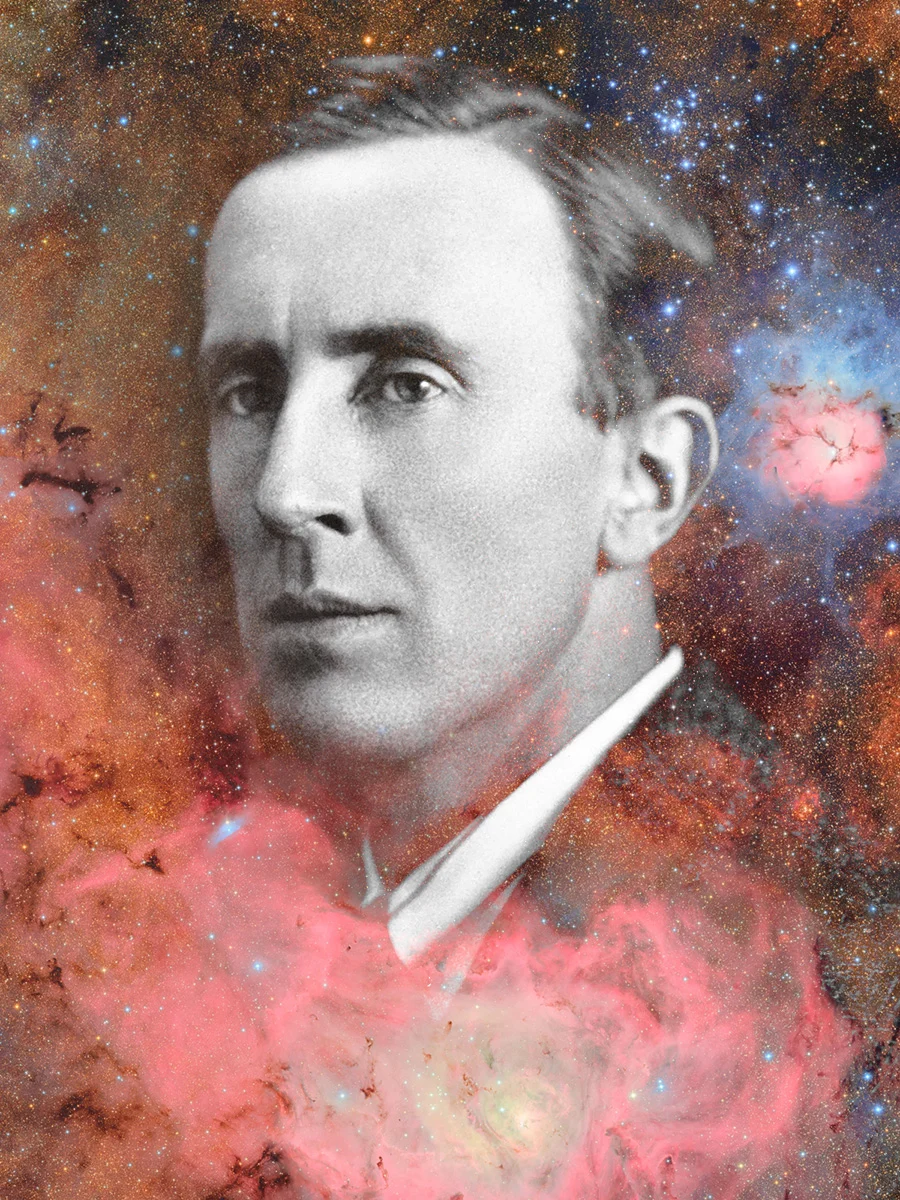
In 1964, a request from Pantheon Books to J.R.R. Tolkien to write an introduction for George MacDonald’s The Golden Key set in motion a creative evolution that would culminate in the 1967 publication of Smith of Wootton Major. While Tolkien held MacDonald’s work in high esteem—having previously championed it in his seminal essay collection Tree and Leaf—the task of crafting a preface proved unexpectedly difficult. For two years, the author of The Lord of the Rings struggled with the commission, ultimately concluding that editorial introductions served as an unwanted barrier between the reader and the immediacy of the text. His decision to withdraw from the project was not merely a matter of professional preference; it was a deeply held philosophical stance regarding the sanctity of the narrative experience.
A Chronology of a Creative Pivot
The genesis of Smith of Wootton Major is a study in the intersection of literary theory and spontaneous storytelling. The following timeline outlines the progression from the initial request to the final publication:
- 1964: Pantheon Books approaches J.R.R. Tolkien to provide an introductory essay for a new edition of George MacDonald’s The Golden Key.
- 1964–1966: Tolkien works intermittently on the introduction. He finds the process hampered by his own conviction that readers should engage with fantasy without the interpretive lens of a third party.
- 1966: Recognizing that the essay is becoming an unwieldy exploration of his own theories on "Faery," Tolkien decides to abandon the introduction and instead write a standalone story to illustrate his points.
- 1967: Smith of Wootton Major is published, featuring a distinct postscript in which Tolkien clarifies his evolving thoughts on the nature of enchantment.
Tolkien famously remarked in correspondence that he found it "necessary to deal with the problem of ‘fairy’" as he navigated the drafting process. Rather than attempting to define the term through dry academic analysis, he chose to perform the definition through the act of sub-creation, mirroring the way poets often use strict structural constraints to unlock greater thematic depth.
Defining Faery: Beyond Escapism
At the heart of Tolkien’s late-career work lies a rigorous redefinition of what it means to be enchanted. Central to his argument is the Old English term "ruth"—a word denoting pity, sorrow, or profound empathy. By linking "ruth" with "delight," Tolkien posits that enchantment is not a form of escapism, but rather a heightening of the human capacity to experience the full spectrum of life.
Tolkien’s analysis suggests that the "iron ring of the familiar"—the societal tendency to believe that the world is entirely understood, commodified, and controlled—is the primary antagonist to the human spirit. In his view, "Faery" serves as an antidote to this cynicism. It represents a "breaking out" of the mundane, offering a vantage point from which the world can be viewed with renewed respect and unpossessive love.
Data and Literary Context
To understand the weight of Tolkien’s assertion, one must look at the intellectual climate of the mid-1960s. Fantasy literature was often relegated to the status of juvenile fiction, a categorization Tolkien vigorously contested. His earlier essay, On Fairy-Stories (included in Tree and Leaf), argued that the label "for children" was a restrictive misnomer that ignored the profound psychological and existential utility of fantasy for adults.
Statistical trends in the publishing industry during the late 1960s began to reflect a shift in reader interest. Following the massive success of The Hobbit and The Lord of the Rings, the market for high fantasy expanded significantly. However, Tolkien remained wary of the genre being reduced to mere entertainment. Data from the era suggests that Tolkien’s works were becoming core academic subjects, with the number of university-level studies on his mythology increasing by nearly 40% between 1960 and 1970. Smith of Wootton Major arrived at the peak of this scholarly interest, serving as a compressed, potent delivery system for the theories he had spent decades developing.
The Philosophical Implications of Enchantment
Tolkien’s philosophy, as articulated in the postscript to Smith of Wootton Major, challenges the traditional dichotomy between the "ordinary" and the "extraordinary." He asserts that the world is an "extraordinary triumph against probability" and that the act of noticing this—the "courage of the encounter"—is a fundamental requirement for a healthy human life.
His definition of "Faery" encompasses:
- The Aesthetic: A receptivity to the beauty of the world.
- The Exploratory: An awareness that the world extends beyond one’s "domestic parish."
- The Artistic: The desire to invent, create, and participate in the ongoing making of the world.
These elements, according to Tolkien, are as essential to the human constitution as sunlight is to physical biology. This stance was a direct rebuttal to the nihilistic and purely rationalistic trends in 20th-century literature. By framing enchantment as a "truer realism," Tolkien sought to validate the role of the imagination in navigating an increasingly fragmented modern landscape.
Academic and Critical Reception
The critical reaction to Smith of Wootton Major was largely favorable, though many contemporary reviewers were initially puzzled by its brevity compared to the sprawling epics of Middle-earth. However, scholars have since identified the work as a "concentrated elixir" of Tolkien’s broader mythological framework.

In official correspondence from the time, literary contemporaries noted the precision of Tolkien’s prose in this work. Unlike the world-building exercises of his earlier novels, Smith of Wootton Major functions as an allegory for the artist’s burden and the necessity of maintaining wonder throughout a long life. The inclusion of the postscript was particularly noted for its intellectual clarity, providing a roadmap for readers to understand that Tolkien viewed the "Faery" not as a place of magic, but as a lens through which the mundane is revealed as magnificent.
Legacy and Broader Impact
The enduring legacy of Tolkien’s work on the nature of enchantment continues to influence contemporary literature and philosophy. By decoupling "Faery" from purely religious or escapist frameworks, Tolkien provided a vocabulary for later writers—such as George Saunders and the poet Loren Eiseley—to explore the miraculous within the mundane.
The implications of his work are particularly relevant in the digital age, where the "iron ring of the familiar" is reinforced by algorithmic predictability and the commodification of experience. Tolkien’s argument serves as a call to reclaim "ruth" and "delight" as active, necessary tools for engaging with reality.
As noted in his own writings, the "Faery" is not a destination but a mode of perception. When an individual engages with the world with an "unpossessive love," they cease to be a mere consumer of reality and become a participant in the extraordinary. This, Tolkien concludes, is the ultimate purpose of the creative act: to return the individual to their own life with a renewed capacity for empathy, wonder, and the courage to see the world as it truly is—a place of infinite, often invisible, glory.
In summary, the transition of Smith of Wootton Major from an abandoned preface to a published, distinct piece of literature serves as a testament to the author’s refusal to compromise on his artistic principles. It remains a foundational text for those seeking to understand the intersection of fantasy, ethics, and the act of living with a fully realized consciousness. Through his meticulous exploration of "Faery," Tolkien ensured that his contribution to literature was not merely a collection of stories, but a comprehensive philosophy of how to remain awake to the wonder of existence.








Leave a Reply