
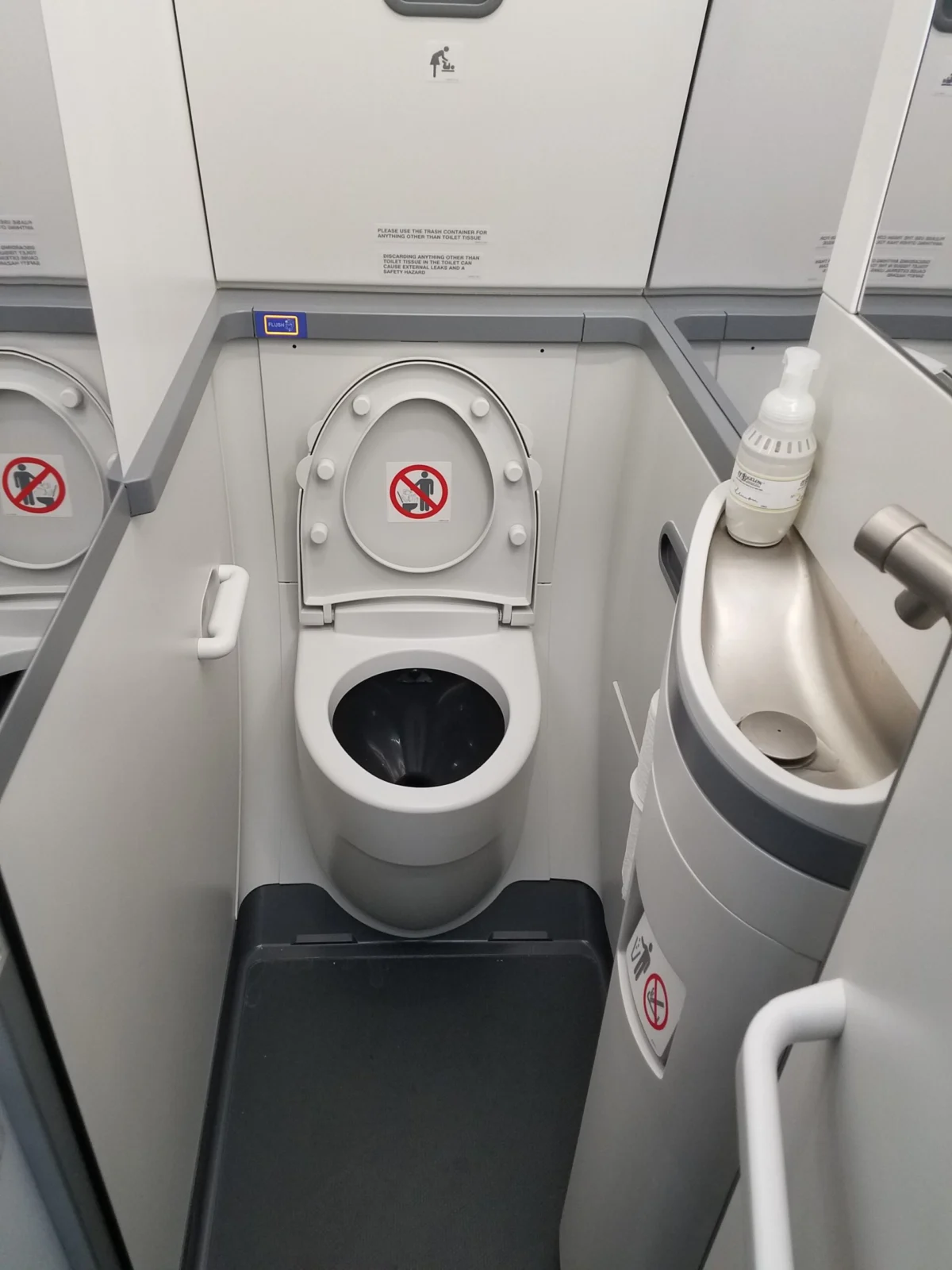
The delicate balance of cabin etiquette and the operational demands of commercial aviation were brought into sharp focus this week following a public account of a mid-flight confrontation aboard an American Airlines flight from New York’s LaGuardia Airport (LGA) to Nashville International Airport (BNA). Passenger Eric Sherman, who had entered the aircraft lavatory for the express purpose of inserting contact lenses, reported being intercepted by a flight attendant upon exiting the facility and instructed to return to the lavatory to flush the toilet. Mr. Sherman, having not utilized the toilet facilities during his brief visit, found the directive both confusing and potentially humiliating, sparking a broader discussion regarding the boundaries of cabin crew authority and the hygiene standards expected of passengers at 30,000 feet.
Chronology of the Incident
The incident occurred during a routine domestic flight, a segment typically characterized by quick turnaround times and high-density passenger traffic. According to Mr. Sherman’s account, shared via social media, his brief visit to the lavatory was purely functional in terms of personal grooming. Upon his exit, a flight attendant positioned near the galley or the lavatory bank directed him back into the enclosure under the assumption that he had failed to flush.
This interaction highlights a recurring point of friction in the flight experience: the assumption of guilt. While the flight attendant’s directive was likely motivated by a desire to maintain the hygiene of the shared space for the next passenger, it inadvertently placed the burden of proof on the traveler. For Mr. Sherman, the experience prompted a public query: Should a passenger feel offended by being policed for an act they did not commit, or is the frequency of poor lavatory etiquette so pervasive that crew members have been forced to adopt such preemptive enforcement measures?
The Reality of Aircraft Lavatory Hygiene
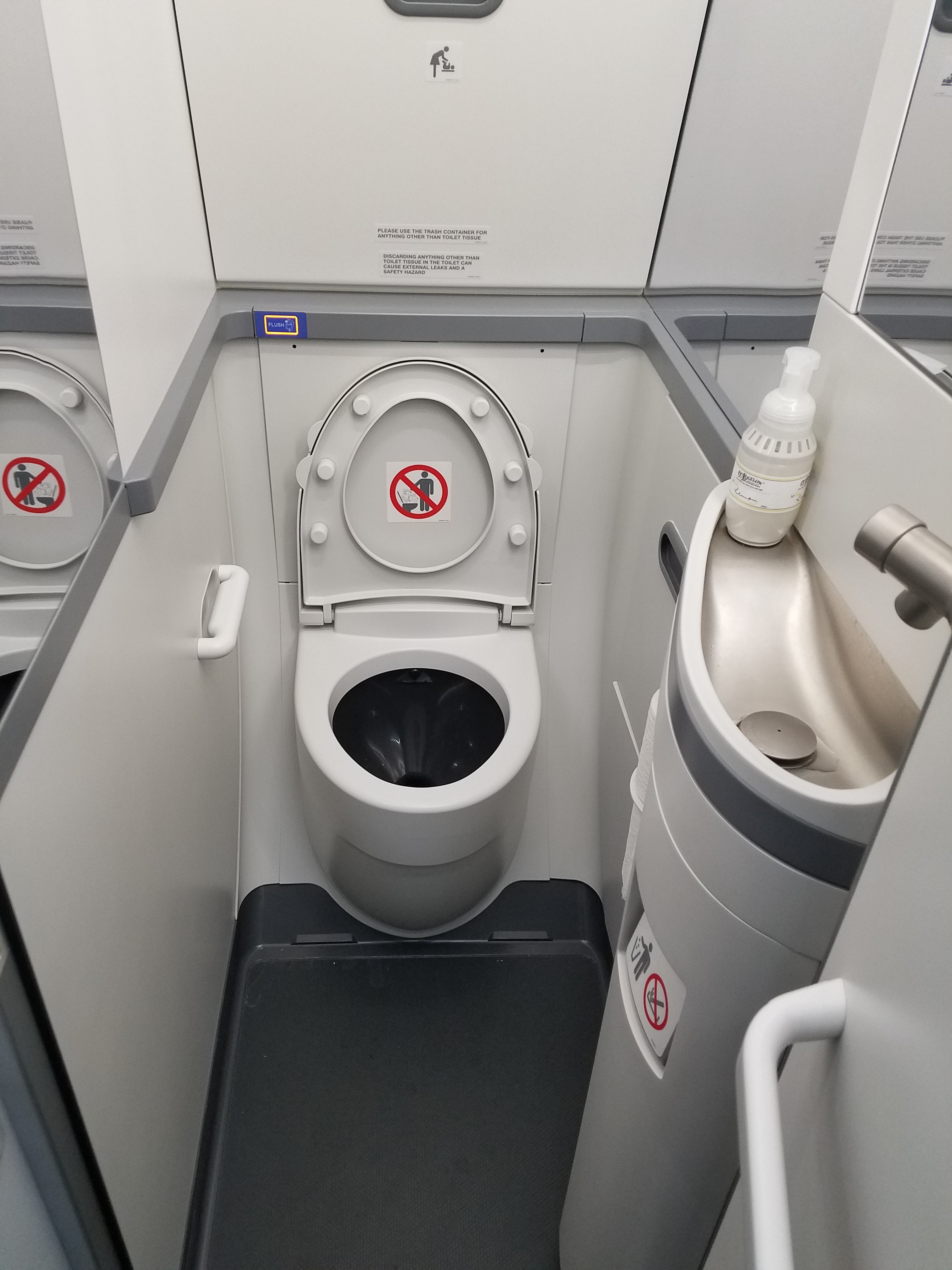
To understand the crew’s perspective, one must look at the operational realities of modern air travel. Aviation forums and internal crew discussions frequently cite "the state of the lavatory" as one of the primary stressors for cabin staff. Unlike domestic bathrooms, aircraft lavatories are small, enclosed, and subjected to heavy use by hundreds of people in rapid succession.
Data from various cabin crew unions and professional associations indicate that lavatory maintenance is a persistent logistical challenge. On short-haul domestic flights, the "turn time"—the duration an aircraft spends at the gate between arrival and the next departure—is often as short as 30 to 45 minutes. During this period, the cleaning crew must perform a rapid cabin tidy, which often leaves little time for deep-cleaning or sanitizing lavatories. Consequently, if a passenger fails to flush or leaves a mess, that condition persists for the duration of the flight, affecting the comfort of all subsequent users.
The Burden of Responsibility
The tension is exacerbated by the ambiguity regarding who is responsible for the upkeep of these spaces during flight. While flight attendants are primarily tasked with passenger safety, their duties have increasingly expanded to include "soft" cabin maintenance. This includes monitoring lavatories, replenishing paper products, and occasionally addressing significant sanitary failures.
Earlier this year, reports emerged of an American Airlines first-class passenger being handed cleaning supplies to manage a mess left by previous occupants. This incident underscored a growing trend where, due to staffing shortages or time constraints, the line between crew responsibilities and passenger conduct becomes blurred. When flight attendants face a "trashed" lavatory, their frustration is palpable; however, when that frustration is directed at a passenger who has not actually violated any hygiene rules, the result is a breakdown in the professional rapport necessary for a smooth flight.
Psychological and Social Implications
The psychological impact of being publicly corrected in a confined cabin environment cannot be overstated. Social anxiety is common among air travelers, and being singled out by crew members can lead to feelings of shame or resentment. When a passenger is instructed to perform a task they did not neglect, it creates a sense of procedural injustice.
Sociologists who study air travel environments note that the "anonymity" of a flight often leads to a decline in social responsibility, which is why crew members feel the need to intervene. However, the intervention style matters. When a flight attendant assumes a disciplinary tone, it can alienate the passenger base. Conversely, if crews fail to monitor the facilities, they risk creating an environment that is genuinely unpleasant, leading to a cascade of complaints from other travelers.
Operational Data and Crew Training
The training protocols for major carriers like American Airlines generally emphasize "de-escalation" and "customer service excellence." However, these protocols are often tested by the reality of the cabin. Flight attendants are trained to ensure the cabin is safe and clean, but the methods for achieving this are often left to the individual crew member’s discretion.
In terms of operational data, airlines monitor "lavatory-related complaints" as a subset of overall passenger satisfaction metrics. These complaints often spike on older aircraft models or flights with high load factors. The blue flush button, a standard feature across the American Airlines fleet, is intuitive, yet the "user error" rate remains high due to a variety of factors: different types of vacuum-flush systems, the noise levels that make it hard to hear if a flush was successful, and simple negligence.

The Path Forward: Expectations vs. Reality
The incident involving Mr. Sherman serves as a microcosm of the current state of commercial aviation. As airlines continue to push for efficiency, the margin for error for both passengers and crew shrinks.
For passengers, the expectation is a clean, functional facility. For crew, the expectation is that passengers will treat the shared environment with a basic level of respect. When these expectations collide, the resulting friction often spills over into the public sphere.
Moving forward, the industry may need to consider more robust technological solutions to mitigate these tensions. This could include touchless flush sensors, which are increasingly common in modern aircraft, or more explicit communication regarding the limitations of the onboard cleaning schedule. Furthermore, clarifying the expectations of passengers via pre-flight announcements or digital signage within the lavatory itself might reduce the need for manual enforcement by cabin staff.
Conclusion
While the interaction between the American Airlines flight attendant and Mr. Sherman may seem like a minor anecdote, it highlights a significant issue in the airline industry: the erosion of trust and the rise of confrontational service. As airlines look to improve the passenger experience, addressing the "hidden" aspects of travel—such as the maintenance and monitoring of common spaces—is essential. Whether through better design, clearer communication, or a more tempered approach to cabin management, the goal must remain the same: ensuring that every passenger arrives at their destination without feeling unnecessarily policed or inconvenienced.
The debate over who is responsible for the state of the airplane lavatory will likely continue as long as air travel remains a shared, high-density experience. However, the resolution to these conflicts lies in the balance between the authority of the crew to maintain order and the dignity afforded to the passenger. For now, both parties would benefit from a greater degree of patience, recognizing that in the confined space of a commercial jet, everyone is ultimately working toward the same objective: a clean, safe, and efficient journey.








Leave a Reply