
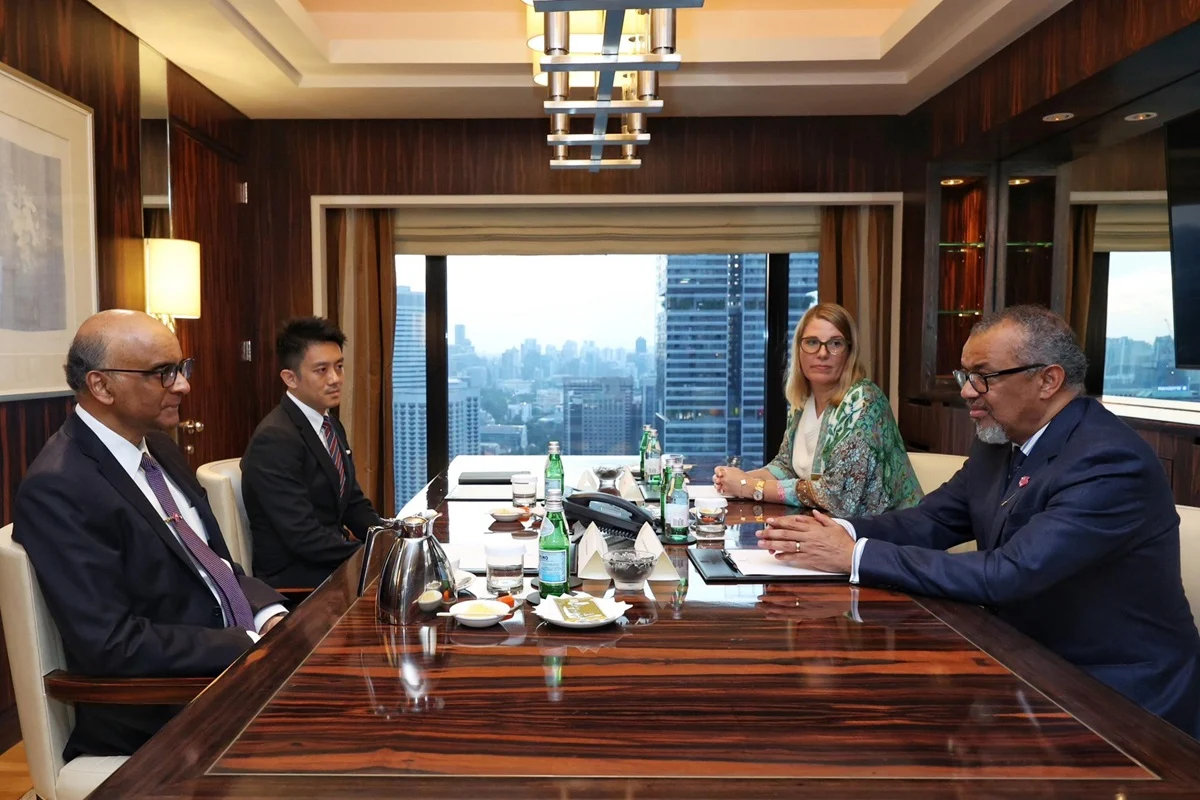
The landscape of international public health is undergoing a profound transformation, driven increasingly by cross-sector collaborations that bridge the gap between traditional state-sponsored initiatives and private philanthropic capital. This paradigm was brought to the forefront during the high-level Philanthropy Asia Summit, held in Singapore from May 5 to May 7, 2025. Addressing international delegates, policy-makers, and philanthropic leaders, World Health Organization (WHO) Director-General Dr. Tedros Adhanom Ghebreyesus delivered a compelling address emphasizing that private philanthropic support is no longer merely a supplementary asset, but an absolute structural pillar required to fortify global health architecture, achieve universal health coverage (UHC), and secure long-term health equity in an increasingly volatile geopolitical and environmental climate.
The three-day summit, hosted prominently by the Temasek Foundation and the Philanthropy Asia Alliance, served as a critical nexus for mobilizing resources, sharing innovative intervention strategies, and aligning private sector agility with public health mandates. Against the backdrop of escalating global health security threats—ranging from recurring epidemic and pandemic risks to the chronic burden of non-communicable diseases and climate-induced health crises—Dr. Tedros underscored the indispensable nature of strategic philanthropy. His remarks arrived at a critical junction for the WHO, as the organization actively broadens its funding mechanisms, diversifies its donor ecosystem, and accelerates execution of its ambitious Fourteenth General Programme of Work (GPW14).
Chronology and Event Background
The Philanthropy Asia Summit 2025 emerged from a multi-year trajectory of institutional realignment within global health governance. Over the past decade, traditional donor-aid models have faced unprecedented budgetary pressures. Economic headwinds in major industrialized nations, coupled with compounding crises such as armed conflicts, supply chain disruptions, and climate change emergencies, have strained the financial capacity of traditional multilateral funding streams.
Recognizing these vulnerabilities, the WHO launched its landmark Investment Round mechanism to secure predictable, flexible, and sustainable financing. The initiative was designed to transition the organization away from its historic reliance on tightly earmarked voluntary contributions toward sustainable core financing. Singapore and the Temasek Foundation quickly positioned themselves at the forefront of this financial evolution. During the proceedings in early May 2025, Dr. Tedros formally acknowledged Singapore’s leadership, specifically praising President Tharman Shanmugaratnam for the nation’s visionary approach to multilateral health diplomacy. Singapore and the Temasek Foundation were among the very first global entities to pledge robust financial and strategic support to the WHO Investment Round, establishing a benchmark for public-private synergy that organizers hoped other sovereign and philanthropic actors would emulate.
The summit itself unfolded across a meticulously structured sequence of plenary sessions, closed-door strategic roundtables, and high-level ministerial dialogues. Day one focused heavily on systemic health security, examining lessons learned from post-pandemic surveillance architectures and the imperative for vaccine manufacturing equity in the Global South. Day two shifted toward primary health care (PHC) delivery models, leveraging artificial intelligence and digital health diagnostics in resource-constrained environments. The concluding day synthesized these themes into actionable commitments, emphasizing multi-stakeholder accountability frameworks and long-term endowment strategies for regional health resilience.
The Evolving Mechanics of Philanthropic Intervention in Public Health
To comprehend the profound significance of Dr. Tedros’s remarks at the Singapore summit, one must analyze the unique structural advantages that philanthropic capital brings to the global health ecosystem. While sovereign states and multilateral institutions operate under rigid bureaucratic mandates, stringent legislative appropriations cycles, and complex diplomatic constraints, philanthropic foundations possess the institutional agility to deploy resources rapidly and creatively.
One of the most critical contributions of modern philanthropic partners lies in their capacity to fund high-risk, high-reward research and development (R&D). Traditional public sector funding mechanisms—often bound by domestic political accountability and taxpayer scrutiny—frequently hesitate to invest in early-stage scientific innovations where the failure rate is exceptionally high. Philanthropic organizations, conversely, can act as venture capitalists of public health. They can absorb early-stage financial risks, subsidize proof-of-concept trials for neglected tropical disease treatments, and accelerate the development of platform technologies for rapid vaccine and therapeutic deployment.
Furthermore, philanthropic capital plays a vital catalytic role in strengthening primary health care delivery systems at the community level. In many low- and middle-income countries (LMICs), national health budgets are overwhelmingly consumed by tertiary hospital care in urban centers, leaving rural and marginalized populations structurally underserved. Strategic philanthropic investments frequently target these systemic gaps by supporting community health worker training programs, establishing resilient cold-chain logistics for immunization drives, and deploying digital health infrastructure that connects remote clinics to central diagnostic databases.
By aligning their grant-making strategies with national health plans, philanthropic foundations ensure that their interventions do not operate in isolated silos. Instead, they complement and amplify the work of multilateral bodies like the WHO, UNICEF, and Gavi, the Vaccine Alliance, transforming fragmented pilot projects into sustainable, nationally owned public health programs.
Strategic Imperatives: The WHO Investment Round and Diversified Funding
A central theme of Dr. Tedros’s engagement at the Philanthropy Asia Summit was the ongoing strategic mobilization of the WHO Investment Round. Historically, the WHO has relied heavily on assessed contributions (mandatory dues from member states) and specified voluntary contributions. For decades, assessed contributions have plummeted as a percentage of the total budget, leaving up to 80% of the organization’s financing dependent on tightly earmarked voluntary funds. This dynamic created significant vulnerabilities, restricting the Director-General’s ability to allocate resources flexibly in response to sudden public health emergencies or long-term structural reforms.
To rectify this imbalance, the WHO engineered the Investment Round model to invite predictable, multi-year funding commitments from a vastly expanded and diversified donor base. This initiative deliberately extends beyond traditional member state governments to systematically engage high-net-worth individuals, corporate foundations, venture philanthropy funds, and philanthropic alliances.
By engaging with organizations such as the Temasek Foundation and the Philanthropy Asia Alliance, the WHO is tapping into the dynamic wealth creation and innovation hubs of the Asia-Pacific region. Dr. Tedros noted that these partnerships are instrumental in helping countries transition toward self-reliance. Rather than fostering permanent dependency on external aid, effective philanthropic investments empower national governments to build domestic institutional capacity, strengthen regulatory frameworks, and progressively increase domestic resource allocation for health.
The inclusion of Asian philanthropic actors also reflects a broader geopolitical realignment in global health governance. For generations, the flow of philanthropic capital was predominantly Western-led, moving from North America and Europe to the Global South. Today, the rapid economic expansion of Asian economies has catalyzed a vibrant domestic and regional philanthropic sector characterized by a sophisticated understanding of localized health disparities, regional supply chain dynamics, and culturally attuned community engagement strategies.
Addressing Health Inequities in a Turbulent Global Environment
The urgency articulated during the Singapore summit was underscored by the compounding crises defining the contemporary geopolitical and socio-economic landscape. The world in 2025 is grappling with overlapping shocks: protracted regional conflicts displacing millions, intensifying climate anomalies triggering unprecedented displacement and vector-borne disease outbreaks, and persistent macroeconomic pressures inflating the cost of essential medicines and medical technologies.
These converging crises disproportionately impact vulnerable populations, exacerbating historical health inequities both within and between nations. Dr. Tedros reminded the assembly of the foundational ethos enshrined in the WHO’s constitutional mandate: that the enjoyment of the highest attainable standard of health is a fundamental human right, not a conditional privilege reserved for the affluent.
Philanthropic entities possess a distinct advocacy advantage in combating these widening disparities. Unencumbered by diplomatic protocols that often constrain intergovernmental bodies, philanthropic leaders can openly champion controversial or neglected health policies, challenge structural market failures in pharmaceutical pricing, and advocate aggressively for intellectual property flexibilities during health emergencies. By leveraging their public standing, economic influence, and convening power, philanthropic partners act as vital amplifiers of marginalized voices, ensuring that the needs of remote, indigenous, and conflict-affected communities remain central to global policy agendas.
Broader Impact and Implications for the Fourteenth General Programme of Work (GPW14)
Looking toward the horizon, the partnerships forged and reinforced at the Philanthropy Asia Summit 2025 will serve as foundational building blocks for the implementation of the WHO’s Fourteenth General Programme of Work (GPW14). GPW14 outlines the strategic blueprint for the organization’s operations, setting rigorous targets for reducing mortality from non-communicable diseases, closing immunization gaps, strengthening global pathogen surveillance systems, and embedding climate resilience into health infrastructure.
Achieving the ambitious milestones established in GPW14 is mathematically and logistically impossible without robust, institutionalized multi-stakeholder collaboration. The complex matrix of modern public health challenges requires an ecosystem approach—one that harmonizes the normative authority and technical expertise of the WHO with the financial flexibility, innovative spirit, and operational reach of private philanthropy.
The success of the Singapore summit signals a maturing of this relationship. It demonstrates that international public health organizations are increasingly adept at designing transparent, accountable, and high-impact partnership frameworks that welcome private capital without compromising public health integrity or regulatory independence.
As the global health community reflects on the outcomes of the Philanthropy Asia Summit 2025, the overarching message remains unequivocal: navigating the turbulent decades ahead will require unprecedented levels of global solidarity. By cementing strategic alliances between sovereign governments, multilateral institutions, and forward-thinking philanthropic foundations like the Temasek Foundation and the Philanthropy Asia Alliance, the international community is laying the groundwork for a more resilient, equitable, and secure global health future—one where universal health coverage transitions steadily from an aspirational ideal into a tangible reality for every individual across the globe.







Leave a Reply