
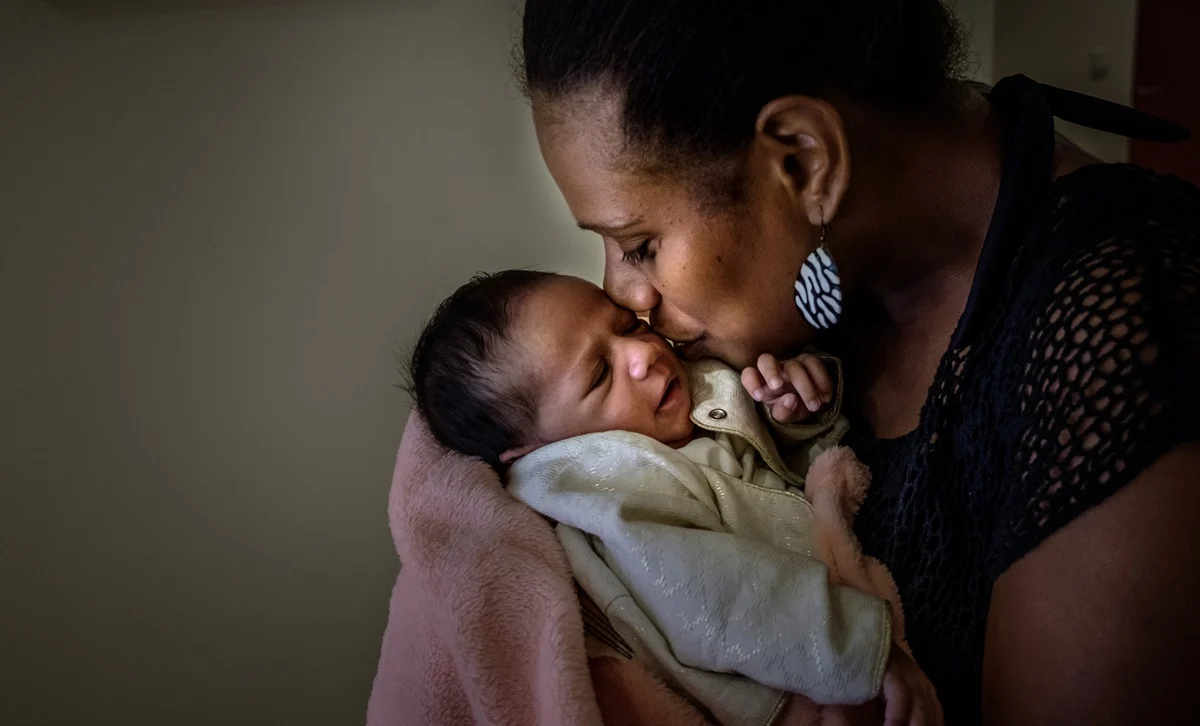
On the 7th of April, 2025, the global health community observed World Health Day under the resonant theme "Healthier beginnings, hopeful futures," marking both the 77th anniversary of the founding of the World Health Organization (WHO) and the official launch of a critical, year-long campaign dedicated entirely to maternal and newborn health. In an unprecedented display of international solidarity and urgent advocacy, more than 100 WHO country offices worldwide mobilized alongside Member States, local communities, frontline health workers, donor agencies, and civil society organizations. These coordinated actions brought to the forefront a message that has grown increasingly urgent: the foundational care required by mothers and newborns during pregnancy, childbirth, and the postnatal period is facing severe, compounding threats from widespread international aid cuts and systemic underfunding.
The timing of this global mobilization is far from coincidental. It directly responds to stark, coordinated warnings issued by United Nations agencies on the very same day, alerting the international community that years of fragile, hard-fought progress in reducing preventable maternal and neonatal mortality are in jeopardy. The convergence of post-pandemic economic recovery challenges, shifting geopolitical priorities, and sudden reductions in official development assistance (ODA) has created a volatile financial landscape for global health. Consequently, critical maternal and newborn health-related services—ranging from emergency obstetric care and skilled birth attendance to postnatal nutrition and neonatal intensive care—are experiencing severe resource constraints, particularly in low- and middle-income countries.
Background and Context: A Fragile Landscape of Maternal Survival
To understand the gravity of the World Health Day 2025 campaign, one must examine the trajectory of global maternal and child health over the past two decades. Prior to the COVID-19 pandemic, the international community had made notable, albeit uneven, strides in reducing maternal mortality ratios (MMR) and neonatal mortality rates, largely driven by the Millennium Development Goals (MDGs) and subsequently the Sustainable Development Goals (SDGs). Target 3.1 of the SDGs explicitly aims to reduce the global maternal mortality ratio to less than 70 per 100,000 live births by the year 2030, while Target 3.2 seeks to end preventable deaths of newborns and children under 5 years of age, with all countries aiming to reduce neonatal mortality to at least as low as 12 per 1,000 live births.
However, recent data compiled by WHO, UNICEF, and the United Nations Population Fund (UNFPA) indicate that progress has largely stagnated since 2016. In many regions, the compounding crises of health system disruptions, armed conflicts, economic instability, and climate-related emergencies have reversed hard-won gains. Every day, approximately 800 women die from preventable causes related to pregnancy and childbirth globally—amounting to roughly one death every two minutes. Furthermore, millions of newborns fail to survive their first month of life, with complications from prematurity, intrapartum-related events (birth asphyxia), and neonatal infections serving as the primary drivers of mortality.
It is within this sobering context that the WHO chose to center its 77th anniversary not merely on biomedical achievements, but on the profound social, economic, and human rights imperative of securing healthy beginnings. The year-long initiative is designed to galvanize political will, mobilize domestic resource allocation, and foster cross-sectoral partnerships to protect maternal and newborn health as the indisputable foundation of resilient families and prosperous communities.
Regional Actions and Grassroots Engagement Across the Globe
The decentralized nature of the World Health Day 2025 campaign ensured that advocacy efforts were tailored to the specific epidemiological, cultural, and structural realities of each WHO region. Across Africa, the Americas, the Eastern Mediterranean, Europe, South-East Asia, and the Western Pacific, stakeholders translated global mandates into localized, high-impact interventions.
In the Region of the Americas, high-level dialogues and community-level forums took center stage. A notable example occurred in Chile, where PAHO/WHO Chile Country Representative Giovanni Escalante Guzmán participated in a collaborative discussion alongside prominent Mapuche leader Juana Cheuquepan. The dialogue focused intently on "mother and newborn health as the basis for healthy families and communities," explicitly bridging indigenous ancestral knowledge and modern public health frameworks. This engagement underscored the imperative of culturally sensitive health care delivery—a crucial factor in reducing maternal mortality among indigenous and marginalized populations who historically experience systemic barriers to quality health services.
Across the African Region, where the burden of maternal and neonatal mortality remains disproportionately high, WHO country offices partnered with ministries of health to launch national advocacy campaigns emphasizing the protection of frontline health workers. Discussions centered on the severe shortages of midwives, nurses, and obstetricians, many of whom operate in under-resourced facilities without reliable access to essential medicines, clean water, or electricity. Ministries and civil society groups utilized the occasion to call for increased domestic budgetary commitments to health, arguing that reliance on volatile international funding streams leaves national health systems acutely vulnerable to external shocks.
Meanwhile, in the Eastern Mediterranean Region, public awareness campaigns concentrated on the acute vulnerabilities of mothers and newborns caught in protracted humanitarian crises and displacement settings. WHO representatives highlighted how conflicts in countries such as Sudan, Yemen, and parts of the Levant have systematically dismantled health infrastructure, leaving millions of pregnant women without access to emergency obstetric care. In the European Region, advocacy efforts pivoted toward addressing emerging disparities in maternal care quality, postnatal mental health support, and the integration of migrant populations into national health insurance frameworks.
In the South-East Asia and Western Pacific regions, regional offices utilized World Health Day to showcase successful innovations in digital health, community-based maternal surveillance, and task-shifting models designed to expand the reach of skilled birth attendants into remote rural expanses. Despite these regional successes, the overarching narrative binding all these localized efforts together was a shared anxiety over impending budget reductions from traditional donor nations.
The Threat of Aid Cuts: An Analysis of Economic and Humanitarian Implications
The primary catalyst for alarm during the 2025 campaign is the quantifiable threat of international aid reductions. In late 2024 and early 2025, several major donor governments announced significant recalibrations and downward adjustments to their official development assistance budgets, driven by domestic fiscal pressures, inflation, and shifting geopolitical priorities toward defense and security.
Public health economists and international development experts have warned that the withdrawal or reduction of external funding will have immediate, cascading effects on vertical programs dedicated to reproductive, maternal, newborn, child, and adolescent health (RMNCAH). Unlike generalized health system financing, which can sometimes absorb minor shocks, targeted maternal and newborn interventions often rely heavily on donor-funded commodities, including life-saving pharmaceuticals such as oxytocin for preventing postpartum hemorrhage, magnesium sulfate for managing severe pre-eclampsia, and specialized resuscitation equipment for newborns.
When international aid contracts or disbursements are delayed or canceled, the supply chain integrity of these essential commodities collapses at the district and facility levels. In low-resource settings, out-of-pocket expenditure for health care remains high; thus, when free or subsidized maternal services are compromised by funding shortfalls, impoverished families are forced to absorb catastrophic costs. This dynamic frequently results in delays in seeking care, forcing women to give birth at home without skilled attendance or to arrive at under-staffed referral facilities when life-threatening complications have already progressed past the window of effective medical intervention.
Furthermore, the funding crisis threatens to stall workforce expansion and training initiatives. The global deficit of health workers—estimated by the WHO to reach millions over the coming decade—is acutely concentrated in nursing and midwifery professions. Without sustained financial support for recruitment, continuous professional development, and fair remuneration, retention rates in rural and underserved areas will plummet, further entrenching geographical disparities in maternal survival outcomes.
Institutional Responses and Strategic Imperatives for the Future
In response to these mounting challenges, UN agencies, international health organizations, and public health coalitions have articulated a clear, multi-pronged strategic agenda designed to safeguard maternal and newborn health through 2025 and beyond.
First and foremost, the WHO is urging national governments to transition away from over-reliance on volatile external aid by institutionalizing sustainable domestic financing mechanisms for health. This includes expanding fiscal space for health through progressive taxation, closing tax loopholes, reallocating harmful subsidies, and prioritizing maternal and child health within national budgetary frameworks. Sustainable domestic financing is framed not merely as a matter of economic policy, but as a fundamental sovereign responsibility essential for national security and human capital development.
Second, the international health community is advocating for the institutionalization of resilient, primary health care (PHC)-oriented health systems. Rather than viewing maternal and newborn health as a set of isolated vertical interventions, health planners are emphasizing the necessity of integrated service delivery. Under this model, antenatal care, skilled attendance at birth, postnatal support, immunization, nutrition counseling, and sexual and reproductive health services are woven seamlessly into the fabric of everyday primary care, ensuring continuity of care across the life-course.
Third, the campaign emphasizes the empowerment and protection of the health workforce. Recognizing that high-quality, respectful maternal care depends entirely on the well-being and competence of health providers, WHO member states are being urged to implement robust occupational safety standards, provide adequate mental health support, and establish clear pathways for career progression and fair compensation for midwives and nurses.
Conclusion: A Pivotal Juncture for Global Public Health
As the World Health Organization enters its 78th year of existence, the global community stands at a critical historical crossroads regarding the survival and well-being of mothers and newborns. The widespread mobilization observed on World Health Day 2025 demonstrated unequivocally that civil society, health professionals, and international bodies recognize the immense stakes involved.
Yet, advocacy alone cannot bridge funding deficits or reverse systemic policy failures. The stark warnings issued by UN agencies regarding aid cuts serve as an urgent call to action for policymakers, financial institutions, and global leaders. If the international community fails to protect and expand investments in maternal and newborn health, the world risks a historic regression—turning back the clock on decades of progress and denying millions of women and children their fundamental human right to health, survival, and a hopeful future. The imperative moving forward is clear: sustained political commitment, innovative domestic financing, and unwavering solidarity must be marshaled to ensure that every birth is a safe beginning and every life begins with enduring hope.









Leave a Reply