
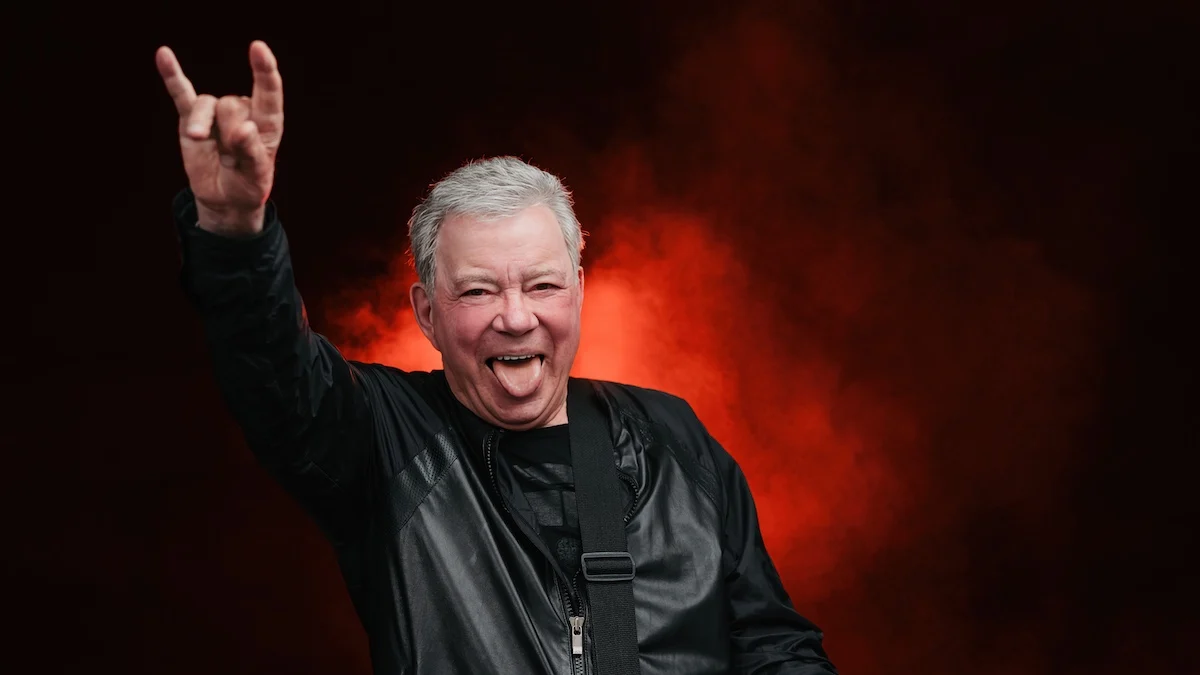
At the age of 95, legendary actor and cultural icon William Shatner has officially added a new, unexpected dimension to his storied career: heavy metal frontman. On the evening of Saturday, September 19, Shatner took the stage at Park West in Chicago, marking his debut foray into live metal performance. Backed by his high-octane ensemble known as The uckers, the Star Trek* luminary delivered a set that bridged the gap between spoken-word performance art and the aggressive sonic architecture of heavy metal.
This performance served as a high-profile precursor to his scheduled appearance at the annual Riot Fest, a cornerstone of the Chicago alternative and punk music scene. By bringing his unique interpretive style to the stage, Shatner challenged traditional perceptions of the genre, proving that the boundary between stage acting and musical performance remains porous even for a nonagenarian legend.
A Chronology of the Performance
The evening at Park West was characterized by a deliberate juxtaposition of classic metal anthems and original, introspective compositions. The setlist opened with an ambitious rendition of Ozzy Osbourne’s "Crazy Train," setting the tone for a show that relied heavily on Shatner’s idiosyncratic delivery. Rather than attempting to match the vocal registers of legends like Ozzy Osbourne or Lemmy Kilmister, Shatner employed a dramatic, rhythmic spoken-word cadence. This approach transformed the lyrics into something approaching Shakespearean soliloquy, anchored by the technical proficiency of The *uckers.
The chronology of the performance flowed as follows:
- Crazy Train (Ozzy Osbourne): An energetic opening that highlighted the contrast between the band’s thrashing instrumentals and Shatner’s deliberate vocal phrasing.
- Do Not Go Gentle into That Good Night: An original composition utilizing Dylan Thomas’s famous imagery, demonstrating Shatner’s ability to weave literary weight into the heavy metal landscape.
- Ace of Spades (Motörhead): A bold interpretation of the speed metal classic, proving that the intensity of the track can survive even the most unconventional vocal delivery.
- Will We Care When the Sky Turns Black: An original track that leans into the darker, existential themes often found in modern metal.
- Enter Sandman (Metallica): A centerpiece performance that saw the crowd engaging with the familiar riffs while adapting to Shatner’s commanding stage presence.
- Damn Old Age: A concluding original track that serves as a poignant, if blunt, reflection on the passage of time—a recurring theme in Shatner’s recent creative output.
Contextualizing the Venture: The Path to Heavy Metal
Shatner’s pivot to heavy metal is not a sudden whim, but the culmination of a long-standing interest in musical experimentation. Over the last several decades, he has cultivated a reputation as an artist unafraid to tackle unconventional genres, famously releasing albums that blend spoken-word with folk, rock, and jazz. His transition to metal, however, is his most ambitious departure yet.
The artist is currently in the late stages of production for his debut metal album, tentatively titled What the F Is Heavy Metal?, which is slated for release through Cleopatra Records. The project has garnered significant attention due to the caliber of collaborators attached to the production. The album features contributions from some of the most influential figures in the history of the genre, including Brian May of Queen, Rob Halford of Judas Priest, Tony Iommi of Black Sabbath, and legendary percussionist Dave Lombardo, formerly of Slayer.
The involvement of such high-profile figures underscores the industry’s reception of the project. Rather than treating the venture as a novelty, established metal titans have lent their craft to the production, suggesting a genuine collaborative effort that seeks to explore the intersection of theatrical delivery and heavy instrumentation.
Industry Analysis and Musical Implications
From a musicological perspective, Shatner’s approach represents a fusion of the "Shatnerian" style—characterized by unpredictable pauses, emphatic delivery, and intense emotional inflection—with the standardized structures of 1980s and 90s metal. By stripping away the melody and focusing on the cadence of the lyrics, he forces the listener to confront the content of the words, often revealing a darker or more urgent subtext than the original recordings might suggest.
This is not the first time the music industry has seen an actor cross over into heavy metal, but the scale and the age of the participant set this instance apart. The implications for the metal genre are twofold: first, it signals a continued openness within the metal community to cross-disciplinary experimentation. Second, it highlights the longevity of artistic relevance. At 95, Shatner is defying age-related tropes in the entertainment industry, suggesting that the creative spirit, particularly in the expressive world of music, is not bound by chronological markers.
Supporting Data and Production Details
The logistics of the Park West performance were designed to facilitate a transition from the intimate club setting to the much larger stage of Riot Fest. The choice of The *uckers as a backing band provided the necessary technical rigor to sustain the high-tempo demands of the setlist.
For fans attending the Riot Fest set at 5:25 p.m., the experience serves as a case study in the evolution of festival programming. Promoters have increasingly looked to "legacy acts" and genre-defying performances to bolster lineups, and Shatner’s inclusion is a testament to his enduring cultural capital. His ability to draw crowds—not just for his status as Captain Kirk, but for his genuine commitment to this new musical chapter—speaks to the elasticity of his brand.
Official Responses and Public Reception
While formal comments from the guest contributors on his upcoming album remain centered on the creative process, the consensus among those involved is one of mutual respect. In industry circles, the project is being discussed as an exploration of the "heaviness" of the human condition, with Shatner acting as a conduit for lyrics that might otherwise be overlooked in favor of musical bombast.
The immediate fan reaction at the Chicago show was markedly positive. The crowd, a mix of long-time Star Trek enthusiasts and die-hard metal fans, appeared to embrace the theatricality of the performance. Videos circulating from the event show a receptive audience, many of whom were drawn by the novelty of seeing a Hollywood icon engage with the tropes of the metal genre in such a visceral way.
Broader Impact: The "Shatner Effect"
The broader impact of this endeavor is the disruption of the "elder statesman" archetype. Often, performers in their ninth decade are expected to retreat into comfortable, acoustic, or legacy-based repertoire. By selecting a genre defined by its intensity, volume, and aggression, Shatner is making a statement about the nature of aging. He is not merely participating in a trend; he is actively reshaping the environment around him to suit his current artistic vision.
Furthermore, the collaboration with Cleopatra Records indicates a calculated business strategy. The label, known for its extensive catalog of experimental and niche music, has identified a unique market niche for Shatner’s brand of spoken-word metal. The combination of his recognizable voice and the gravitas of guests like Tony Iommi and Rob Halford provides a compelling narrative that is likely to generate significant commercial interest upon the album’s release.
Looking Ahead: The Future of the Project
As the Riot Fest appearance serves as the public launchpad for his metal career, industry analysts will be watching to see if this leads to a sustained touring schedule or if the project remains a studio-focused endeavor. The logistical challenges of touring for a 95-year-old performer are significant, yet the success of the Park West show suggests that the appetite for such performances is present.
If the success of his debut show is any indication, the metal world has not only accepted William Shatner but has effectively integrated him into its ecosystem. The transition from the bridge of the Enterprise to the center of a mosh pit is a trajectory that few could have predicted, yet it stands as one of the most intriguing developments in the entertainment landscape of 2026. As the album nears its release, the focus will shift to how the recorded versions of these tracks—with the added production polish of heavy metal veterans—will fare on the global stage.
For now, the story remains one of audacity and adaptation. Whether the performance is viewed as an ironic nod to his own legacy or a sincere attempt to conquer a new medium, the result is the same: William Shatner is, once again, the center of the conversation. His presence at Riot Fest and his forthcoming album represent a collision of worlds—Hollywood and high-volume rock—that proves, in the mind of the performer, there is no final frontier for artistic expression.






Leave a Reply