
The federal government’s abrupt decision to eliminate the Office of the Canadian Ombudsman for Responsible Enterprise (CORE) has left human rights defenders, environmental advocates, and affected communities worldwide scrambling for accountability. Shuttered earlier this year under Prime Minister Mark Carney, CORE was originally established to investigate allegations of human rights abuses, environmental degradation, and labor violations by Canada-based companies operating overseas, particularly within the lucrative mining, oil and gas, and garment sectors.
In place of the independent watchdog, the administration of Prime Minister Carney has directed complainants toward the National Contact Point (NCP), a long-standing office housed within Global Affairs Canada. However, this transition has drawn fierce criticism from civil society organizations and international legal experts. Critics argue that the NCP—operating for more than two decades with a historically poor track record of securing meaningful remedies—lacks the statutory powers, structural independence, and investigative muscle required to hold powerful multinational corporations accountable.
With Canada serving as the home base for approximately half of the world’s publicly traded mining and mineral exploration companies, the closure of CORE and the reliance on a perceived toothless alternative mark a critical turning point in international corporate accountability.
A Timeline of Decay: The Rise and Fall of CORE

The creation of CORE was hard-won by Canadian civil society groups who argued that existing grievance mechanisms were structurally incapable of addressing corporate misconduct abroad. Designed to function as an independent investigative body, the ombudsperson’s office was empowered to evaluate complaints, compel evidence, and publish factual findings regarding corporate harm.
However, the office’s trajectory was plagued by political inertia. Two months into his tenure as prime minister, Mark Carney left the ombudsperson position vacant. Despite mounting complaints from overseas communities affected by Canadian corporate projects, CORE languished for more than a year without leadership, rendering it entirely unable to probe or process grievances.
Rather than appointing a new leader to revitalize the agency, Prime Minister Carney declared the office ineffective and officially eliminated it in June. At the time of its closure, CORE still held 24 active complaints pending review and three awaiting initial intake. Complainants received a brief notification informing them that all activities had ceased and offering them two unpalatable choices: transfer their files to the Canadian NCP or close their cases entirely.
Global Affairs Canada defended the elimination, stating that the government had decided to permanently streamline the ombudsperson’s responsibilities into alternative functions with "stronger track records of effectiveness," pointing directly to the National Contact Point.
The Record of the National Contact Point

Established under the framework of the Organisation for Economic Co-operation and Development (OECD), National Contact Points operate in 52 countries as nonjudicial grievance mechanisms to promote responsible business conduct. They rely on nonbinding principles and seek to facilitate dialogue and mediation between corporations and affected communities.
Yet, a review of the Canadian NCP’s operational history reveals stark limitations. Since 2000, out of 33 cases submitted to the Canadian NCP, only three have ever reached a formal joint agreement. In one of those instances, the process was actually led by an NCP from another country. Even when agreements were reached, they rarely delivered meaningful redress, frequently resulting in vague commitments rather than substantive compensation or structural changes.
Furthermore, systemic structural issues have long plagued the office. A 2019 peer review conducted by representatives from the NCPs of Belgium, Denmark, the United Kingdom, and the OECD Secretariat highlighted significant vulnerabilities. The review noted that housing the Canadian NCP within the Trade Commissioner Service of Global Affairs Canada created an inherent conflict of interest, generating a widespread public perception of partiality and susceptibility to trade-related pressures. Reviewers also flagged restrictive rules on public campaigning, onerous substantiation requirements, and severe delays in resolving cases.
While Global Affairs Canada has promised to increase staff numbers at the NCP—which operated with only two dedicated personnel from 2017 onward—advocates argue that adding personnel does nothing to solve foundational design flaws.
Voices from the Ground: Disillusioned Complainants

For international human rights defenders who spent years navigating administrative hurdles, the forced migration of cases from CORE to the NCP has proven deeply demoralizing.
John Namegabe Bugabo, a human rights defender based in the Democratic Republic of Congo (DRC), represents 129 individuals from the villages of Mege and Bandayi. These residents allege they were forcibly evicted from their lands to make way for an expansion of the Kibali gold mine, which is 45% owned by Canadian mining giant Barrick Mining Corp. Bugabo asserts that more than 2,000 people were ultimately impacted when security forces allegedly destroyed homes, schools, places of worship, and vital agricultural infrastructure without prior consultation or compensation, leaving residents homeless. Some protesters were reportedly shot and killed.
Barrick Mining has consistently denied any role in the 2021 resettlement operations, maintaining that the relocation was directed and executed entirely by the DRC government.
Bugabo initially brought his grievances to the Canadian NCP in 2022. Having previously secured a historic mediation success through the Netherlands NCP regarding a labor dispute involving Heineken, Bugabo had anticipated a rigorous and fair process in Canada. Instead, after a single day of mediation in 2023, the Canadian NCP abruptly terminated talks, concluding that further dialogue was unlikely to yield a resolution. It closed the file without securing compensation for the destroyed properties, issuing instead a set of nonbinding recommendations urging Barrick Mining to improve transparency regarding its relationship with security forces.
When CORE was shut down, Bugabo was given the option to transfer his unresolved file back to the NCP—the very office that had previously failed to secure a remedy. Refusing to engage further with an agency he views as deeply compromised, Bugabo joined other complainants in rejecting the transfer, leaving his community entirely without recourse.

Concerns Over Industry Interference and Transparency
Critics point to past controversies as evidence that the Canadian NCP is vulnerable to corporate and political pressure.
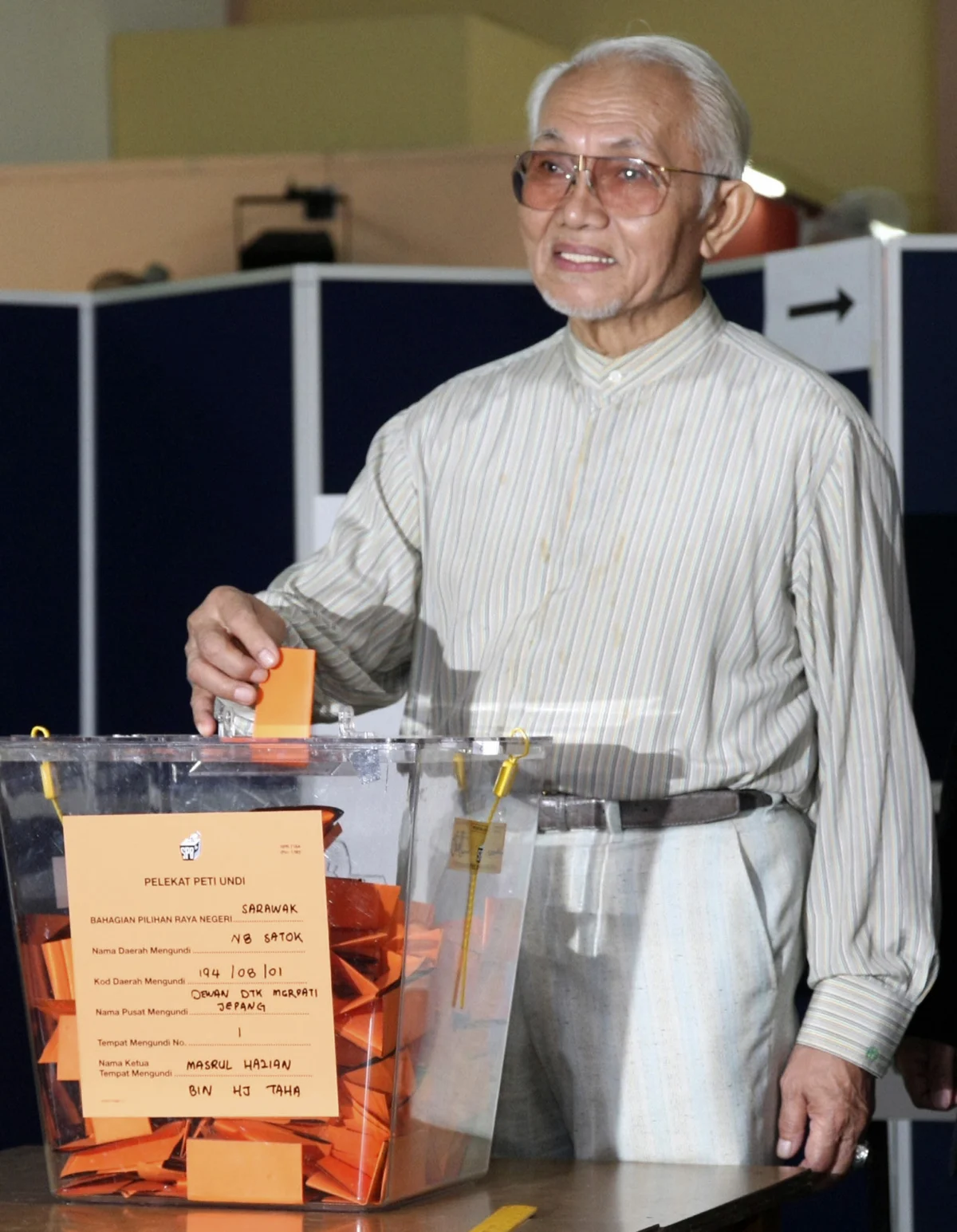
In 2016, the Swiss environmental NGO Bruno Manser Fonds filed a request with the Canadian NCP to review Sakto Corp., an Ottawa-based real estate investment firm. The NGO alleged that Sakto was tied to millions of dollars in illicit logging kickbacks siphoned from the deforestation of Sarawak, Malaysia, under the tenure of former state chief minister Abdul Taib Mahmud—whose daughter is married to Sakto’s co-controller. Sakto vehemently denied the allegations, maintaining it is a 100% Canadian company with no international operations, and launched defamation proceedings in Switzerland.
While the Canadian NCP initially drafted an assessment finding the complaint admissible, the process quickly collapsed. The NCP ultimately closed the complaint in 2017, blaming the NGO for breaching confidentiality. However, subsequent disclosures revealed that a Canadian Member of Parliament had directly lobbied the international trade minister, accusing the NGO of harassment and criticizing the NCP process.
The OECD Investment Committee later upheld a complaint filed by OECD Watch against the Canadian NCP, ruling that the office had failed to fulfill its responsibilities, lacked transparency, and contributed to a widespread perception of partiality.

International Comparisons and the Call for Reform
Global experts emphasize that Canada’s position as a global mining superpower places an outsized responsibility on its regulatory and accountability mechanisms. Joseph Wilde-Ramsing, advocacy director at the Netherlands-based Centre for Research on Multinational Corporations (SOMO) and a founder of OECD Watch, notes that while nations like the Netherlands have transformed their NCPs into robust, independent entities utilizing non-governmental experts for mediation, Canada has lagged far behind.
Catherine Coumans, research coordinator for MiningWatch Canada, warns that the reliance on the NCP effectively grants Canadian corporations a free pass.
"What this essentially means is that it’ll be business as usual for Canadian mining companies operating overseas," Coumans said. "They have nothing to be concerned about. They won’t have to improve their practices. They will not be held to account in Canada in any way."
As the Canadian NCP undergoes its second periodic peer review by the OECD, civil society organizations are continuing to demand structural transformation. Advocates are pressing the federal government to either reinstate CORE with subpoena powers and true independence from foreign trade directives or establish a brand-new legislative watchdog equipped with the teeth necessary to ensure that Canadian corporations operating abroad respect human rights and environmental laws. Without such reform, affected communities worldwide will remain structurally locked out of justice.










Leave a Reply