

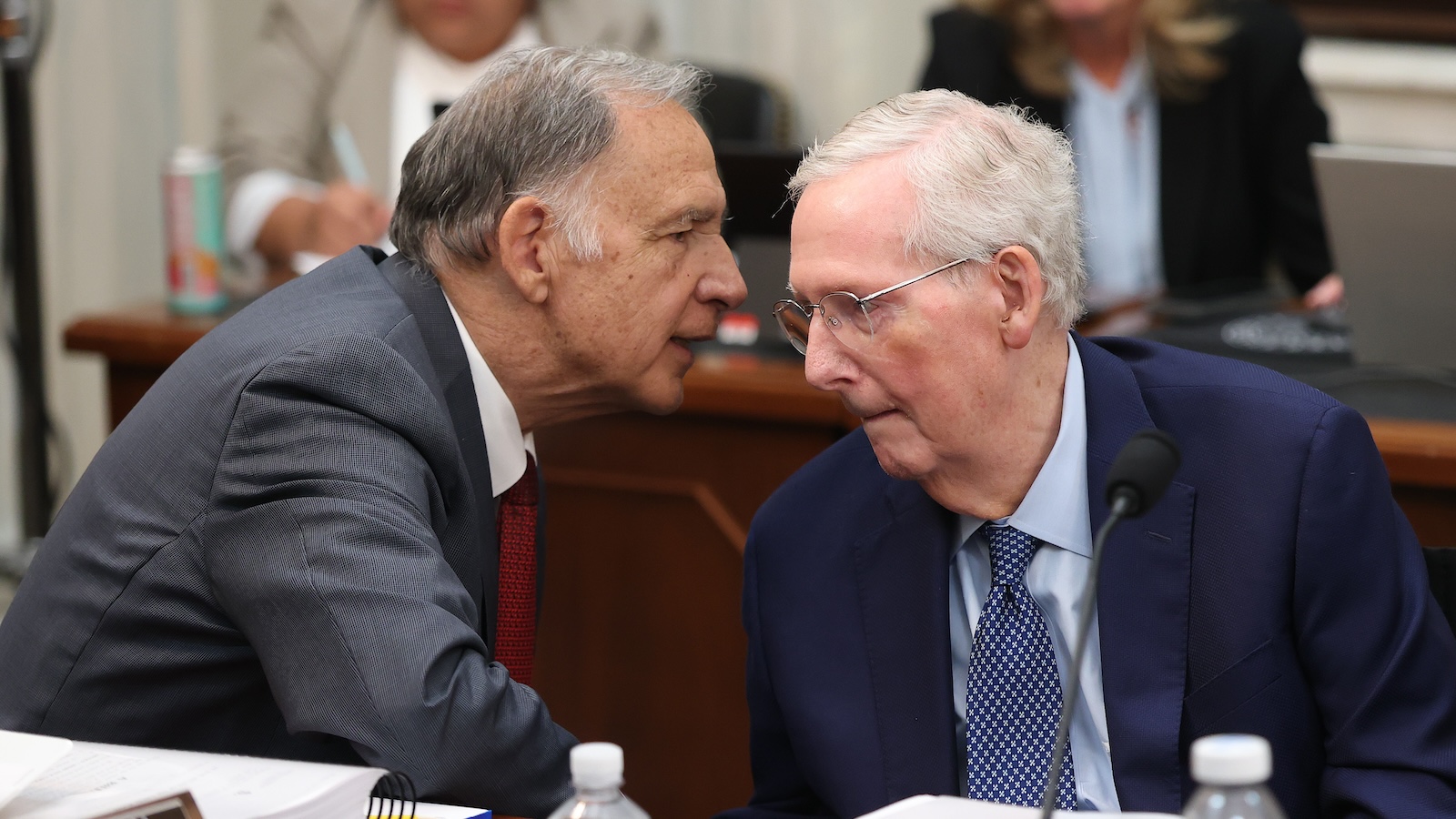
The United States legislative landscape continues to grapple with a profound policy paralysis as the path to renewing the nation’s cornerstone agricultural legislation remains blocked by deep partisan divisions. Last Tuesday marked a brief return to the spotlight for Senator Mitch McConnell, who stepped back onto the congressional floor after a three-month absence. His immediate action was casting a deciding vote within the Republican-led Agriculture Committee, a move intended to jump-start the stalled legislative vehicle. However, despite McConnell’s return and his alignment with committee leadership, political analysts and congressional insiders agree that the probability of Congress passing a comprehensive farm bill this year remains remarkably low.
Should the legislative effort collapse entirely before the year is out, it will mark the fourth consecutive year that lawmakers have failed to successfully renew the sprawling package that dictates everything from nutritional assistance to rural development and environmental conservation. The ongoing stalemate highlights a legislative branch increasingly incapable of bridging ideological chasms, leaving the nation’s agricultural sector, millions of low-income families, and state-level administrators navigating an era of profound economic uncertainty.
A Chronology of Delay: How the Farm Bill Became Bogged Down
To understand the current crisis, one must trace the timeline of agricultural policy over the past decade. Historically, the farm bill is designed to be reauthorized approximately every five years, serving as an omnibus legislative package that commands rare bipartisan consensus. The last fully realized, comprehensive farm bill was signed into law in 2018. Since its expiration window approached, however, the process has devolved into a series of stopgap extensions, short-term delays, and fierce ideological battles.
The friction intensified last August when Democrats on the Senate Agriculture Committee successfully blocked the chamber’s draft version of the farm bill from moving forward to a full floor vote. The core grievances that motivated that blockade remain entirely unresolved. Although Republicans hold a slim majority in the Senate with 53 seats, the mechanics of the chamber require a 60-vote threshold to overcome procedural hurdles and pass major legislation. Consequently, Republican leadership cannot advance the package on party-line votes alone; they must successfully court several Democratic lawmakers. With the midterm elections looming in November, the political appetite for compromise has shrunk considerably, rendering the path to the necessary 60 votes virtually impassable.
The SNAP Battleground: Nutrition, Rural Communities, and Budgetary Strain
At the epicenter of the legislative deadlock is a fierce dispute over the Supplemental Nutrition Assistance Program (SNAP). Traditionally, SNAP reauthorization and funding structures are embedded directly within the farm bill. However, the political landscape shifted dramatically last summer when President Donald Trump signed into law the One Big Beautiful Bill Act. That sweeping legislation enacted historic fiscal contractions, slashing federal funding for SNAP by a staggering $186 billion.
Senate Democrats on the Agriculture Committee have drawn a hard line in the sand, maintaining that they will not vote in favor of any farm bill that fails to reverse these devastating nutrition cuts. Furthermore, Democrats are pushing for a substantial delay in an impending regulatory change that would shift a larger share of administrative costs for running SNAP onto individual state governments.
The current committee-advanced bill addresses neither of these demands, leaving Senate Democrats little incentive to support the package on the floor. The implications of these unresolved disputes extend far beyond Washington boardrooms, directly threatening the economic stability of both vulnerable populations and the rural communities that support them.
The $186 billion reduction in nutrition assistance creates immediate hardships for millions of low-income families and individuals who depend on the program to put food on the table. Yet, the economic fallout loops directly back to the agricultural producers the bill is ostensibly designed to protect.
"The farmers in our network live in rural areas," explained Jody Osmund, a founding member of the FACE Ag Network, a coalition of pasture-based livestock producers. "Rural areas have a higher uptake of SNAP participation than urban areas. So it’s hurting our community."
Beyond the direct drop in local purchasing power, the failure to delay the structural shift in administrative costs places an unprecedented burden on state budgets. State governments across the country are now facing agonizing fiscal dilemmas.
"States are going to have to rethink their budgets," noted Mike Lavender, policy director for the National Sustainable Agriculture Coalition. "That could mean that states are looking at, ‘Hey, do we fund education at this level or do we fund SNAP? Or do we fund transportation or SNAP?’ So this is forcing really difficult decisions that could impact departments of agriculture at the state level."
These fiscal pressures do not distribute their weight evenly across the agricultural economy. Small- and medium-sized farming operations are projected to absorb the brunt of these state-level budgetary reallocations. This comes at a uniquely perilous economic moment characterized by soaring input costs—including record-high diesel prices—and deeply unstable global trade markets.
Environmental Conservation and the Animal Welfare Debate
While the nutrition and administrative disputes have dominated headlines, the farm bill debate also encompasses fierce battles over environmental conservation programs and animal welfare regulations. The current Senate draft includes cuts to vital conservation frameworks, such as the Environmental Quality Incentives Program (EQIP) and the Conservation Stewardship Program (CSP).
These proposed reductions have drawn sharp criticism from environmental advocates and sustainable agriculture groups. However, some agricultural stakeholders argue that the problem extends deeper than mere funding levels. According to critics like Osmund, legacy conservation programs are structurally flawed and require a complete redesign to maximize efficiency and target resources toward true sustainable farming practices.
Osmund contends that too many federal conservation dollars are currently channeled into managing animal waste on massive, industrial-scale livestock operations, rather than being directed toward meaningful climate adaptation strategies for independent farms.
Amid these contentious debates, the current Senate farm bill did offer one notable exclusion that drew cautious praise from reform advocates: the omission of the controversial "Save Our Bacon" provision. This proposed measure would have preempted state-level animal welfare laws, making it significantly easier for livestock producers to employ intensive confinement and caging practices that many states have moved to ban.
Ahead of the committee vote, Osmund and members of his coalition traveled to Washington, D.C., holding direct meetings with lawmakers to lobby against the inclusion of the provision. "It’s encouraging," Osmund said regarding its removal, reflecting a rare point of agreement among certain sustainable agriculture groups.
Implications: Why No Deal May Be Preferable to a Bad Deal
As the calendar moves closer to the November midterms, the reality of another legislative failure becomes increasingly stark. For many agricultural organizations and rural advocates, however, the prospect of a stalled farm bill is no longer viewed with uniform dread.
Because Congress has repeatedly failed to pass a comprehensive reauthorization over the last four years, federal agricultural programs have continued to limp forward via a series of stopgap funding measures and extensions of the 2018 farm bill. To a segment of the farming community, maintaining the status quo under the 2018 framework is vastly preferable to rushing through a deeply flawed legislative package driven by short-term political pressures.
"A continuation of the 2018 farm bill may be better," Osmund argued. "It’s not good. It is not ideal, but no deal on the current versions of the farm bill, in our opinion, is much better than a very, very bad deal."
If the current negotiations collapse entirely—as mounting procedural hurdles and immovable partisan lines suggest they will—lawmakers will be forced back to the drawing board when the new Congress convenes in 2027. Until then, American agriculture will continue to operate in a state of regulatory limbo, managed by temporary fixes while foundational questions regarding nutrition, state budgets, conservation, and rural economic survival remain deferred to another day.







Leave a Reply