
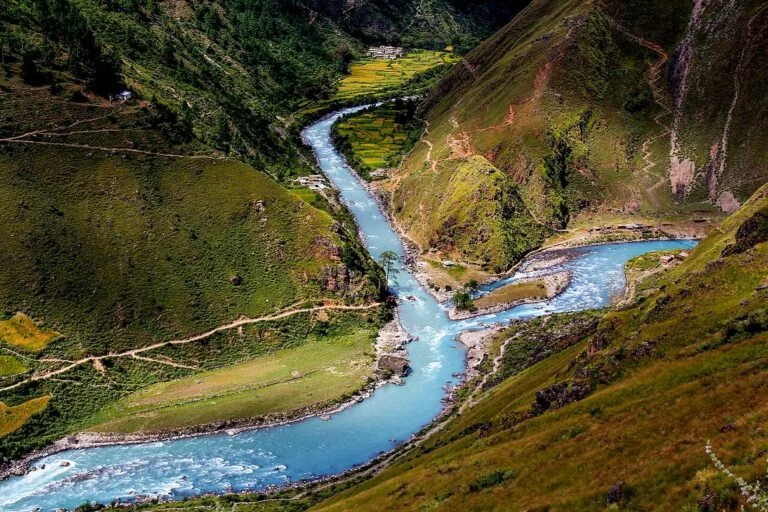
A catastrophic glacial collapse along the borderlands of the Nepal-China frontier has triggered an unprecedented humanitarian and ecological emergency, laying bare the profound vulnerabilities of South Asia’s rapidly expanding hydropower infrastructure in the face of accelerating climate change. Recent figures confirm that more than 1,000 people have perished, while over 4,000 individuals remain missing across Nepal and China. Search and recovery operations continue under grueling conditions as heavy machinery and rescue crews labor through deep mud and silt to reach workers feared trapped inside subterranean infrastructure. Among the hardest-hit zones are the vast tunnel systems of hydropower facilities along the Trishuli and Bhotekoshi rivers—engineering marvels large enough to accommodate trucks, now entirely choked with mountainous debris and glacial silt.
This disaster transcends the parameters of a conventional natural catastrophe. Environmental scientists, geologists, and river conservationists characterize the event as a stark preview of the mounting climatic pressures confronting the Hindu Kush Himalaya mountain range. Furthermore, the disaster serves as an urgent wake-up call regarding the aggressive, unchecked pace of dam construction throughout Nepal, where energy developers have historically sought to harness nearly every flowing watercourse to feed power-hungry regional grids.
Anatomy of a High-Altitude Disaster
The catastrophic flooding that recently devastated the Rasuwa and Nuwakot districts did not occur in a vacuum. For decades, climatologists and glaciologists affiliated with regional monitoring bodies, including the Kathmandu-based International Centre for Integrated Mountain Development (ICIMOD), have issued persistent warnings regarding the state of the Hindu Kush Himalaya. High-altitude glaciers are retreating and thinning at an exponential rate, permafrost is rapidly degrading, and surrounding slopes are increasingly destabilized. Consequently, glacial lakes are swelling to dangerous volumes, heightening the frequency and severity of glacial lake outburst floods (GLOFs).

Despite extensive documentation of these escalating hazards by disaster management agencies, the construction of heavy infrastructure in precarious high-altitude corridors has continued unabated. This dynamic highlights a tragic contradiction at the core of Nepal’s contemporary energy strategy. While the nation successfully generates the vast majority of its domestic electricity through hydropower—predominantly via "run-of-river" facilities—these installations are frequently nestled precisely within the steep, narrow river gorges most susceptible to flash floods, landslides, and debris torrents.
The human and infrastructural toll of the recent floods underscores this systemic vulnerability. Official assessments indicate that at least 11 operational hydropower plants suffered severe damage, instantly wiping out approximately ten percent of Nepal’s total national generating capacity. The sudden loss of power forced Nepal—ordinarily a reliable net exporter of electricity to neighboring India—to immediately halt cross-border energy exports and pivot to importing power to stabilize its domestic grid. Compounding these challenges, an additional 15 hydropower facilities currently under active construction sustained critical structural damage.
Independent environmental researchers specializing in South Asian river systems note that large dams and associated subterranean networks do not merely occupy vulnerable geographic positions. In many instances, massive concrete barrages, diversion tunnels, and artificially altered river channels act as force multipliers, exacerbating the destructive velocity and volume of sudden floodwaters when structures are breached or overtopped.
Chronology and Escalating Pressures
The trajectory of Nepal’s hydropower boom has evolved rapidly over the past twenty years, driven by ambitious bilateral energy agreements and substantial international financial backing.

- Early 2000s: Initial feasibility studies and commercial proposals target Nepal’s major river basins, including the remote and pristine Karnali River, with the objective of supplying electricity to India’s expanding industrial and urban centers.
- 2010–2020: Climate monitoring organizations note an accelerating retreat of Himalayan glaciers, alongside a measurable increase in the frequency of GLOFs and high-altitude slope failures across the Tibetan Plateau and Himalayan foothills.
- 2024–2025: International financiers and engineering conglomerates pledge significant capital commitments aimed at more than tripling Nepal’s total installed hydropower capacity within the decade, advancing proposals to harness virtually every major river system in the country.
- Current Period: A catastrophic glacial collapse on the Tibetan Plateau triggers massive debris flows across the Nepal-China border, resulting in over 1,000 fatalities, thousands of missing persons, widespread devastation of operating and under-construction hydropower facilities, and a temporary halt to national energy exports.
Despite the profound destruction witnessed along the Trishuli and Bhotekoshi rivers, international investors and regional authorities have maintained plans for future dam developments. With approximately 6,000 rivers and streams crisscrossing the nation, nearly every major waterway has either been developed, dammed, or slated for future exploitation—leaving a solitary major exception.
The Karnali River: Nepal’s Last Free-Flowing Lifeline
That remaining sanctuary is the Karnali River. Originating near the sacred Mount Kailash close to the Tibetan border, the Karnali carves a glacier-fed, entirely un-dammed path through the rugged canyons of western Nepal before spilling onto the fertile plains toward India, where it eventually merges with the Ganges. As Nepal’s last truly wild river, the Karnali supports ecosystems and human communities that have vanished elsewhere in the region.
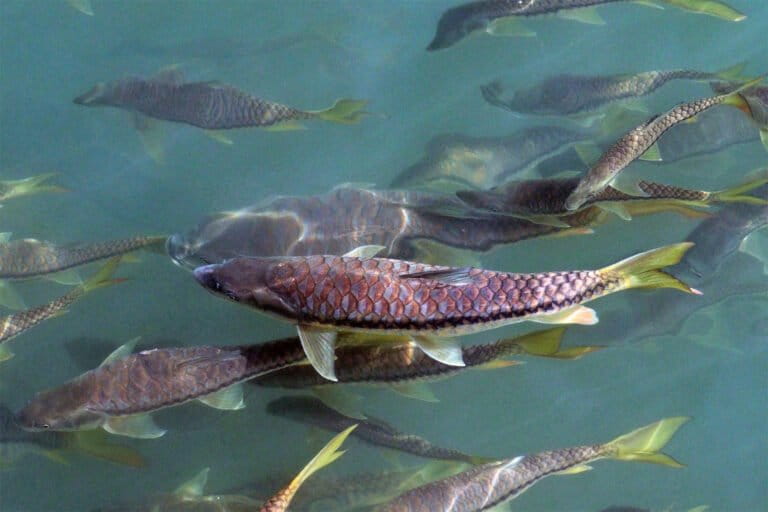
The watershed serves as the traditional home for indigenous populations, including some of Nepal’s final remaining nomadic Raute communities, who continue to subsist along an undammed riparian corridor. Ecologically, the river is a vital stronghold for endangered aquatic species, including the giant migratory mahseer (Tor putitora)—often referred to as the "tiger of the river"—and the vulnerable giant catfish (Bagarius yarrelli). Furthermore, the river’s world-class whitewater rapids sustain a burgeoning ecotourism and rafting economy, providing local communities with sustainable, non-extractive livelihoods.
Despite its ecological and cultural significance, the Karnali has faced persistent commercial pressure for decades. Competing proposals—ranging from state-backed initiatives to ventures by international engineering firms—have repeatedly targeted the river for dam construction, aiming to bore diversion tunnels, drain riverbeds, and convert its rapids into hydroelectric megawatts. Although these proposals have faced repeated delays due to complex political dynamics, financing deficits, and sustained resistance from local and international conservationists, they have never been formally abandoned.

Official Responses and Institutional Reevaluations
In the wake of the disaster, energy officials, disaster response coordinators, and environmental advocates are engaged in urgent deliberations regarding the future of infrastructure development in high-risk zones. While government ministries are currently occupied with assessing repair timelines and securing damaged grid connections, civil society organizations and conservation groups are demanding a more fundamental reassessment of national planning priorities.
Leading river conservationists and waterkeepers emphasize that the disaster offers an unambiguous mandate to halt expansion into volatile high-altitude gorges. Rather than automatically channeling capital into reconstructing vulnerable facilities in hazardous locations, stakeholders argue that policymakers must evaluate which projects pose unacceptable risks and should consequently be permanently shelved.
Legal and conservation campaigns centered on the Karnali River have gained renewed urgency following the disaster. Activists, Indigenous leaders, and legal scholars are pressing forward with initiatives modeled on international frameworks like the United States’ Wild and Scenic Rivers Act. A pending petition before Nepal’s Supreme Court seeks to challenge proposed dam developments on the Karnali, while advocates are actively pursuing formal international recognition, including a designated UNESCO World Heritage status for the river basin.
Proponents of the UNESCO designation emphasize that the Karnali transcends standard geographical boundaries, serving as a unifying spiritual and civilizational nexus for nearly two billion people across South Asia. The watershed connects three foundational cultural landscapes: the Kailash Civilization of Tibet and China, the Khas Civilization of western Nepal, and the Ganga Civilization of India.
Additionally, the ecological value of the lower Karnali basin has gained heightened prominence. Initiatives such as the Phoenix Species Project—backed by major philanthropic commitments from figures including Leonardo DiCaprio and Jeff Bezos—have targeted the lower stretches of the river within Bardiya National Park as a critical habitat for the survival of the critically endangered gharial crocodile (Gavialis gangeticus). Conservationists warn that any upstream dam failure triggered by a high-altitude glacial collapse would spell catastrophic ecological consequences for these protected lowland populations.
Diversifying Nepal’s Energy Portfolio
Advocates for protecting the Karnali emphasize that opposing additional river dams does not equate to a rejection of renewable energy development or economic modernization. Instead, experts argue that diversifying Nepal’s energy matrix is essential for long-term national security and climate resilience.
Data compiled by energy analysts indicates that Nepal experiences approximately 300 sunny days annually, offering substantial potential for utility-scale and decentralized solar power generation. Furthermore, the nation possesses abundant wind energy resources distributed across numerous high-altitude mountain passes and deep river gorges. By failing to adequately explore or invest in these alternative technologies, national planners have remained overly reliant on a high-risk, single-source strategy centered exclusively on run-of-river hydropower.
As international financiers, regional governments, and Nepali authorities process the staggering human and economic toll of the recent glacial floods, the imperative for structural reform has never been clearer. A free-flowing Karnali River represents more than an environmental conservation objective or a cultural sanctuary; it functions as a critical physical, ecological, and economic insurance policy against the escalating impacts of a changing climate. For Nepal, preserving its last wild river is not merely a choice about landscape management—it is a vital lesson written in the wake of tragedy.









Leave a Reply