
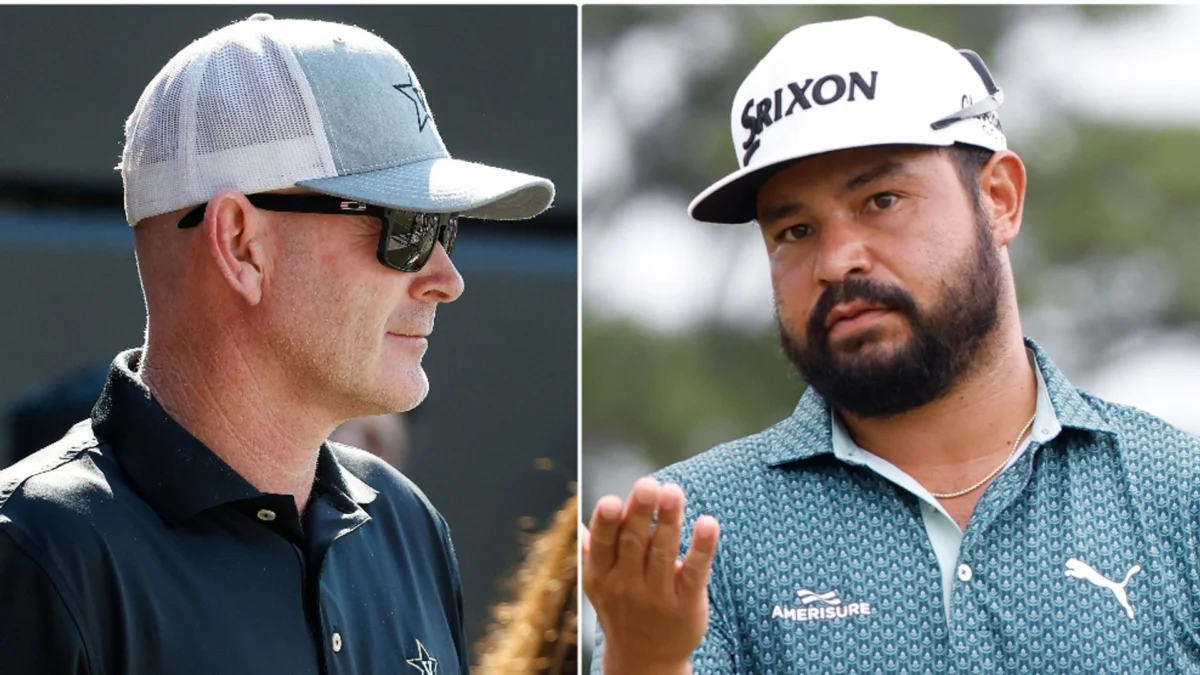
The fallout from the United States Presidents Cup team selection has dominated the golfing headlines this week, centered primarily on the controversial omission of JJ Spaun. Following a triumphant victory at the BMW PGA Championship at Wentworth, Spaun has publicly addressed his frustration regarding his exclusion from the squad tasked with representing the United States against the International Team at Medinah Country Club. The situation has prompted a candid response from captain Brandt Snedeker, who acknowledged the difficulty of the selection process while defending the autonomy of his decision-making.
A Historic Victory Amidst Personal Turmoil
JJ Spaun’s performance at the BMW PGA Championship was nothing short of historic. By securing the title, he became only the third American golfer to claim victory at the prestigious event, joining the elite company of Arnold Palmer and Billy Horschel. Furthermore, Spaun achieved the rare feat of winning the tournament on his debut, a distinction not seen since Byeong-hun An’s victory in 2015.
However, the victory was underscored by a palpable sense of grievance. Speaking to the press following his final round, Spaun admitted that he entered the tournament with a "huge chip on his shoulder." For a player who has battled his way through the ranks of professional golf without the benefit of sponsor exemptions or elite collegiate scholarships, the snub from the Presidents Cup team served as a visceral source of motivation. "My whole career, I’ve kind of had to do that," Spaun reflected. "I wasn’t given scholarships. I had to earn my PGA Tour card the hard way. I was never given sponsor invite opportunities—I just had to do everything the hard way."
Chronology of the Selection Controversy
The tension between the player and the leadership reached a boiling point immediately following the conclusion of the PGA Tour Championship. According to Spaun, his expectations of a team spot were bolstered by positive, ongoing dialogues with Captain Snedeker throughout the qualification cycle. These discussions led the 36-year-old to believe that his form—which included a victory at the Valero Texas Open earlier this season and a previous Ryder Cup appearance—would be sufficient to secure his place on the 12-man roster.
Instead, the reality was delivered in what Spaun described as a "45-second phone call." The brevity of the conversation left the veteran feeling sidelined and misled. The selection committee’s final roster included 21-year-old PGA Tour rookie Jackson Koivun and seasoned veteran Patrick Cantlay. The inclusion of these players, both of whom finished outside the top 12 in the official Presidents Cup points standings, created a stark contrast to the exclusion of Spaun, who had finished 10th in the standings.
Understanding the Captain’s Perspective
Brandt Snedeker, facing scrutiny over the composition of his team, has maintained that the selection process was both rigorous and agonizing. In addition to Spaun, Snedeker revealed that he deliberated extensively over several other high-profile candidates, including Ryan Gerard, Akshay Bhatia, and Gary Woodland, the latter of whom currently serves as a vice-captain for the US side.
"Being a captain, you have to make tough decisions, unfortunately, and we had 15 or 16 guys that we were really looking at," Snedeker explained. When pressed on the methodology behind his final choices, the captain emphasized the necessity of instinct. "You’re going to have to make these tough decisions, and the best advice I got from all the guys I talked to, even coaches, is you got to trust your gut. My gut was telling me one thing."
Regarding his comment that he hopes Spaun "makes me look like an idiot," Snedeker is acknowledging the inherent risk in high-stakes captaincy. In professional sports, where momentum and form are volatile, a captain’s decision is often judged solely by the final result on the leaderboard. If the US team fails to secure the Presidents Cup, the exclusion of a player in the form of Spaun will inevitably become the primary focal point of post-tournament analysis.
Supporting Data and Selection Context
The Presidents Cup selection criteria have long been a subject of debate within the golfing community. While points standings provide a baseline for meritocracy, the captain’s picks are designed to allow for tactical flexibility, team chemistry, and historical performance under pressure.
Spaun’s profile—a former US Open champion and a consistent performer on the PGA Tour—suggests a player built for match-play scenarios. His statistics throughout the current season have highlighted his ability to close out tournaments, a trait that usually makes a player an automatic choice for team competition. By contrast, the decision to favor younger, less experienced talent like Koivun signals a strategic pivot by Snedeker toward long-term team development, though it has clearly alienated veterans who felt their merit-based standing earned them a spot.
The Broader Impact on the Presidents Cup
The implications of this public disagreement extend beyond the personal feelings of the individuals involved. The Presidents Cup, which pits the best golfers from the United States against the top international players, relies on a narrative of national pride and unity. When a prominent player publicly questions the integrity of the selection process, it creates a potential distraction for the team.
Furthermore, the "chip on the shoulder" mentality that Spaun brought to Wentworth is a double-edged sword. While it fueled his victory in the BMW PGA, it also highlights the internal friction that can arise when elite athletes feel undervalued by their national governing bodies. For Snedeker, the task now shifts from managing selection to managing the morale of a team that will be under immense pressure to perform at Medinah.
Fact-Based Analysis of Team Strategy
The US team’s reliance on captain’s picks over strict points-list adherence is a common feature of modern team golf. However, the optics of bypassing a top-10 finisher in the standings in favor of lower-ranked players necessitates a transparent justification that, according to Spaun, was not adequately provided.
From an analytical standpoint, the US team is betting on a specific synergy—one that prioritizes current tactical fit over raw points accumulation. This strategy is not without precedent, but it requires the team to win convincingly to validate the exclusion of players who arguably "earned" their place through the traditional ranking system. Should the results at Medinah deviate from expectations, the conversation regarding transparency and the "gut-feeling" approach to captaincy will likely lead to calls for a reform of the selection criteria.
Conclusion: A Test of Leadership
As the Presidents Cup approaches, all eyes will be on Medinah. The stage is set for a high-intensity showdown, and the performance of the US squad will be analyzed through the lens of Snedeker’s controversial choices. JJ Spaun, meanwhile, has moved on to demonstrate his capabilities on the global stage, proving that his game is in peak condition despite the disappointment of being left off the team.
The incident serves as a stark reminder of the pressures inherent in elite sports management. For Snedeker, the objective remains clear: secure the trophy for the United States. For Spaun, the mission has evolved into a personal quest to continue proving his worth as one of the world’s elite golfers, regardless of institutional recognition. Whether the captain’s "gut" was right or whether the snub of a Major champion will haunt the US team remains to be seen when the first ball is struck this Thursday. The world of golf will be watching, waiting to see if Snedeker’s gamble pays off or if the results on the course prove that the selection process was, as some critics might suggest, a missed opportunity.






Leave a Reply