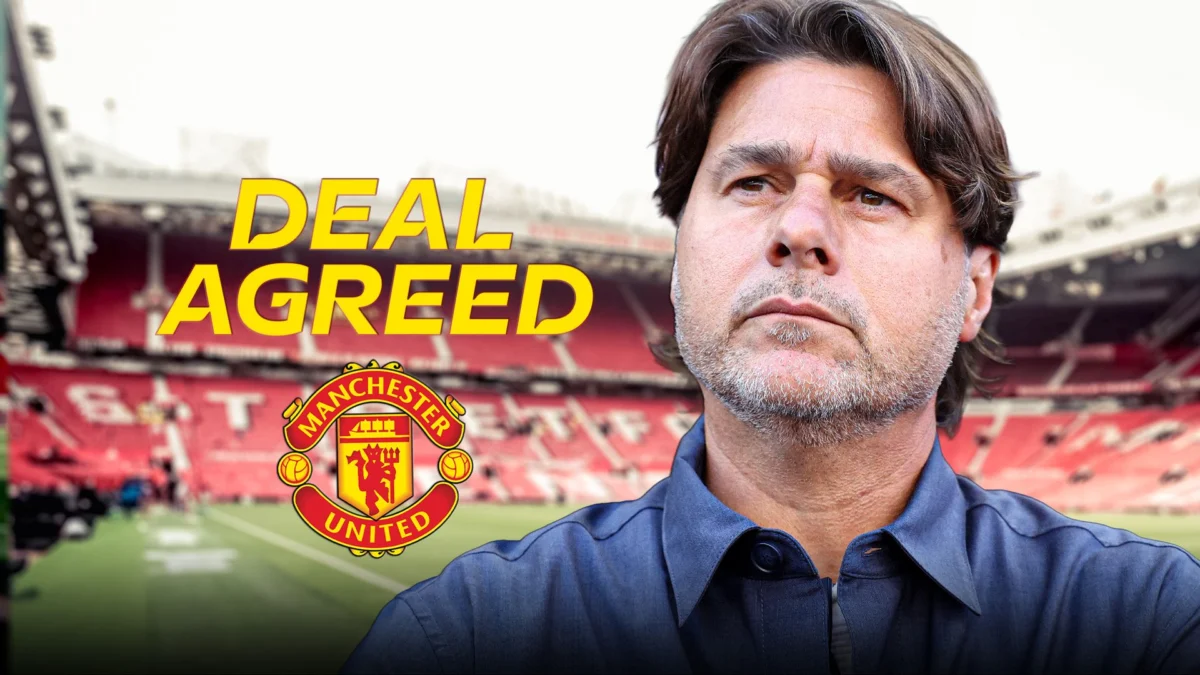
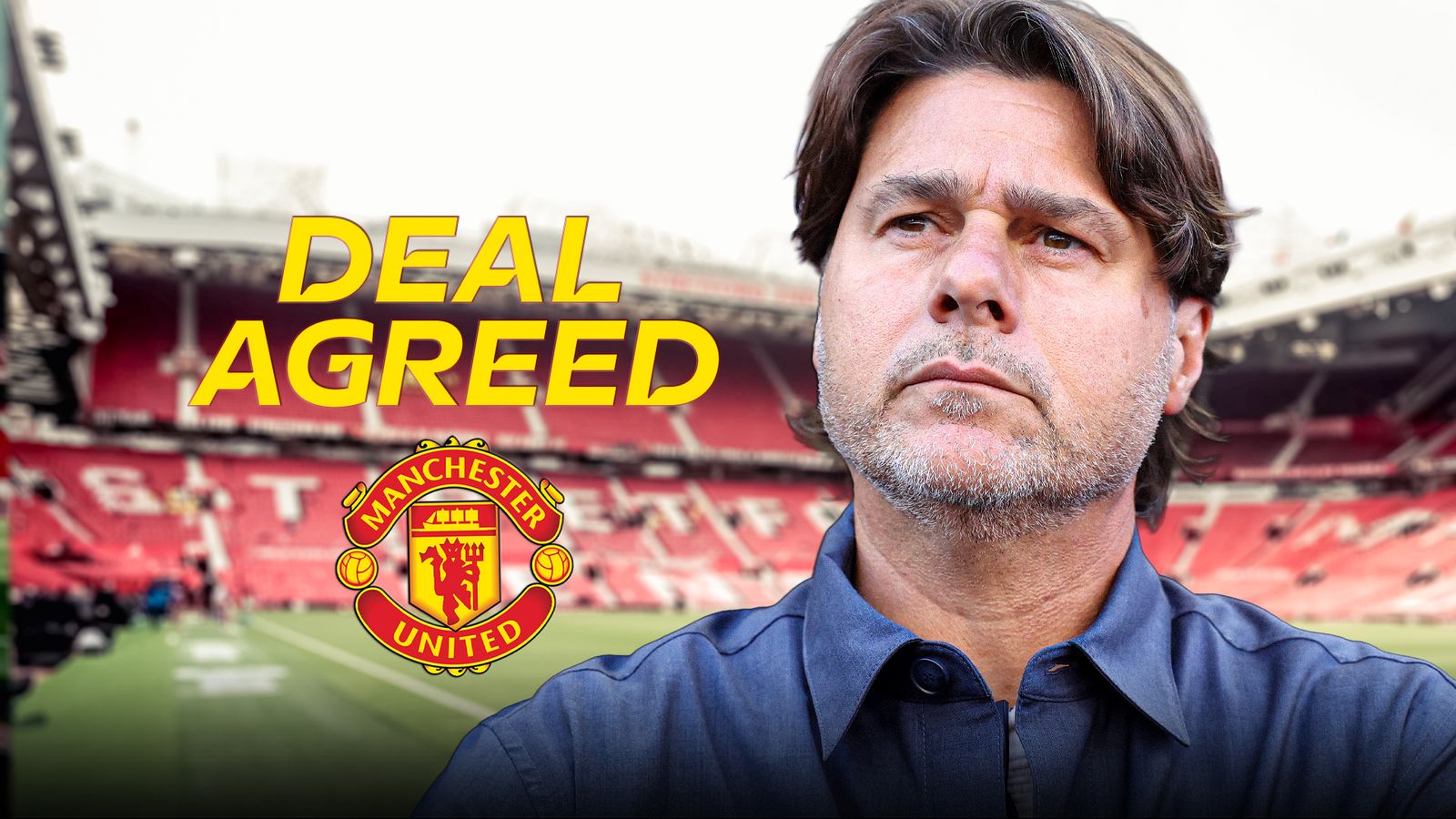
Manchester United have officially confirmed that Mauricio Pochettino will become the club’s next permanent head coach, marking a significant transition for the Old Trafford outfit. The Argentine manager is set to sign a two-and-a-half-year contract, assuming the helm of a squad currently mired in its most difficult start to a Premier League campaign in four decades. The appointment comes following the dismissal of Michael Carrick on Thursday morning, a decision ratified by minority owner Sir Jim Ratcliffe during a strategic summit in Monaco.
The transition, which follows extensive consultations between chief executive Omar Berrada and director of football Jason Wilcox, aims to arrest a dramatic decline in form that has seen the club plummet into the Premier League relegation zone. Pochettino, who previously held the reins of the United States men’s national team, will conclude his duties with the USA during their upcoming fixtures against Haiti before officially transitioning to the Manchester dugout. His debut is scheduled for November 22, in a high-stakes encounter against Liverpool at Anfield.
A Tenure of Two Halves: The Unraveling of Michael Carrick
Michael Carrick’s departure arrives less than six months after he signed a two-year contract extension, a testament to the volatility that has defined the club’s recent history. Appointed in January 2026 as the successor to Ruben Amorim, Carrick’s initial impact was nothing short of transformative. Over his first 17 matches, he secured 12 victories—a win rate of 70.1 per cent—which propelled the club to a third-place finish and a return to the prestigious Champions League.
However, the momentum evaporated at the start of the current campaign. Carrick leaves with a record of 15 wins in 32 matches as permanent manager, a win percentage of 46.9 per cent. The 2026/27 season has been particularly barren, with the club managing only three wins in 15 outings across all competitions. The final straw for the hierarchy was a chaotic 4-4 draw against Aston Villa, a match in which United displayed both the defensive frailties and the occasional offensive spark that have characterized their season. Despite staging a late comeback, the performance was deemed insufficient to justify a stay of execution for the manager.
Alongside Carrick, the club has parted ways with a significant portion of the coaching staff, including Jonny Evans, Jonathan Woodgate, Steve Holland, Travis Binnion, and goalkeeping coach Craig Mawson. Connor King, the assistant first-team goalkeeping coach, remains the sole survivor of the previous regime, highlighting the scale of the impending overhaul.
The INEOS Era: A Record of Instability
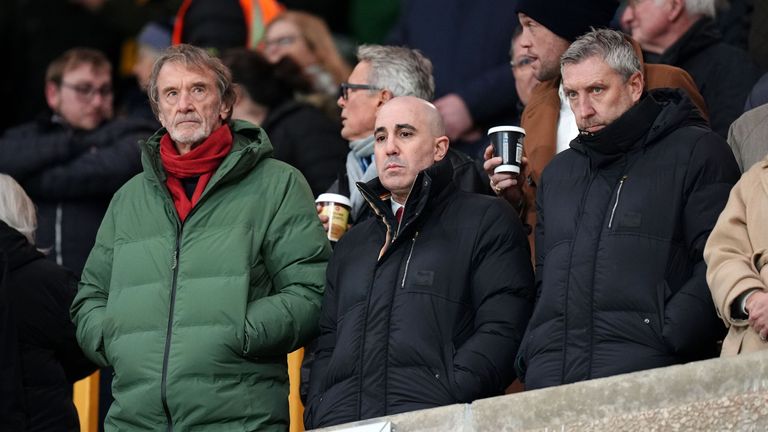
The appointment of Mauricio Pochettino represents the latest chapter in a turbulent era for Manchester United under the influence of INEOS and Sir Jim Ratcliffe. Since acquiring a 27.7 per cent stake in the club and assuming control of football operations in February 2024, the ownership group has presided over a revolving door of leadership.
The timeline of administrative and managerial change since 2024 is extensive:
- January 2024: Omar Berrada is recruited from Manchester City as CEO.
- July 2024: Erik ten Hag receives a one-year contract extension following an FA Cup win, only to be dismissed in October 2024 after a poor start to the season.
- November 2024: Ruben Amorim is appointed, a tenure that would last just 14 months.
- January 2026: Michael Carrick is appointed to steer the club through a transition period.
- May 2026: Following a successful Champions League qualification, Carrick is rewarded with a long-term deal, only to be sacked six months later.
This constant churn has led to recurring questions regarding the club’s long-term strategic vision. Critics, including club icon Gary Neville, have argued that the focus on changing managers obscures deeper, structural issues within the organization. Neville, speaking to NBC, expressed frustration with the "rinse and repeat" cycle, noting that the club has cycled through world-class managers—ranging from Jose Mourinho to Louis van Gaal—without establishing a sustainable framework for success. According to Neville, the failures are rooted in a performance department and a recruitment strategy that have consistently struggled to align with the demands of modern elite football.
Data Analysis: The Post-Ferguson Vacuum
The statistics underlying Manchester United’s post-2013 era paint a stark picture of a club searching for its identity. Since Sir Alex Ferguson’s retirement, which brought a 27-year dynasty to a close with a 59.7 per cent win ratio, the club has struggled to find a successor capable of achieving similar longevity.
In the 731 games played since Ferguson’s departure, United have utilized eight permanent managers, alongside various interim and caretaker figures. While Jose Mourinho remains the most successful in terms of trophy accumulation—securing a League Cup and a Europa League title—his win percentage of 58.3 per cent still trails the historical benchmarks set during the Ferguson era.
The current squad, despite significant investment in players such as Matthijs De Ligt, Noussair Mazraoui, and Manuel Ugarte, has failed to bridge the gap between expectation and execution. The United hierarchy, led by Wilcox and Berrada, maintains that the playing staff is of a higher caliber than the current table suggests, placing the burden of responsibility on the incoming coaching team to unlock this latent potential.
The Challenge Facing Pochettino
Mauricio Pochettino enters Old Trafford with a reputation for developing young talent and implementing a high-pressing, progressive style of play. His previous spells at Tottenham Hotspur and Chelsea provide a blueprint for what United fans might expect, though the pressure in Manchester is unique.
The immediate tactical challenge is the upcoming fixture list. The trip to Anfield on November 22 is arguably the most daunting start a new manager could face. It will be followed by a Champions League clash against Sporting CP and a domestic fixture against Brentford. Pochettino must quickly establish a defensive structure that has been porous throughout the current campaign, while simultaneously fostering the creative confidence required to climb back into contention for European qualification.
Beyond the tactical board, Pochettino faces the psychological challenge of a squad that has seen three managers come and go in less than two years. The morale of the dressing room, coupled with the high expectations of the Old Trafford faithful, creates an environment where immediate results are not just requested, but demanded.
Public and Fan Sentiment
The reaction from the Manchester United fan base has been deeply polarized. Supporters on various platforms have expressed a mix of weariness and skepticism. A common sentiment, echoed by fan groups and contributors, is that the issue lies not with the man in the dugout, but in the boardroom.
"Nothing is going to change until there is stability at the top," noted one supporter, a sentiment echoed by several online forums. Comparisons to Arsenal’s patience with Mikel Arteta are frequently cited as the gold standard for long-term success, suggesting that United’s tendency to fire managers at the first sign of crisis is a self-defeating strategy.
Conversely, others argue that given the gravity of the current situation—hovering near the relegation zone—a change was necessary to avoid a catastrophic drop in status. The club’s official statement reflected this, describing the decision as an "extremely difficult conclusion" reached only after the realization that a change was required to protect the club’s long-term ambitions.
Future Implications
The arrival of Pochettino signals a pivot toward a manager with established Premier League experience, potentially aimed at providing the steady hand that the club has lacked since 2013. However, the success of this appointment will likely depend on the synergy between the manager and the restructured football operations department.
With Jason Wilcox now in the role of director of football and overseeing the broader recruitment strategy, there is a hope that the club can move toward a more coherent, long-term vision. The upcoming transfer windows will be crucial, as Pochettino will need to imprint his tactical philosophy onto a squad that is currently unbalanced.
As the club prepares for the next phase of its season, all eyes will be on Anfield on November 22. For Pochettino, the task is clear: stabilize a leaking ship, restore the confidence of a fractured dressing room, and prove that the solution to Manchester United’s malaise can be found on the training pitch rather than in the boardroom. Whether this appointment marks the end of the post-Ferguson uncertainty or simply the next chapter in an ongoing struggle remains to be seen. What is certain is that the patience of the supporters and the hierarchy is wearing thin, and the margin for error has all but vanished.