

In an era characterized by an unrelenting twenty-four-hour news cycle and the rapid dissemination of information, human anxiety has become a defining feature of modern psychological life. While contemporary observers often point to the volatility of global markets, political instability, and social media saturation as the primary drivers of this unease, historical evidence suggests that the propensity to suffer in anticipation of future events is an ancient, hard-wired cognitive trait. Nearly two millennia ago, the Roman statesman and philosopher Seneca the Younger addressed this perennial human condition in his Epistulae Morales ad Lucilium, specifically in his thirteenth letter, "On Groundless Fears." His analysis offers a sophisticated framework for understanding the mechanics of worry—a framework that remains remarkably relevant to current debates in clinical psychology and behavioral economics regarding the toll of anticipatory stress.
The Anatomy of Anticipatory Anxiety
The modern human experience is frequently defined by what psychologists term "anticipatory anxiety," the process of projecting negative outcomes onto a future that has yet to occur. Research from the American Psychological Association indicates that individuals spend a significant portion of their cognitive resources bracing for hypothetical disasters. This aligns with historical observations, such as those made by Kurt Vonnegut, who famously remarked on the impossibility of distinguishing "good news" from "bad news" within the integrated complexity of natural processes.
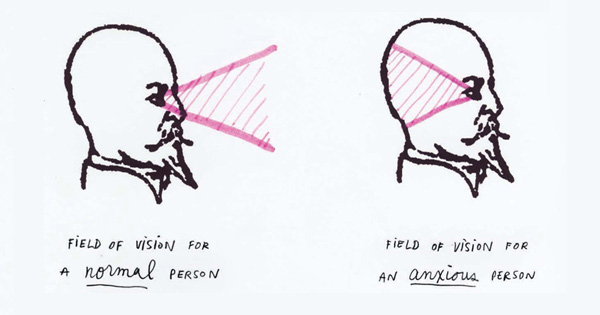
In the 1930s, pastoral counselors attempted to quantify this phenomenon, noting that of all the worries reported by individuals, approximately 92% were either entirely imaginary or unlikely to manifest in a tangible way. Today, this disproportionate focus on potential, rather than actual, threats has been exacerbated by digital platforms that profit from high-arousal content. By presenting worst-case scenarios as imminent realities, these platforms manipulate the human amygdala, triggering a chronic "fight-or-flight" response that is rarely discharged by actual physical threats.
Seneca’s Historical Perspective on Mental Discipline
Seneca, serving as a prominent advisor to the Emperor Nero during the first century, lived in a world of high-stakes political intrigue where the threat of execution or exile was a constant, tangible reality. Unlike the abstract worries of the modern citizen, Seneca’s anxieties were grounded in a environment where life and death were often separated by a single imperial whim.
In his thirteenth letter to his protégé Lucilius Junior, Seneca argued that humans are more often victims of their own imaginations than of external circumstances. He posited that the act of "running out to meet suffering" is a tactical error in the management of one’s own well-being. By refusing to preemptively surrender to the emotional weight of a crisis, Seneca suggested, the individual preserves the mental clarity required to address the situation if and when it actually arrives. His argument is not one of nihilism, but of tactical reserve: he advises against squandering the only finite resource one truly possesses—time—on disasters that may never materialize.

Chronology of Stoic Thought and Its Modern Application
The development of Stoic philosophy traces back to Zeno of Citium in the early 3rd century BCE, but it reached its zenith in Rome through the works of Epictetus, Marcus Aurelius, and Seneca. The progression of this thought can be viewed through several distinct stages:
- The Hellenistic Foundation (300 BCE): The formalization of the dichotomy of control—distinguishing between what we can influence (our thoughts and actions) and what we cannot (external events).
- The Roman Adaptation (1st Century CE): Seneca’s shift toward practical, interpersonal guidance, turning philosophy into a therapeutic tool for daily life.
- The Renaissance Rediscovery: The translation and circulation of Seneca’s letters, which influenced thinkers ranging from Michel de Montaigne to Erasmus.
- The Cognitive-Behavioral Revolution (20th Century): The emergence of modern psychotherapy, which essentially codified Stoic practices—such as negative visualization and the challenging of irrational beliefs—into evidence-based treatments like Cognitive Behavioral Therapy (CBT).
Fact-Based Analysis of the "Worry" Economy
The economic implications of collective anxiety are profound. According to data from the World Health Organization, anxiety disorders are among the most prevalent mental health conditions globally, costing the world economy an estimated $1 trillion per year in lost productivity. This figure is not merely a reflection of clinical pathology but of a society-wide inability to manage the "false shapes of evil" that Seneca identified.
When individuals fall into the trap of ruminating on doubtful information—a tendency Seneca described as twisting "some word of doubtful meaning" into the worst possible interpretation—they effectively paralyze their own decision-making capabilities. This has a direct impact on market stability and consumer confidence. As Seneca noted, "the fool… is always getting ready to live," implying that by constantly preparing for a future catastrophe, individuals neglect the present reality, which is the only place where actual problem-solving occurs.

Theoretical Reactions and Counterpoints
While some critics argue that Stoicism advocates for a passive detachment that could lead to complacency, proponents suggest that it is the ultimate form of active resilience. Seneca does not suggest that one should ignore genuine danger; rather, he advises that when danger is in "plain sight," it should be met with a "resolute spirit" rather than a fragmented one.
In clinical settings, this is often interpreted as "radical acceptance." By acknowledging the reality of a situation without adding the "extra suffering" of emotional panic, the individual gains a strategic advantage. Statements from modern experts in behavioral health support this, noting that the "doubting" mind often creates a self-fulfilling prophecy where the stress of worry itself causes the very decline in performance or health that the person originally feared.
Broader Implications for Contemporary Society
The integration of Stoic principles into contemporary life is not a retreat into the past, but a necessity for surviving the information age. The constant exposure to global, systemic problems creates a "vicarious traumatization" where the average person feels the weight of events thousands of miles away. Seneca’s counsel to "temper fear with hope" and to "decide in your own favor" when the evidence is ambiguous provides a cognitive filter for this overload.

If one applies Seneca’s logic to the current landscape, the takeaway is clear: the majority of our modern anxieties are, statistically and practically, self-imposed burdens. By adopting the Stoic practice of evaluating whether a concern is within one’s control, and by refusing to participate in the mental gymnastics of future-tripping, individuals can reclaim significant portions of their cognitive bandwidth.
Conclusion: The Discipline of Presence
As the world becomes increasingly interconnected, the challenge of maintaining peace of mind will only intensify. Seneca’s letters serve as a foundational text for the modern discipline of emotional regulation. His insistence that we "cease to harass our soul" is not a luxury, but a requirement for functional living in a complex, unpredictable environment.
The ultimate lesson from the Roman philosopher is that the passage of time is the most valuable commodity. To spend that time in a state of pre-emptive grief is to forfeit the capacity for action. As the digital age continues to amplify the reach and frequency of potentially distressing information, the ability to cultivate a "resolute spirit" stands as the most effective defense against the pervasive anxiety of the twenty-first century. By recognizing the difference between the reality of the present and the phantom of the future, society can begin to shift its focus from the anticipation of loss to the cultivation of resilience.









Leave a Reply