The human experience is defined by a paradox: the conscious awareness of inevitable mortality juxtaposed against the persistent, irrational impulse to love and create. This existential tension—the knowledge that all things fade—serves as the foundational theme of much of the 21st century’s literary and philosophical discourse. By examining the works of authors such as Louise Erdrich and the naturalist observations of Loren Eiseley, one can identify a recurring narrative regarding the necessity of vulnerability. Despite the empirical certainty of loss, the act of engaging with the world remains a primary objective of the living, functioning as a defiance against an otherwise indifferent cosmic backdrop.
Philosophical Foundations and the Literature of Risk
In her 2005 novel The Painted Drum, Louise Erdrich explores the concept of the "risked heart." The narrative suggests that protective isolation is not a viable strategy for avoiding the inevitable pain of existence, as solitude itself carries the burden of yearning. From a psychological perspective, this aligns with the attachment theory developed by John Bowlby, which posits that humans are biologically predisposed to seek connection, even when that connection carries the inherent risk of grief.
Sociologists often note that modern society’s increasing emphasis on self-preservation and the mitigation of emotional risk has led to a paradoxical increase in loneliness. The "breaking" that Erdrich describes—the inevitable experience of betrayal, loss, or death—is presented not as a failure of the individual, but as a mandatory rite of passage. The implication is that the "sweetness" of life, symbolized by the falling apples in an orchard, can only be harvested if one is willing to endure the transient nature of the harvest itself.
The Judgment of the Birds: A Naturalist’s Perspective
The intersection of life and death is perhaps most poignantly documented in the field of natural history. In 1957, the paleontologist and essayist Loren Eiseley published The Judgment of the Birds, a seminal piece of nature writing that analyzed the behavioral response of avian species to predation. Eiseley’s observations, recorded while he was engaged in fossil collection, provide a biological framework for the human response to tragedy.
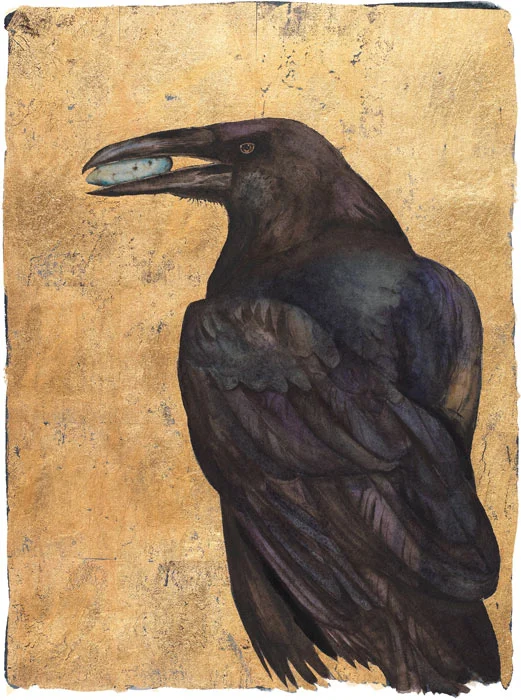
Eiseley documented a specific encounter in a woodland clearing where a raven had captured a nestling. The resulting behavior of the surrounding birds—a collective, mournful outcry—demonstrated a form of communal empathy. However, the most significant observation occurred when the protest ceased. Despite the presence of the predator, the other birds began to sing. Eiseley characterized this not as a lack of awareness, but as an active, instinctive prioritization of life over the presence of death. This observation suggests that the "aria of affirmation" is not merely a poetic construct but an evolutionary survival mechanism: the ability to return to the rhythms of life in the face of insurmountable odds.
Chronology of Philosophical Inquiry into Mortality
The discourse regarding the reconciliation of life and loss has evolved over several decades, manifesting across different academic and creative disciplines:
- 1957: Loren Eiseley publishes The Star Thrower, articulating the necessity of "the song" in the presence of death. His work bridges the gap between scientific observation and existential philosophy.
- 1970s–1980s: Hannah Arendt’s later works, particularly those concerning the nature of love and the political life, begin to influence how scholars view the "fear of loss" as a primary driver of human social structure.
- 2005: Louise Erdrich releases The Painted Drum, providing a contemporary narrative anchor for the necessity of emotional vulnerability.
- 2019–2024: Contemporary cultural commentary, exemplified by platforms such as The Marginalian, begins to synthesize these historical texts to address modern anxieties surrounding rapid environmental change and the "indifferent cosmos."
Data on Emotional Resilience and Loneliness
While the philosophical perspective emphasizes the beauty of the struggle, empirical data provides context for the scale of the human experience. Research from the World Health Organization (WHO) and various longitudinal studies on loneliness indicate that social isolation is now recognized as a significant public health risk, with mortality rates comparable to smoking or obesity.
The "yearning" described by Erdrich has quantifiable manifestations. In a 2023 study regarding human sociality, researchers found that individuals who engaged in high-risk, high-reward emotional relationships reported higher levels of subjective well-being, despite experiencing more frequent periods of distress. This suggests that the biological imperative to connect—to "risk one’s heart"—is fundamentally linked to long-term cognitive and physical health, even when the outcome involves the pain of loss.
Analytical Perspectives: The Ethics of Stewardship
The implication of these findings is that life acts as a form of "stewardship." If the cosmos is indeed indifferent, as Eiseley suggests, then the responsibility for meaning-making rests entirely on the living. This view has been supported by thinkers like Hannah Arendt, who argued that love is the ultimate bridge between the temporal human life and the eternal nature of the world.
From a professional analytical standpoint, the synthesis of Eiseley’s naturalism and Erdrich’s prose offers a framework for understanding modern burnout and existential dread. When individuals view life as a series of threats to be mitigated rather than a sequence of experiences to be tasted, the "song" of the individual is often lost. By shifting the perspective toward a "judgment of life against death"—wherein the priority is placed on the continuation of the song—individuals may find a more sustainable approach to navigating personal and collective trauma.
The Broader Impact of Existential Awareness
The cultural shift toward acknowledging the "brooding shadow of the raven"—a metaphor for the inevitable threats to our collective future—is evident in contemporary art, literature, and even political discourse. Whether discussing the climate crisis or the personal loss of a loved one, the underlying tension remains the same: how does one continue to act, create, and love when the outcome is guaranteed to be transient?
The consensus among scholars who study these intersections is that the refusal to give in to the silence of the cosmos is an act of defiance. When the song sparrow sings in the presence of the raven, it is asserting the primacy of the living. Similarly, when humans choose to love despite the inevitability of loss, they are performing a fundamental, life-affirming act that distinguishes consciousness from mere existence.
Conclusion: The Sweetness of the Harvest
In summary, the human capacity for resilience is rooted in the acceptance of the transient. Whether through the lens of paleontological observation or the narrative depth of contemporary fiction, the message remains consistent: life is an aria of affirmation. The falling of the apples, as described by Erdrich, represents the necessity of consumption—of experiencing the sweetness of life while it is available, rather than fearing the decay that follows.
The scholarly and creative consensus suggests that the most effective way to address the inherent risks of living is not to withdraw into a state of protected solitude, but to participate fully in the communal song of existence. In a world defined by the "cold dark silence" of the cosmos, the act of singing—the act of loving—is the only rational response to an indifferent universe. This perspective provides not only a coping mechanism for the individual but a blueprint for a more connected and resilient society.