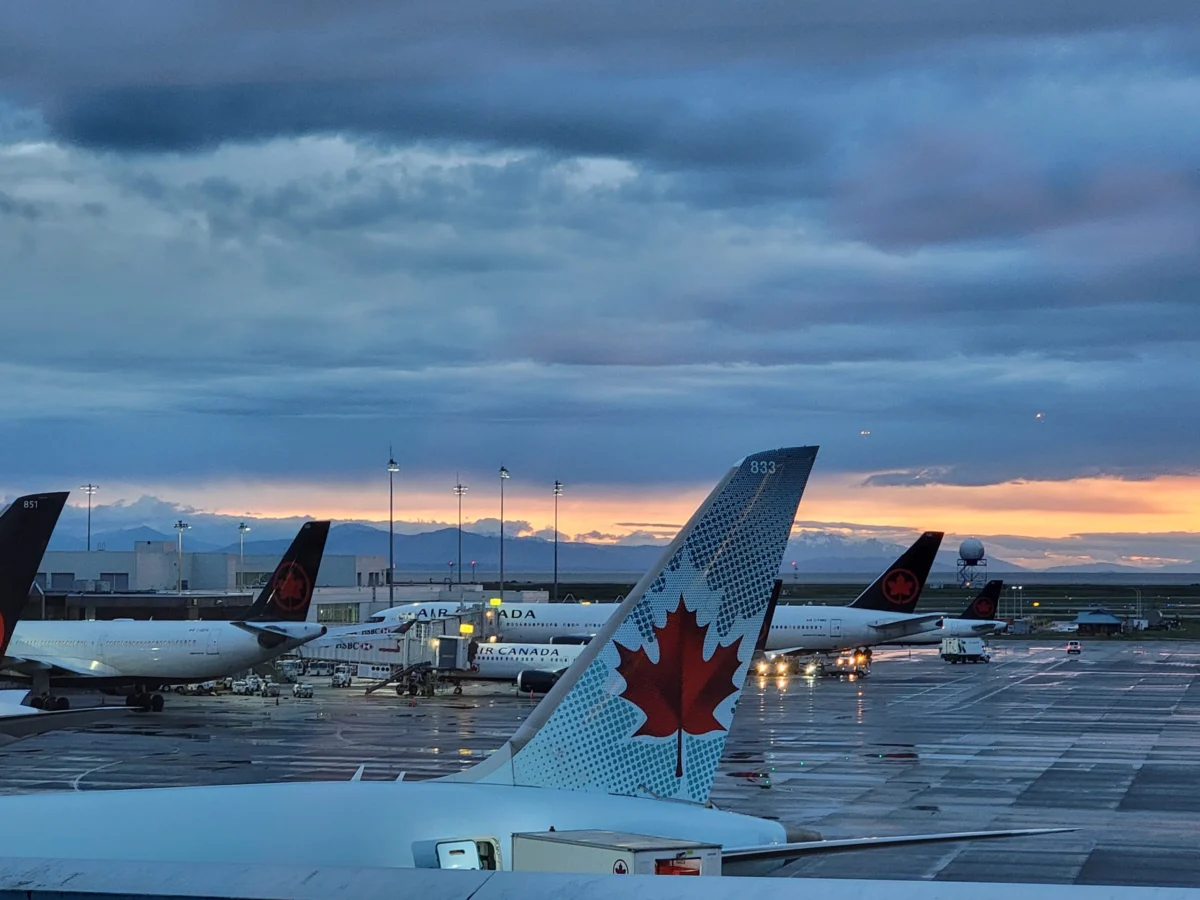
In a landmark decision that highlights the escalating tension between Canadian air carriers and consumer rights advocates, a passenger has successfully secured C$1,000 in compensation from Air Canada after proving the airline submitted fraudulent maintenance records to justify a flight cancellation. The case, which concluded in January 2026, stems from a September 2022 incident where a flight from Montreal to Bogota was canceled, allegedly for safety reasons. Subsequent investigation by the passenger revealed that the airline had cited maintenance logs from a completely different aircraft to evade its legal obligation to provide compensation.
This ruling has sent shockwaves through the aviation industry, as it provides documented evidence of what many frequent flyers have long suspected: the systematic abuse of the "safety exception" loophole within Canada’s Air Passenger Protection Regulations (APPR).
Chronology of the Dispute
The saga began in September 2022, when the passenger’s scheduled flight from Montreal-Trudeau International Airport to Bogota was abruptly canceled. Air Canada, in its initial response to the passenger’s claim for compensation, cited safety-related maintenance requirements. Under the Canadian APPR, airlines are exempt from paying compensation if a delay or cancellation is caused by a safety-related issue that is outside of the airline’s control.
The passenger, skeptical of the airline’s narrative, initiated a formal review process. By cross-referencing public aircraft movement data and maintenance history, the passenger discovered that the specific aircraft assigned to his flight had not been grounded for the technical issues cited by the carrier. Instead, the aircraft had been reassigned to a different route—a common practice known as "aircraft swapping"—to prioritize other operations. When the passenger presented this evidence to the Canadian Transportation Agency (CTA) and relevant adjudicators, the airline’s defense collapsed. The ruling, finalized in early 2026, confirmed that the airline had provided misleading information, resulting in the mandatory payout of C$1,000.
The Maintenance Loophole and Operational Fluidity
At the heart of this controversy is the interpretation of the APPR. Canadian law stipulates that passengers are entitled to compensation—ranging from C$400 to C$1,000 depending on the length of the delay—unless the disruption is deemed to be within the airline’s control and not safety-related.
Air Canada has consistently defended its right to manage its fleet dynamically. In statements regarding similar disputes, the airline has argued that aircraft assignments are fluid and that decisions are made to "help the greatest number of passengers." The carrier maintains that if a long-haul flight experiences a delay, it is operationally prudent to reassign an aircraft from a shorter, more easily rebookable route to ensure the long-haul passengers reach their destination.
However, legal experts and passenger advocacy groups argue that while this strategy may be operationally efficient for the airline’s bottom line, it does not exempt the carrier from its legal duties to the passengers whose flights were sacrificed. The November 2022 decision involving WestJet underscored this principle. In that case, the airline used an aircraft from a Honolulu-to-Vancouver flight to rescue passengers on a different flight suffering from a fuel tank issue. The adjudicator ruled that while the swap was "operationally reasonable," the airline remained liable to pay compensation to the passengers on the flight that was canceled to accommodate the swap.
Industry Patterns and Systematic Misrepresentation
This case is not an isolated incident. Social media platforms, including X (formerly Twitter), have become hubs for frustrated travelers sharing similar experiences. User Sonduren Fanarredha, among others, has publicly alleged that airlines frequently employ deceptive practices to reclassify routine operational failures—such as crew shortages—as "safety issues."
The distinction is critical: a crew shortage is generally considered within the control of the airline, making it a compensable event. Conversely, a legitimate safety issue, such as an unexpected mechanical failure discovered during pre-flight checks, is generally non-compensable. By blurring these lines, airlines can effectively reduce their total compensation liability by millions of dollars annually.
The practice is reminiscent of trends observed in the United States, where passengers often report receiving conflicting information—such as a "maintenance" explanation at the gate, followed by a "weather" explanation when the passenger later requests reimbursement for hotels or meals. Because passengers lack access to internal airline operational logs, they are often at a significant disadvantage when attempting to challenge these denials.
Comparative Regulatory Frameworks
The Canadian landscape stands in contrast to the European Union’s approach under Regulation (EC) No 261/2004. In the EU, the bar for "extraordinary circumstances" is much higher. Technical problems that are inherent to the normal exercise of the activity of the air carrier, such as standard wear and tear or maintenance, do not usually excuse the airline from paying compensation.
By contrast, the Canadian system relies heavily on the "directly attributable" test. For an airline to deny compensation, it must prove that the delay or cancellation is directly linked to an earlier safety disruption and that it took all reasonable measures to mitigate the impact. The recent Montreal-Bogota case suggests that Canadian regulators are becoming increasingly intolerant of airlines that treat this requirement as a suggestion rather than a legal mandate.
Broader Implications for Passenger Rights
The successful outcome for the Montreal passenger represents a significant shift in the power dynamic between consumers and major carriers. It demonstrates that with the right data and persistence, individuals can hold large corporations accountable for deceptive practices.
However, the burden of proof currently rests almost entirely on the passenger. For the average traveler, the time and effort required to investigate an airline’s internal aircraft logs are prohibitive. This has led to calls for greater transparency and stricter oversight. Consumer advocates are pushing for the Canadian government to implement an automated, third-party verification system where airlines must submit proof of the "safety" justification to an independent regulator at the time of the cancellation, rather than waiting for a passenger to file a formal complaint.
The economic implications for airlines are also significant. If carriers are forced to pay compensation every time they perform an aircraft swap, it may lead to a restructuring of airline scheduling. Airlines might become more conservative in their planning, potentially leading to fewer, more reliable flights but higher ticket prices, or they may be forced to maintain a larger reserve fleet to handle unexpected disruptions without cannibalizing existing routes.
As the Canadian government continues to review and refine the APPR, the Montreal-Bogota case serves as a warning to the industry. The era of "black box" operations, where airlines could unilaterally redefine the causes of delays to protect their balance sheets, is facing unprecedented scrutiny. Whether this leads to a permanent change in corporate behavior remains to be seen, but for now, the ruling stands as a clear victory for transparency in the aviation sector.