Alaska Airlines is set to reestablish a historic transpacific connection by launching nonstop service between Anchorage, Alaska, and Tokyo Narita International Airport, utilizing its Boeing 737 MAX 8 aircraft. Scheduled to commence on May 13, 2027, the route marks a significant milestone for the carrier as it expands its international footprint into East Asia. However, the operational parameters of the flight—spanning roughly 3,433 miles with an expected duration of 8 hours and 15 minutes—bring unique challenges and revive industry discussions regarding the viability of narrowbody aircraft on long-haul transoceanic routes.
The new service will operate during the peak summer season, offering travelers a direct link between the Anchorage hub and Japan. To stimulate initial demand, Alaska Airlines has introduced an introductory roundtrip coach fare of $999 for journeys originating in Anchorage between May 13 and June 7, 2027, provided tickets are purchased by October 31. While the airline is banking on robust seasonal demand from both leisure and VFR (visiting friends and relatives) traffic, the physical realities of spending over eight hours in a single-aisle aircraft have drawn considerable attention from aviation analysts.
A Historical Perspective and the Evolution of Transpacific Narrowbody Routes
The Anchorage-to-Tokyo route carries a rich aviation history. Major U.S. carriers once regularly utilized Anchorage as a refueling and passenger stopover for flights between the continental United States and Asia prior to the widespread introduction of long-range widebody aircraft capable of nonstop polar and oceanic routing. Northwest Airlines was the last major legacy carrier to operate direct passenger service between Anchorage and Tokyo, a route it abandoned in 1999. Furthermore, China Airlines maintained service between Anchorage and Taipei until 2011, after which scheduled international passenger operations from Ted Stevens Anchorage International Airport to Asia largely faded.

In the decades following the cessation of these routes, the industry shifted decisively toward widebody aircraft—such as the Boeing 777, 787, and Airbus A350—for intercontinental travel. However, advances in fuel efficiency, engine reliability, and extended-range twin-engine operational performance standards (ETOPS) have prompted several carriers globally to reevaluate narrowbody aircraft for longer, thinner international sectors.
While Alaska’s upcoming Anchorage-Tokyo route is undeniably long for a Boeing 737 MAX 8, it is not the longest narrowbody operation currently active in commercial aviation. Carriers around the world continue to push the boundaries of single-aisle deployment:
- GOL Linhas Aéreas operates flights between Orlando, Florida, and Brasília, Brazil, spanning approximately 3,780 miles.
- Arajet connects Santo Domingo and Punta Cana to Buenos Aires, Argentina, over distances of roughly 3,750 and 3,740 miles, respectively.
- Alaska Airlines itself operates a transatlantic route between Seattle and Keflavík, Iceland, covering 3,620 miles—making it slightly longer than the forthcoming Anchorage-Narita sector.
- Icelandair links Vancouver to Keflavík at a distance of 3,540 miles.
- Historically, Scandinavian Airlines (SAS) operated a specialized business-class-only Boeing 737-700 service via PrivatAir between Stavanger, Norway, and Houston, Texas, covering an impressive 4,800 miles.
Navigating Airspace Restrictions and ETOPS Compliance
A critical operational factor for the new Anchorage-Narita route is the avoidance of restricted Russian airspace, which has significantly altered international routing between North America and Asia since the onset of the conflict in Ukraine. The direct geodesic path between Anchorage and Tokyo passes close to Russia’s Far East; however, flight planning has adapted to bypass Russian territory entirely.
By routing aircraft along the Aleutian Islands chain and continuing over the Pacific Ocean south and east of Russian airspace into Japan, airlines can complete the journey with minimal distance penalty. Specifically, routing via Shemya Island increases the total trip distance by only about one percent compared to historical direct tracks.

Furthermore, the Boeing 737 MAX 8 is approved for 180-minute ETOPS operations. This certification ensures that the aircraft remains within an allowable diversion time from adequate en-route alternate airports—such as Cold Bay, Adak, and Shemya in Alaska, as well as airports in Japan—with the maximum diversion time estimated at approximately 108 minutes under standard operating conditions.
Financial Incentives and Airport Support
The launch of the Anchorage-Narita route is bolstered significantly by local and state airport incentive programs designed to attract international carriers and stimulate regional economic growth. The Alaska International Airport System’s incentive program provides substantial financial relief for new international passenger service.
Industry analysis indicates that the route will benefit from airport fee abatements valued at approximately $500,000. These incentives typically include a full year of waived landing fees, terminal inspection fees, gate and jet bridge charges, common-use facility fees, ticket counter rentals, and passenger processing fees.
The planned summer schedule features 118 roundtrips. Utilizing a standard configuration of 161 seats per aircraft, the route will introduce nearly 38,000 roundtrip seats to the market. When allocated across the projected capacity, the airport subsidies translate to roughly $13 per offered seat, or approximately $16.45 per passenger assuming an 80% average load factor. This institutional backing mitigates some of the financial risks inherent in launching a thin, seasonal international route with a narrowbody fleet.

Contrasting Business Models: Alaska Airlines Versus Failed Precedents
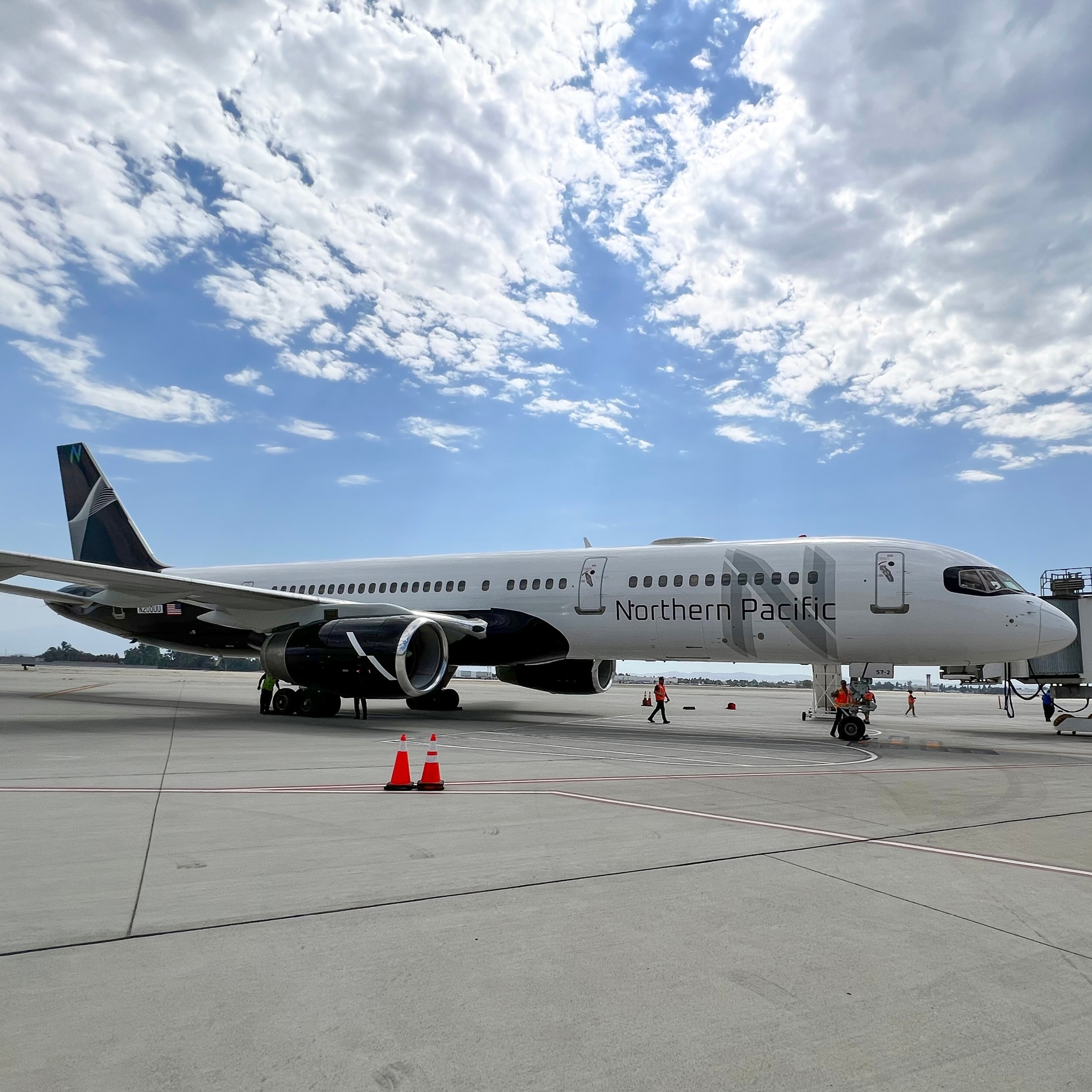
The launch of Anchorage-Narita draws inevitable comparisons to past speculative ventures, most notably the short-lived Northern Pacific Airways (later rebranded as New Pacific Airlines). That startup had envisioned establishing a major connecting hub in Anchorage to shuttle passengers between the continental United States and Asia using secondhand Boeing 757 aircraft, explicitly modeling its ambitions after Icelandair’s successful transatlantic connecting model.
However, industry observers widely questioned the viability of Northern Pacific’s business plan. The carrier required passengers to choose a multi-stop itinerary through Anchorage when numerous other airlines offered more direct, one-stop, or nonstop alternatives from major U.S. metropolitan areas to Asia. Compounded by severe restrictions on Russian airspace that rendered trans-polar connecting models economically unfeasible, Northern Pacific struggled to secure a foothold, repeatedly pivoted its strategy, and ultimately ceased operations.
In stark contrast, Alaska Airlines approaches this route from a position of structural strength. Alaska maintains an established hub at Ted Stevens Anchorage International Airport, a robust loyal customer base throughout the state of Alaska, a comprehensive frequent flyer loyalty program, and existing commercial infrastructure in Tokyo. These existing assets provide a reliable baseline of origin-and-destination (O&D) traffic, reducing reliance solely on connecting itineraries and insulating the route from the vulnerabilities that plagued independent startup competitors.
Passenger Experience Aboard the Boeing 737 MAX 8
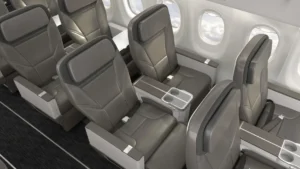
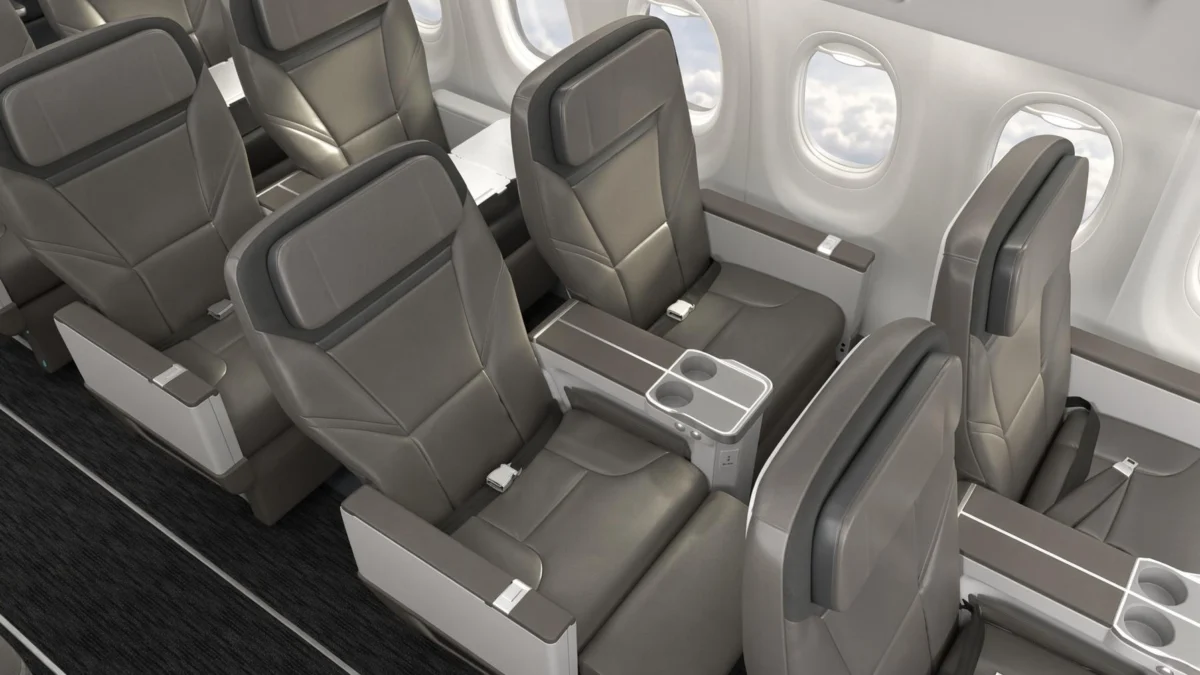
Travelers booking the Anchorage-Narita flight will experience Alaska Airlines’ refreshed Boeing 737 MAX 8 cabin configuration, which accommodates a total of 161 passengers. The layout features 16 seats in first class and 145 seats in the main cabin.
Because the aircraft is a narrowbody single-aisle jet, the passenger experience differs substantially from the widebody aircraft typically deployed on transpacific trunk routes:
- First Class: Passengers in the premium cabin will occupy upgraded reclining seats—specifically the redesigned Recaro domestic first-class product. While comfortable for domestic and shorter regional flights, the seats lack the fully flat beds standard on long-haul international widebody flights. To compensate for the lack of lie-flat seating, Alaska Airlines has announced plans to provide upgraded dining options, premium Filson bedding, and specialized amenity kits for first-class travelers.
- Main Cabin: Coach passengers will face an 8-hour and 15-minute journey in standard domestic-pitch seating. Notably, the aircraft is not equipped with seatback entertainment screens, requiring passengers to bring their own personal devices to stream media via the airline’s onboard Wi-Fi network. To enhance the coach experience, Alaska has committed to serving complimentary hot meals to all main cabin passengers, a departure from standard domestic catering norms designed to align with international flight expectations.
Broader Implications for Transpacific Aviation
Alaska Airlines’ entry into the Anchorage-Tokyo market represents a calculated risk and a potential bellwether for the future deployment of narrowbody aircraft on long-haul, secondary international routes. As aircraft manufacturers continue to extend the range capabilities of single-aisle platforms like the Boeing 737 MAX and Airbus A321neo/A321XLR, airlines increasingly possess the technical tools to connect non-hub or regional markets across oceans.
While passenger comfort in a single-aisle cabin over an eight-hour duration will remain a point of discussion among frequent flyers, the combination of targeted state incentives, strong local origin traffic, and the elimination of Russian airspace transit penalties provides a viable economic framework for the route. As operations commence in May 2027, industry analysts will closely monitor load factors, yield performance, and passenger reception to determine whether narrowbody transpacific services will remain an anomaly or evolve into a broader industry trend.