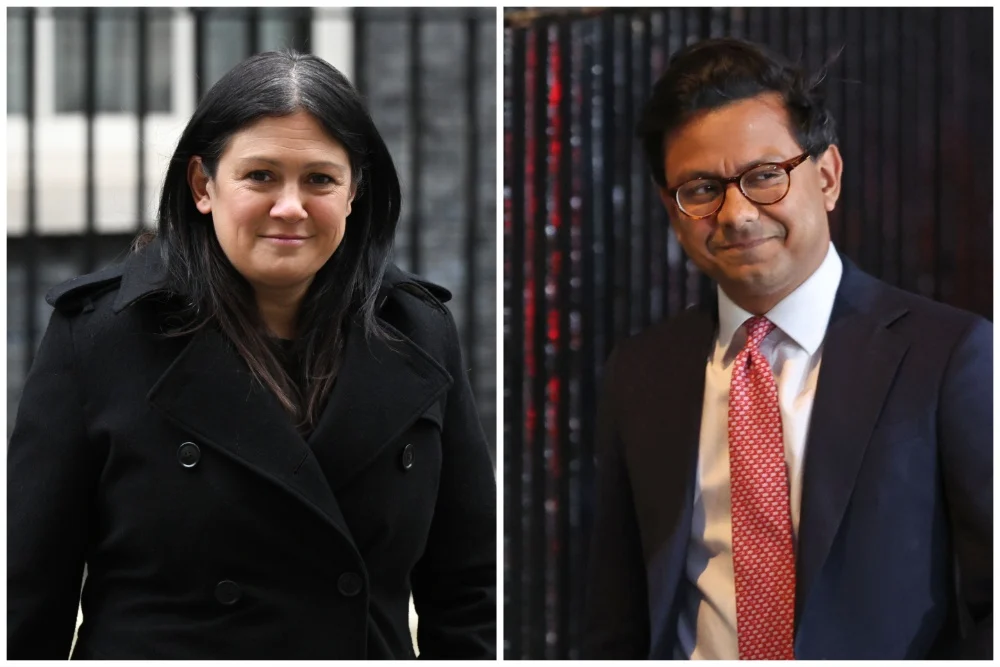
Prime Minister Andy Burnham has initiated a significant cabinet reshuffle, a move that has seen a considerable turnover of ministerial positions. However, in a notable decision that signals a degree of continuity amidst the broader governmental changes, incumbent Culture Secretary Lisa Nandy is set to remain in her post. This decision comes at a critical juncture for the United Kingdom’s creative industries, which have been navigating a complex landscape of economic challenges and profound structural shifts. Nandy’s reappointment suggests a commitment to maintaining experienced leadership as the government grapples with these pressing issues.
Nandy, who has represented the constituency of Wigan as a Member of Parliament since 2010, was first appointed as Secretary of State for Culture, Media and Sport in July 2024 by the then Prime Minister Keir Starmer, following the Labour party’s decisive victory in the general election. Her tenure in this role has been marked by a significant period of flux within the department. Indeed, the position has seen a remarkable rate of ministerial change in recent years, with Nandy becoming the twelfth minister to hold the post in less than a decade and a half. This high turnover has often been cited as a contributing factor to a lack of sustained policy development and long-term strategic planning within the sector.
Her current two-year stint has, by contrast, positioned her as one of the longer-serving incumbents in recent history, a testament to her ability to navigate the often-turbulent waters of ministerial appointments. Prior to her current role, Nandy garnered significant experience in shadow cabinet positions, serving as the Shadow Secretary of State for International Development and as Shadow Housing Minister. These previous roles provided her with a broad understanding of policy-making and the intricacies of government, which she has brought to bear on her current responsibilities.
Nandy assumed leadership of the Department for Culture, Media and Sport (DCMS) at a particularly challenging period for the UK’s screen sector. The aftermath of the protracted Hollywood writer and actor strikes had a ripple effect across the global film and television production landscape, impacting project pipelines and investment. This was compounded by the persistent pressures of post-pandemic inflation, which drove up production costs, and a significant downturn in the advertising market, a crucial revenue stream for many media companies. Furthermore, broadcasters and streamers, facing their own economic headwinds, implemented substantial budget cuts, leading to a contraction in commissioning and a more challenging environment for independent production companies.
In this dynamic environment, Nandy has been tasked with overseeing several high-profile and complex policy initiatives. A key priority has been the renewal of the BBC’s royal charter, a quinquennial process that not only determines the broadcaster’s future operating framework but also crucially involves a review of its funding mechanism. This review is particularly sensitive, given the ongoing debate about the licence fee and the BBC’s role in a rapidly evolving media landscape. The outcome of this charter renewal will have profound implications for public service broadcasting in the UK.
Beyond the BBC, Nandy’s department has also been actively involved in scrutinizing the proposed merger between Paramount and Warner Bros. Discovery’s UK operations. Nandy has publicly stated her "mind to intervene" in this significant consolidation, signalling a cautious approach to a deal that could reshape the competitive dynamics of the UK’s streaming and content production market. Such interventions are typically aimed at ensuring that mergers do not unduly harm competition, stifle innovation, or reduce consumer choice. The potential impact on local content creation and distribution channels will undoubtedly be a central consideration.
The UK’s media landscape has been a hotbed of M&A activity in recent times. Another major transaction that has captured industry attention is Comcast-owned Sky’s recent acquisition of the public service broadcaster ITV. This deal, however, is still awaiting regulatory approval, a process that will involve thorough scrutiny from competition authorities to assess its potential impact on the market. The potential acquisition of ITV, a cornerstone of British television for decades, by a dominant pay-TV provider raises significant questions about the future of public service broadcasting and the diversity of media ownership.
Adding to the ongoing consolidation, there are also reports of potential bidders circling ITV’s soon-to-be-spun-off production arm, ITV Studios. This move signifies a strategic pivot by ITV, aiming to unlock value and focus on its core broadcasting operations. The sale of ITV Studios, a highly regarded global production powerhouse, could lead to further shifts in the ownership and control of content creation in the UK.
In parallel with these developments in the media and culture sectors, Prime Minister Burnham has also made a significant appointment to address the burgeoning field of artificial intelligence. Kanishka Narayan has been appointed as the first Minister for AI, a portfolio that will be jointly held within the Cabinet Office and the Department for Business, Innovation, Science and Trade. This signals a clear governmental intent to prioritize and strategically develop the UK’s capabilities in artificial intelligence.
Narayan, who was elected as the MP for the Vale of Glamorgan in July 2024, brings prior experience to this new role, having previously served as Parliamentary Under-Secretary of State in the Department for Science, Innovation and Technology. His background suggests a focus on fostering innovation, attracting investment, and developing regulatory frameworks for AI technologies. The establishment of a dedicated ministerial role for AI underscores the government’s recognition of its transformative potential across all sectors of the economy and society.
The retention of Lisa Nandy as Culture Secretary, therefore, represents a decision to build upon existing knowledge and experience within a department that is currently overseeing some of the most significant structural changes the UK’s media and creative industries have ever faced. Her familiarity with the ongoing BBC charter renewal, the complexities of the Paramount/Warner Bros. Discovery merger, and the broader challenges facing the screen sector could be seen as an asset in providing a degree of stability.
However, the effectiveness of Nandy’s continued tenure will be closely watched. The high turnover of her predecessors has historically hindered the development of cohesive, long-term strategies. The current economic climate, characterized by inflation and reduced advertising spend, presents a formidable challenge. Furthermore, the ongoing consolidation within the media industry, as exemplified by the Sky-ITV deal and the potential sale of ITV Studios, necessitates a robust and proactive approach from the government to ensure a healthy and competitive media ecosystem.
The establishment of a dedicated Minister for AI, alongside Nandy’s continuation in her role, presents an interesting dynamic. It highlights the government’s dual focus on safeguarding traditional cultural assets and fostering new technological frontiers. The synergy, or potential divergence, between these policy areas will be a critical aspect of Burnham’s premiership.
Background and Chronology of Recent Events
The period leading up to Prime Minister Andy Burnham’s cabinet reshuffle has been characterized by significant political and economic shifts. The Labour party’s victory in the July 2024 general election marked a new chapter in UK governance, ushering in a period of anticipated policy renewal and departmental restructuring.
- July 2024: Labour wins the general election. Keir Starmer appoints Lisa Nandy as Secretary of State for Culture, Media and Sport.
- Late 2024 – Early 2025: The UK screen sector continues to grapple with the aftershocks of the Hollywood strikes, persistent inflation, and a weakened advertising market.
- Ongoing: Discussions and preliminary reviews commence regarding the BBC’s royal charter renewal, a process typically spanning several months.
- Early 2025: Sky announces its intention to acquire ITV. Regulatory bodies begin preparations for scrutiny.
- Mid-2025: Reports emerge of potential bidders for ITV Studios.
- Late 2025: Andy Burnham becomes Prime Minister and initiates a cabinet reshuffle. Lisa Nandy is confirmed to remain as Culture Secretary. Kanishka Narayan is appointed as the first Minister for AI.
Supporting Data and Industry Trends
The challenges facing the UK’s creative industries are underscored by several key data points:
- Inflation Impact: The Office for National Statistics (ONS) has reported persistent inflation rates, impacting the cost of goods and services, including production materials and labour, for the screen sector. For example, a 5% increase in the cost of raw materials could translate to millions of pounds in additional costs for a major film production.
- Advertising Market Downturn: The Advertising Association’s forecasts have indicated a slowdown in advertising expenditure growth, particularly in sectors heavily reliant on television and digital platforms. This can lead to reduced revenue for broadcasters and content creators. In 2023, the UK advertising market saw a modest growth of 2.1% according to AA/WARC figures, a significant slowdown from previous years.
- Broadcaster and Streamer Budget Cuts: Industry analysts have noted a trend of reduced commissioning budgets from major broadcasters and streaming services. This is often a response to increased competition, subscriber churn, and the need to manage profitability in a maturing streaming market. Some reports suggest average commissioning budgets for flagship drama series have seen a decline of 10-15% across major platforms in the last two years.
- Media Consolidation: The UK media market has witnessed a trend towards consolidation. The value of mergers and acquisitions in the UK media and entertainment sector has been substantial, with the Sky-ITV deal alone representing a multi-billion pound transaction. This consolidation can lead to fewer independent players and a concentration of market power.
- Growth of AI Investment: Global investment in AI technologies is experiencing exponential growth. Reports by firms like PwC and Statista project trillions of dollars in economic impact from AI over the next decade, highlighting the strategic importance of the new Minister for AI role. The UK government’s stated aim is to position the UK as a global AI superpower, attracting significant R&D investment.
Official Responses and Industry Reactions
While specific, detailed public statements from all parties involved are yet to be widely disseminated following the reshuffle, the implications of Nandy’s reappointment can be inferred from the broader political and industry context.
- Government Statement (Inferred): The Prime Minister’s office, in announcing the reshuffle, likely emphasized a commitment to stability and experienced leadership in key departments. The retention of Nandy would be presented as a strategic decision to ensure continuity during a period of significant sectoral reform.
- Industry Bodies (Anticipated Reactions): Organizations such as the Production Guild of Great Britain, Pact (the trade association for the UK’s independent film and TV production sector), and the Royal Television Society are likely to welcome the continuity in the Culture Secretary role. They will also be keen to engage with Nandy and her department on pressing issues such as tax incentives for production, skills development, and the regulatory framework for media mergers. A spokesperson for an industry body might state, "We look forward to continuing our constructive dialogue with Secretary of State Nandy as we navigate these complex times. Stability at the top is crucial for the long-term health of our vibrant creative industries."
- BBC (Anticipated Response): The BBC, facing its charter renewal, will likely appreciate the continuity of a minister who has already been involved in the initial stages of this critical process. Their engagement will focus on securing a funding model that allows for continued investment in high-quality public service content.
- Tech and AI Sector (Anticipated Response): The appointment of a dedicated Minister for AI is likely to be met with enthusiasm from the tech industry and AI researchers. They will be looking for clear policy direction, investment in R&D, and a regulatory environment that fosters innovation while addressing ethical concerns. A statement from a leading AI ethics think tank might say, "This appointment signals a serious commitment to the future of AI in the UK. We anticipate robust engagement on ethical guidelines and responsible innovation."
Broader Impact and Implications
The decision to retain Lisa Nandy as Culture Secretary, coupled with the creation of a Minister for AI, carries significant implications for the UK’s cultural and technological future.
- Stability in a Volatile Sector: Nandy’s reappointment offers a degree of stability for the creative industries at a time when they are undergoing profound transformation. This continuity can be crucial for fostering investor confidence and enabling long-term strategic planning, which has been historically challenging due to ministerial churn. Her familiarity with ongoing complex negotiations, such as the BBC charter renewal and the Paramount/Warner Bros. Discovery merger, means she can hit the ground running without a steep learning curve.
- Navigating Media Consolidation: The ongoing wave of media consolidation presents both opportunities and challenges. While mergers can lead to greater efficiency and investment, they also raise concerns about market concentration, potential job losses, and the impact on diversity of voices. Nandy’s role will be critical in ensuring that regulatory interventions are effective in safeguarding competition and public interest. The Sky-ITV deal, in particular, could fundamentally alter the landscape of public service broadcasting in the UK, and her oversight will be closely scrutinized.
- The Rise of AI and its Interplay with Culture: The establishment of a dedicated Minister for AI signifies a proactive approach to a technology that is poised to reshape nearly every aspect of society, including the creative industries. The interplay between AI and culture is a complex one, with potential benefits in content creation, distribution, and audience engagement, alongside significant ethical considerations and potential disruptions to existing creative roles. The coordination between Nandy’s department and the new Minister for AI will be vital to harness the opportunities and mitigate the risks.
- Future of Public Service Broadcasting: The BBC’s charter renewal is arguably one of the most significant policy challenges facing the DCMS. Nandy’s continued leadership in this area is essential for navigating the intricate debates surrounding the BBC’s remit, funding, and its role in an increasingly fragmented media market. The outcome will have long-lasting repercussions for public service broadcasting in the UK.
- Economic Competitiveness: The creative industries are a significant contributor to the UK economy. Ensuring their continued growth and competitiveness in a global market requires supportive government policies, including appropriate tax incentives, skills development programs, and a favorable regulatory environment. Nandy’s continued presence offers a chance to build upon existing initiatives and adapt them to evolving market conditions. The appointment of a Minister for AI further underscores the government’s ambition to leverage technology for economic growth.
In conclusion, Prime Minister Andy Burnham’s decision to keep Lisa Nandy at the helm of the Department for Culture, Media and Sport amidst a significant cabinet reshuffle reflects a strategic choice to prioritize continuity and experience in a sector facing unprecedented challenges and opportunities. Her tenure will be defined by her ability to navigate complex mergers, oversee the future of public service broadcasting, and foster a dynamic environment for the UK’s globally renowned creative industries, all while working alongside a new dedicated minister tasked with shaping the nation’s AI future.