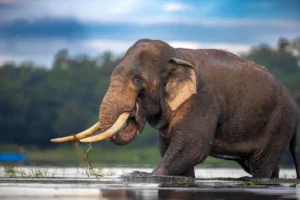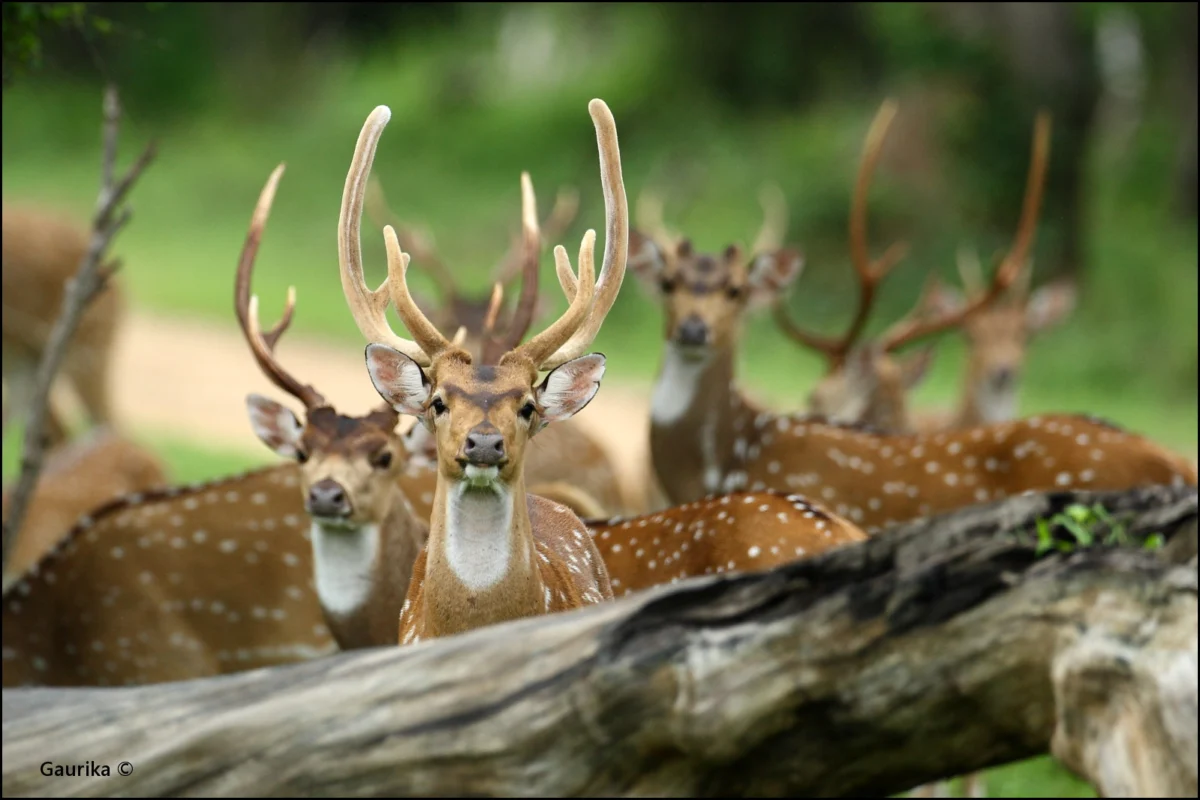
The ecological integrity of Sri Lanka’s protected areas is currently facing a dual threat that endangers both its iconic biodiversity and its burgeoning tourism economy. Approximately 14% of the island’s total landmass is designated as wildlife protected areas, a network that includes more than 20 national parks intended to serve as sanctuaries for the Sri Lankan leopard (Panthera pardus kotiya) and the Sri Lankan elephant (Elephas maximus maximus). However, as the island prepares for a significant El Niño event expected to peak in late 2025 and early 2026, conservationists warn that the combination of shrinking habitats, illegal encroachment, and extreme weather patterns could lead to a catastrophic decline in animal populations.
Wildlife authorities have reported that despite a decade of intensified law enforcement, the battle against encroachment remains largely uphill. The Department of Wildlife Conservation (DWC) has struggled to balance the needs of human resettlement with the mandate of preserving natural corridors. This struggle is particularly acute in the island’s North and East, regions that were largely inaccessible during the decades-long armed conflict that ended in 2009. The subsequent push for development and resettlement has placed unprecedented pressure on the boundaries of some of the nation’s most vital ecological zones.
A Century of Legal Boundaries and Modern Pressures
The legislative framework governing Sri Lanka’s wildlife began in the colonial era, specifically with the Flora and Fauna Protection Ordinance (FFPO) No. 2 of 1937. While this ordinance laid the groundwork for modern conservation, many of the boundaries it established in 1938 remained theoretical rather than physical for decades. According to Srinath Dissanayake, a wildlife ranger with the DWC, the reality of park management shifted dramatically following the end of the civil war in May 2009.

In the Northern and Eastern provinces, many protected areas were only formally gazetted or re-demarcated in the post-war era. This delay allowed for decades of informal land use. "Most encroachments that we see today had happened back in the 1950s and 1960s," Dissanayake noted. However, the post-2009 period saw a different kind of pressure: the state-led resettlement of internally displaced persons (IDPs). This humanitarian necessity frequently clashed with environmental priorities, leading to significant deforestation for housing schemes and infrastructure projects.
Wilpattu National Park, the country’s largest and oldest park, became a flashpoint for these tensions. Large swaths of forest were cleared to accommodate returning populations, leading to protracted legal battles. While the DWC has successfully secured some eviction orders and reclaimed certain lands, Dissanayake warns that reclaiming land is not the same as restoring an ecosystem. Once a commercialized or agricultural environment is established, the natural forest structure is lost, necessitating decades of active regeneration efforts that the state is often under-equipped to provide.
The Ecological Shift: From Grasslands to Scrublands
While human encroachment is a visible threat, a more subtle ecological transformation is occurring within the park boundaries. A landmark 2021 study evaluating habitat coverage in Udawalawe National Park from 2005 to 2019 revealed a concerning trend: the steady decline of grasslands in favor of forest and scrub habitats. This shift, known as natural succession, occurs when open fields are left unattended, eventually maturing into dense woody vegetation.
Mayuri Wijesinghe, a senior professor at the University of Colombo and co-author of the study, emphasizes that this is not necessarily a "natural" win for the environment. "Grasslands are required for elephants and many other herbivores," she explained. "If a habitat is just protected and nothing is being done, it will one day become a dry zone forest."

For Sri Lanka’s elephants, who rely on grass for 60% to 70% of their caloric intake, the loss of these open spaces is devastating. As grasslands vanish, elephants are forced to venture outside park boundaries into neighboring agricultural lands to find food. This movement is the primary driver of the Human-Elephant Conflict (HEC), a crisis that results in the deaths of hundreds of elephants and dozens of humans annually. To mitigate this, experts suggest "prescribed burning"—the controlled use of fire to clear old growth and encourage new grass shoots—and the aggressive removal of invasive alien species that choke out native flora.
A 2024 audit report on grassland conservation corroborated these concerns, citing illegal cultivation, unauthorized cattle grazing, and the spread of invasive plants as primary factors in the degradation of herbivore feeding grounds. The presence of unauthorized cattle ranches within national parks is a particularly thorny issue, as domestic livestock compete directly with wild species for limited food and water resources.
The Looming Threat of El Niño
The immediate concern for 2025 is the arrival of El Niño, a climate phenomenon that historically brings severe drought to the Indian Ocean island. For the dry zone parks, such as Yala and Udawalawe, the heat is already reaching critical levels. Palitha Wickramaratne, a prominent environmentalist, points out that while drought is a cyclical part of Sri Lanka’s climate—with major events recorded in 2001, 2012, and 2016—the current environmental degradation makes the ecosystem less resilient.
In previous drought years, the DWC and volunteer groups were forced to ferry water in bowsers to fill parched water holes. During the 2016 drought, natural lakes like Heen Wewa and Gonagala Wewa were restored or desilted to increase storage capacity. However, even these interventions are sometimes insufficient. The Menik Ganga Diversion project, which included the construction of the Weheragala Reservoir in 2005, was designed to provide water for the Kataragama region and parts of Yala Block I, but during extreme El Niño years, even these large-scale irrigation systems can run dry.

Wickramaratne suggests that the DWC should consider closing high-traffic areas like Yala Block I during the peak of the drought. This would allow wildlife to move freely toward remaining water sources without the stress of safari jeep congestion, which can further dehydrate and exhaust emaciated animals.
The Economic Imperative of Conservation
The survival of Sri Lanka’s wildlife is not merely an ethical or ecological concern; it is a cornerstone of the national economy. As the country recovers from its recent economic crisis, tourism has emerged as a vital source of foreign exchange. In 2025, Sri Lanka welcomed nearly 2.4 million visitors, generating approximately $3.2 billion in revenue. A significant portion of these tourists visit specifically for wildlife safaris.
A 2022 study by sustainability professional Srilal Miththapala attempted to quantify the value of the island’s wildlife, estimating that a single wild elephant is worth approximately 4.5 million Sri Lankan rupees ($27,000) annually in terms of tourism revenue. When scaled across the thousands of elephants and leopards that inhabit the parks, the economic "asset value" of these species is in the billions.
Despite this, the management of these assets remains underfunded. The DWC often finds itself at the center of a debate between interventionist conservation and natural selection. Ranjan Marasinghe, Director General of the DWC, argues that some level of hardship is necessary for a healthy ecosystem. "Wild animals develop a ruggedness during drought conditions, and that is required to strike a balance in the ecosystem," he said. He pointed to the wild buffalo population, which is naturally thinned during droughts, preventing overgrazing and ensuring that stronger genes are passed on.

Future Outlook and Strategic Responses
As the November El Niño window approaches, the DWC has announced plans to increase patrols to combat poaching, which often spikes during droughts when animals congregate around the few remaining water holes. By August 2025, officers are expected to be deployed in full force to monitor illegal activity and ensure that the irrigation systems within the parks are functioning.
However, a long-term strategy requires more than just crisis management. The 2024 audit report highlights the need for a national policy on grassland management and a more aggressive stance against illegal cattle ranches. Furthermore, the regeneration of forests in reclaimed lands must be prioritized to provide a buffer against the shrinking habitats caused by climate change.
The intersection of human encroachment, ecological succession, and climate volatility represents the greatest challenge to Sri Lankan conservation in a generation. Without a cohesive plan that addresses both the immediate threat of El Niño and the structural issues of land management, the "Pearl of the Indian Ocean" risks losing the very natural wonders that define its identity and sustain its economy. The coming months will be a decisive test for the Department of Wildlife Conservation and the Sri Lankan government’s commitment to its environmental heritage.