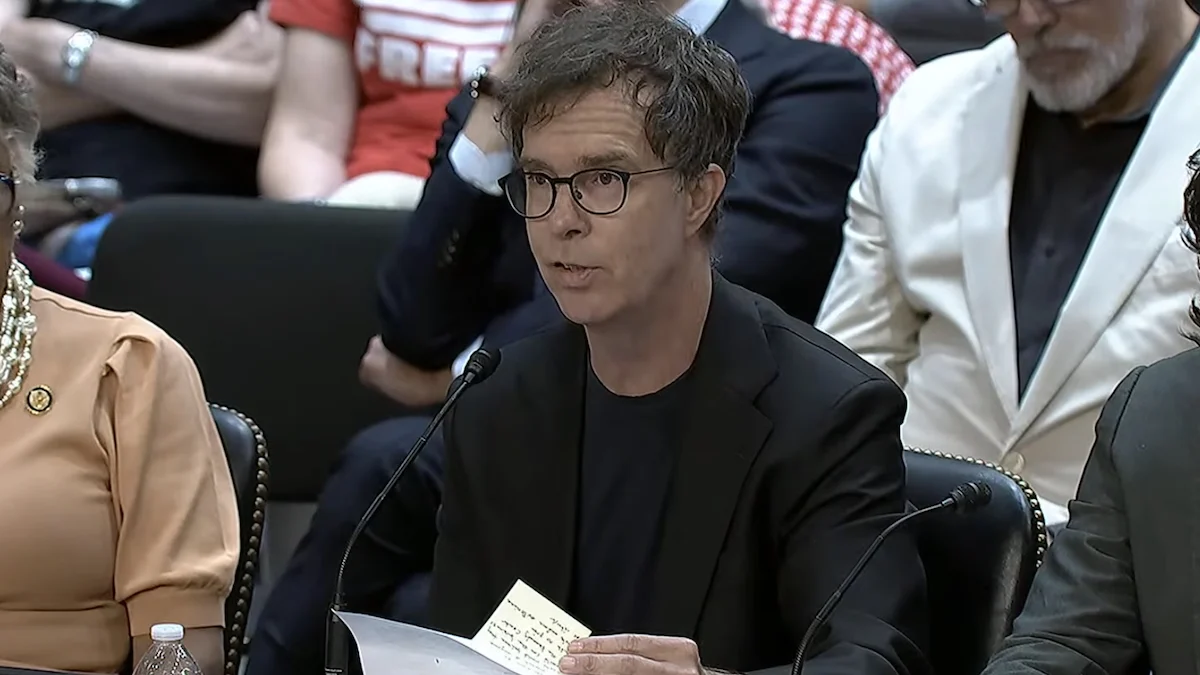
Ben Folds, the acclaimed musician and former artistic advisor to the National Symphony Orchestra at the John F. Kennedy Center for the Performing Arts, delivered a powerful and impassioned testimony before a bicameral congressional forum on Tuesday, July 21st. Folds articulated his grave concerns regarding what he characterized as President Donald Trump’s "takeover" of the prestigious federal arts institution, arguing that such actions undermined its non-partisan mission and transformed it into a "hyper-politicized environment."
Folds, who served as the Kennedy Center’s inaugural artistic advisor to the National Symphony Orchestra from 2017 until his resignation in February 2025, spoke for approximately five-and-a-half minutes. He detailed a concerning shift in the Center’s operational philosophy, asserting that it had long served as a neutral cultural sanctuary before the Trump administration’s intervention. According to Folds, this intervention involved the removal of established board members, the President assuming the chairmanship, and the subsequent appointment of loyalists who, in his view, drastically altered the venue’s programming and artistic direction.
A Timeline of Alleged Political Interference
The genesis of Folds’ concerns can be traced back to February 2025, a period he described as a "brutal board takeover." This marked a significant departure from the Kennedy Center’s historical precedent. "For the first time in history, a president took control of the Kennedy Center’s programming and messaging," Folds stated during his testimony. He elaborated that this move effectively eliminated the crucial firewall that had historically separated political influence from the Center’s core non-profit mission, resulting in an environment he found deeply problematic.
Prior to this alleged takeover, the Kennedy Center operated under a mandate to foster artistic excellence and accessibility across diverse disciplines, serving as a national symbol of American culture. Established by an act of Congress in 1958, it was envisioned as a living memorial to President John F. Kennedy, a place where the arts could thrive free from partisan pressures. The Center’s charter emphasizes its role in presenting and celebrating performing arts and humanities, reflecting the nation’s rich cultural tapestry.
Folds’ tenure as artistic advisor was intended to bolster the National Symphony Orchestra’s artistic vision and community engagement. His departure in February 2025, as reported previously, signaled a growing disillusionment with the Center’s trajectory under the new leadership. His testimony before Congress aimed to shed light on the perceived negative consequences of these changes, which he believes have profoundly impacted the institution’s integrity and effectiveness.
The Erosion of an Apolitical Sanctuary
The core of Folds’ argument revolved around the fundamental nature of art and its relationship with political influence. "I think most of us understand that when you politicize art, you’ve got propaganda," Folds declared, encapsulating his central thesis. He posited that by injecting partisan agendas into the programming and messaging of a national cultural institution, the Kennedy Center risked becoming a mouthpiece for a particular political ideology, thereby compromising its ability to serve as a truly representative platform for all Americans.
This transformation, Folds argued, has not only damaged the Center’s reputation but also created significant challenges for artists themselves. He highlighted an incident from September of the previous year, involving fingerstyle guitarist Yasmin Williams. Williams, who was scheduled to perform at the Kennedy Center, reportedly faced a barrage of heckling from an organized group of conservatives after she voiced concerns about the perceived changes at the institution.
Folds recounted the distressing experience of Williams, stating, "Yasmin had to endure heckling from extremists on the right while also getting grief from the left for even showing up to perform, treated [as] if she was a scab crossing a picket line." This dual pressure, Folds explained, illustrates the untenable position artists are placed in when a cultural venue becomes embroiled in political controversy. Performers are caught between factions, facing criticism regardless of their stance or simply for participating in an event that has become politically charged. This climate, he asserted, stifles artistic freedom and discourages participation.
Broader Implications for the Arts and National Culture
The consequences of this alleged politicization, according to Folds, extend far beyond individual artists and immediate programming. He concluded his remarks by stating, "The takeover hobbled the Kennedy Center, broke its once proven successful business model, and disrespected its original core mission." This assertion points to a potential unraveling of the Center’s operational stability and its long-standing commitment to artistic excellence and broad public access.
The economic implications of such a disruption cannot be understated. Federal arts funding, while often a fraction of overall government budgets, plays a critical role in supporting institutions that contribute significantly to local economies through employment, tourism, and cultural enrichment. A compromised business model could lead to reduced programming, fewer opportunities for artists, and a diminished capacity to engage diverse audiences, ultimately impacting the broader cultural landscape of the nation.
The Congressional Forum: "Monumental Waste"
Folds’ testimony was delivered at a hearing convened by Senator Richard Blumenthal (D-CT). The hearing, titled "Monumental Waste: How Donald Trump Is Spending Millions Destroying American Landmarks," provided a platform for critics to voice concerns about the administration’s impact on various national institutions. The focus on the Kennedy Center highlighted a specific area where concerns about political interference in cultural affairs were being raised at the highest levels of government.
The inclusion of the Kennedy Center in a hearing discussing "monumental waste" suggests a broader narrative of alleged mismanagement and detrimental policy decisions attributed to the Trump administration concerning national cultural assets. The testimony from Folds, a respected figure in the arts community, lends significant weight to these allegations.
Reactions and Analysis
While direct official responses from the Trump administration regarding Folds’ specific testimony were not immediately available in the provided content, the context of the hearing suggests a political divide. Senator Blumenthal’s committee likely convened this forum to scrutinize actions perceived as undermining public trust and the integrity of national institutions.
The implications of Folds’ testimony are multifaceted. Firstly, it raises questions about the appropriate role of political leadership in the governance of non-profit arts organizations that receive federal support. The principle of artistic independence is often considered paramount to fostering a vibrant and critical cultural environment. When this independence is perceived to be compromised, it can lead to a chilling effect on artistic expression and public engagement.
Secondly, the incident with Yasmin Williams underscores the personal toll that politicization can take on artists. In an era where political discourse is often highly polarized, cultural spaces are increasingly becoming battlegrounds for ideological disputes. This can deter artists from participating in public forums and limit the diversity of voices and perspectives presented to the public.
Finally, Folds’ assertion about the "broken business model" warrants further investigation. A successful non-profit arts institution relies on a delicate balance of earned revenue, philanthropic support, and government funding. Any perceived political interference could jeopardize these revenue streams, leading to financial instability and a reduction in the Center’s ability to fulfill its mission.
The video of Folds’ remarks, available from approximately the 25-minute mark of the provided link, offers a direct window into his testimony. His detailed account and forceful language suggest a deep-seated concern for the future of the Kennedy Center as a national cultural treasure. The broader impact of this testimony will likely be felt in ongoing debates about arts funding, the separation of politics and culture, and the responsibility of public officials in safeguarding the integrity of national institutions. The future of the Kennedy Center, as a symbol of American arts and culture, may well hinge on the outcomes of such congressional scrutiny and public discourse.