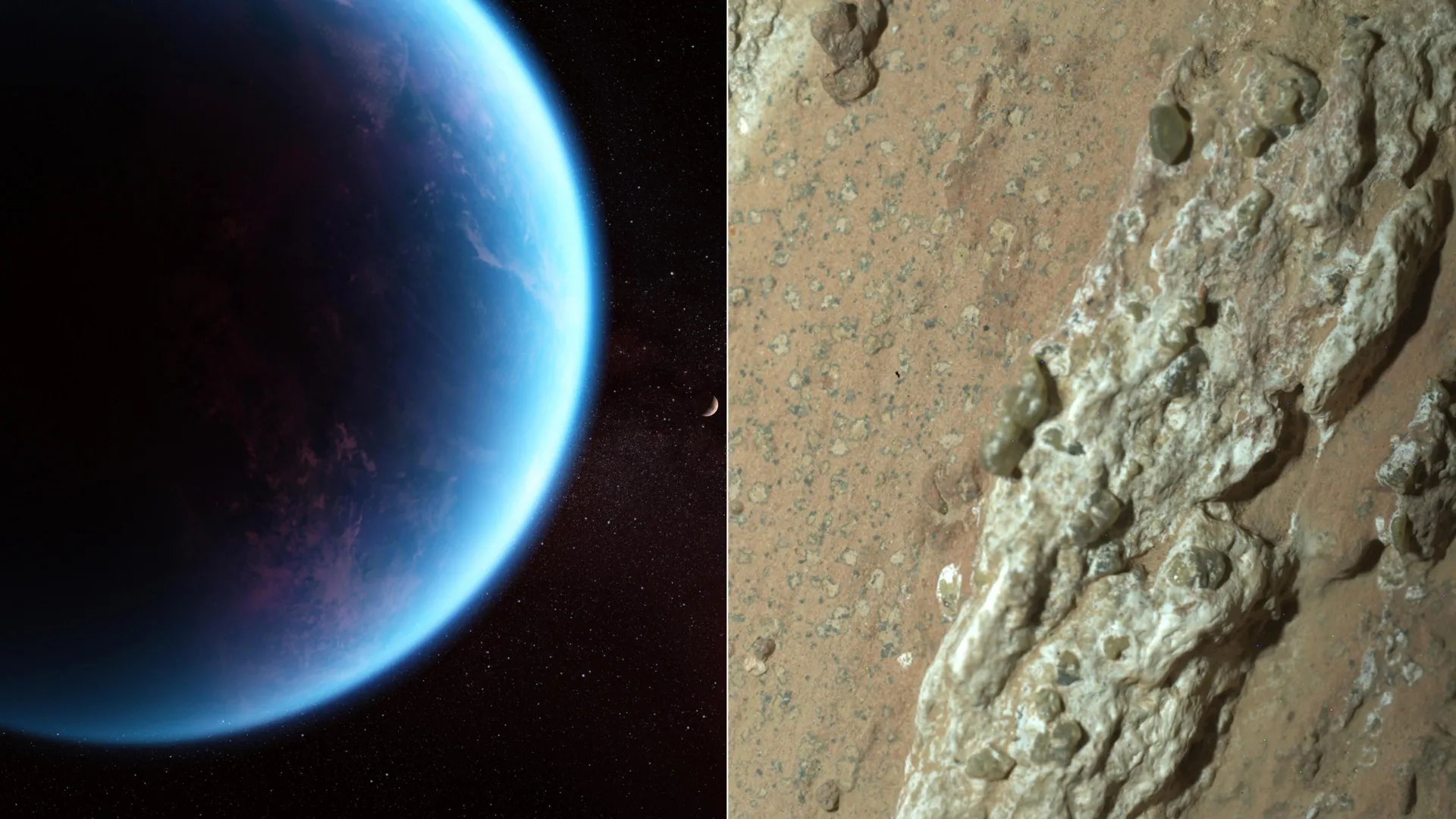
The recent surge in high-profile announcements regarding potential extraterrestrial life—ranging from the atmospheric composition of exoplanet K2-18b to the geological anomalies discovered by the Perseverance rover on Mars—has reignited a perennial question: are we truly on the precipice of a monumental discovery? While media outlets frequently report these findings with a sense of impending breakthrough, the reality within the scientific community is far more nuanced, cautious, and methodologically conservative. To understand the gap between public perception and professional consensus, a new wave of research is now attempting to quantify the actual distribution of expert opinion within the field of astrobiology.
The 2025 Milestones: A Chronology of Discovery
The year 2025 will likely be remembered as a watershed moment for astrobiology, characterized by two major, albeit ambiguous, announcements that dominated global headlines.
In April 2025, an international team of astronomers published findings in The Astrophysical Journal Letters concerning K2-18b, an exoplanet orbiting within the habitable zone of a red dwarf star 120 light-years away. The study highlighted the detection of dimethyl sulfide (DMS) and potential dimethyl disulfide (DMDS). On Earth, these organic sulfur compounds are primarily produced by phytoplankton in marine environments. The report suggested these molecules could be indicative of biological processes occurring in a "Hycean" world—a planet with a hydrogen-rich atmosphere and a global water ocean.
Following this, the narrative shifted from the interstellar to the interplanetary. In September 2025, NASA confirmed that the Perseverance rover, exploring the Jezero Crater on Mars, had identified a rock sample nicknamed "Cheyava Falls." The rock exhibited distinctive "leopard spots"—mineral rings featuring dark halos that, under terrestrial conditions, often signify the presence of fossilized microbial activity. NASA Administrator Sean Duffy described the discovery as the most compelling evidence for ancient life ever recovered from the Martian surface.
Quantifying Expert Opinion: The C-Scope Initiative
The excitement surrounding these announcements prompted researchers at the Centre for Scientific Community Opinion Polling and Evaluation (C-Scope) at Durham University to move beyond anecdotal commentary. The researchers initiated a systematic survey of hundreds of global astrobiologists immediately following each event to determine the extent to which the expert community viewed these findings as definitive evidence of life.
The data revealed a stark disconnect between the sensationalism of the headlines and the measured skepticism of the experts. In the case of K2-18b, only 6.6% of respondents agreed that the presence of life had likely been detected. Conversely, 65.4% of the astrobiologists expressed disagreement, while 28.0% adopted a neutral stance.
The response to the Mars discovery was slightly more optimistic but remained firmly rooted in scientific caution. Approximately 15.1% of the surveyed experts agreed that life had likely been found. Disagreement dropped to 44.6%, while neutrality rose to 40.3%. Notably, the "strong disagreement" category—those who outright dismissed the findings—shrank significantly between the two events, dropping from 35.1% in the K2-18b survey to 11.1% regarding the Martian sample.
The Dichotomy of Evidence: Atmospheric vs. Geological
The shift in opinion between the April and September findings suggests that the nature of the data significantly influences scientific confidence. The K2-18b evidence relied on remote spectroscopic analysis—an indirect method prone to "false positives" where non-biological chemical reactions can mimic the signatures of life. In contrast, the Cheyava Falls discovery allowed for in-situ geological examination.
Astrobiologists are acutely aware of the "false biosignature" problem. In geological and atmospheric contexts, nature often produces patterns that are superficially lifelike. For example, abiotic mineral crystallization can create structures that mirror biological cells or filaments. Because the scientific method prioritizes the null hypothesis—the assumption that a phenomenon has a non-biological origin—experts often require multiple, independent lines of evidence before declaring a discovery as "life."
The increased neutrality observed in the Mars survey indicates that while scientists are becoming more open to the possibility of biological origins, they are hesitant to commit to a conclusion without further laboratory analysis, likely requiring a "sample return" mission to bring Martian rock fragments back to Earth for high-resolution study.
Official Responses and the Burden of Proof
NASA and other space agencies operate under a delicate mandate: they must maintain public interest and secure funding for long-term exploration while adhering to the rigorous demands of the peer-review process. When administrators describe a finding as "the closest we have ever come," they are technically accurate, yet the language can be misinterpreted by the public as a confirmation of discovery.
From the perspective of the scientific community, "potential biosignature" is a term of extreme precision, not a synonym for "life." It identifies a signal that could be biological but is currently categorized as "unexplained." The internal discourse among astrobiologists focuses on the "ladder of detection"—a series of criteria that must be satisfied to move from a potential signal to a confirmed biological entity. The C-Scope findings suggest that the majority of the field views current evidence as having only just begun to climb the lower rungs of that ladder.
Broader Implications for Science Communication
The study conducted by the C-Scope team carries implications far beyond the search for extraterrestrial life. In an era where "the science" is frequently invoked in political and public debates—ranging from climate change mitigation to artificial intelligence safety—the lack of systematic data regarding scientific consensus is a significant vulnerability.
When journalists rely on the "both sides" approach—quoting one optimistic scientist and one pessimist—the public is left with a distorted view of the scientific landscape. This binary framing often fails to capture the "middle ground" where most scientists actually reside: a space of informed uncertainty.
The Durham University initiative serves as a pilot for a new standard in scientific journalism. By polling the community, researchers can identify whether a scientific field is in a state of consensus, emerging discovery, or fundamental contention. This prevents the "flattening" of scientific opinion, where complex distributions of doubt and belief are reduced to simple headlines.
The Path Forward: Managing Uncertainty
Scientific advancement is not a linear progression from ignorance to certainty; it is a messy, iterative process defined by the systematic refinement of hypotheses. The fact that astrobiologists are shifting their stance from strong rejection to tentative neutrality is, in itself, a mark of progress. It reflects a community that is adjusting its Bayesian priors in response to new, if ambiguous, data.
The challenge for the future lies in communicating this process to the public. If the goal of scientific reporting is to inform, then reporting on the distribution of expert judgment is just as vital as reporting on the raw data itself. As we continue to explore the solar system and gaze into the atmospheres of distant exoplanets, we must prepare for a future where we may find "hints" of life long before we find life itself. In such a world, understanding the nuances of scientific disagreement will be as essential to our knowledge as the telescopes and rovers that fuel our curiosity.
As the C-Scope researchers noted, they do not intend for polling to replace the peer-review process or to treat a majority opinion as an absolute truth. Rather, they advocate for a transparent assessment of how the scientific community responds to the unknown. By doing so, we can bridge the gap between the excitement of the search and the rigor of the conclusion, ensuring that public understanding stays aligned with the slow, steady, and evidence-based progress of the scientific method. Whether or not we are truly alone in the universe remains the ultimate question; how we approach the answer, however, is a matter of clear communication and methodological integrity.