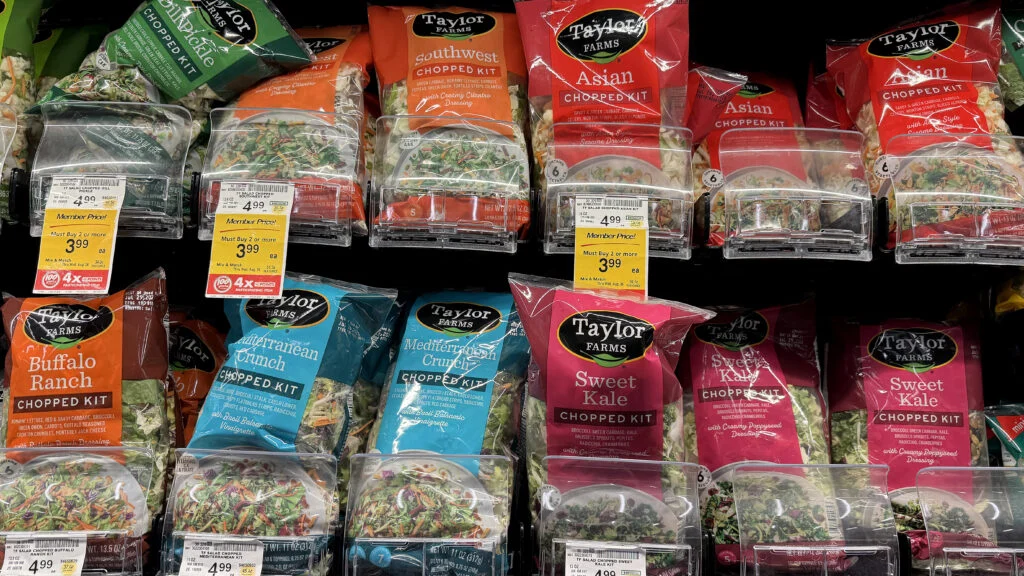
Federal health officials have reaffirmed their primary focus on lettuce supplied by Taylor Farms as the suspected source of a multi-state outbreak of Cyclospora, a parasitic infection causing significant gastrointestinal distress. This renewed emphasis comes despite a temporary setback involving an inaccurate laboratory test result that the government briefly publicized over the weekend, causing initial confusion. The Food and Drug Administration (FDA) has since clarified that a rapid screening test erroneously indicated the presence of Cyclospora on a sample of lettuce from Taylor Farms, a finding that was subsequently corrected and reported as a false positive.
The ongoing investigation, a collaborative effort between federal and state authorities, has been meticulously tracing a surge in Cyclospora cases across five states. Early investigative threads had pointed towards lettuce served at various Taco Bell locations as a potential vector for the outbreak. In response to mounting evidence and in an effort to safeguard public health, Taylor Farms initiated a voluntary recall on Saturday of 25 shredded lettuce and salad mix products. These recalled items, bearing eight distinct brand codes, are widely distributed and utilized by a multitude of U.S. food chains and suppliers, underscoring the widespread potential impact of the contamination.
Unwavering Focus on Taylor Farms Lettuce
Despite the transient confusion caused by the erroneous test result, federal health officials remain steadfast in their assessment of the situation. Donald Prater, the acting food chief for the FDA, reiterated on Monday that the agency’s comprehensive traceback investigation and the aggregated outbreak data continue to “converge on shredded iceberg lettuce from Taylor Farms’ locations in central Mexico.” This statement underscores the persistent and targeted nature of the investigation, which involves scrutinizing the entire supply chain from farm to table. In parallel with tracing the provenance of the implicated lettuce, FDA personnel have also commenced testing produce samples as they cross the U.S. border, adopting a proactive stance in identifying potential contamination points.
Timeline of the Investigation and False Positive Incident
The unfolding of this public health alert has been marked by a series of critical developments:
- Early Stages of Outbreak Identification: Federal and state health agencies began noticing an unusual increase in reported cases of Cyclospora infections across several states. Initial epidemiological investigations linked these illnesses to consumption of lettuce at Taco Bell restaurants.
- Taylor Farms Recall: On Saturday, August 17th, 2024, Taylor Farms, a major produce supplier, announced a voluntary recall of 25 products, including shredded lettuce and salad mixes, sold under various brand codes. This action was taken proactively as the company cooperated with ongoing investigations.
- Erroneous Test Result Announcement: On Saturday, August 17th, 2024, the FDA posted information on its website indicating a positive test result for Cyclospora on a sample of lettuce from Taylor Farms. This announcement was made in accordance with the agency’s protocol for promptly informing the public about potential foodborne hazards.
- Correction of Test Result: On Sunday, August 18th, 2024, the FDA issued a clarification, stating that the previously announced positive test result was a false positive. The agency explained that a rapid screening test had produced an inaccurate result, which was subsequently identified and corrected through a quality control check.
- Official Reaffirmation of Focus: On Monday, August 19th, 2024, FDA officials, including acting food chief Donald Prater and acting commissioner Kyle Diamantas, held a press briefing to provide an update. They re-emphasized that the investigation’s focus remained on Taylor Farms’ shredded iceberg lettuce, originating from their facilities in central Mexico, and that the false positive did not alter the overarching trajectory of the investigation.
The incident involving the false positive highlights the complexities and inherent challenges in real-time food safety testing. FDA officials explained that the erroneous result stemmed from a rapid screening test designed for preliminary detection. The specific sample that initially tested positive was indeed from Taylor Farms but was not part of the recalled product line. The agency stated that it felt it was imperative to alert the public immediately upon receiving the preliminary positive result, even before full confirmation, to err on the side of caution. However, subsequent rigorous quality control measures revealed the error. This correction was promptly communicated to Taylor Farms on Sunday.
Taylor Farms’ Response and Public Perception
Taylor Farms acknowledged the updated information regarding the false positive test result. The company took to social media to communicate the corrected findings to its consumers and stakeholders, stating, “FDA apologized to us.” However, FDA officials clarified that there was no formal apology issued by the agency, indicating a nuance in the communication and perception of the event. This exchange underscores the sensitive nature of such announcements and the importance of precise public communication during foodborne illness investigations.
Understanding Cyclospora: A Microscopic Threat
Cyclospora cayetanensis is a microscopic, single-celled parasite that poses a significant public health concern. Its transmission typically occurs through the ingestion of food or water contaminated with the feces of infected individuals. Produce, particularly fruits and vegetables that are consumed raw, is a common vehicle for this parasite, especially if it has been irrigated or washed with contaminated water.
Upon ingestion, the parasite infects the small intestine, leading to a range of gastrointestinal symptoms. According to the Centers for Disease Control and Prevention (CDC), these symptoms are often characterized by “frequent and sometimes explosive bowel movements.” Other common manifestations include diarrhea, loss of appetite, weight loss, stomach cramps, bloating, gas, nausea, and fatigue. In some individuals, particularly those with compromised immune systems, the illness can persist for extended periods, even weeks or months, and may be accompanied by vomiting and fever.
The Broader Landscape of Cyclospora Outbreaks
The current outbreak is not an isolated incident. Cyclospora infections have been a recurring issue in the United States. In 2024, prior to the current investigation, the FDA and CDC were tracking multiple distinct clusters of Cyclospora illnesses. According to preliminary data available at the time of reporting, at least 1,645 individuals across the U.S. had been sickened by Cyclospora, with 141 requiring hospitalization. The current investigation involving Taylor Farms represents one of five separate clusters of illness under scrutiny by federal health authorities.
Continued Vigilance and Public Health Imperative
The persistence of new cases associated with the current outbreak is a cause for concern for public health officials. Kyle Diamantas, the FDA’s acting commissioner, highlighted this ongoing challenge, stating that health officials have continued to observe new infections linked to this outbreak, with some cases reported as recently as the past week. “Which means it’s imperative for us to take action to ensure that contaminated product is not making its way to the market,” Diamantas emphasized. This statement underscores the urgency and critical importance of the ongoing efforts to identify and remove any potentially contaminated products from circulation to prevent further illness.
Economic and Consumer Impact
The implications of a foodborne illness outbreak extend beyond public health, significantly impacting the food service industry. Data compiled by Placer.ai, a firm that tracks consumer movement patterns through cellphone usage, revealed a notable decline in foot traffic at several major dining chains in the week preceding Friday, August 16th, 2024, compared to the average for the period between January 1st and July 6th, 2024.
Taco Bell experienced the most substantial downturn, with an 18.9% decrease in foot traffic following the federal health officials’ announcement linking the chain to the cyclosporiasis outbreak investigation. Other affected establishments also saw significant dips: Chopt reported a 14.3% decline in visitors, while both Chipotle and Panera Bread experienced close to a 7% reduction in customer traffic. Cava, a Mediterranean fast-casual chain, saw a less pronounced decrease of 4.2%. These figures illustrate the tangible economic consequences of food safety concerns and the public’s sensitivity to potential health risks associated with dining out.
Challenges in Food Safety Investigation
Investigating foodborne illness outbreaks, particularly those involving microscopic parasites like Cyclospora, presents unique challenges for food safety experts. Establishing a definitive biological link between a specific recalled product and an outbreak can be arduous. Traditional laboratory tests commonly used for detecting bacterial food poisoning are often not adept at identifying Cyclospora. Furthermore, the parasite cannot be easily cultivated in laboratory settings, which hinders the ability to draw direct evidence from contaminated produce samples.
Consequently, investigators often rely on a combination of methodologies to build their case. These typically include detailed epidemiological surveys where individuals are interviewed about their dietary habits and recent consumption patterns, the geographical and temporal clustering of reported illnesses, and the identification of common food exposures among affected individuals. This indirect approach requires meticulous data collection and analysis to pinpoint the likely source of contamination and prevent further spread. The ongoing investigation into the Taylor Farms lettuce exemplifies this complex, multi-faceted approach to safeguarding the nation’s food supply.