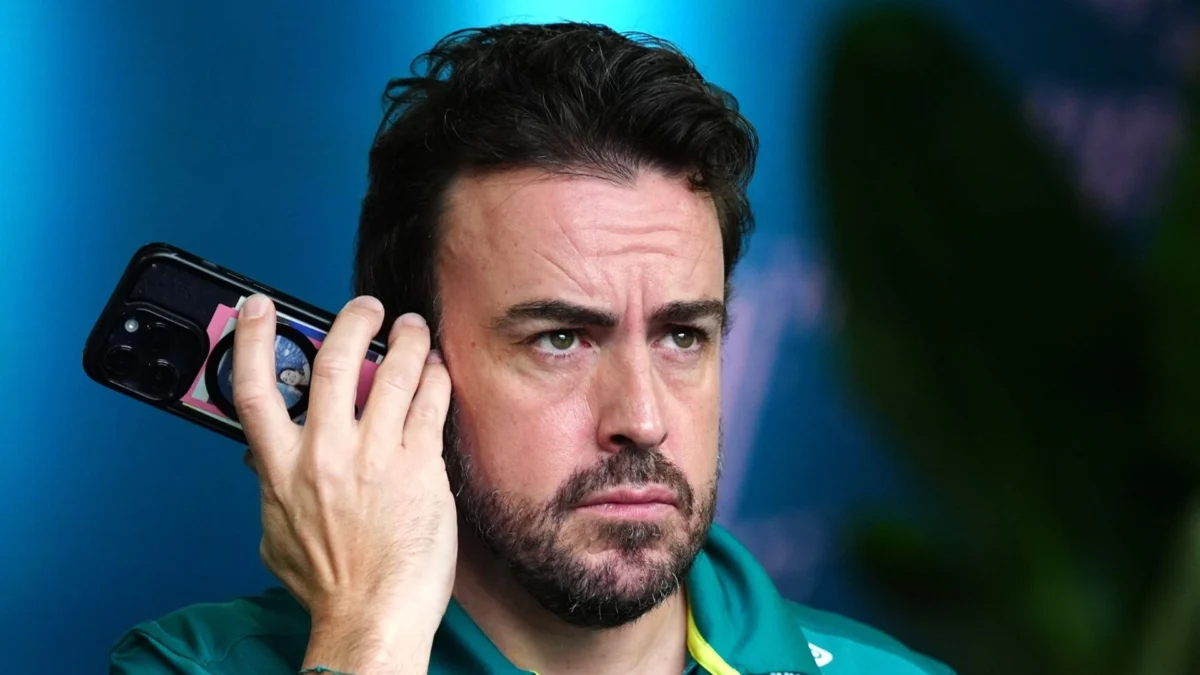
The tension within the Formula 1 paddock has reached a boiling point following a heated exchange regarding driving standards in the lower half of the field. Aston Martin’s two-time world champion, Fernando Alonso, has reignited a contentious debate concerning the caliber of talent currently occupying the bottom third of the grid. His remarks, which were first aired following a collision with Williams driver Alex Albon at the United States Grand Prix in Austin, have sparked a broader discussion about racing etiquette, the impact of the cost cap on team operations, and the generational shift in driver development.
The catalyst for these comments was an incident on the opening lap at the Circuit of the Americas. As the field navigated the technical Turn 11 hairpin, Albon attempted an opportunistic overtake on Alonso for 12th position. The maneuver resulted in side-to-side contact that caused localized damage to both vehicles. While the stewards elected to take no further action, deeming it a standard racing incident, the frustration expressed by the veteran Spaniard was palpable. Both drivers managed to finish the race—Alonso in 16th and Albon in 17th—but the post-race fallout has overshadowed the result.
The Chronology of the Controversy
The discourse began in the immediate aftermath of the Austin race, where Alonso characterized the driving standards of the lower-grid participants as "very low." During the media day ahead of the Mexico City Grand Prix, rather than walking back his comments, the 43-year-old doubled down, asserting that the prevalence of early-race incidents is a byproduct of a lack of experience and talent among those battling outside the points-paying positions.
Alonso’s argument centers on the philosophy of patience. He pointed to seasoned champions like Max Verstappen and Lewis Hamilton, noting that even when these drivers are forced to start at the back of the grid due to mechanical penalties or engine changes, they exercise the tactical restraint required to slice through the field without causing unnecessary collisions. "Lap 1 is not the end of the world when you have your confidence and the talent to wait for one or two more laps," Alonso stated, highlighting a perceived deficiency in the decision-making processes of his less-experienced peers.
Examining the Drivers’ Perspectives
Alex Albon, representing the viewpoint of the mid-to-lower field, pushed back against the veteran’s assessment during the FIA press conference in Mexico City. The Williams driver, who has earned a reputation for extracting the maximum from machinery that often lacks the downforce and tire-management capabilities of the top-tier cars, argued that the modern grid is arguably more competitive than it has been in previous decades.
"I have a huge respect for Fernando. I looked up to him a lot growing up as a kid," Albon remarked. "It’s not nice to hear those comments in many ways. You’re racing someone that you look up to, but at the same time, I don’t agree. I think the level is strong up and down the grid." Albon further noted the decline of the "pay driver" era, suggesting that the current selection process for F1 seats is more meritocratic than the landscape Alonso encountered when he debuted in 2001.
The Technical Context: Why the Back of the Grid is Different
To understand the friction between these perspectives, one must consider the technical realities of driving at the back of the pack. Alonso acknowledges that the machinery in the bottom third of the standings is inherently more difficult to handle. These cars often suffer from unstable aerodynamic platforms, leading to unpredictable handling characteristics, particularly in dirty air—the turbulent wake left by cars ahead.
When a driver is struggling with a car that lacks consistent grip, the margin for error narrows significantly. Alonso suggests that this creates a "vicious cycle": the car is difficult to drive, which leads to mistakes, and these mistakes occur in an environment that is not "welcoming." However, he maintains that this technical disadvantage does not excuse the reckless behavior he observed at the start of the race. He emphasized that for teams fighting for the final positions, the cost cap—a financial regulation designed to limit team spending—has introduced a new layer of complexity. With limited resources to manufacture replacement parts, frequent contact is not just a sporting error; it is a significant financial burden that can hinder a team’s development for the remainder of the season.
Economic Implications and the Cost Cap
The implementation of the FIA’s financial regulations has fundamentally changed how teams approach race weekends. In the pre-cost-cap era, larger teams could absorb the cost of damaged carbon fiber wings and suspension components with relative ease. Today, every collision impacts the team’s total expenditure, which is strictly monitored to ensure parity.
Alonso’s critique touches upon this economic reality. He observed that some teams appear content with the status quo, effectively budgeting for accidents as part of their race-weekend operations. "There are teams that are happy with the cost cap and breaking things every race. They can pay for them," he noted. This creates a divergence in philosophy: those who view the race as a long-term strategic exercise versus those who prioritize immediate, often high-risk, gains on the first lap.
A Historical Comparison of Standards
When reflecting on his two-decade career, Alonso suggests that the issue is not necessarily a recent development but a persistent one. He argues that the nature of racing at the back has always been frantic, as drivers are often fighting for visibility and trying to prove their worth to team principals. However, he remains steadfast that the current crop of drivers, particularly those in the lower third, lacks the necessary maturity to balance aggression with the long-term goal of the Grand Prix.
Statistical analysis of the 2026 season shows a high density of mid-field incidents, often occurring in the first three corners of a race. While the stewards have been lenient, the "Alonso doctrine" suggests that the FIA may need to re-evaluate how it polices aggressive maneuvers at the start of the race to discourage the "win-it-or-bin-it" mentality that he feels has become prevalent.
The Road Ahead: Mexico City and Beyond
As the circus moves to the Autódromo Hermanos Rodríguez for the Mexico City Grand Prix, the paddock remains divided. Alonso has indicated that he will not be raising the issue in the Friday drivers’ meeting, dismissing it as "part of the game." Instead, he has pivoted the responsibility toward his own team, Aston Martin, stating that the only way to avoid these entanglements is to qualify higher and escape the volatile territory of the backmarkers.
For the sport as a whole, the exchange highlights a fascinating clash between the old guard and the new generation. The intensity of Formula 1 has never been higher, with the field compressed to the narrowest margins in history. As the triple-header in the Americas concludes, the focus will likely shift back to the on-track action, yet the debate over talent, cost, and the responsibility of the driver to preserve equipment will undoubtedly remain a simmering subtext for the remainder of the season.
The Mexico City Grand Prix weekend will be a critical litmus test for these drivers. With high-altitude air affecting aerodynamics and cooling, the potential for incidents is historically high. Whether the drivers heed the implicit warnings of their elder statesman or continue to race with the uncompromising aggression that has characterized the 2026 season remains to be seen.
Weekend Schedule Overview
The upcoming event in Mexico City, a pivotal stop in the calendar, continues on Friday, October 30, with Practice One at 6:30pm, followed by the F1 Show and the Team Bosses’ Press Conference. Practice Two follows at 10pm. The intensity ramps up on Saturday, October 31, with Practice Three at 6:30pm and Qualifying at 9pm, which will determine the starting order for Sunday’s main event. The Mexico City Grand Prix itself is scheduled for Sunday, November 1, at 8pm, providing a final opportunity for teams to demonstrate their resilience and for drivers to prove that, regardless of their position on the grid, they possess the talent and discipline to navigate the field cleanly.