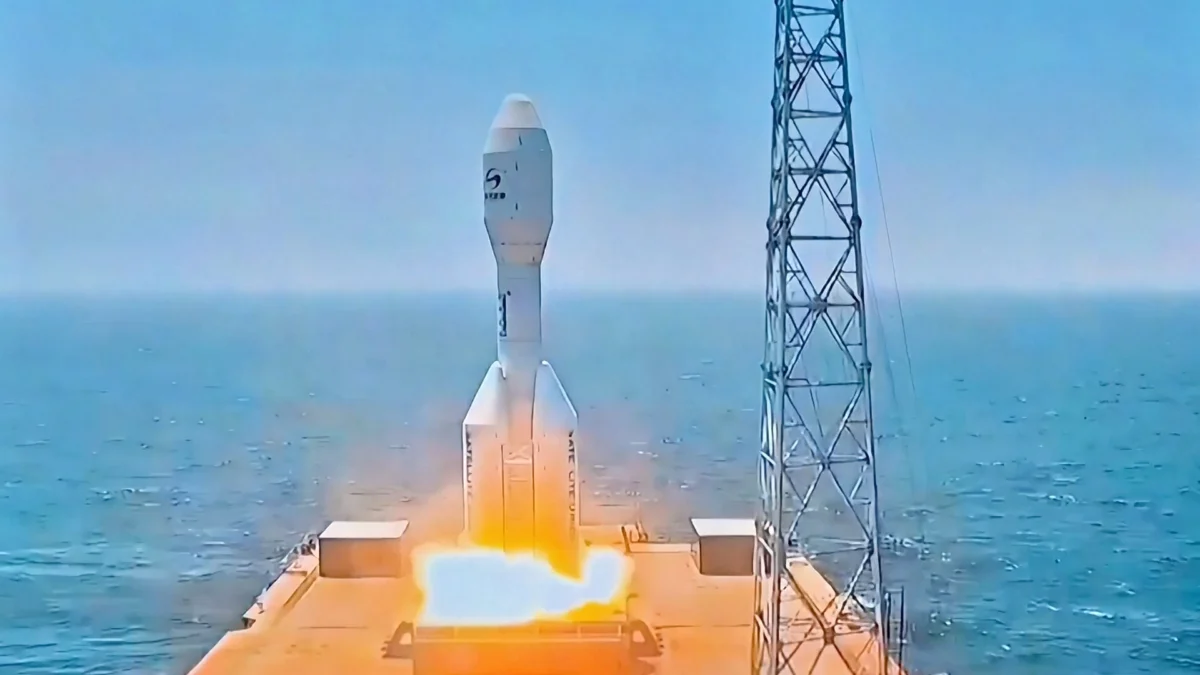
The world’s most powerful solid-fuel rocket just aced its third-ever mission. Gravity-1, a distinctively squat and stubby rocket, launched Tuesday night (July 21) from the deck of a ship stationed off the coast of Shanghai, marking another significant achievement for China’s burgeoning commercial space sector. Liftoff occurred precisely at 10:54 p.m. EDT (0254 GMT and 10:54 a.m. Beijing time on July 22), according to the state-run Chinese outlet Xinhua. The agency further reported that all nine satellites aboard the rocket successfully reached their designated orbits, underscoring the reliability and precision of this powerful launch vehicle. While details about the specific satellites were not immediately provided, their successful deployment signifies a critical step in China’s ongoing efforts to expand its space-based capabilities.
A New Era of Maritime Space Launches
The successful mission of Gravity-1 represents a pivotal moment in the evolution of space launch operations, particularly highlighting the strategic advantage of maritime launches. Operated by Orienspace, a company headquartered in the eastern Chinese province of Shandong, the Gravity-1 rocket stands at approximately 100 feet (30 meters) tall. This compact stature, less than half the height of SpaceX’s prominent Falcon 9 vehicle, belies its immense power. The rocket is engineered with three core stages, all propelled by robust solid rocket motors, augmented by four additional strap-on boosters. This configuration enables Gravity-1 to deliver an impressive payload of up to 14,300 pounds (6,500 kilograms) to low Earth orbit (LEO). This capability solidifies its position as the most powerful solid-fuel rocket currently in operation globally. For comparative context, the liquid-fueled Falcon 9, a workhorse of international spaceflight, boasts a maximum payload capacity of 50,265 pounds (22,800 kg) to LEO, illustrating the different strengths and applications of solid versus liquid propellant systems.
A Proven Track Record: Three for Three
The July 21st launch marks the third successful mission for the Gravity-1 rocket, with each prior flight also originating from a maritime platform and achieving full mission success. The rocket’s maiden voyage took place in January 2024, followed by its second flight in October 2025. The consistent success across these initial missions is a testament to Orienspace’s engineering prowess and its commitment to developing a dependable launch system. The choice of sea launches offers several strategic advantages, including greater flexibility in launch trajectory and the ability to avoid overflight of populated areas, thereby enhancing safety and minimizing environmental impact. Furthermore, maritime launch platforms can be relocated to optimize orbital insertion, a critical factor for deploying payloads into specific orbits.
Strategic Advantages of Maritime Launches
The consistent use of a ship-based launch platform for Gravity-1 is not merely a logistical choice but a strategic imperative for Orienspace and China’s broader space ambitions. Maritime launches provide unparalleled flexibility in selecting launch azimuths, allowing for precise orbital inclination adjustments. This is particularly crucial for deploying satellites into specific orbits required for various applications, such as Earth observation, telecommunications, and scientific research. By launching from international waters, China can also circumvent certain regulatory hurdles and launch site limitations that might be encountered with land-based facilities. This operational freedom is invaluable for rapid deployment and response capabilities.
Moreover, the environmental considerations are significant. Launching from the sea minimizes the risk of debris falling on inhabited landmasses, a concern with any rocket launch. This approach aligns with a growing global emphasis on sustainable and responsible space activities. The mobility of launch platforms also offers a degree of redundancy and resilience, as they can be moved to safer locations in the event of inclement weather or geopolitical instability.
Looking Ahead: The Future of Orienspace’s Launch Vehicles
The successful third flight of Gravity-1 is just a stepping stone for Orienspace. The company has ambitious plans for its future launch vehicle development, with Gravity-2 and Gravity-3 in the pipeline. These next-generation rockets are designed to be even more powerful and versatile, incorporating liquid-fueled core stages complemented by solid rocket boosters. This hybrid design approach aims to leverage the advantages of both propulsion systems, offering enhanced performance and payload capacity.
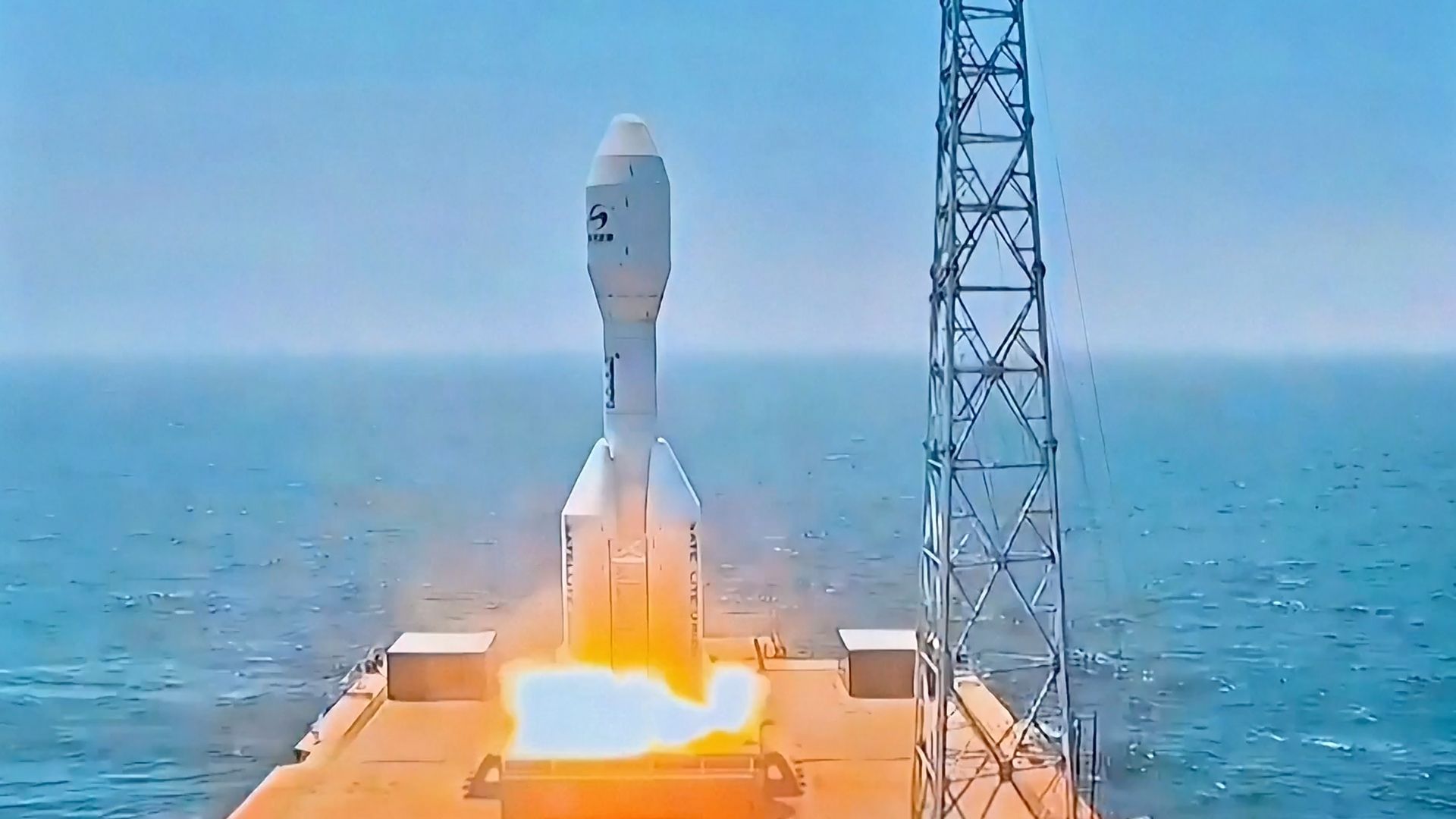
According to CGTN, Gravity-2 is anticipated to be ready for its inaugural flight by the end of the current year. Similar to Gravity-1, Gravity-2 is also expected to conduct its launches from an ocean-based pad, further solidifying Orienspace’s expertise in maritime launch operations. This strategic focus on sea-based launches indicates a long-term vision for flexible and scalable access to space.
Expanding Capabilities: From Solid to Liquid at Sea
The progression from Gravity-1 to Gravity-2 and Gravity-3 signifies a deliberate evolutionary path for Orienspace. The company’s chief designer, Xu Guoguang, articulated this vision, stating, "Sea launch of solid-propellant rockets paves the way for future launch of liquid rockets at sea." This statement underscores the company’s belief that the expertise gained from mastering solid-fuel maritime launches is directly transferable and foundational to developing more complex liquid-fueled systems for sea-based operations. Xu Guoguang also indicated that Orienspace is exploring other innovative launch methodologies, such as utilizing drilling platforms, which could offer further advantages in terms of stability and launch infrastructure.
The development of Gravity-2 and Gravity-3 is critical for China to meet the growing global demand for satellite deployment and space-based services. These larger rockets will be capable of launching more substantial payloads, including constellations of satellites for communication, navigation, and Earth observation, as well as potentially supporting more ambitious deep-space missions.
Broader Implications for the Global Space Economy
The consistent success of Gravity-1 and the ambitious development roadmap of Orienspace have significant implications for the global space economy. China’s increasing prowess in commercial launch services presents a competitive challenge to established players and offers new opportunities for international collaboration and market diversification. The ability to launch powerful solid-fuel rockets from maritime platforms provides a cost-effective and flexible alternative for satellite operators worldwide.
Furthermore, the advancements in maritime launch technology could democratize access to space, making launches more accessible to a wider range of countries and organizations. This could spur innovation in satellite technology and the development of new space-based applications across various sectors, including climate monitoring, disaster management, and scientific exploration.
The development of powerful, versatile launch systems like Gravity-1, coupled with a strategic focus on maritime launch capabilities, positions China as a formidable contender in the global space race. As Orienspace continues to innovate and expand its launch portfolio, its contributions are likely to shape the future of space access and underscore the growing importance of the commercial space sector. The successful deployment of nine satellites in this latest mission is not just a technical achievement but a strategic indicator of China’s expanding influence and capability in the final frontier.