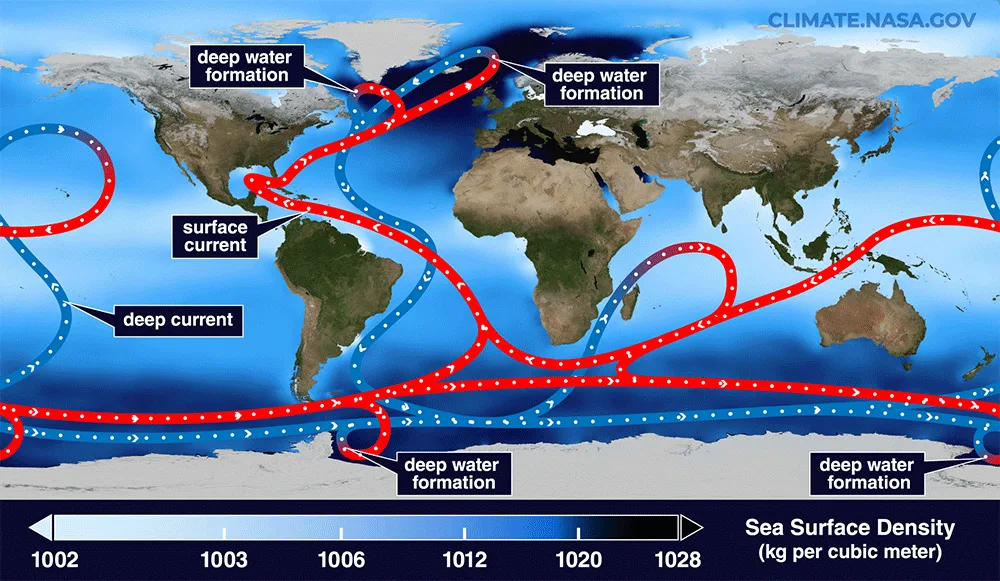
The accelerating melt of the Greenland ice sheet is a critical environmental concern, contributing significantly to global sea-level rise and, perhaps more insidiously, to the weakening of vital ocean currents that regulate climate across the Northern Hemisphere. The sheer volume of fresh water being discharged into the North Atlantic from Greenland’s glaciers is a primary driver of this destabilization, according to ongoing scientific research. This influx of less dense, fresh water disrupts the delicate balance of salinity and temperature that powers the Atlantic Meridional Overturning Circulation (AMOC), a vast system of ocean currents that includes the Gulf Stream. The potential consequences of a significantly weakened or even collapsed AMOC are far-reaching, impacting weather patterns, marine ecosystems, and human societies from North America to Europe.
The Scale of Greenland’s Melt
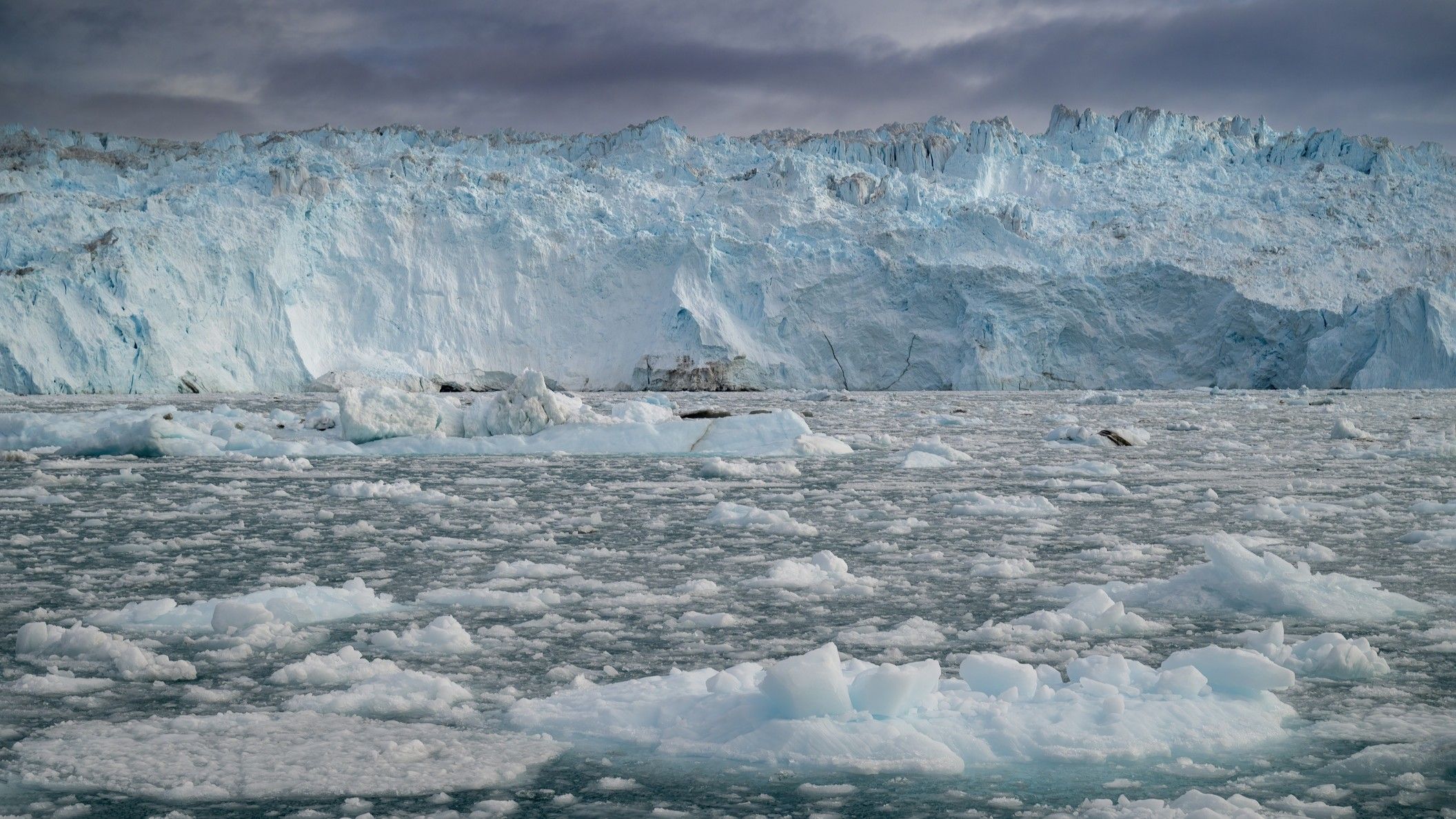
Greenland’s ice sheet, the second largest on Earth, holds enough frozen water to raise global sea levels by approximately 23 feet (7 meters). For decades, scientists have monitored its mass balance, and recent decades have seen an alarming acceleration in ice loss. Satellite data from NASA’s GRACE and GRACE-FO missions, which measure gravitational changes, have provided compelling evidence of this trend. Between 2002 and 2023, Greenland lost an average of 279 billion metric tons of ice per year, with the rate of loss increasing over time. This colossal amount of meltwater, when released into the ocean, has a direct impact on oceanographic processes.
The process by which fresh water influences ocean currents is rooted in basic physics. Cold, salty water is denser than warm, fresh water. In the North Atlantic, a key part of the AMOC involves surface water becoming colder and saltier as it travels north, making it denser. This dense water then sinks to the ocean floor, pulling warmer surface water northward to replace it, thus completing a crucial part of the global heat conveyor belt. However, the continuous influx of vast quantities of fresh meltwater from Greenland dilutes the salinity of the surface waters in the region where this sinking process occurs. This dilution reduces the density of the water, hindering its ability to sink effectively and thereby slowing down the entire circulation system.
A Looming Threat to the AMOC
The AMOC is not a monolithic current but a complex system of interconnected flows. Its most prominent component, the Gulf Stream, plays a vital role in moderating the climate of Western Europe, making regions like the United Kingdom significantly warmer than other areas at similar latitudes. Scientific models and paleoclimate data suggest that the AMOC has experienced periods of significant weakening and even abrupt shutdowns in the past, often linked to large influxes of fresh water, such as during the end of the last Ice Age when meltwater from vast ice sheets dramatically altered ocean salinity.
Recent studies, published in leading scientific journals like Nature Climate Change and Science Advances, have employed sophisticated climate models to project the future behavior of the AMOC under various greenhouse gas emission scenarios. These models consistently indicate a weakening trend for the AMOC throughout the 21st century, with some studies suggesting a potential tipping point beyond which a more abrupt slowdown or shutdown could occur. While the precise timing and likelihood of such a dramatic event remain subjects of active scientific debate, the consensus is that the risk is increasing as global warming intensifies and ice melt accelerates.
A significant slowdown of the AMOC could have profound and widespread consequences:
- Cooling in Europe: Western Europe could experience a substantial drop in average temperatures, potentially leading to more severe winters and altered agricultural seasons.
- Sea Level Rise: While global sea levels will continue to rise due to thermal expansion and melting of other ice sheets, a weakened AMOC could lead to accelerated sea-level rise along the East Coast of North America, as the ocean’s ability to redistribute water is diminished.
- Altered Precipitation Patterns: Changes in ocean circulation can disrupt atmospheric circulation, leading to shifts in rainfall patterns across continents. This could result in increased drought in some regions and more extreme precipitation events in others.
- Impacts on Marine Ecosystems: The ocean’s currents play a crucial role in nutrient distribution and temperature regulation, which are vital for marine life. A weakened AMOC could disrupt fisheries and impact the health of coral reefs and other sensitive ecosystems.
- Extreme Weather Events: Some research suggests a link between a weakened AMOC and an increased frequency or intensity of certain extreme weather events, such as heatwaves in North America and stronger storms.
Historical Context and Early Warnings
The potential impact of melting ice sheets on ocean currents has been a subject of scientific inquiry for decades. Early concerns were raised by oceanographers observing changes in North Atlantic salinity and temperature. The concept of a "thermohaline circulation" (driven by differences in temperature and salinity) was developed to explain the intricate workings of ocean currents like the AMOC.
In recent years, the evidence has become more robust. Studies utilizing paleoclimate proxies, such as ice cores and ocean sediment records, have provided insights into past AMOC behavior and its sensitivity to freshwater input. These records indicate that past abrupt climate shifts were often preceded by significant destabilization of major ice sheets, a scenario that scientists are increasingly concerned about with the current rate of Greenlandic ice loss.
A pivotal study published in Nature Climate Change in 2023 by researchers at Utrecht University in the Netherlands provided new evidence for an AMOC slowdown. Using a specific AMOC index based on salinity data, they identified a critical point beyond which the circulation could become unstable. While their findings suggest that a full shutdown is unlikely before 2100 under current emission trajectories, they underscore the urgency of understanding these complex feedback loops.
Scientific Monitoring and Future Projections
The scientific community is actively engaged in monitoring the Greenland ice sheet and the AMOC. A network of oceanographic buoys, research vessels, and satellite systems provides continuous data on sea surface temperature, salinity, ocean currents, and ice melt rates. These observations are crucial for validating and refining climate models.
The Intergovernmental Panel on Climate Change (IPCC), the leading international body for assessing climate science, has consistently highlighted the potential weakening of the AMOC as a significant concern in its assessment reports. The IPCC’s Sixth Assessment Report (AR6), released in stages between 2021 and 2023, concluded with high confidence that the AMOC will weaken over the course of the 21st century under all emission scenarios. However, the report also noted that a collapse of the AMOC within the 21st century, while possible, is considered a low-likelihood, high-impact event.
Expert Reactions and Policy Implications
The ongoing research into Greenland’s melt and its impact on the AMOC has prompted reactions from scientists and policymakers alike. Dr. Stefan Rahmstorf, a leading oceanographer and proponent of climate research, has frequently emphasized the importance of understanding AMOC dynamics, stating, "The AMOC is one of the most important climate feedbacks on Earth. Its potential weakening is a serious concern."
While direct policy responses specifically targeting the AMOC are challenging due to its scale and complexity, the findings reinforce the global imperative to reduce greenhouse gas emissions. The IPCC reports and the underlying scientific research provide the evidence base for international climate negotiations and national climate policies. Reducing global warming is the most effective way to mitigate the risk of significant AMOC destabilization.
Furthermore, enhanced investment in climate monitoring and modeling is crucial. A better understanding of the tipping points within the climate system, including those related to ice sheet stability and ocean circulation, will allow for more accurate risk assessments and more informed adaptation strategies.
Broader Implications and Adaptation
The potential consequences of a weakened AMOC extend beyond climate science, impacting economies, food security, and geopolitical stability. For instance, changes in European weather patterns could affect agricultural yields, potentially leading to food shortages or price volatility. Similarly, altered sea levels along the North American coastlines could necessitate significant investment in coastal defense infrastructure.
While the prospect of a dramatic AMOC shutdown remains a low-probability, high-impact scenario, the ongoing weakening trend presents more immediate challenges. Societies need to prepare for the potential shifts in weather patterns and sea levels that are already being influenced by this process. This includes developing resilient infrastructure, diversifying food sources, and implementing effective coastal management strategies.
The melting of the Greenland ice sheet is not an isolated phenomenon; it is a stark indicator of a warming planet and a powerful reminder of the interconnectedness of Earth’s climate systems. The fate of the Atlantic Meridional Overturning Circulation, intricately linked to the vast frozen landscapes of Greenland, serves as a critical barometer of the planet’s health and a profound call to action for global climate mitigation and adaptation efforts. The scientific community continues to unravel the complexities of these systems, providing vital insights that will shape our understanding of climate change and our response to its escalating challenges.