
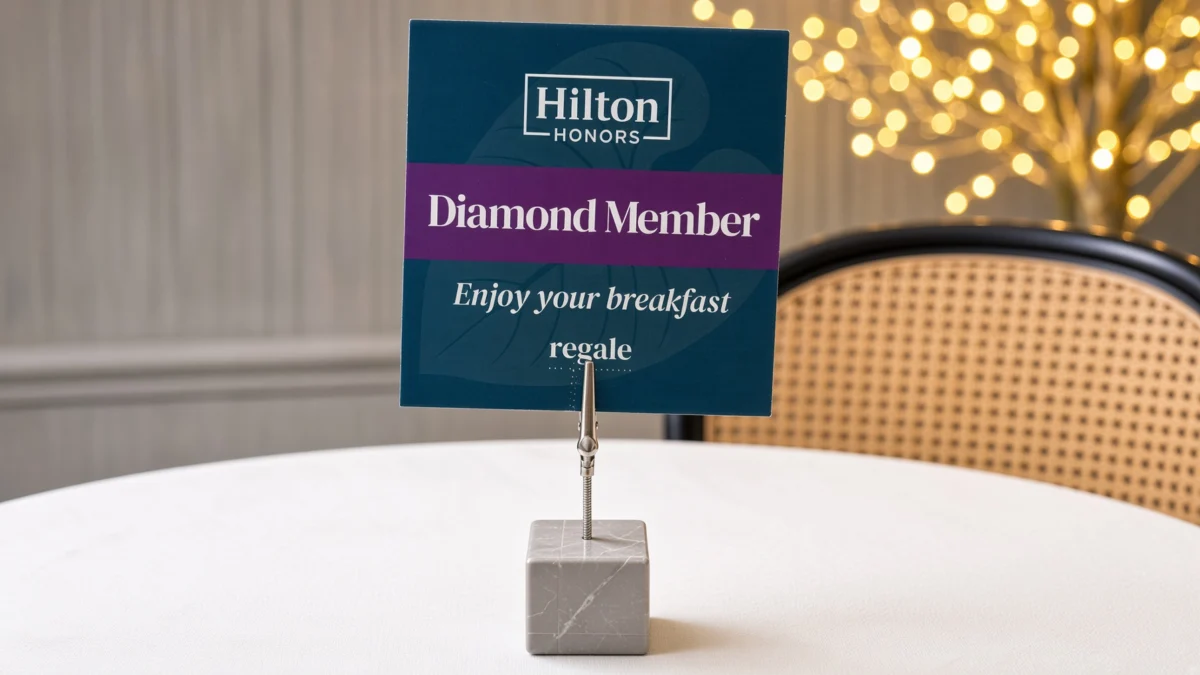
The landscape of hotel loyalty programs is undergoing a profound transformation as Hilton Honors, one of the world’s most prominent hospitality rewards platforms, signals a major shift in its elite status architecture. Following a year characterized by significant adjustments to qualification thresholds and the introduction of new membership categories, Hilton has confirmed the emergence of an ultra-exclusive status tier: Black Diamond. This development represents the latest step in a broader strategy to segment high-value travelers and redefine the pinnacle of the Hilton guest experience, placing the new tier above the previously unveiled "The Honors Society" designation.
A Chronology of Hilton Honors Evolution
The introduction of the Black Diamond tier is not an isolated event but rather the culmination of a deliberate, multi-phased overhaul of the Hilton Honors program that began in late 2025. Over the past twelve months, the program has aggressively pursued a strategy aimed at both accessibility for mid-tier travelers and extreme exclusivity for its top-tier clientele.
In December 2025, eagle-eyed industry observers noted the first internal references to "The Honors Society," a then-mysterious tier that appeared in internal corporate documentation. At the time, the industry was already reacting to Hilton’s decision to lower the qualification requirements for the foundational Gold and Diamond tiers. By reducing the number of nights or stays required to reach these statuses, Hilton sought to recapture market share in a post-pandemic travel environment where consumer loyalty was being fiercely contested by Marriott Bonvoy, Hyatt, and independent boutique collections.
By June 2026, the branding for "The Honors Society" moved from internal memos to external marketing campaigns, signaling that the tier was intended to serve as a high-level engagement tool for the program’s most dedicated members. However, the discovery of the "Black Diamond" designation—a tier that sits atop the existing hierarchy—suggests that Hilton is now focusing on the "ultra-premium" segment, likely targeting high-net-worth individuals and corporate partners who command significant annual travel expenditures.
Analyzing the Loyalty Program Restructuring
The structural changes implemented by Hilton serve several strategic objectives. By lowering the entry barrier for Gold and Diamond statuses earlier this year, the company effectively widened the "middle class" of its loyalty program. This influx of elite members drives occupancy rates and encourages brand stickiness. However, such a move often risks diluting the prestige of top-tier status, leading to "elite fatigue" where the benefits—such as room upgrades and lounge access—become harder to secure due to the sheer volume of qualified guests.
The introduction of Black Diamond acts as a corrective measure. By creating a tier that exists beyond the traditional Diamond status, Hilton is effectively re-establishing a clear hierarchy. This allows the brand to offer truly differentiated, high-touch services to its most valuable customers without needing to extend those same costly benefits to the entire Diamond-tier population.
Industry analysts suggest that this strategy mirrors the evolution of airline loyalty programs, where carriers have moved from simple mileage-based tiers to revenue-based models that prioritize "spend" over "frequency." By creating an ultra-elite tier, Hilton is positioning itself to capture the "whale" customers—those who consistently book luxury suites and utilize high-end conference facilities.
Financial Implications and Consumer Behavior
Beyond the internal shifts at Hilton, the broader travel ecosystem continues to see a convergence between retail shopping portals and travel loyalty. Platforms such as Rakuten have become essential components of the modern travel-hacking landscape, allowing consumers to leverage everyday spending to accelerate their progress toward elite status or to accumulate points for aspirational travel.
![Hilton May Add “Black Diamond” Above Diamond Reserve—Pushing Diamond Status Further Down [Roundup]](https://viewfromthewing.com/wp-content/uploads/2026/09/cV0De.jpg)
The current trend of using shopping portals to buy gift cards—such as those for Uber, DoorDash, or major airlines like Southwest and Delta—highlights the sophisticated ways in which modern travelers optimize their point-earning potential. By converting cash-back offers into airline or hotel points, consumers are effectively subsidizing their travel costs. For a company like Hilton, the integration of these external partner ecosystems is vital. The more points a traveler can accumulate through diversified channels, the more likely they are to view Hilton properties as their primary choice for hotel stays.
Industry Context and Market Sentiment
The travel sector is currently experiencing a period of intense competition for customer attention. Recent social media activity from industry commentators and travelers alike underscores the focus on the "total travel experience." While Hilton focuses on status tiers, the airline industry is simultaneously engaged in a battle over the quality of onboard service. For instance, recent praise for American Airlines’ premium catering on transcontinental routes reflects a broader consumer desire for tangible quality improvements, not just abstract status perks.
When travelers discuss their preferences, they often highlight a desire for a seamless transition between different stages of a journey—from the airport lounge to the hotel check-in desk. Hilton’s recent moves suggest they are attempting to curate this entire journey. By creating a "Black Diamond" experience, they are promising a level of recognition that transcends standard corporate hospitality.
The Impact on the Elite Membership Landscape
What, then, are the implications for the average Hilton Honors member? For the vast majority, the status quo remains unchanged. The lower requirements for Gold and Diamond status remain in effect, ensuring that the "everyday" business traveler continues to see value in the program. However, the introduction of Black Diamond signals that the ceiling of the program has been raised.
For the company, this is a low-risk, high-reward proposition. The operational cost of servicing a very small, exclusive group of Black Diamond members is likely offset by the increased loyalty and spending from those individuals. It also provides a marketing incentive for top-tier Diamond members to spend more in order to reach that next level, thereby increasing the Average Daily Rate (ADR) across Hilton’s portfolio.
Looking Ahead: The Future of Hotel Loyalty
As we approach the end of 2026, the travel industry is likely to see further consolidation of these loyalty strategies. We can expect Hilton to provide more clarity on the specific benefits attached to the Black Diamond tier in the coming months. These benefits will likely include dedicated concierge services, guaranteed room availability at high-occupancy properties, and exclusive access to non-public corporate events or experiences.
Ultimately, the transformation of Hilton Honors reflects a mature hospitality industry that is no longer satisfied with simply providing a bed for the night. Instead, it is leaning into the "experience economy." By segmenting its members into ever-more specific categories, Hilton is moving closer to a personalized hospitality model where the brand knows exactly how to reward its most valuable guests. Whether this will successfully insulate Hilton from the competitive pressures of the broader market remains to be seen, but the intent is clear: to remain the dominant force in the global hotel sector, Hilton is betting on the power of exclusivity.
As the industry continues to monitor these developments, travelers should pay close attention to how these status changes affect their ability to secure upgrades and recognition. While the landscape of elite travel is becoming more complex, it is also becoming more rewarding for those who can navigate the nuances of these tiered systems. Whether it is through smart shopping via portals like Rakuten or strategic booking habits, the modern traveler has more tools than ever to climb the ladder of loyalty, provided they understand the new rules of the game.







Leave a Reply