
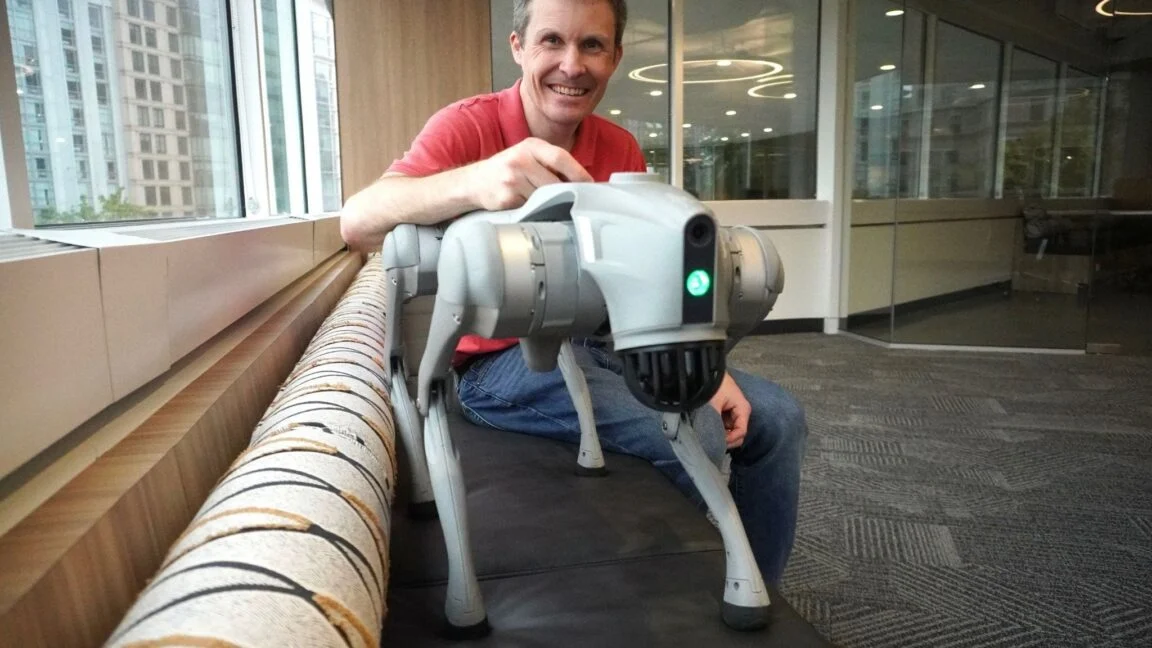
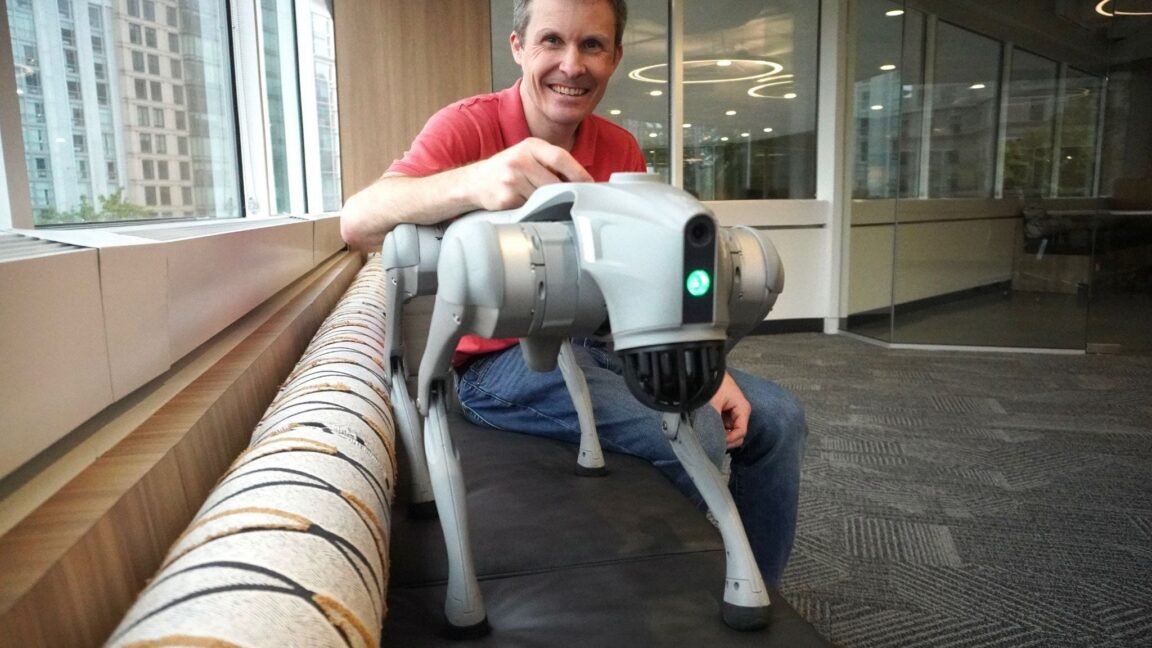
In June, a standard urban commute in Washington, D.C., offered onlookers a glimpse into a rapidly evolving technological future when a pedestrian walked to work accompanied by a quadruped robot. Manufactured by Chinese robotics firm Unitree Robotics, the Go2 Pro quadruped drew curious glances, smartphone photographs, and inquiries from passersby throughout its two-mile journey from the Mount Pleasant neighborhood to an office near the White House. While biological dogs kept a wary distance, barking or growling at the mechanical device, children enthusiastically watched the robot perform programmed maneuvers, including handstands, handshakes, and vertical leaps.
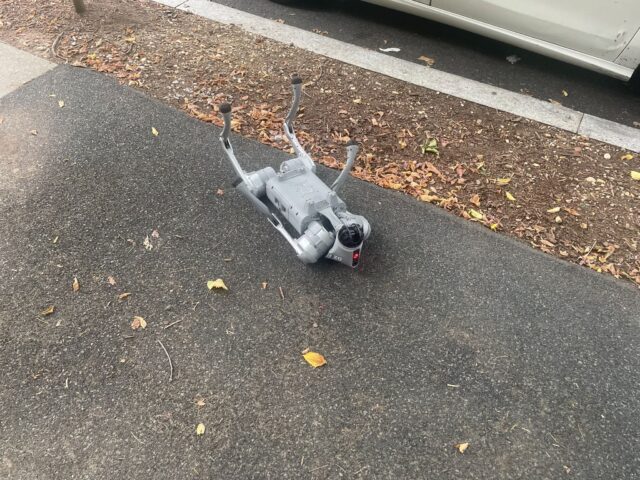
However, the commute also exposed the current practical limitations of consumer-grade robotics. While the robot navigated the predominantly downhill morning walk with battery capacity to spare, the afternoon return trip presented severe challenges. Walking uphill amid an 87°F (30°C) ambient temperature placed immense strain on the hardware. Within sight of its destination, the unit suffered a critical failure. Telemetry data indicated the internal battery had dropped to 5 percent while internal components reached a staggering 84°C (183°F). Rather than executing a controlled shutdown, the machine collapsed abruptly onto its back, its facial LED flashing red while its nose-mounted LiDAR sensor continued to spin.
The Democratization of Legged Locomotion
The device in question, purchased for $4,017 including shipping and tariffs, highlights a profound shift in the robotics industry. For decades, quadruped locomotion was restricted to heavily funded academic research groups and elite military contractors due to prohibitive costs. Industry pioneer Boston Dynamics established early benchmarks with hydraulic and gasoline-powered platforms such as BigDog and WildCat, eventually releasing the electric-powered Spot in 2020 at a starting price of roughly $75,000.
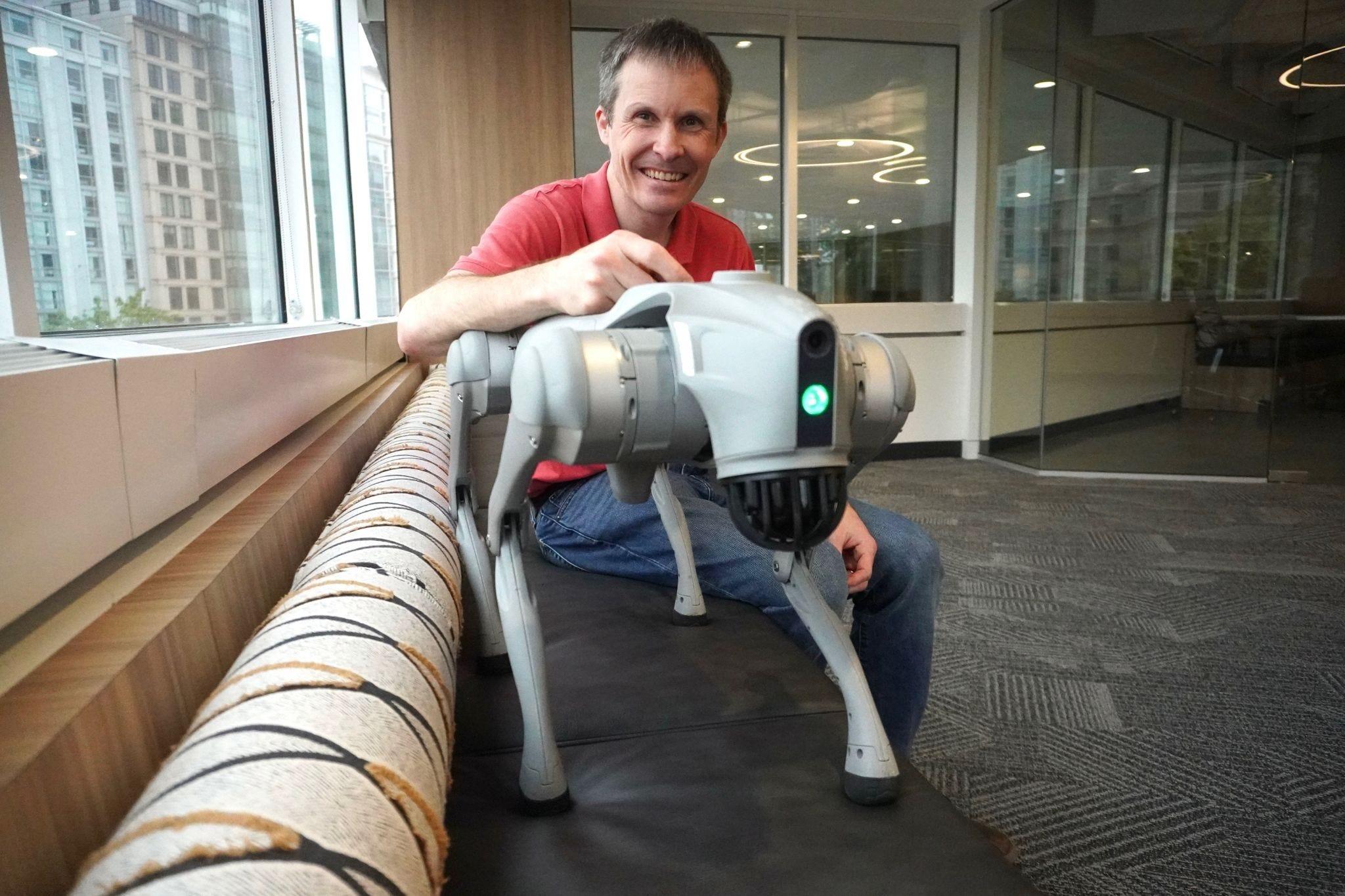
That high financial barrier created an opening for Unitree Robotics, founded in May 2016 by Wang Xingxing following his development of the rudimentary "XDog" prototype for his master’s thesis at Shanghai University. Wang sought to build smaller, simpler, and more accessible electric-driven quadruped systems. Unitree released the Laikago in 2017 and the AlienGo in 2019, targeting research institutions with hardware costing tens of thousands of dollars.
The turning point for consumer accessibility arrived in 2021 with the debut of the Go1 line, priced starting at $2,700, followed by the Go2 release in 2023, which lowered entry costs further to $1,600 for the Air variant and $2,800 for the Pro model. By undercutting established Western alternatives by more than 97 percent, Unitree effectively democratized research and experimentation with legged robots, allowing universities, independent developers, and tech enthusiasts to acquire hardware previously out of reach.
Engineering Innovations and Cost-Reduction Strategies
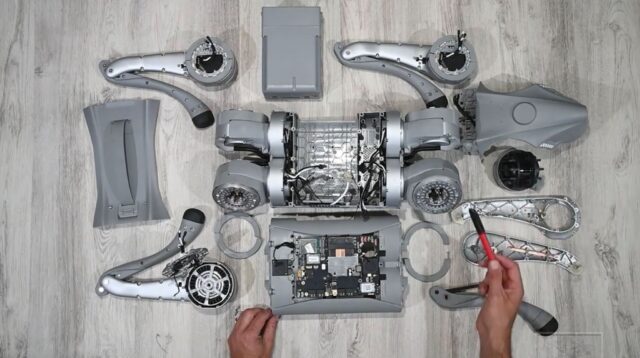
Reverse-engineering analyses, such as a teardown conducted by engineering firm Simplexity, reveal the precise mechanical strategies Unitree employed to achieve such low price points. The Go2 architecture relies on twelve identical motors—three per leg—governing shoulder angles and individual leg segments. By standardizing component manufacturing and reusing identical actuators across all four limbs, the company dramatically reduced part counts and production complexity.
Furthermore, Unitree diverged from traditional industrial robotics design philosophies regarding gear reducers. While legacy systems utilize high gear ratios—such as Spot’s 51-to-1 gearboxes—to achieve extreme precision and force multiplication, these components are expensive and introduce mechanical rigidity. Unitree instead paired powerful in-house motors with a simplified 6.33-to-1 gearbox. This configuration enhances backdriveability, allowing limbs to yield gracefully to physical resistance while lowering manufacturing costs. The resulting hardware is more dynamic, nimble, and easier to simulate, shifting the burden of precise control to sophisticated neural networks and control software capable of making constant minor adjustments in real time.
According to industry analysts, Unitree also leveraged substantial support from the Chinese policy environment, including tax incentives, public institution procurement contracts, and an integrated domestic supply chain. By bringing the production of motors, gearboxes, LiDAR sensors, and cameras in-house, Unitree reportedly produces internal components at a fraction of Western manufacturing costs, generating a powerful financial flywheel that fuels further research and development.
Expansion Into Humanoid Robotics
Capitalizing on its success in the quadruped market, Unitree expanded rapidly into humanoid robotics. The company debuted its H1 humanoid in 2023, followed by the more advanced and economical G1 model. While a quadruped like the Go2 utilizes 12 total motors, the base G1 humanoid integrates 23 motors—five in each arm, six in each leg, and one in the torso—requiring significantly higher torque and balance capabilities.
Despite the mechanical complexity, Unitree leveraged its existing supply chain and actuator expertise to introduce consumer humanoids starting at roughly $13,500, with research-grade EDU variants priced near $50,000. Financial disclosures connected to Unitree’s August initial public offering on the Shanghai stock market underscored this pivot. The company’s humanoid revenue surged from RMB 107 million ($16 million) in 2024 to RMB 867 million ($129 million) in 2025—an eightfold increase that outpaced its quadruped sales growth and accounted for 51 percent of total corporate revenue. Following its public debut, Unitree’s valuation soared, establishing it as a dominant force in global robotics.
Market Dominance and Geopolitical Friction
Industry analysts frequently compare Unitree’s trajectory to that of DJI, the Chinese technology firm that revolutionized the global drone market by undercutting legacy aerial cinematography equipment and expanding into commercial sectors. By scaling manufacturing volume and aggressively reducing component costs, Unitree has positioned itself similarly within the legged robotics sector.

However, this rapid ascension has triggered regulatory pushback in Western markets. Policymakers in the United States have expressed acute national security concerns regarding the proliferation of Chinese-manufactured hardware equipped with advanced sensors and cameras. In June, a bipartisan group in the House of Representatives introduced legislation aimed at restricting the importation of Chinese robots, specifically citing Unitree. Shortly thereafter, the Federal Communications Commission (FCC) enacted broad regulatory frameworks targeting foreign-made robotic systems and power inverters.
Despite these emerging trade barriers, international robotics markets remain vast. Analysts note that restrictions in the United States risk mirroring the trajectory of the electric vehicle sector, where trade barriers isolate domestic markets while Chinese manufacturers capture widespread adoption across Europe, Asia, and the Global South. As Unitree and domestic rivals like AgiBot continue to scale production and refine software capabilities, the global robotics landscape stands at a critical juncture, defined by unprecedented affordability on one side and intensifying geopolitical competition on the other.









Leave a Reply