
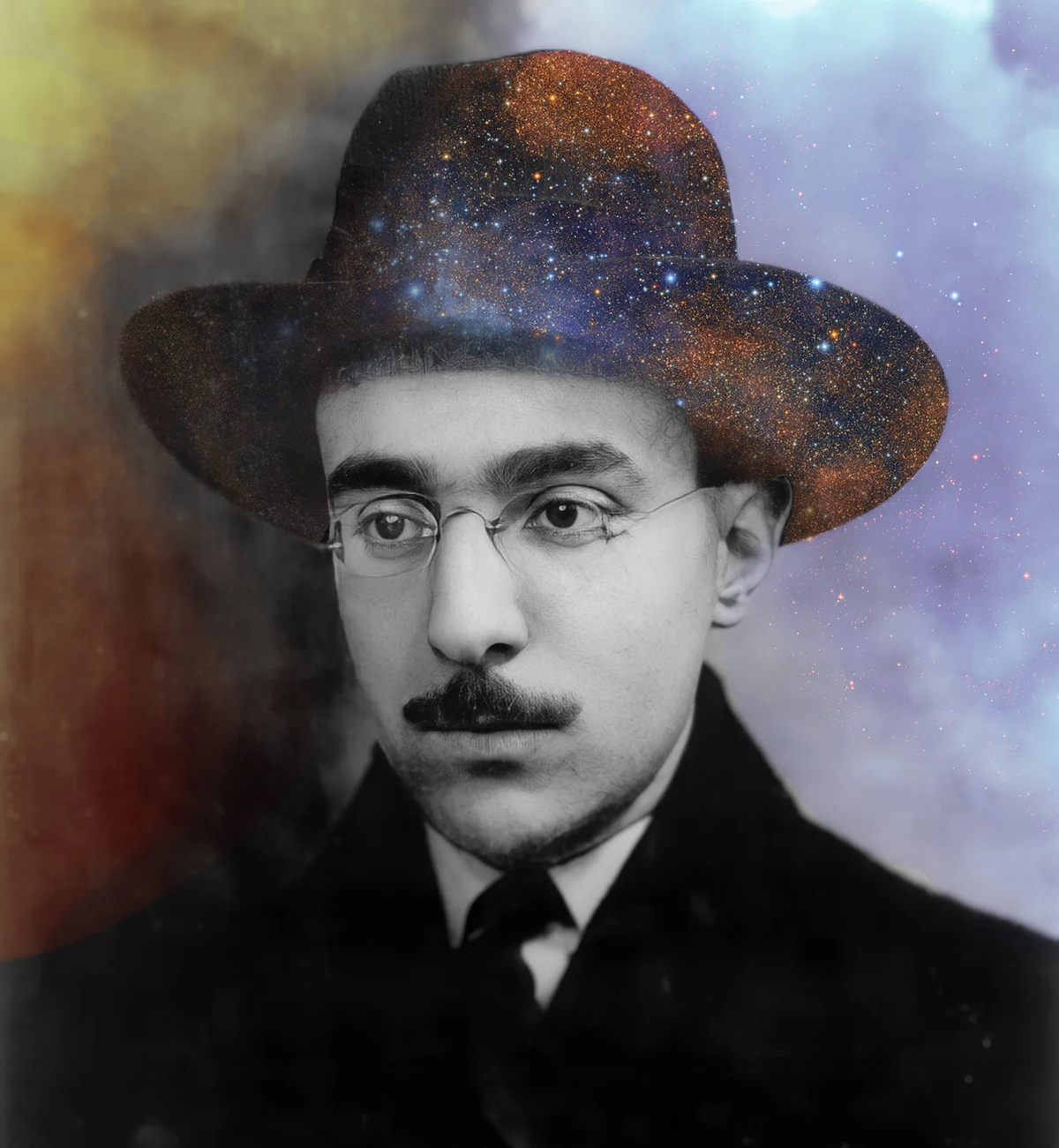
The philosophical inquiry into the nature of the self has long occupied the intellectual vanguard, yet few have approached the subject with the harrowing precision of Fernando Pessoa. His posthumously published masterwork, The Book of Disquiet, serves as a cornerstone of 20th-century literature, offering a profound meditation on the internal landscape of the individual. By distinguishing between the superficiality of the tourist and the radical vulnerability of the explorer, Pessoa provides a framework for self-discovery that challenges modern sensibilities regarding identity, consciousness, and the persistent human drive to quantify the soul.
Historical Context and the Genesis of Disquiet
Fernando Pessoa (1888–1935) was a Portuguese poet, essayist, and critic who spent the majority of his life in Lisbon. While he was a prominent figure in the modernist literary circles of his time, the full scope of his creative output remained largely obscured during his lifetime. Upon his death in 1935, executors discovered a massive trunk containing over 25,000 pages of unpublished manuscripts. Among these fragments was The Book of Disquiet, a "factless autobiography" attributed to his semi-heteronym, Bernardo Soares.
The publication of this work in the decades following his death transformed the literary canon. It shifted the focus from objective historical narrative to the subjective, fractured experience of modern consciousness. Unlike traditional autobiographies, which seek to establish a coherent timeline of achievement, The Book of Disquiet operates as a continuous, unfinished excavation of the psyche. It posits that the self is not a static entity to be defined, but a "brambled, tendrilled wilderness" requiring constant navigation.
The Duality of Human Perception: Experiment vs. Exploration
A central theme in Pessoa’s discourse is the critical distinction between the experimental approach to life and the exploratory one. In scientific and social contexts, an experiment is defined by its pursuit of a fixed, binary outcome—a hypothesis either succeeds or fails. This model, when applied to human identity, often results in the pursuit of external markers such as professional success, social validation, or the acquisition of "superhuman" personal strength.
Conversely, exploration is defined as a traversal of the unknown. It does not seek to confirm a pre-existing theory but to uncover landscapes previously hidden from the conscious mind. Research into cognitive psychology suggests that "openness to experience"—one of the Big Five personality traits—is highly correlated with individual growth and emotional resilience. Exploration, as described by Pessoa, requires the shedding of expectation. It demands that the individual treat their internal reality with the same empirical rigor and, simultaneously, the same sense of wonder that a natural scientist brings to the study of an ecosystem.
Chronology of the Philosophical Inquiry
The evolution of the "Self" as a subject of literary and philosophical scrutiny can be mapped across the 20th century:
- 1913–1935: The primary years of Pessoa’s writing, during which he composed the foundational notes for The Book of Disquiet.
- 1982: The first major Portuguese edition of the book is published, bringing Pessoa to international acclaim and cementing his status as a key modernist figure.
- 1990s–2000s: The work undergoes a global resurgence, with multiple academic translations into English, French, and German, influencing contemporary discussions on existentialism and mental health.
- 2025: Current scholarly discourse continues to analyze Pessoa’s work through the lens of modern neuroscience, specifically how "self-consciousness" functions as both a tool for awareness and a source of cognitive dissonance.
The Paradox of Consciousness
Pessoa’s assertion that "the universe isn’t mine: it’s me" underscores a recurring tension in philosophical thought: the inversion of the lens. Consciousness serves as the instrument through which the universe attempts to understand itself. However, as Pessoa notes, this instrument is inherently flawed. The very act of observing one’s own mind—self-consciousness—often creates a feedback loop that leads to alienation rather than enlightenment.
Data from the field of affective neuroscience indicates that excessive self-monitoring (hyper-reflexivity) is linked to increased anxiety and a diminished capacity for "flow states." When individuals attempt to analyze their own emotions with the same clinical detachment they apply to external objects, they often lose the visceral quality of the experience. Pessoa addresses this by suggesting a form of "strategic dissimulation"—a way of viewing one’s own impressions as if they were a field of nature, rather than personal failures or triumphs. This detachment, he argues, is the gateway to genuine wisdom.
Analysis of Methodological Receptivity
Pessoa’s "instructions to himself" offer a practical, albeit demanding, methodology for living with what he terms "revelatory receptivity." This involves:

- Emotional Integration: The ability to "think with the emotions and feel with the mind." This synthesis bridges the traditional divide between rational and affective processing.
- Imagination as a Boundary: Limiting desire to the imaginative realm prevents the frustration that arises from the inability to control external circumstances.
- Haughty Suffering: A stoic acceptance of pain, viewing it as a necessary byproduct of a deeply felt life rather than a grievance against the world.
- The Shop Window Analogy: Perhaps his most striking image, Pessoa suggests that sensations should be peeled down to their essence and then "wrapped up again" for display. This indicates a disciplined engagement with the world where the individual participates fully but retains an internal sanctuary that remains untouched by the transactional nature of daily life.
Implications for Modern Well-Being
The implications of Pessoa’s work for contemporary readers are significant. In an era characterized by an unprecedented volume of information and constant self-presentation, the "tourist" mentality—passing through the foreign parts of ourselves without establishing residency—has become a default setting for many. The pressure to present a curated, "fixed" self in digital spaces is the antithesis of the exploration Pessoa advocates.
Psychologists increasingly emphasize the necessity of "unselfing"—a concept echoed by writers such as Simone de Beauvoir and Wendell Berry. De Beauvoir’s diaries and Berry’s poetry both advocate for a life lived in accordance with one’s own inherent rhythm rather than the expectations of society. By treating life as an expedition into the unknown, the individual can transition from a passive observer of their own existence to an active participant in their own revelation.
Conclusion
Fernando Pessoa’s legacy is not found in the resolution of his questions, but in the enduring quality of his inquiry. By inviting the reader to stop the cycle of constant analysis and instead embrace the "landscape" of the self, he provides a path toward a more authentic existence. As the modern world continues to prioritize data-driven metrics and objective outcomes, the subjective, messy, and infinitely complex "Book of Disquiet" remains a vital counterbalance. It serves as a reminder that the most significant territory one will ever explore is the one that lies within, and that the only true requirement for such a journey is the courage to remain fully, and often uncomfortably, open to the experience of being alive.








Leave a Reply