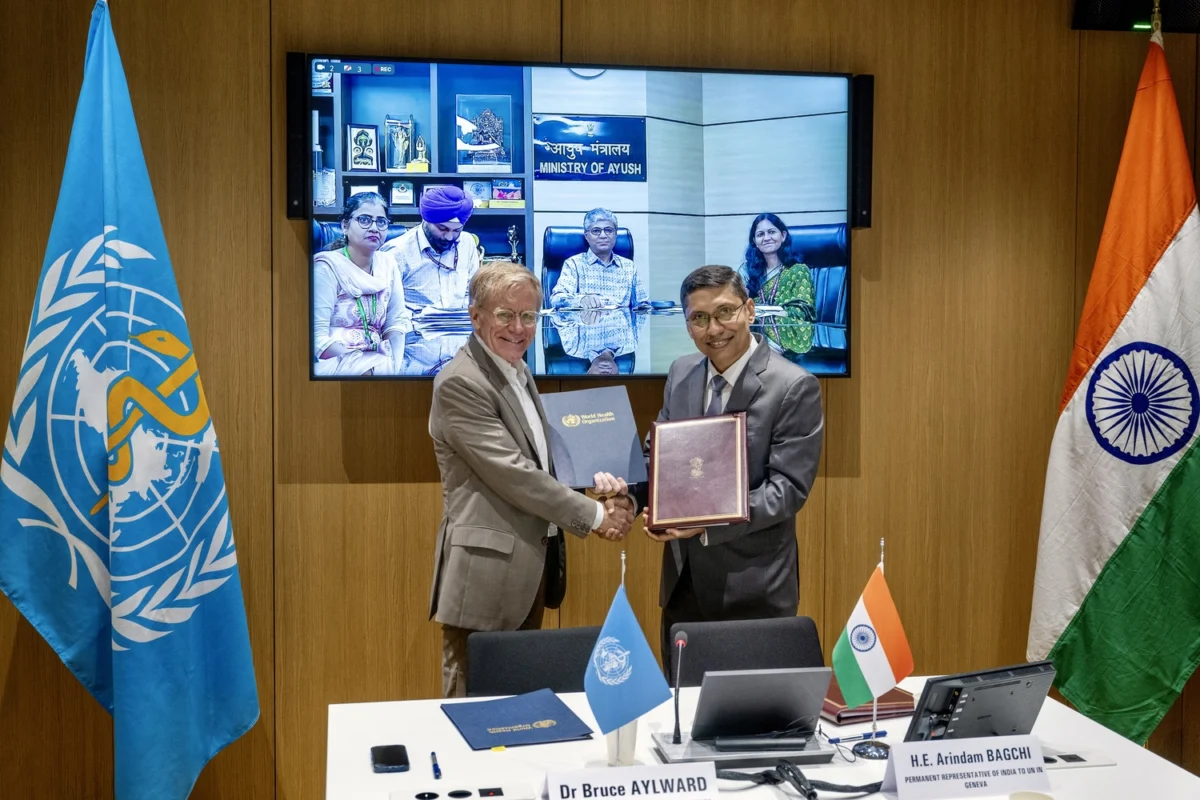
The landscape of global public health received a significant financial and strategic boost in Geneva, where the Government of India formally committed US$ 85 million over a ten-year span, running from 2022 to 2032. This substantial capital injection is earmarked to support the core programming and overarching mission of the World Health Organization (WHO) Global Traditional Medicine Centre, located in Jamnagar, India. The landmark donor agreement represents a pivotal moment in the institutionalization and scientific validation of traditional, complementary, and integrative medicine worldwide, reflecting an international pivot toward inclusive healthcare frameworks that harness indigenous knowledge alongside modern medical science.
Main Facts and the Scope of the Agreement
The newly finalized donor agreement between WHO and the Government of India forms a vital component of a broader, visionary US$ 250 million investment pledged by New Delhi to establish and sustain the WHO Global Centre of Traditional Medicine. This comprehensive financial package encompasses support for the Centre’s dynamic workplan, interim facilities, and the construction of a state-of-the-art permanent campus.
Furthermore, a designated portion of India’s generous contribution has been integrated into the WHO Investment Round to resource the organization’s core operational mandates spanning the 2025–2028 period. By bolstering WHO’s internal technical divisions and regional offices, the agreement fosters global collaboration and solidarity, ensuring that traditional medicine systems are rigorously evaluated, standardized, and safely integrated into national health delivery models.
Billions of people globally rely on traditional medicine for their daily health, preventive care, and overall well-being. However, historical gaps in empirical data, standardized policies, and product regulation have often limited the integration of these practices into formal primary healthcare systems. The 10-year funding framework directly addresses these vulnerabilities by establishing a robust cross-sectoral work program focused on generating high-quality evidence, monitoring public usage, evaluating therapeutic policies, and documenting clinical practices.
Chronology of Events and Institutional Milestones
The formalization of this decade-long funding agreement is the latest in a series of strategic milestones that trace the evolution of the WHO Global Traditional Medicine Centre from a visionary concept into a fully operational global health hub:
- March 2022: The Government of India and the WHO sign an initial host-country agreement supported by a US$ 250 million investment framework to establish the WHO Global Centre for Traditional Medicine in Jamnagar, Gujarat.
- August 2023: The inaugural WHO Traditional Medicine Global Summit takes place in Gujarat, drawing international delegates, policymakers, and researchers. The summit culminates in the adoption of the Gujarat Declaration, a landmark multistakeholder action agenda emphasizing evidence-based traditional medicine.
- Late 2023: India signs a supplementary five-year agreement to bolster the technical capabilities of the WHO Traditional, Complementary and Integrative Medicine (TCI) unit, facilitating the creation of global benchmark documents and standardized terminologies.
- Geneva Signing Ceremony (Current Phase): The Government of India formally commits US$ 85 million across the 2022–2032 window to operationalize the Centre’s long-term programming, solidifying its institutional footprint in global health governance.
- May 2025 (Anticipated): The 78th World Health Assembly is scheduled to witness the official launch of the new 2025–2034 Global Strategy for Traditional Medicine.
- November 2025 (Planned): The second WHO Global Traditional Medicine Summit is slated to convene, building upon the foundations laid by the Gujarat Declaration and reviewing the early implementation phases of the new global strategy.
Supporting Data and Core Areas of Work
Led by Dr. Shyama Kuruvilla, Director a.i., the WHO Global Traditional Medicine Centre functions as a premier knowledge hub designed to bridge ancient healing traditions with contemporary scientific scrutiny. The Centre’s operational mandate is structured around five interconnected pillars of work:
- Research and Evidence: Building rigorous methodological frameworks to evaluate the safety, efficacy, quality, and mechanisms of action inherent in traditional medicines.
- Primary Health Care and Universal Health Coverage: Exploring pathways to integrate validated traditional practices into grassroots health systems, thereby expanding care access to marginalized and underserved populations.
- Indigenous Knowledges and Biodiversity: Safeguarding the intellectual property of indigenous communities while promoting the sustainable harvesting, conservation, and ethical sourcing of medicinal plants and natural resources.
- Digital Health Applications: Utilizing artificial intelligence, machine learning, and big data analytics to map traditional medicine utilization, digitize historical compendiums, and track clinical outcomes.
- Global Dialogues and Collaborations: Convening the biennial WHO Global Traditional Medicine Summit alongside continuous multi-stakeholder consultations.
In parallel, the WHO Traditional, Complementary and Integrative Medicine (TCI) unit works in lockstep with the Jamnagar Centre. Supported by targeted Indian partnerships, the TCI unit spearheads the development of global standards, benchmark training requirements for practitioners, and evidence-informed technical documents. Both entities operate through a coordinated "One WHO" approach, facilitated by regular convenings of the WHO Technical Expert Network across headquarters, regional bureaus, and country offices.
Official Responses and Diplomatic Perspectives
The signing ceremony elicited strong endorsements from senior international health officials and diplomatic representatives, underscoring the universal relevance of the initiative.
Dr. Bruce Aylward, Assistant Director-General of the Universal Health Coverage and Life Course division at WHO, emphasized the timely nature of the partnership. "India’s commitment and leadership in expanding the evidence-based contribution of traditional medicine to the health and well-being of all people and the planet comes at an opportune moment," Dr. Aylward stated. "Traditional medicine, supported within national health systems, can allow us to reach those most often left behind. Integration of traditional practice and knowledge is critical to achieving health for all."
Highlighting the bilateral synergy between New Delhi and the global health body, Vice Minister Vaidya Rajesh Kotecha, Secretary of the Ministry of Ayush, Government of India, remarked on the significance of the event. "The signing of this donor agreement is a major milestone towards achieving the shared vision of Honourable Prime Minister of India Shri Narendra Modi and WHO Director-General Tedros for the development of the WHO Global Traditional Medicine Centre at Jamnagar in India."
Ambassador Arindam Bagchi, Permanent Representative of India to the UN and other International Organizations in Geneva, reiterated the nation’s steadfast dedication to international public health goals. "India remains committed to supporting WHO in its work to strengthen traditional medicine systems globally for achieving universal health coverage and serving the entire humanity, especially through this Global Centre in Jamnagar, which would help focus these efforts to benefit all Member States," Ambassador Bagchi noted.
Broader Impact and Implications for Global Health
The infusion of US$ 85 million over the next decade carries profound implications for the future architecture of international healthcare. By systematically addressing the historical lack of empirical data surrounding traditional therapies, the WHO Global Traditional Medicine Centre is poised to transform how herbal, indigenous, and complementary modalities are perceived, regulated, and prescribed.
As health systems worldwide grapple with rising chronic disease burdens, aging populations, and the economic pressures of delivering comprehensive care, integrating safe and effective traditional practices offers a viable pathway toward true Universal Health Coverage (UHC). The generation of credible scientific evidence ensures that patient safety remains paramount, protecting consumers from substandard products while validating legitimate therapeutic interventions.
Furthermore, the alignment of this decade-long funding with the forthcoming 2025–2034 Global Strategy for Traditional Medicine ensures that WHO Member States will be equipped with actionable policy roadmaps for the foreseeable future. Through sustained financial backing, institutional collaboration, and rigorous scientific inquiry, the partnership between India and the World Health Organization establishes a transformative benchmark for global health diplomacy, validating ancient wisdom through the rigorous lens of modern science for the benefit of humanity and the planet.