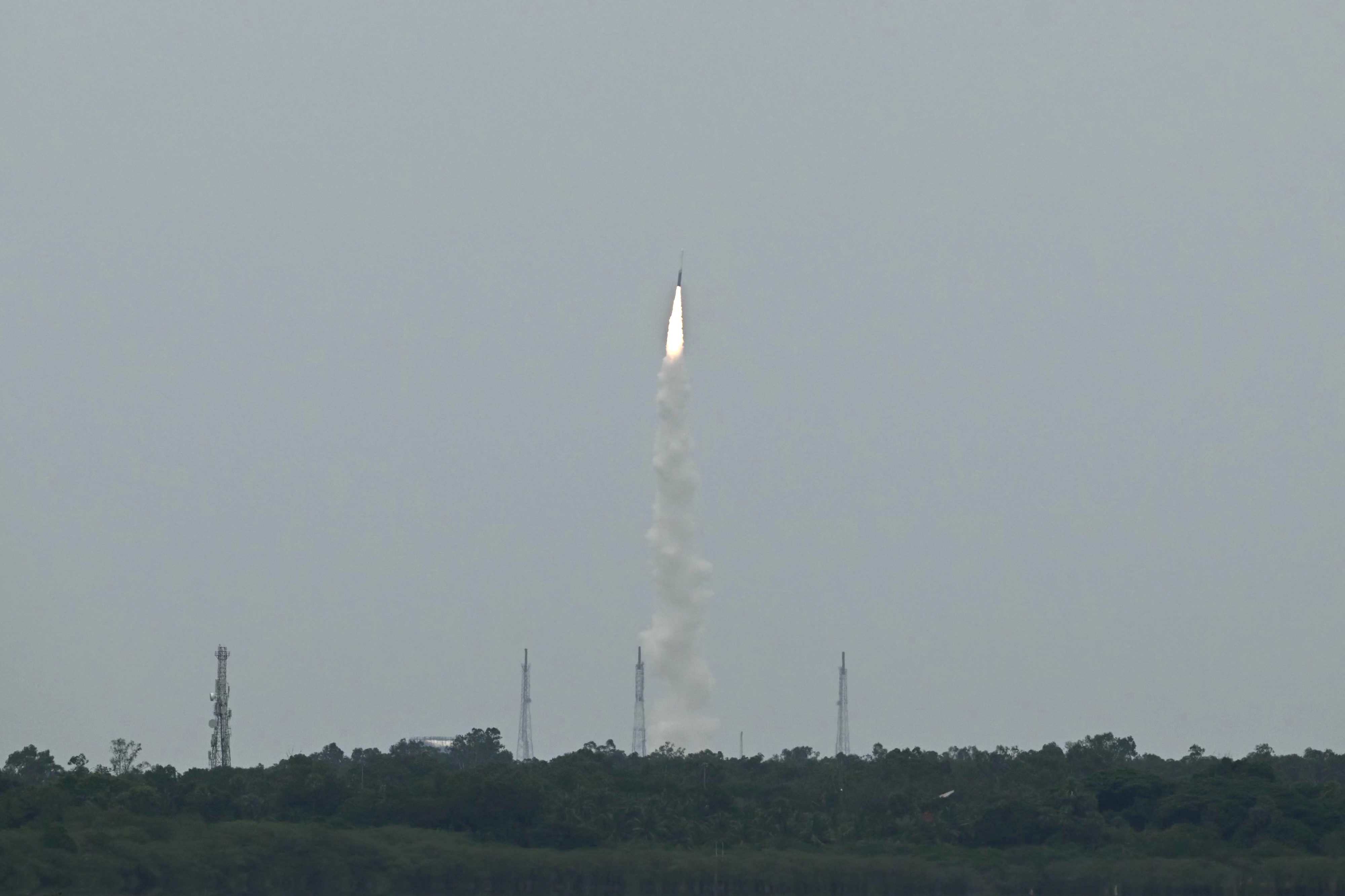
Indian space officials and enthusiasts are celebrating a landmark achievement in the nation’s burgeoning private space sector as Skyroot Aerospace successfully launched its Vikram-1 rocket into orbit on Saturday. Hailed as a "grand success," this maiden flight marks India’s first fully commercial satellite launcher to reach orbit, propelling a new era of private space exploration and services from the subcontinent. The on-target climb to a 280-mile-high orbit, following liftoff from the Satish Dhawan Space Center on Sriharikota Island, situated in the Bay of Bengal, signifies a pivotal moment for both Skyroot and India’s global space ambitions.
A Flawless Ascent and Orbital Precision
The Vikram-1 lifted off from India’s primary spaceport at 1:35 am EDT (06:35 UTC) Saturday, corresponding to midday at the launch base along India’s southeast coast. The launch, keenly watched by industry leaders and government officials, faced a brief delay of over half an hour to resolve a last-minute technical issue. However, the countdown resumed smoothly, culminating in the precise command to ignite Vikram-1’s solid-fueled first stage booster, sending the rocket skyward with a thunderous roar.
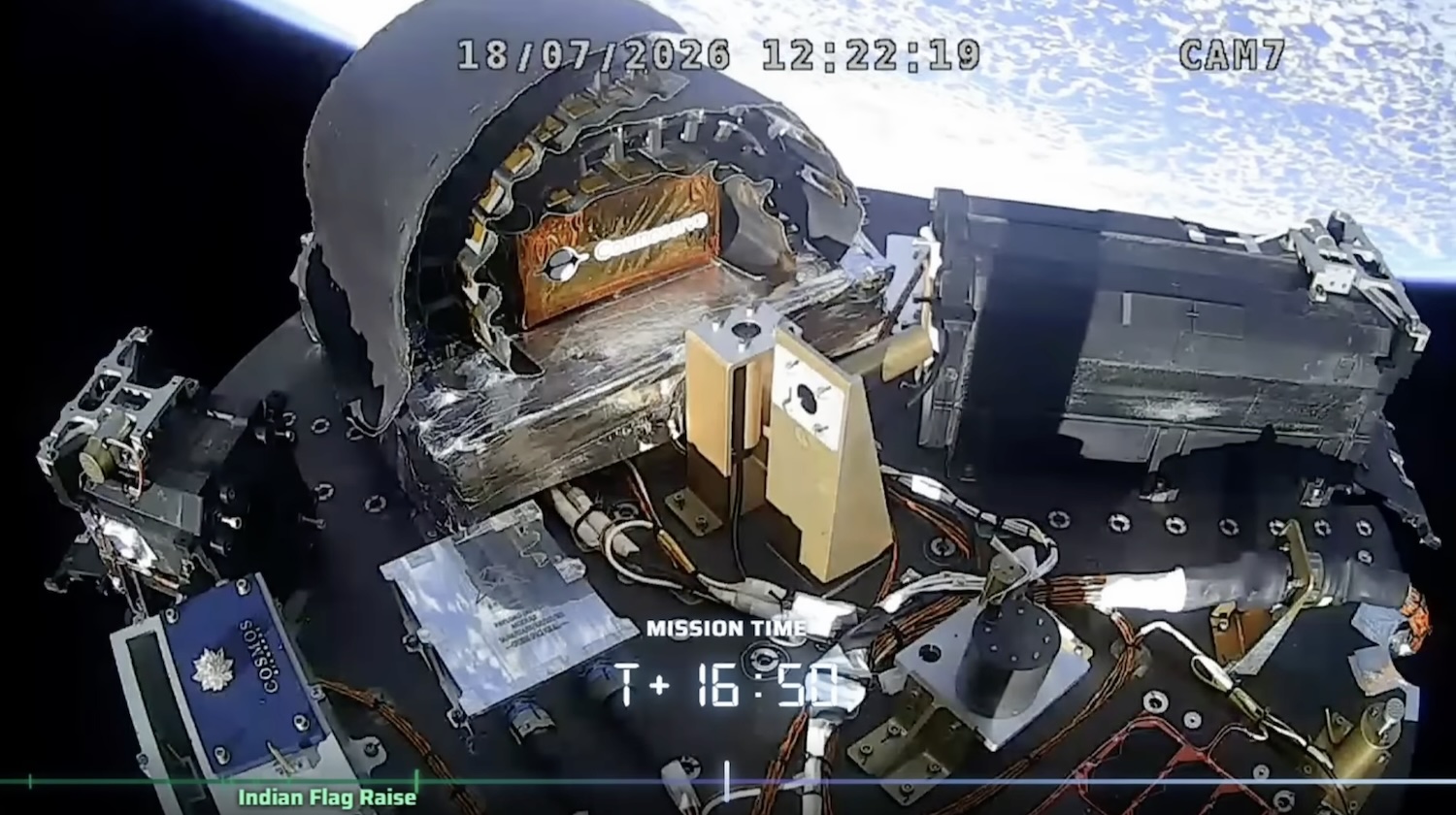
The mission proceeded with remarkable precision. The rocket’s initial thrust came from three solid-fueled rocket motors, firing in succession to propel it through the atmosphere and into space. Following the successful separation of these stages, a sophisticated, small liquid-fueled fourth stage ignited, accelerating the vehicle to an astonishing orbital velocity of approximately 17,000 mph. Live views transmitted from onboard cameras provided breathtaking glimpses of each critical phase of the launch sequence, showcasing the engineering prowess behind the mission.
While the flight was largely flawless, a minor observation occurred during the separation of the rocket’s third stage from its fourth stage. The spent third stage motor appeared to remain in close proximity to the fourth stage during a brief coasting period, rather than distancing itself more rapidly. Nonetheless, this minor deviation had no impact on the mission’s overall success. The fourth stage, powered by its innovative 3D-printed engine, meticulously performed its task, guiding the payload into an orbit approximately 280 miles (450 kilometers) high at an inclination of 60 degrees to the equator. This orbital insertion was remarkably close to pre-flight predictions, a testament to Skyroot Aerospace’s meticulous planning and execution. Subsequent confirmation from US military tracking data further validated the rocket’s successful arrival in orbit, cementing the mission’s triumph.
Vikram-1: A New Contender in the Small Satellite Market
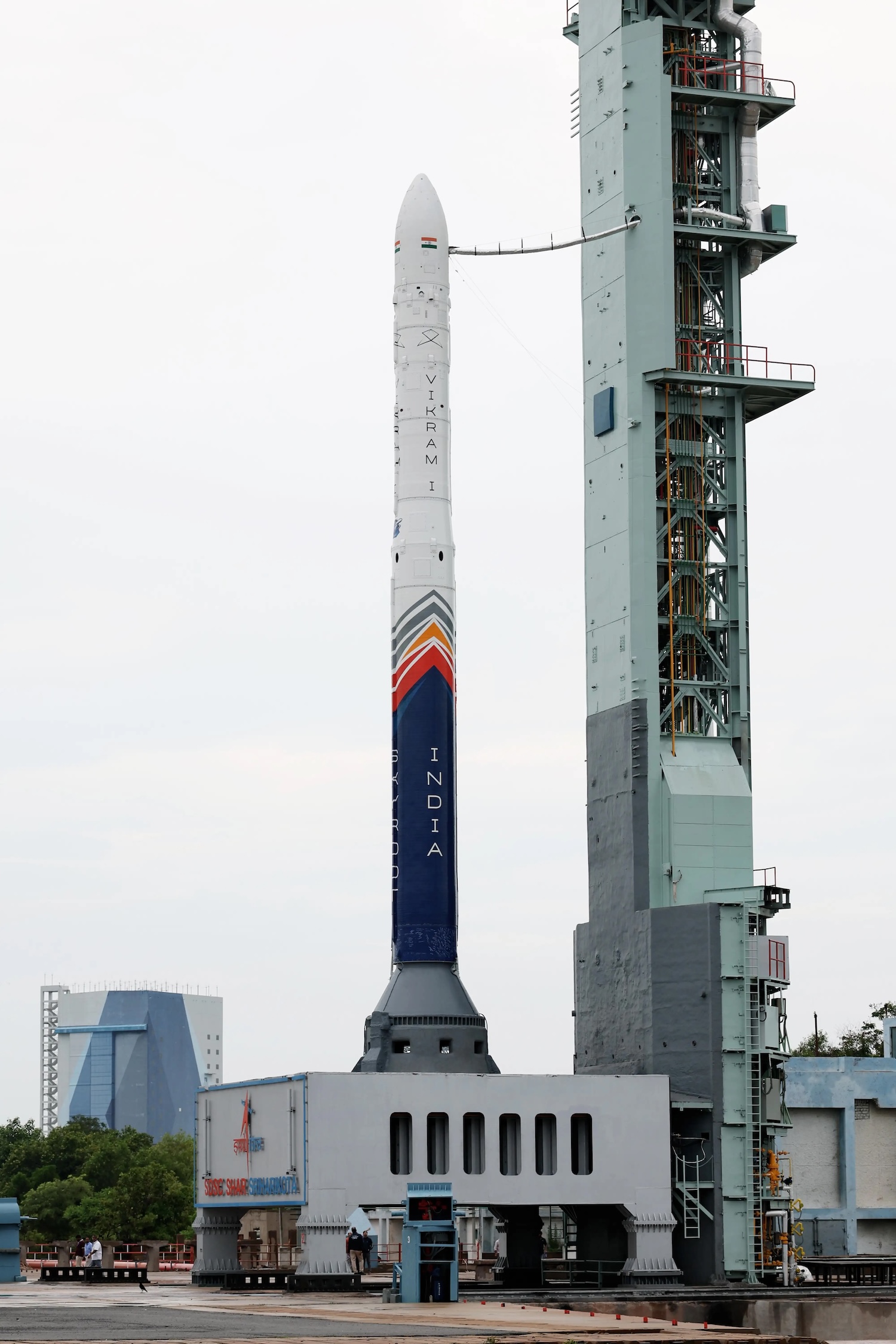
The Vikram-1 rocket, named in honor of the revered Indian physicist Vikram Sarabhai, widely regarded as the father of the Indian space program, is a marvel of modern aerospace engineering. Standing approximately 72 feet (22 meters) tall, its modest size belies its significant capability to place payloads of up to 770 pounds (350 kilograms) into low-Earth orbit. This makes Vikram-1 a robust contender in the rapidly growing small satellite launch market.
Crafted from lightweight carbon composite materials and adorned in a distinctive blue and white livery, the Vikram-1 embodies cutting-edge design and manufacturing. Its payload capacity positions it somewhat larger than Rocket Lab’s Electron launch vehicle, currently the world’s most successful dedicated small satellite launcher. This comparison highlights Skyroot’s ambition to compete on a global scale, offering dedicated and responsive launch services tailored for the burgeoning constellation of small satellites. The use of a 3D-printed engine for the fourth stage underscores the company’s commitment to leveraging advanced manufacturing techniques for efficiency and performance, a trend increasingly prevalent in the private space sector globally.
Beating the Odds: A Dream Realized
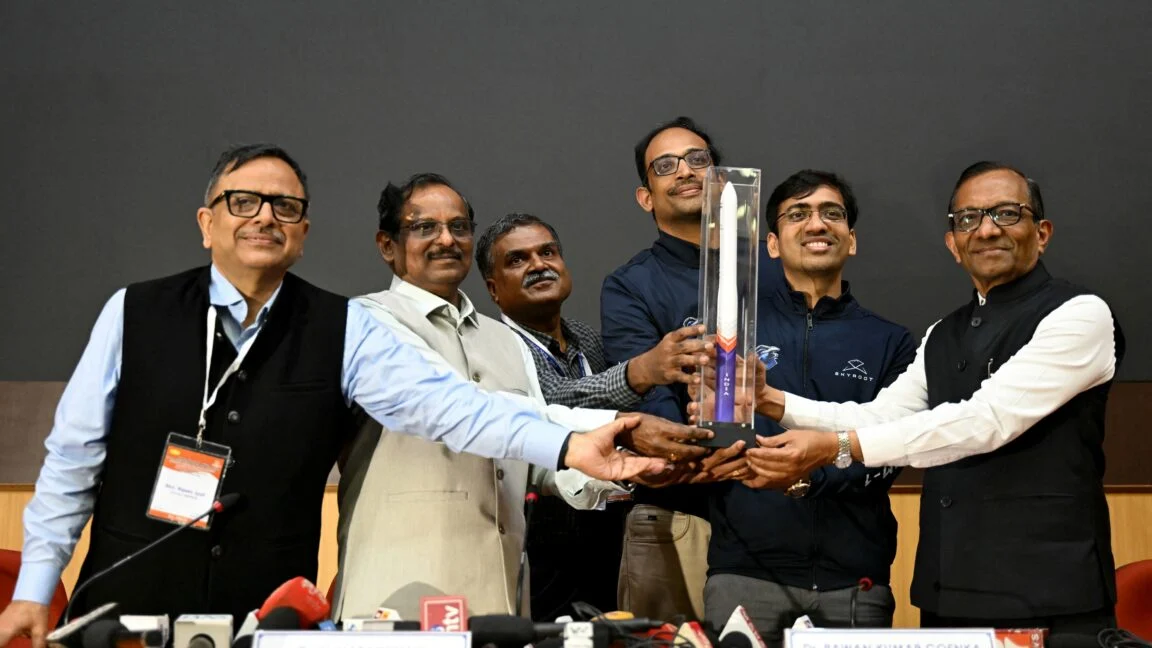
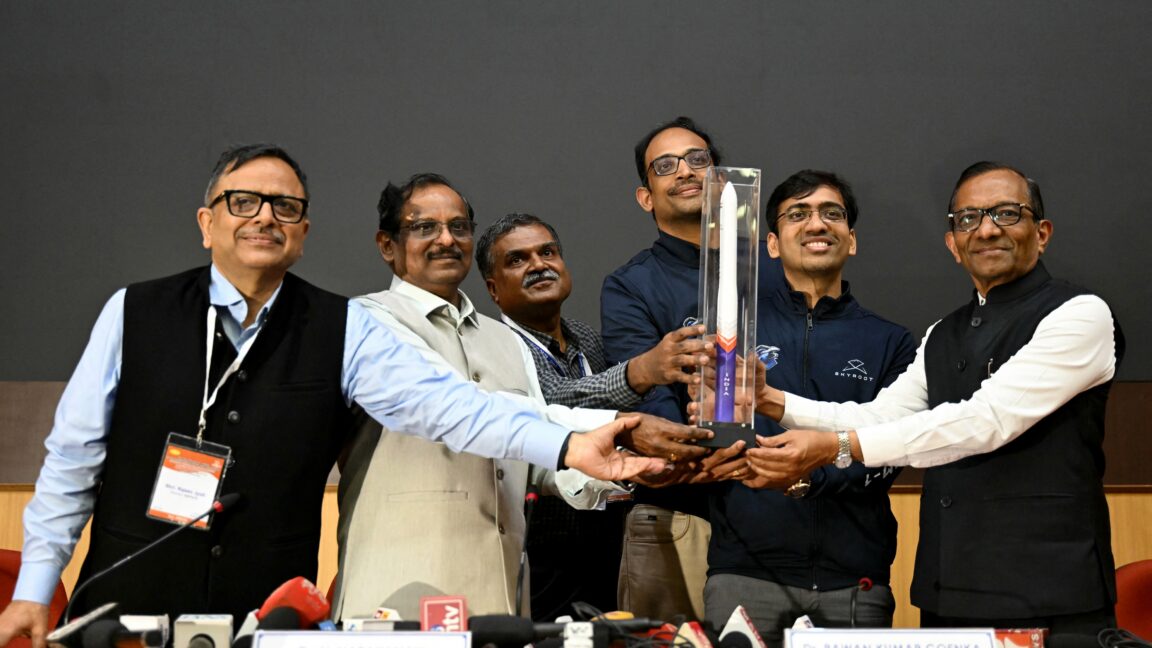
The success of Vikram-1 on its inaugural orbital flight is particularly noteworthy given the challenging history of first attempts for new private orbital-class rockets. Pawan Kumar Chandana, Skyroot’s co-founder and CEO, encapsulated the team’s euphoria, stating, "We achieved one of the biggest milestones ever in India’s space sector—the first private orbital rocket reaching orbit on the very first attempt. It still feels like a dream, and you all made this dream happen."
Indeed, the statistical odds were stacked against them. SpaceX, a titan in the commercial space industry, required four attempts before its Falcon 1 rocket successfully reached orbit in 2008. Rocket Lab’s Electron also failed to achieve orbit on its maiden launch in 2017. Even Blue Origin, with the inaugural flight of its heavy-lift New Glenn rocket in 2025, had the advantage of prior experience from numerous launches of its smaller New Shepard suborbital rocket. Skyroot, therefore, defied conventional wisdom and established a new benchmark for private space ventures.
Chandana openly admitted his initial skepticism, "On the first attempt, reaching orbit, I never thought it was possible." He attributed this extraordinary success to his "phenomenal team," humorously describing the launch as "nothing short of a suspense movie." This sentiment was echoed by Pawan Goenka, chairman of IN-SPACe, a government organization established in 2020 to foster India’s commercial space industry. Goenka revealed the company’s primary objective for the launch was intentionally humble: "The mission objective was only to lift off and clear the tower. That was only about 100 meters, but what we went to was 450 kilometers, and it also released all the satellites that were supposed to release. So the mission was absolutely perfect." This conservative goal-setting, combined with an exceptional outcome, underscores the prudence and meticulousness that characterized Skyroot’s approach.
Government Support and India’s Space Sector Reforms
Skyroot’s breakthrough launch comes at a time when India’s government, under the leadership of Prime Minister Narendra Modi, is actively seeking to supercharge the country’s space industry. India has a long-standing and robust government-led space program, spearheaded by the Indian Space Research Organization (ISRO). ISRO’s workhorse rockets, such as the Polar Satellite Launch Vehicle (PSLV) and the larger Geosynchronous Satellite Launch Vehicle Mark III (LVM3), have a proven track record, frequently attracting commercial customers from the United States and Europe for satellite launches. India further cemented its global space standing by becoming the fourth country to successfully land a spacecraft on the Moon in 2023 with Chandrayaan-3, and is progressing with its ambitious Gaganyaan program to launch astronauts into low-Earth orbit.
The Indian government’s proactive reforms in 2020, including the establishment of IN-SPACe, were designed to open the space sector to private participation, moving away from a purely state-controlled model. This policy shift aims to leverage the innovation and agility of private companies to accelerate growth and meet the burgeoning global demand for space services. ISRO played a crucial role in supporting Skyroot’s venture, offering "handholding and support" by providing access to its solid rocket motor casting and test facilities on Sriharikota Island. Furthermore, ISRO granted Skyroot permission to launch from one of its two active launch pads, demonstrating a collaborative synergy between the public and private sectors that is vital for nurturing a nascent industry.
Prime Minister Modi has set an ambitious target for the Indian space industry: to increase its annual launch total from approximately five per year to an impressive 50 before the end of the decade. This aggressive goal underscores the government’s commitment to making India a dominant player in the global space market. Following Saturday’s historic launch, the Prime Minister personally congratulated Chandana and the Skyroot team. In a statement, Modi declared, "This is a defining moment in India’s space journey. The growing participation of our private sector is opening new frontiers and accelerating innovation. This achievement will encourage countless youngsters to dream bigger and innovate fearlessly." His words highlight the broader national impact of Skyroot’s success, positioning it as an inspiration for future generations of innovators and entrepreneurs.
Skyroot Aerospace: A Trajectory of Growth and Ambition
Skyroot Aerospace was co-founded in 2018 by Pawan Kumar Chandana and Naga Bharath Daka, both former engineers at ISRO. Their strategic decision to initially focus on developing a solid-fueled launcher was driven by the aim of achieving the "lowest development time and the lowest cost per launch." Chandana articulated their immediate goal: "We wanted to get to an orbital launch vehicle in a few years." This pragmatic approach allowed them to quickly iterate and achieve significant milestones.
The Vikram-1 builds directly on the lessons learned from Skyroot’s earlier success with the Vikram-S suborbital rocket, which reached an altitude of nearly 300,000 feet (90 kilometers) in November 2022. That suborbital flight served as a critical testbed, validating many of the technologies and systems now employed in the orbital Vikram-1.
Skyroot’s future roadmap is even more ambitious. The company plans to introduce the Vikram-1U, which will incorporate additional strap-on solid rocket boosters to enhance its capacity for heavier payloads. Beyond that, the Vikram-2 is slated to debut a cryogenic upper stage, significantly increasing its payload capacity to 2,000 pounds (900 kilograms) to low-Earth orbit. The initial purpose of the Vikram rocket family, as articulated in the press kit for Saturday’s mission, is to "deliver dedicated and responsive launch services for small satellites." This focus on the rapidly expanding small satellite market positions Skyroot strategically to capture a significant share of global demand.
However, Skyroot’s ambitions extend far beyond small satellite launches. In an interview conducted prior to the Vikram-1 launch, Chandana shared his long-term vision for Skyroot: to develop larger liquid-fueled, fully reusable rockets, capable of achieving a "daily cadence" from multiple launch sites across different countries. This audacious goal places Skyroot in the league of global space giants aiming for frequent and cost-effective access to space.
To realize such expansive dreams, Skyroot will undoubtedly require substantial additional funding. Yet, Saturday’s launch unequivocally demonstrated that the company possesses the fundamental ingredients for a successful launch enterprise: technical expertise, operational capability, and a clear vision. Skyroot has, to date, successfully raised approximately $160 million in capital, propelling the company’s valuation to an impressive $1.1 billion and earning it unicorn status. The company’s rapid growth is also reflected in its workforce, which now exceeds 1,000 employees, predominantly based at its headquarters in Hyderabad, with an average age of just 28 years. This youthful and dynamic team is a testament to India’s burgeoning talent pool in aerospace engineering and technology. Skyroot’s success has elevated it above any other space startup in India, and indeed, in most countries outside of the United States and China, signaling a significant shift in the global space landscape.
Implications for India and the Global Space Arena
The successful orbital debut of Vikram-1 represents more than just a technical achievement; it is a profound statement about India’s growing technological prowess and its emergence as a significant player in the global commercial space market. By demonstrating the capability to indigenously design, develop, and launch an orbital-class rocket from the private sector, India sends a clear message about its capacity for innovation and self-reliance.

This success is expected to have multi-faceted implications. Economically, it can stimulate further investment in India’s space industry, create high-tech jobs, and foster a vibrant ecosystem of ancillary industries. Technologically, it validates India’s engineering talent and encourages further research and development in advanced propulsion systems, materials science, and rocketry. Geopolitically, it enhances India’s standing as a spacefaring nation, capable of offering competitive launch services to international customers, thereby increasing its soft power and influence.
Chandana’s post-launch declaration, "This is a 100 percent designed in India rocket, a 100 percent made in India rocket, built by 100 percent Indian people, for India and for the world," resonates deeply with the national narrative of ‘Make in India’ and ‘Atmanirbhar Bharat’ (self-reliant India). This indigenous capability not only serves national interests but also contributes to global space access, a critical need as more nations and private entities seek to deploy satellites for communication, Earth observation, navigation, and scientific research.
The success of Vikram-1 sets a high bar for other Indian space startups and serves as a powerful proof of concept for the government’s space sector reforms. It demonstrates that with the right policy framework, regulatory support, and access to infrastructure, the private sector can indeed thrive and achieve remarkable feats in a complex and capital-intensive domain like space.
Looking ahead, the momentum generated by this launch is palpable. Chandana indicated that a second Vikram-1 launch could happen before the end of the year, signaling an aggressive pace for future operations. The challenge for Skyroot, and for India’s private space industry as a whole, will be to sustain this momentum, scale operations, maintain a high success rate, and navigate the increasingly competitive global market for launch services. However, Saturday’s dramatic debut launch has laid a solid foundation, vaulting Skyroot Aerospace and India into a new orbit of possibilities.