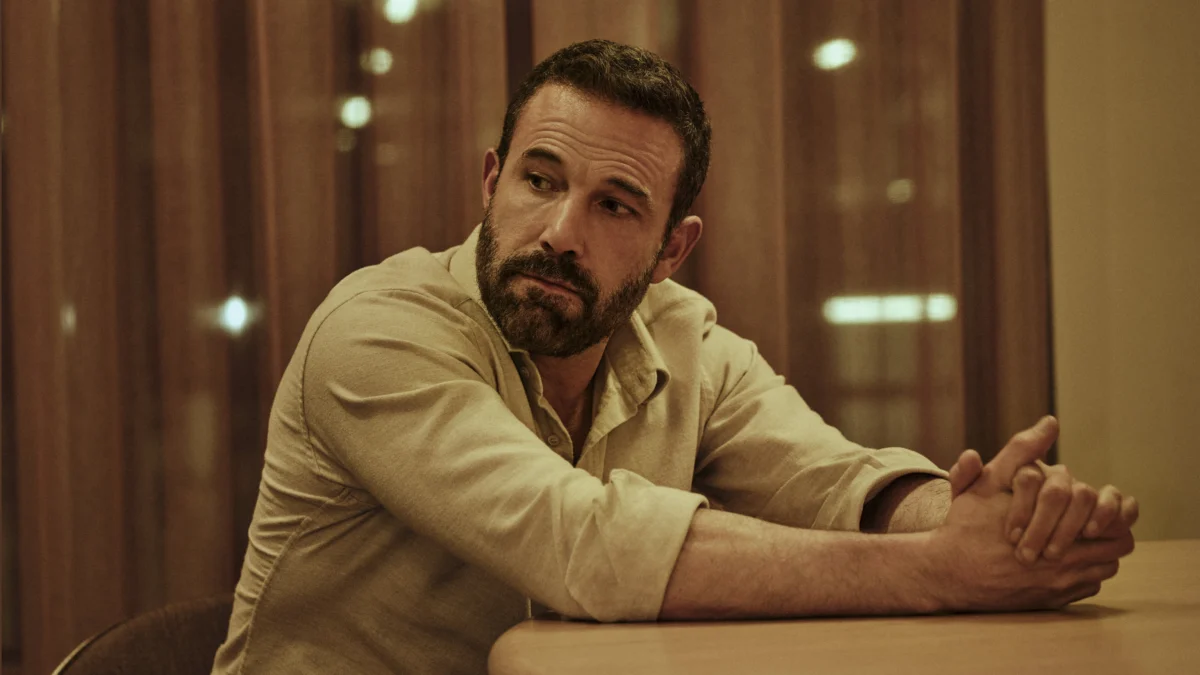
In a significant move that underscores the accelerating integration of artificial intelligence into the entertainment industry, streaming titan Netflix has officially disclosed a $587 million cash payment for InterPositive, a pioneering AI startup co-founded by acclaimed actor and director Ben Affleck. The financial terms, previously a subject of industry speculation, were unveiled in a recent regulatory filing, solidifying Netflix’s strategic commitment to leveraging advanced AI for content creation and post-production efficiencies. This acquisition marks a pivotal moment for both the burgeoning field of AI in filmmaking and for Netflix’s ambitious plans to streamline and enhance its vast content pipeline.
The initial announcement of the acquisition came in March, generating considerable buzz within Hollywood and the tech sector. At the time, Netflix confirmed that the entire InterPositive team would transition to the streaming giant, with Ben Affleck assuming a senior advisory role. While the initial press release from Netflix lauded the innovative potential of InterPositive’s technology, the precise financial details remained undisclosed, fueling a wave of speculation that hinted at a valuation potentially reaching up to $600 million, as reported by outlets like Bloomberg. The recent regulatory filing, however, provides concrete figures, confirming the substantial cash outlay of $587 million, cementing InterPositive as one of the most high-profile AI acquisitions in the entertainment space to date.
InterPositive’s Vision: Protecting Human Creativity with AI
Central to the narrative surrounding InterPositive is Ben Affleck’s stated mission to "protect the power of human creativity" through the company’s AI tools. According to Affleck, InterPositive’s technology is designed to empower filmmakers by addressing "real-world production challenges." These challenges often manifest in post-production, where issues such as "missing shots, background replacements or incorrect lighting" can lead to significant delays, increased costs, and compromised artistic vision. InterPositive’s AI is purported to offer solutions that can intelligently fill these gaps, rectify visual inconsistencies, and enhance footage, thereby allowing creative teams to focus more on storytelling and less on technical remediations.
The specific capabilities described by Affleck suggest AI applications in areas like generative fill, intelligent compositing, automated visual effects, and advanced color correction or lighting adjustment. For instance, an AI system capable of "missing shots" could imply technology that can generate convincing interstitial frames or even entire sequences based on existing footage and script context, a significant leap from traditional reshoots or manual VFX work. Similarly, "background replacements" could range from sophisticated green screen alternatives to entirely synthetic environments, while "incorrect lighting" could be corrected algorithmically to match desired aesthetic and continuity without costly regrading or digital painting by human artists. This focus on practical, problem-solving AI aligns with a broader industry trend seeking to harness technology to optimize complex and expensive production workflows.
A Timeline of Netflix’s AI Ambitions and InterPositive’s Journey
The InterPositive acquisition did not occur in a vacuum but is rather a key development within a longer arc of Netflix’s strategic engagement with artificial intelligence.
- Early 2010s: Netflix establishes itself as a pioneer in data analytics and machine learning, primarily through its highly effective recommendation engine, which uses algorithms to personalize content suggestions for millions of subscribers globally. This early success laid the groundwork for a data-driven corporate culture.
- Mid-2010s: The company begins exploring AI for internal operational efficiencies, including content tagging, metadata generation, and optimizing streaming quality based on network conditions.
- Late 2010s – Early 2020s: With the rise of generative AI, Netflix reportedly increases its investment in research and development into AI applications for content creation. Discussions around using AI for script analysis, localization (dubbing and subtitling), and even early-stage visual effects become more prominent.
- March 2026: Netflix publicly announces its acquisition of InterPositive, co-founded by Ben Affleck. The announcement highlights Affleck’s creative vision for AI as an assistive tool and confirms the integration of InterPositive’s team and Affleck’s advisory role. Financial terms are initially withheld.
- March 2026 (subsequent reports): Industry speculation, fueled by reports from outlets like Bloomberg, suggests the deal could be valued at up to $600 million, indicating the perceived high strategic value of InterPositive’s technology and talent.
- Q2 2026 Earnings Report: Netflix reveals that approximately 300 of its titles have already utilized generative AI technologies in various capacities this year. This statistic provides crucial context, demonstrating that the InterPositive acquisition is part of an ongoing, widespread integration of AI across Netflix’s production slate, not an isolated experiment.
- Recent Regulatory Filing: The definitive financial details emerge, confirming the $587 million cash payment for InterPositive, providing transparency and solidifying the scale of Netflix’s investment.
This chronology illustrates a deliberate and escalating strategy by Netflix to embed AI into the core of its content business, moving from data-driven recommendations to actively using AI in the creation process itself.
Netflix’s Broader AI Strategy and Market Implications
The acquisition of InterPositive, coupled with the revelation that around 300 Netflix titles have already employed generative AI, paints a clear picture of the company’s aggressive pursuit of AI integration. Netflix’s strategy extends beyond merely fixing post-production issues; it encompasses a multi-faceted approach to leveraging AI for competitive advantage, cost efficiency, and unprecedented scale in content production.
- Content Volume and Velocity: As a global streaming giant, Netflix requires a constant influx of diverse content. AI can dramatically accelerate various stages of production, from pre-visualization and script refinement to post-production and localization. This increased velocity allows Netflix to maintain its competitive edge in a crowded streaming market by offering a fresh and extensive library to its subscribers.
- Cost Optimization: Filmmaking is notoriously expensive. AI tools that can automate tedious tasks, reduce the need for reshoots, optimize resource allocation, and streamline VFX processes promise significant cost savings. For a company that invests billions annually in content, even marginal efficiencies can translate into substantial financial benefits, potentially allowing for reinvestment in more ambitious projects or higher quality productions.
- Creative Enhancement and Innovation: Beyond mere efficiency, AI offers new creative possibilities. Tools like those developed by InterPositive can free artists from repetitive tasks, allowing them to focus on higher-level creative decisions. Generative AI could also facilitate experimental storytelling, rapid prototyping of visual concepts, and the creation of entirely new forms of digital art that were previously cost-prohibitive or technically infeasible.
- Personalization Beyond Recommendations: While Netflix’s recommendation engine is legendary, the future of AI could extend personalization into the content itself. Imagine dynamically generated scenes, alternate endings, or even entire narratives tailored to individual viewer preferences, an ambitious but increasingly plausible long-term vision for AI in entertainment.
- Competitive Landscape: Major competitors like Disney, Amazon, and Warner Bros. Discovery are also exploring AI in their content strategies. By acquiring a leading AI startup and integrating its technology, Netflix aims to maintain a vanguard position, ensuring it has access to proprietary tools and talent that can differentiate its offerings.
Industry Reactions and the Debate on AI and Creativity
The news of the InterPositive acquisition and Netflix’s broader AI embrace has elicited a range of reactions across the entertainment and technology sectors.
- Creative Community: While some artists and filmmakers express optimism about AI’s potential to enhance creative workflows and alleviate mundane tasks, there remains significant apprehension. The recent SAG-AFTRA and WGA strikes highlighted deep-seated concerns among writers and actors regarding AI’s potential impact on job security, intellectual property rights, and the very definition of creative authorship. Affleck’s emphasis on "protecting human creativity" is a direct acknowledgment of these anxieties, suggesting a path where AI serves as an augmentative force rather than a replacement. However, the exact mechanisms for ensuring this balance will be a critical point of discussion as AI integration deepens.
- Tech Analysts: Analysts generally view the acquisition positively, seeing it as a smart strategic move for Netflix. The $587 million valuation reflects not just InterPositive’s current technology but also the strategic talent, including Affleck’s influence, and the future potential for scaling AI solutions across a global content empire. Analysts anticipate further M&A activity in the AI-for-media space as companies vie for cutting-edge capabilities.
- Ethical Considerations: The ethical implications of AI in filmmaking remain a prominent topic. Questions regarding algorithmic bias in content generation, the authenticity of performances (e.g., deepfakes), the origin and fair compensation for training data, and the potential for AI to dilute the human element of storytelling are complex and require ongoing industry dialogue and policy development. Netflix, as a major player, will face scrutiny regarding its responsible deployment of these powerful tools.
Ben Affleck’s Role: Bridging Hollywood and Silicon Valley
Ben Affleck’s transition from an acclaimed actor and director to a co-founder of a significant AI startup, and now a senior advisor at Netflix, positions him as a unique figure at the intersection of Hollywood and Silicon Valley. His public statements consistently frame AI as a tool to empower, not undermine, human artists. This perspective is crucial in an industry often wary of technological disruption.
As a senior advisor, Affleck’s role likely extends beyond merely consulting on InterPositive’s integration. He could serve as an essential bridge between the technical developers and the creative teams, ensuring that AI solutions are genuinely useful, artist-friendly, and aligned with artistic sensibilities. His deep understanding of the filmmaking process, from pre-production to post-production, provides invaluable insight into where AI can offer the most impactful and practical benefits. His involvement also lends a degree of credibility and artistic endorsement to Netflix’s AI endeavors, potentially assuaging some fears within the creative community.
The Broader Impact and Future of Filmmaking
The Netflix-InterPositive deal is a bellwether for the future of filmmaking and entertainment. It signals a future where AI is not just a behind-the-scenes utility but an integral part of the creative process itself.
- Evolution of Roles: The roles of traditional filmmaking crafts will evolve. While some tasks may be automated, new roles will emerge focused on AI supervision, prompt engineering, data curation, and integrating AI outputs into human-driven narratives. Filmmakers will need to become adept at collaborating with AI as a creative partner.
- Democratization of Tools: Advanced tools, previously exclusive to high-budget productions, could become more accessible through AI, potentially lowering barriers to entry for independent filmmakers and fostering a new wave of diverse storytelling.
- New Narrative Forms: AI could enable entirely new narrative structures and interactive experiences, pushing the boundaries of what stories can be told and how they are consumed.
- Intellectual Property and Ownership: As AI-generated content becomes more sophisticated, questions of intellectual property, copyright, and the ownership of AI-assisted creations will become increasingly complex, necessitating new legal frameworks.
In conclusion, Netflix’s nearly $600 million investment in InterPositive is more than just a financial transaction; it is a profound declaration of intent. It signifies a future where artificial intelligence is not merely a supplementary tool but a foundational element of content creation, driving efficiency, expanding creative possibilities, and shaping the very fabric of how stories are brought to life on screen. As Netflix continues to roll out AI across its vast production slate, the industry will keenly watch how this technology, championed by figures like Ben Affleck, ultimately redefines the delicate balance between human ingenuity and algorithmic power in the pursuit of cinematic excellence.